

2008: A small start in Spartan, Kempton Park
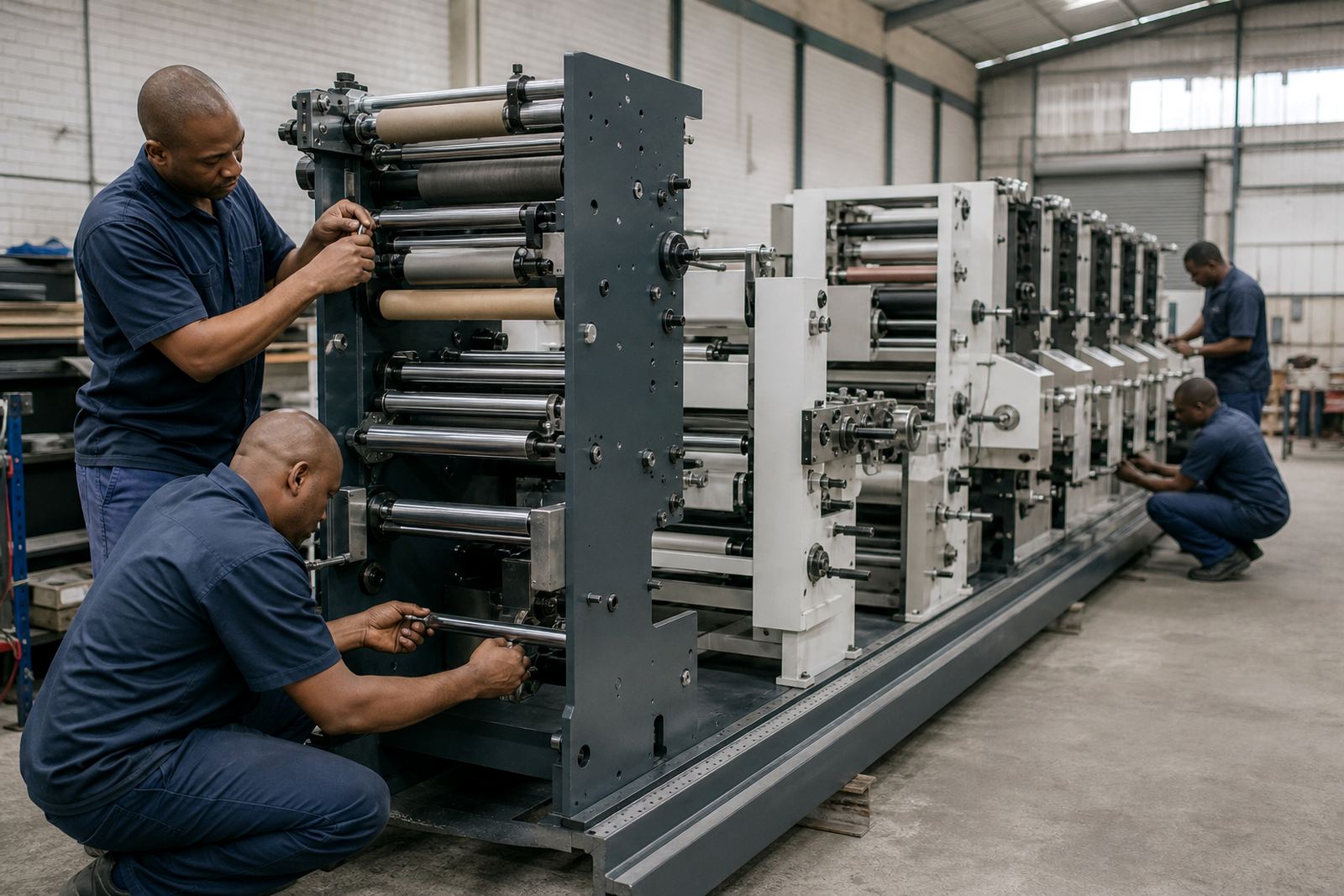
Flexography Printer started trading in 2008 from Spartan in Kempton Park, with Thabo Mokoena leading the business from the outset. The early work was built around narrow-web flexo label presses, basic setup support and helping converters get stable print results on labels and packaging work.
Those first years were practical. Customers needed presses installed correctly, plates mounted properly and finishing set up so jobs could move through production without constant stops. In Gauteng, where many label printers work around tight delivery times and load-shedding interruptions, reliable support mattered from the beginning.
The company built its name by doing the small things properly, from press handover to operator guidance. That approach shaped the business and still guides the team today.
2009 to 2012: Building trust job by job
As more converters came on board, the work widened from initial installations into commissioning, startup production support and preventative maintenance. These were the years when the service side of the business became stronger, because customers did not only need a machine, they needed it to keep running.
During this period, the team learned how different label jobs behaved under South African production conditions. Coastal humidity in places like Durban and Cape Town could affect handling and finishing, while inland sites often dealt with dust, heat and power cuts. That meant practical advice had to be specific, not generic.
- Press installation and commissioning for new sites
- Operator training for setup, changeovers and basic fault finding
- Preventive maintenance to reduce unplanned stoppages
- Remote support when a site needed quick guidance
By the end of this phase, Flexography Printer had moved from an installation led business into a support partner for everyday production challenges.
2013 to 2016: A stronger technical team and broader support
As the customer base grew, so did the need for structured technical support. Johan van der Merwe took on a larger technical role, and the service offering became more organised around the full life of a press, from startup to ongoing production. This period also saw more attention given to anilox care, plate mounting help and finishing setup.
The team understood that label converters in Johannesburg, Pretoria, the East Rand and Centurion often needed fast turnaround on repairs and adjustments. Presses had to fit into busy production schedules, and support had to be practical. There was little room for drawn out explanations when a line was waiting.
At the same time, the business continued to grow its training focus. Lerato Ndlovu helped shape a more structured training approach so that operators could learn how to work safely, maintain print consistency and handle common setup tasks with confidence.
- More formal operator training sessions
- Improved support for spare parts sourcing and replacement planning
- Better finishing guidance for labels and packaging runs
- Hands-on troubleshooting for production teams
2017 to 2019: Supporting converters across more provinces
By this stage, Flexography Printer was working well beyond Gauteng. Customers in Durban, Cape Town and Gqeberha needed the same type of steady support that local clients expected in Kempton Park and Johannesburg. That meant the company had to think carefully about service planning, travel and response times.
The business also refined how it handled production consulting. Some converters needed help with press layout, others with operator flow, and others with better finishing methods so labels looked cleaner on shelf. The work was never about one single fix. It was about understanding the full production process and finding where time and material were being lost.
This was also a period when client expectations became more detailed. Printers wanted practical recommendations, clear handover steps and support that respected the realities of shift work, weekend production and utility interruptions. Flexography Printer kept its approach grounded in those realities.
2020 to 2022: Service under pressure, with local support kept close
These years tested many businesses in the print sector. Customers still had to produce labels for food, beverage, cosmetics and retail supply chains, often with tighter staffing and more pressure on uptime. Flexography Printer responded by leaning more heavily into breakdown support, remote support and startup production support.
For many sites, the immediate concern was keeping machines usable during unstable power conditions and managing production around changing schedules. The team focused on helping operators work through setup issues quickly and on giving clear, calm guidance when a press was down. In that period, short response times and practical follow up mattered more than ever.
Thabo Mokoena continued to lead the business with the same practical outlook that shaped the early years, while Aisha Patel strengthened the sales side and Megan Naidoo supported customers through enquiries, scheduling and service coordination. The business stayed focused on what label converters needed most, not what sounded impressive on paper.
2023 to today: A mature team with nationwide reach
Today, Flexography Printer serves label converters across South Africa from its base in Spartan, Kempton Park. The team now includes Thabo Mokoena as Managing Director, Aisha Patel as Sales Manager, Johan van der Merwe as Technical Manager, Lerato Ndlovu as Training Co-ordinator, Sibusiso Khumalo as Service Technician and Megan Naidoo as Customer Support Lead.
That structure allows the business to handle press installation, commissioning, preventive maintenance, spare parts support, plate mounting help, finishing setup and production consulting with clearer responsibility at each stage. It also means customers know where to turn for help, whether they are planning a new line in Pretoria or need support on a running site in Cape Town.
The story from 2008 to today is steady rather than flashy. It is a story of showing up, learning what different plants need and keeping support tied to real production conditions. That is what has kept the company relevant for label converters that want practical help and consistent follow through.
- Support for sites in Johannesburg, Pretoria, Durban, Cape Town and Gqeberha
- Service for new installations, upgrades and production recovery work
- Guidance shaped by real label printing conditions across South Africa
- Enquiries handled through the contact page enquiry form