What a cold foil unit does on a narrow-web press
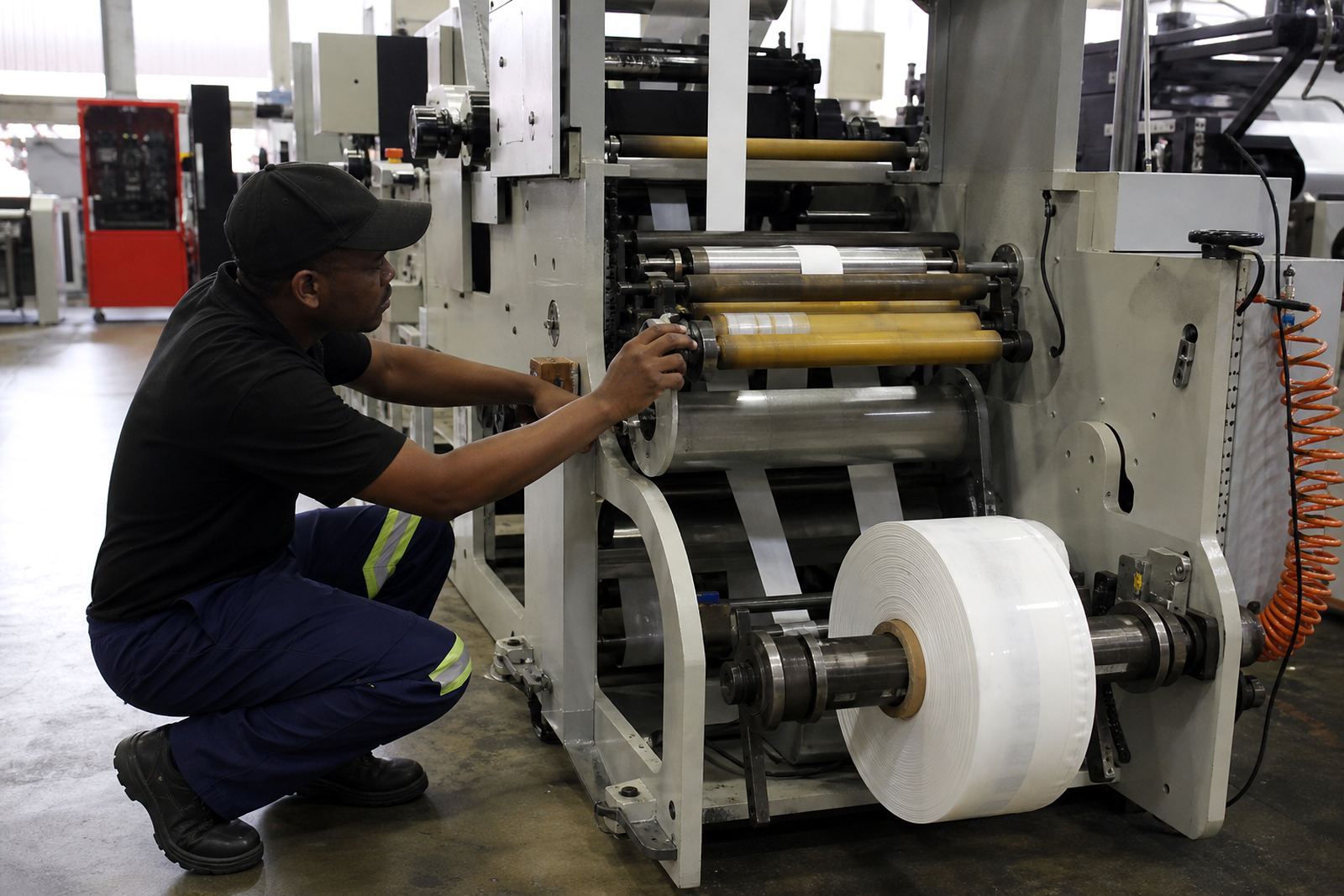
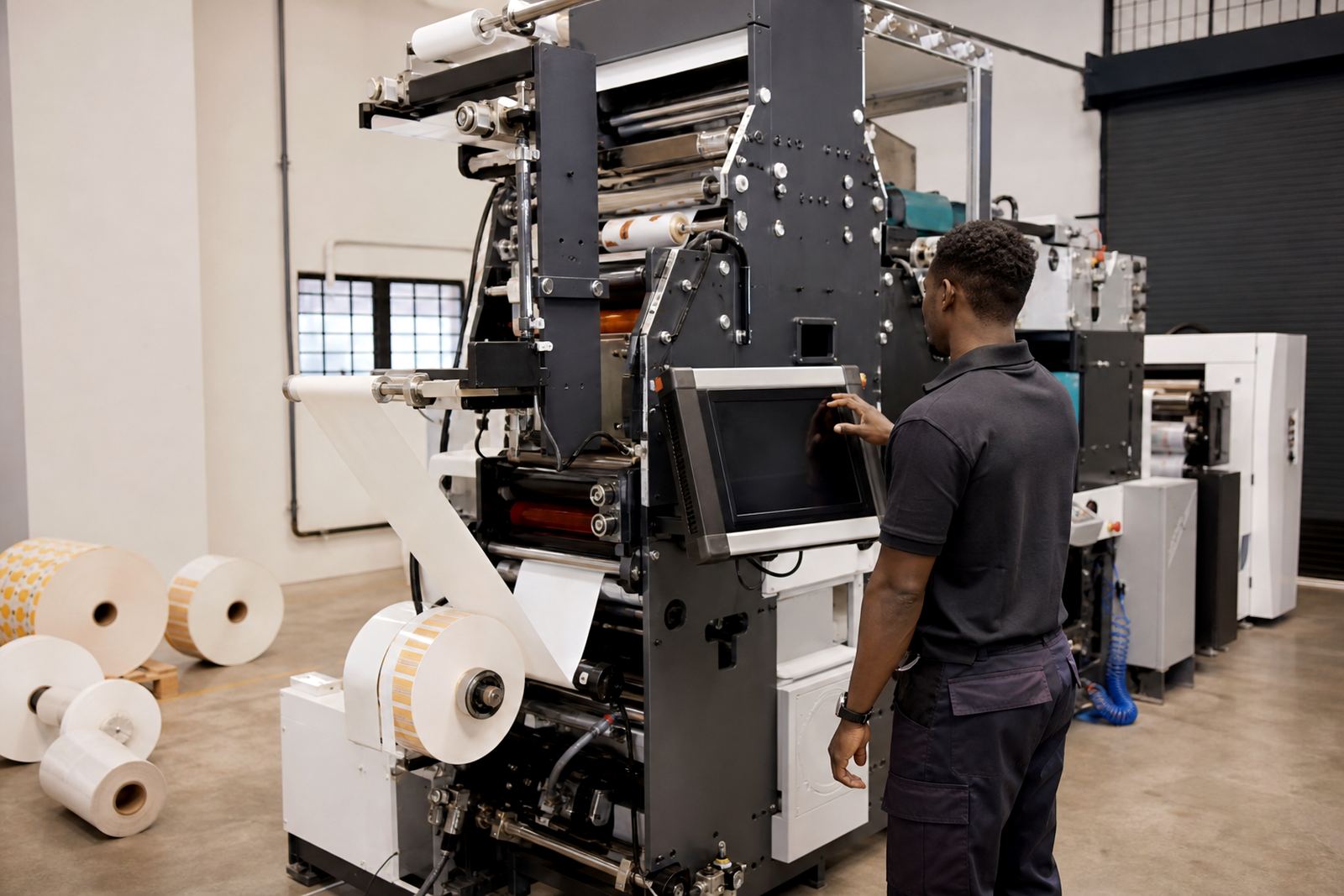
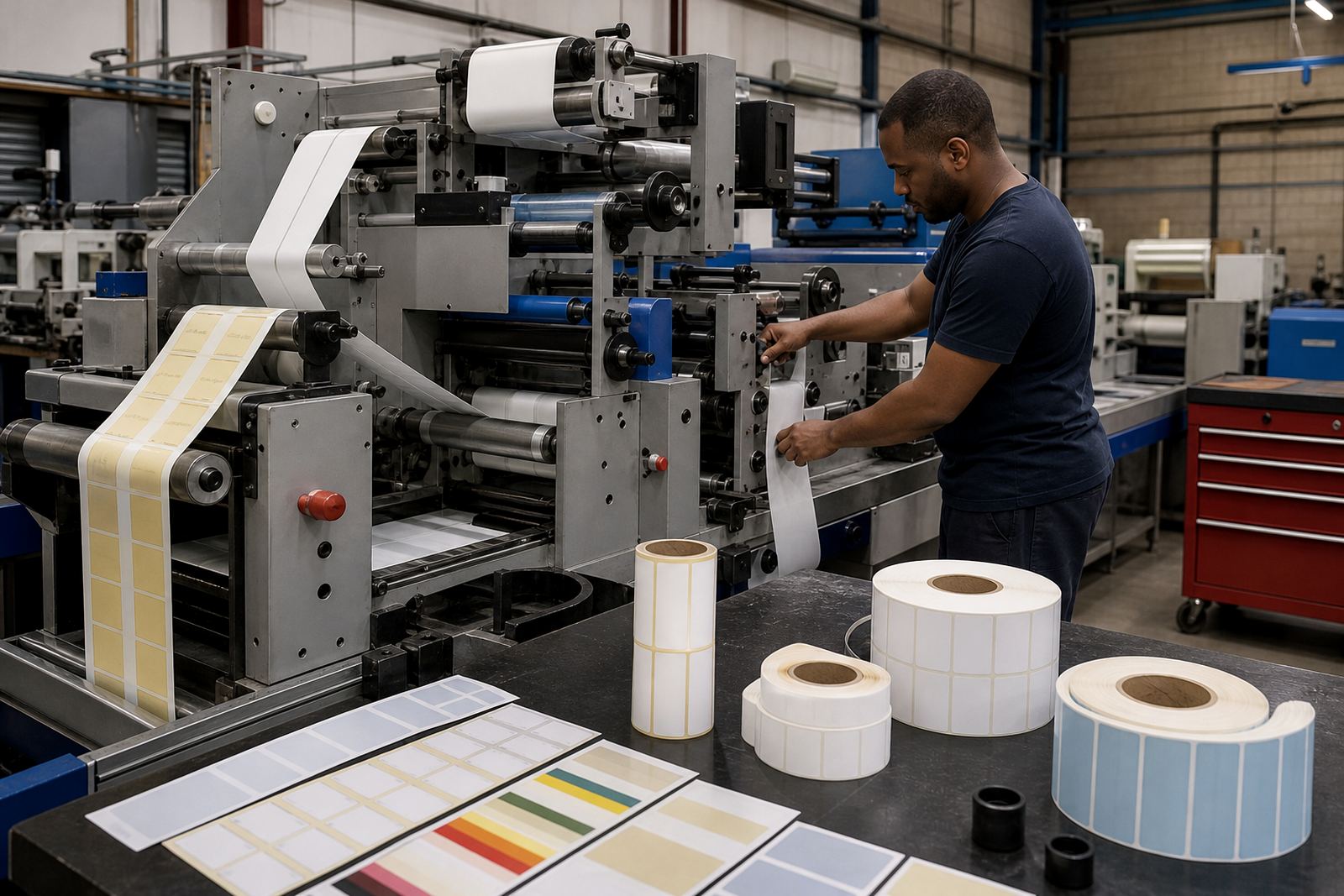
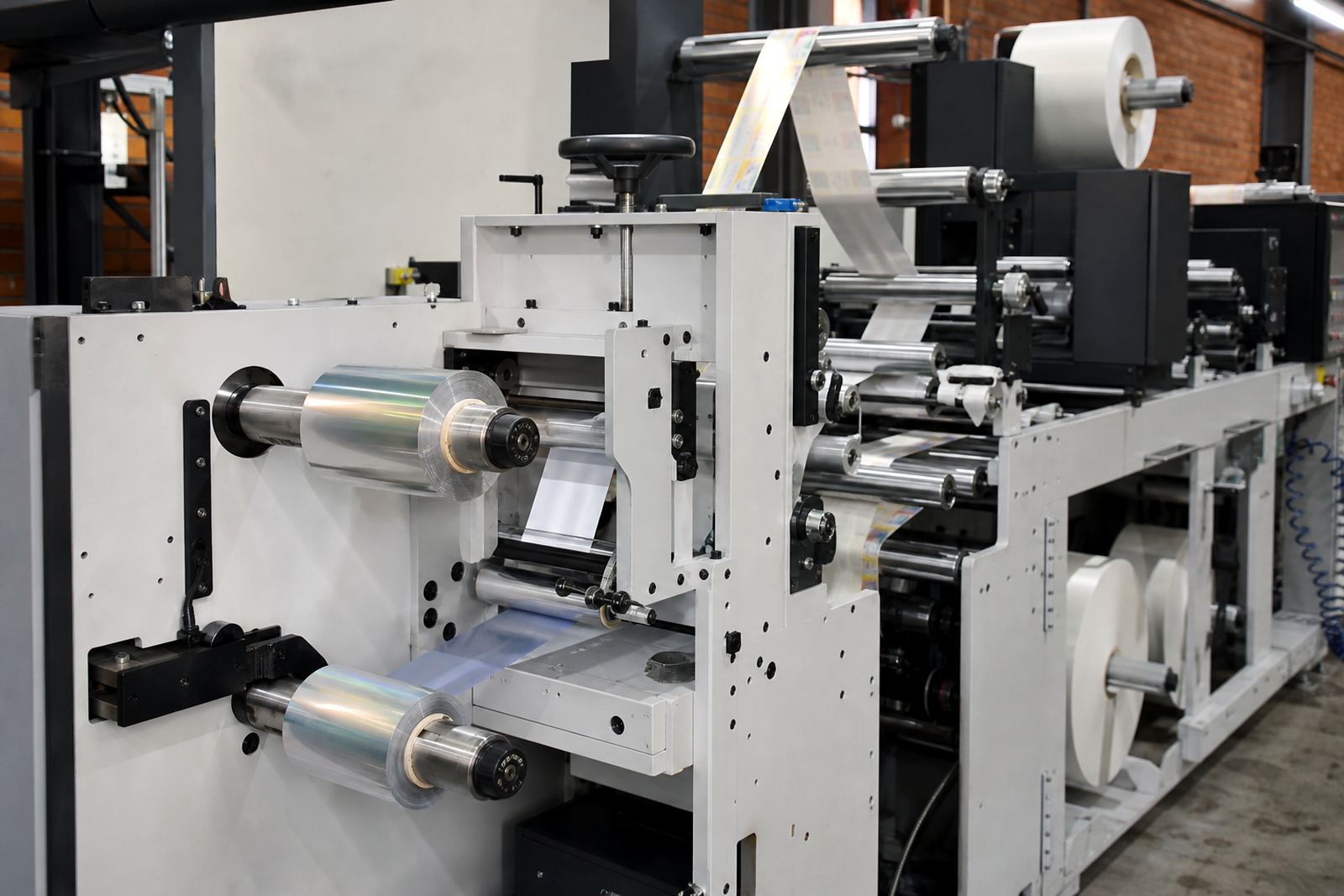
A cold foil unit is an inline module fitted to a narrow-web flexo press so metallic decoration can be applied during the print run. The foil is transferred to the web with adhesive and pressure, then the excess carrier is removed, leaving the design on the label or pack face. It is commonly used for brand accents, fine line detail and short decorative elements where a shiny finish is needed without running a separate finishing step.
For label converters in Johannesburg, Pretoria, Durban, Cape Town and Gqeberha, this is a practical option when the customer wants a premium look on food, beverage, cosmetics, household and retail labels. It works best where repeatability matters and where the pressroom needs to keep production moving, especially during long shifts or when load-shedding puts pressure on turnaround times.
The module sits in line with the press and the rest of the setup needs to be stable, because foil transfer depends on web tension, registration and consistent adhesive laydown. A well set unit can handle fine type, borders and small brand marks with good edge definition, but it still needs correct setup and careful finishing adjustments.
Common sizes, web widths and build options
Cold foil units are normally selected to match the press format, the web width and the type of labels being produced. Narrow-web installations are often chosen for converters that need flexibility across short to medium runs, with changeover speed and clean registration taking priority over heavy-duty embellishment work.
Typical options include:
- Web widths matched to the press in use, commonly for narrow-web label production
- Station layout that allows the unit to run inline with printing and finishing
- Foil unwind and rewind arrangements suited to the available press space
- Adjustable web guides for better tracking on lightweight label stocks
- Compatibility with pressure-sensitive label work and selected packaging films
- Optional controls for tension, registration and start stop response
For buyers in Spartan, Kempton Park and across the East Rand, space in the pressroom is often a deciding factor. The footprint, access for roll changes and room around the infeed and outfeed should be checked before ordering, along with the height needed for loading and service access. If the unit will be used near other inline finishing equipment, make sure the total line length still suits the floor plan.
Where cold foil suits label work in South Africa
Cold foil is a good fit where the label needs a premium finish but the converter still wants practical production. It is commonly used for wine and spirits labels, personal care ranges, promotional retail labels and higher-value food packaging, provided the artwork and substrate are suitable for foil transfer.
It suits jobs that need a bright metallic effect on logos, borders or pattern work, and it can support multiple product ranges when the press is set up carefully. For Durban and other coastal areas, it is worth checking the label stock and adhesive performance because humidity can affect handling and storage. In Gauteng, dry winter conditions can also change static behaviour and web tracking, so pressroom control still matters.
- Labels that need a metallic highlight rather than full coverage
- Short and medium runs where decorative appeal matters
- Work for food and beverage, cosmetics and retail packs
- Jobs where the converter wants inline application rather than a separate process
- Print rooms that already manage flexo setup and finishing in one line
The unit is less suited to heavily textured surfaces or unstable substrates that do not hold fine detail well. Before committing, it helps to test the exact label stock, adhesive and artwork line width so the expected finish can be confirmed in real production conditions.
Installation, power and site preparation
Installation should be planned around the press model, floor space and the rest of the finishing line. A cold foil unit needs a level site, clear access for roll handling and enough room for maintenance around the web path. In a working label plant, this is usually done during scheduled downtime so the press can be aligned properly and the setup checked from infeed to rewind.
Power and utility requirements depend on the final configuration, but the site should allow for the unit controls, drive components and any connected web handling systems. If the pressroom is already affected by load-shedding, backup planning should be discussed before installation so the line can recover safely after an interruption. Stable incoming power and correct earthing are important for repeatable results and safe operation.
Some installations may also need compressed air for certain controls or auxiliary functions, depending on how the line is specified. The final requirement should be confirmed at order stage, together with the available supply on site in Kempton Park, Pretoria, Durban or wherever the unit will be installed. The service team should also check access for cable routing, guarding and emergency stops before handover.
Setup, operator training and production support
Good foil results depend on setup as much as on the equipment itself. Operators need to understand web threading, registration, pressure setting, foil feed, start-up checks and how to spot early signs of poor transfer. A rushed setup can cause waste, weak detail, lifting or patchy coverage, especially on smaller type and fine lines.
Training should cover the full daily routine, not only the first run. That includes web path checks, tension changes, plate and substrate considerations, foil break handling and cleaning between jobs. In a busy plant, the ability to reset quickly after a stop can save a lot of material and time.
- Operator training for start-up, running and shutdown
- Production support during first jobs after installation
- Remote support for fault finding and process questions
- Breakdown support when the line stops unexpectedly
- Spare parts support for wear items and service components
Our team works from Spartan, Kempton Park and supports converters across South Africa, including Johannesburg, Pretoria, Durban, Cape Town and Gqeberha. That includes press installation, commissioning, finishing setup and production consulting, with practical help for shops that need to keep output moving across changing job mixes.
Care, servicing and what to check before ordering
Cold foil units need regular attention to stay reliable. Cleaning the web path, checking rollers and guides, keeping adhesive build-up under control and watching wear on tension-related parts will help protect finish quality. In coastal towns, where salt air can affect exposed metal parts, routine cleaning and inspection become even more important. Inland, dust and paper fibres can also collect around moving parts if housekeeping is not consistent.
Preventive maintenance should be planned alongside press servicing so the unit is checked before a problem starts. A good service routine should include alignment checks, foil path inspection, guide condition, drive condition and calibration of the controls used in daily production. If something starts to drift, it is easier to correct early than after waste has built up.
Before ordering, confirm the following:
- Press model and available mounting space
- Web width and label stock type
- Required finish detail, coverage and artwork complexity
- Power supply and any compressed air needs
- Operator experience level and training requirements
- Expected production volume and changeover frequency
It also helps to confirm whether the unit will be used mainly for decorative accents or for regular production work. That affects how the line is set up, what support is needed and which options are worth including from the start. For many converters, the best choice is the one that matches the actual job mix, not the biggest unit on paper.
Key facts
| Product type | Inline cold foil unit for narrow-web flexo label presses |
|---|---|
| Application | Decorative metallic effects on labels and selected packaging |
| Format | Configured to match narrow-web press width and web path |
| Operating need | Requires stable power and may need compressed air depending on setup |
| Use cases | Food, beverage, cosmetics and retail label work |
| Support | Installation, commissioning, training, servicing and parts support from Kempton Park |