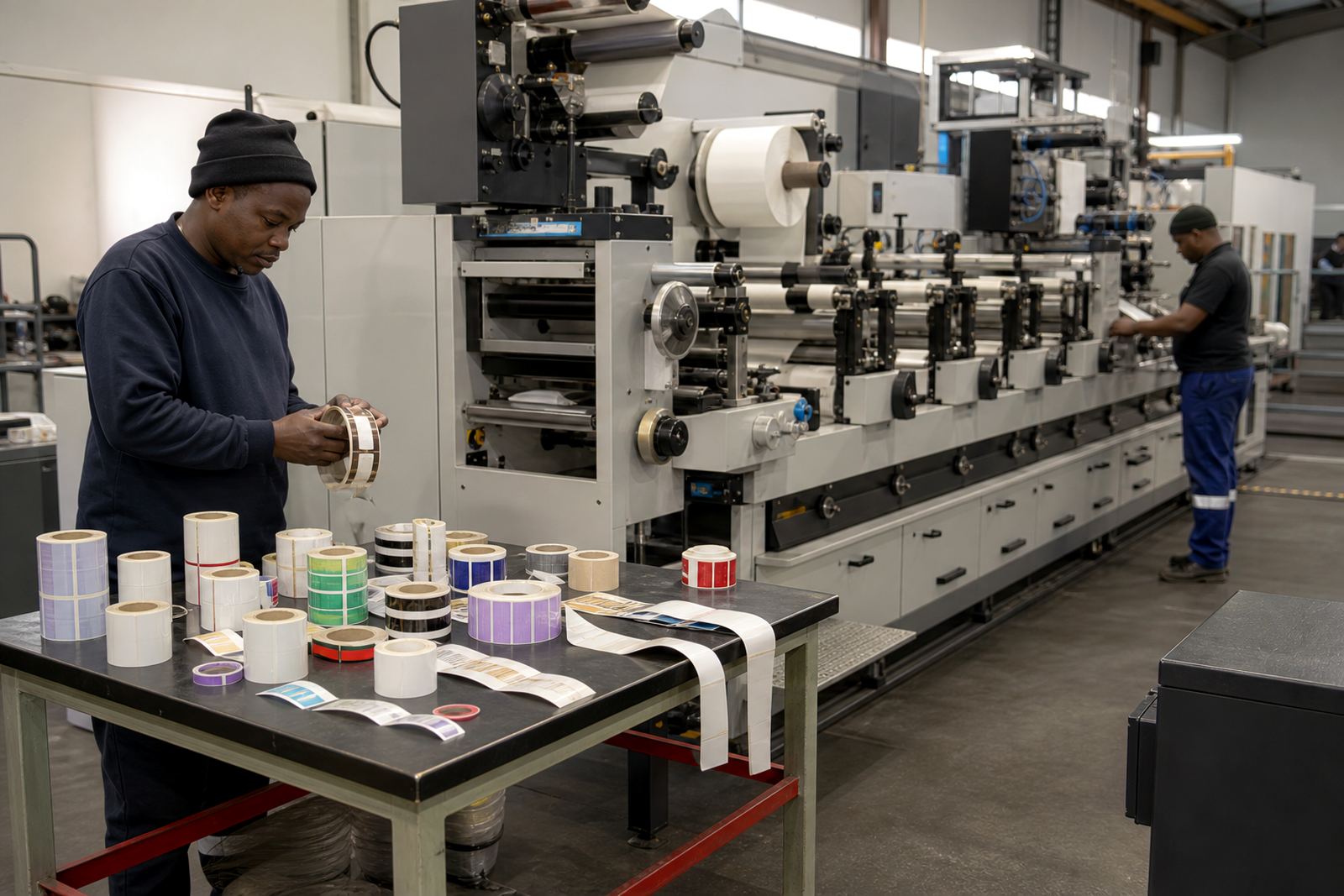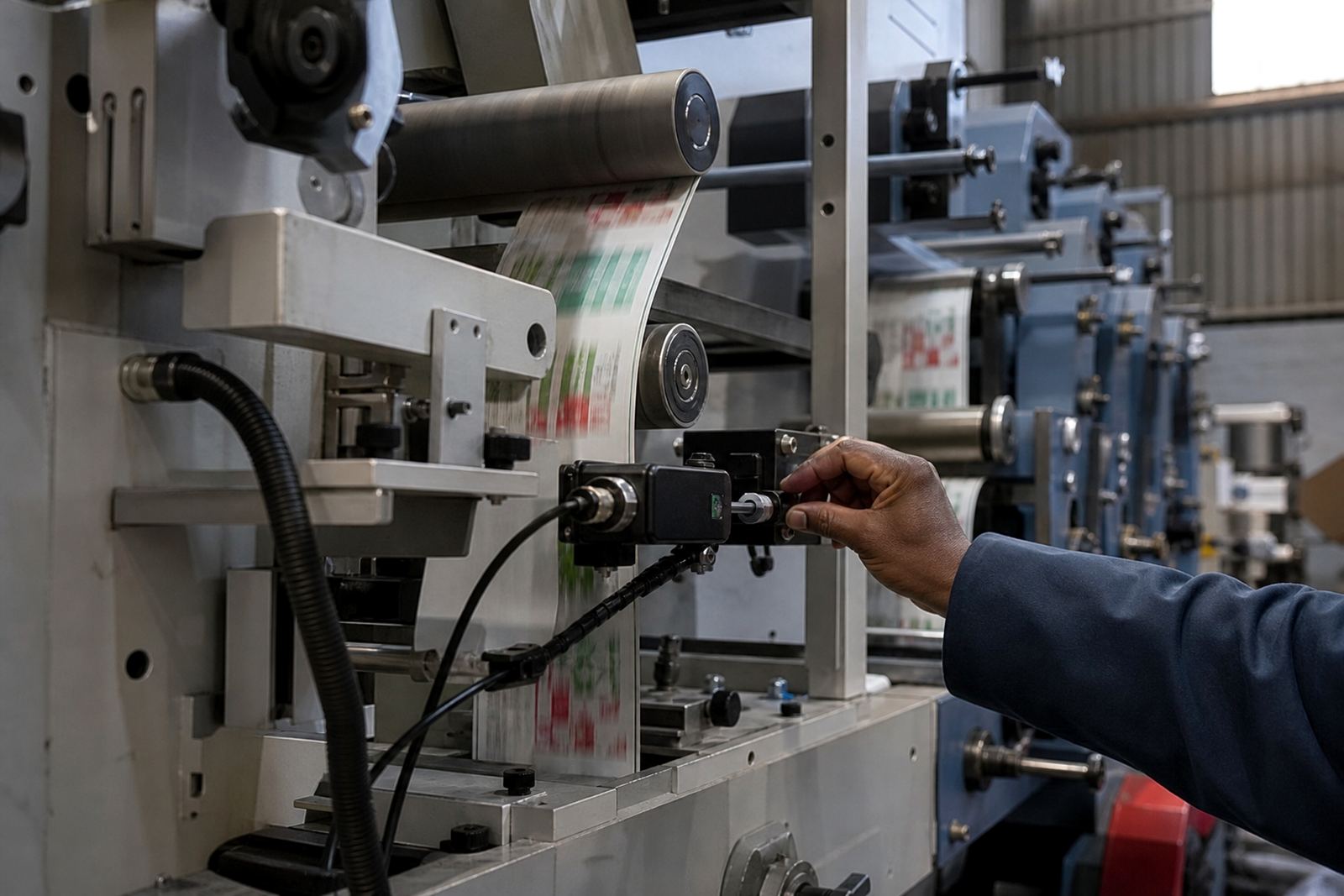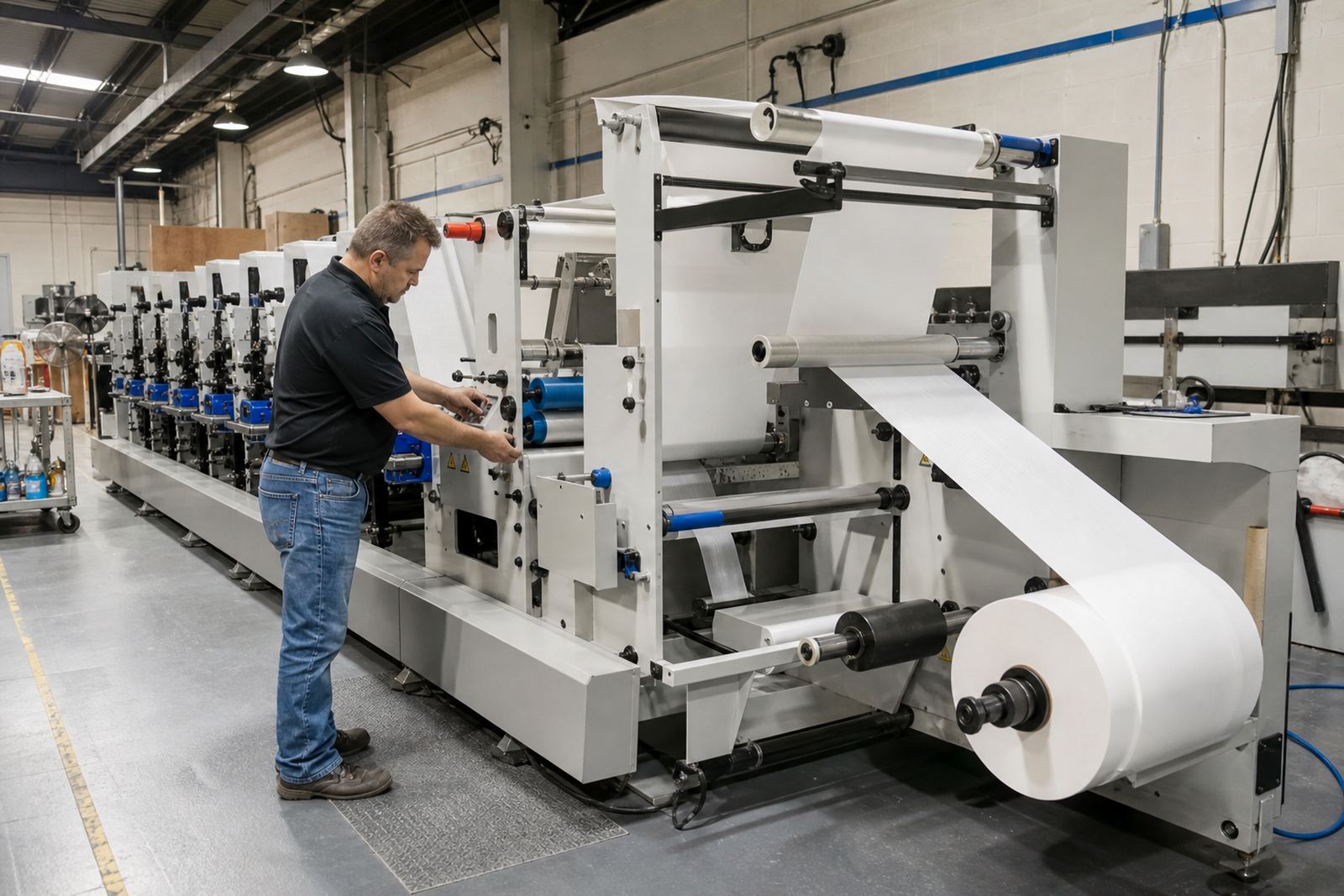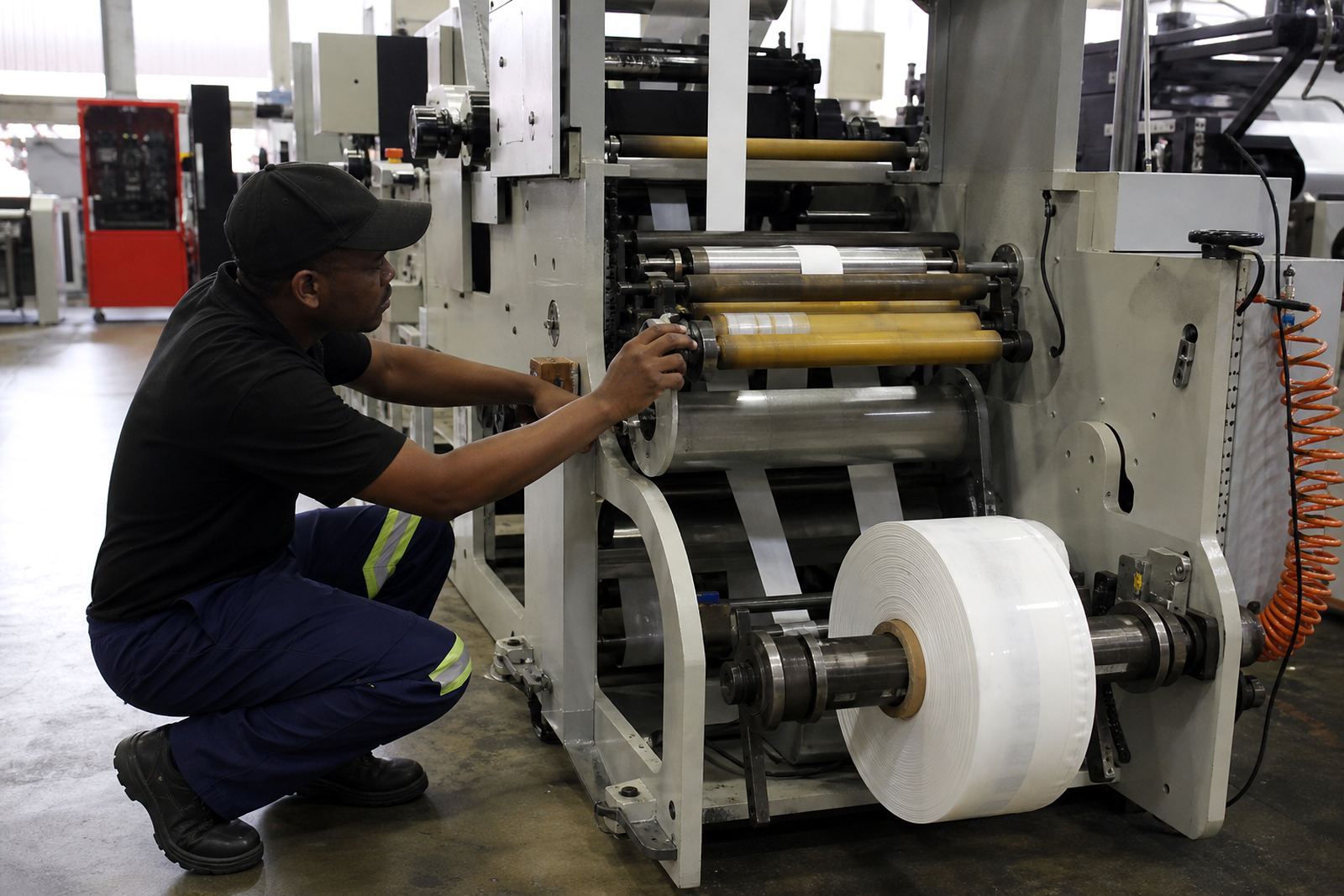
What a corona treatment unit does on press
A corona treatment unit uses a controlled electrical discharge to raise the surface energy of a web before print, laminating or further converting. On narrow-web flexo lines, this is often needed for films such as PE, PP, PET and similar materials where untreated stock can resist ink and coating adhesion. The unit sits inline or as a pre-print station, depending on the press layout and the material path.
For label converters in Gauteng, KwaZulu-Natal, the Western Cape and the Eastern Cape, this is a practical way to improve print consistency on demanding materials. It is not a cure for poor substrate choice or bad storage though, so it works best when the material, inks and drying set-up are selected properly.
Sizes and options for narrow-web presses
Corona units are usually matched to the press web width, material type and production speed. In narrow-web work, that means looking at the active treatment width, roller layout, mounting position and whether the unit is meant for one-sided or two-sided treatment. Some presses only need a compact unit for entry or exit treatment, while others need a full-width arrangement with easier access for maintenance.
- Inline or stand-alone configuration
- Single-side or dual-side treatment options
- Air-cooled or water-cooled arrangements, depending on duty and site conditions
- Fixed or adjustable electrode position
- Interlock and safety monitoring options for press integration
We normally check the web path, substrate range and available space before recommending a set-up. That matters in busy plants where the press room is tight and stoppages cost money.
Where the unit suits best
This treatment is common on label presses that run wine labels, food labels, cosmetic packs, shrink sleeves and retail packaging. It is also useful where converters switch between different film grades and need a steadier print surface from job to job. In coastal areas like Durban and Gqeberha, storage conditions and humidity can affect material handling, so treatment can form part of a broader print control plan.
It suits converters that need better ink adhesion on non-porous stock, cleaner overprint results, and improved downstream performance for varnishing, laminating or die-cutting. If a plant is running through load-shedding, the unit must still restart safely and consistently after power returns, so the control setup needs proper checks from the start.
- Flexible packaging and label production
- Short-run and repeat-run conversion work
- Materials that need surface preparation before printing
- Sites that want fewer adhesion complaints and cleaner finishing
Installation, power and site requirements
Installation should be planned around the press frame, earthing, ventilation and electrical supply. A corona unit must be mounted securely and aligned correctly with the web path so the material runs evenly through the treatment zone. The electrical supply must suit the unit and the press room should have enough space for access, cleaning and safe guarding.
Typical requirements are a suitable mains supply, a proper earth connection, and enough extraction or ventilation where the unit sits close to the operator side. Some set-ups also need compressed air for ancillary controls or cooling functions. We check the site first, because a neat installation on paper can become awkward once the machine is standing in Spartan or in a packed production bay in Pretoria.
- Correct web alignment and roller entry
- Safe access for operator inspection
- Electrical isolation and emergency stop integration
- Ventilation and cooling allowance where required
Care, cleaning and servicing on the floor
Like any press accessory, a corona unit needs routine care to keep performance steady. The electrodes, rollers and guards should be checked for contamination, wear and signs of arcing. Dust, ink mist and adhesive residue can build up over time and reduce treatment consistency. If the unit is left dirty after long runs, you can get patchy adhesion on the next job, so the clean-down schedule matters.
Preventive maintenance should include inspection of cables, earthing points, cooling paths and safety interlocks. Operators should know what normal discharge looks and sounds like, and when to stop the press. Our support teams in Kempton Park, Johannesburg, Pretoria, Durban, Cape Town and Gqeberha can assist with breakdown support, remote checks and scheduled servicing.
- Clean treatment heads and nearby rollers regularly
- Check for scorch marks, ozone smell or uneven discharge
- Inspect earth connections and safety interlocks
- Replace worn parts before they affect output
What to check before you order
Before ordering a corona treatment unit, confirm the press make-up, maximum web width, substrate range and the print and finishing process that follows treatment. You should also know whether the line runs monolayer film, laminated stock or paper-based material, because that affects the treatment requirement. If the unit is being fitted to an existing press, check available space, control compatibility and whether any guarding changes are needed.
It also helps to confirm the plant conditions and operator workflow. For example, do you need a unit that is easy to clean between jobs, or one that can run long shifts with less intervention? Is the press room affected by dust, coastal humidity, or frequent power dips? Those details shape the right choice, and they matter just as much as the headline specs.
- Web width and press speed
- Substrate type and treatment requirement
- Mounting space and access for servicing
- Electrical supply and control integration
- Operator cleaning and changeover needs
Key facts
| Product type | Corona treatment unit for narrow-web flexo and label converting lines |
|---|---|
| Use | Surface preparation for improved ink adhesion and downstream finishing |
| Application width | Matched to press web width and treatment zone requirement |
| Mounting | Inline or pre-print set-up, depending on press layout |
| Utilities | Electrical supply, correct earthing, and ventilation or cooling where required |
| Support | Installation, commissioning, operator training, maintenance and breakdown assistance |