Anilox Care for Cleaner Ink Transfer
Anilox rollers do the hard work of carrying a controlled ink film to the plate, so small handling mistakes can affect density, shade, dot gain and waste. Our anilox care service helps label converters protect roller condition from day to day wear, especially where frequent changeovers, short runs and back-to-back jobs are common.
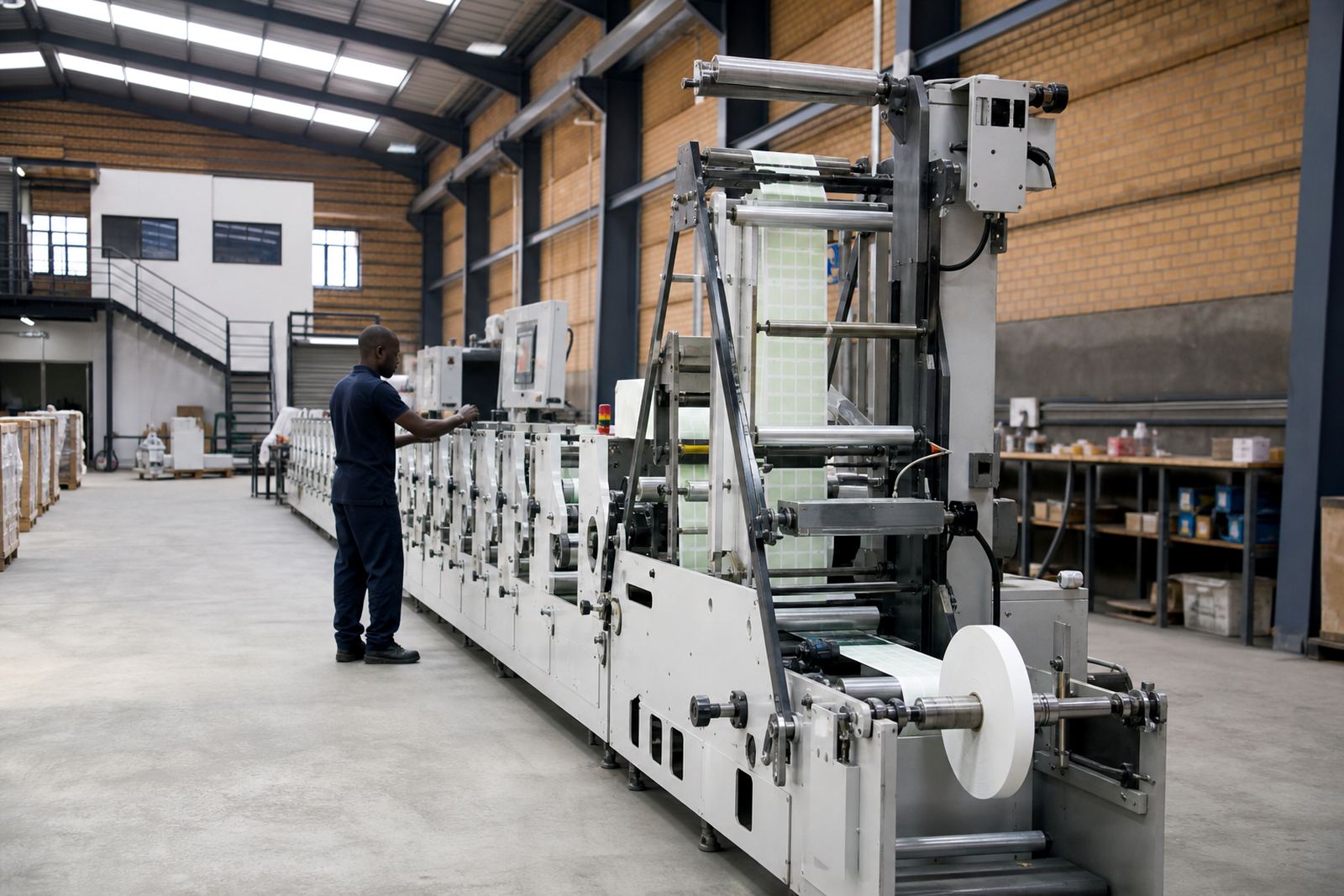
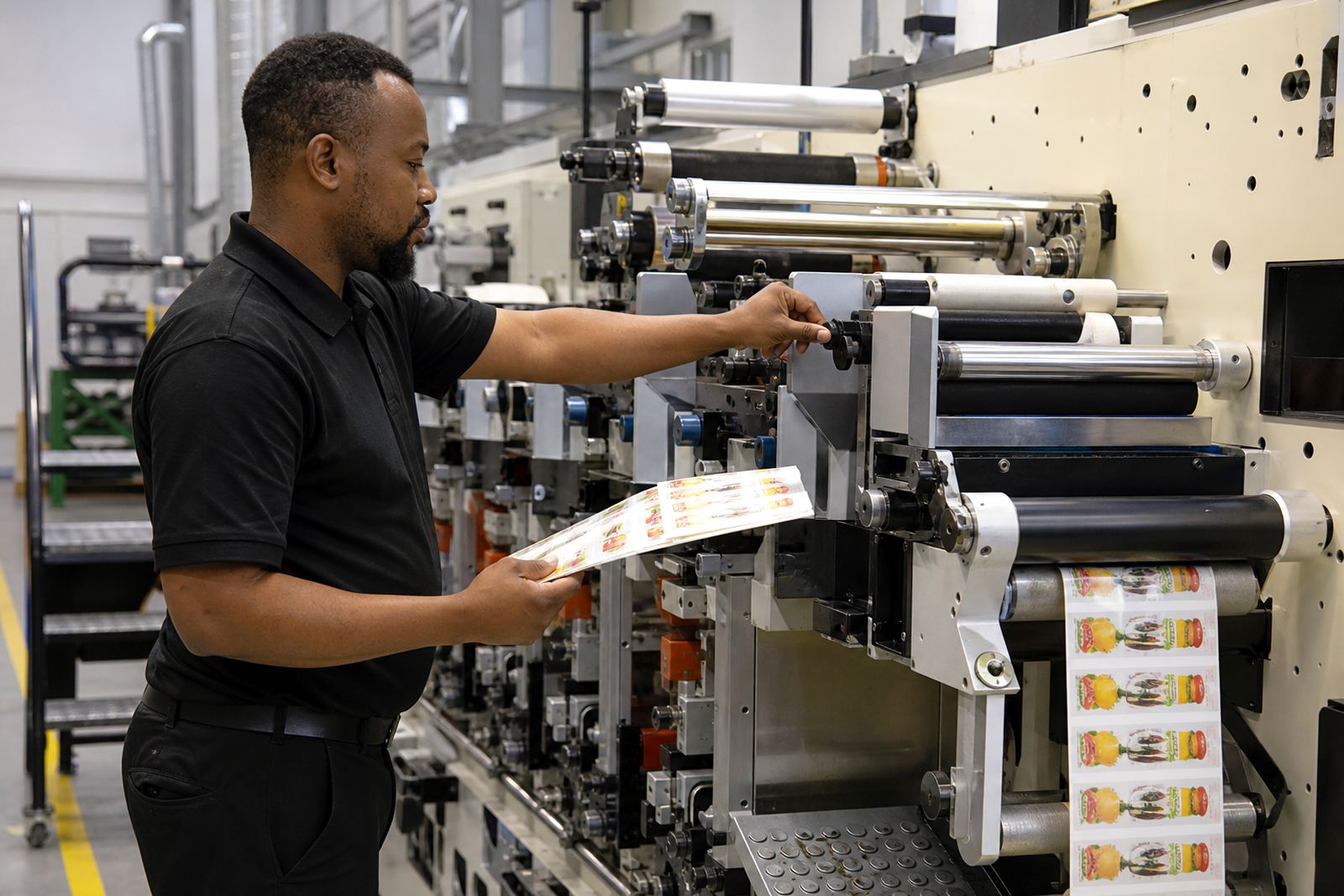
We work with narrow-web flexo label presses used for food and beverage, cosmetics, household labels and retail packaging. In Gauteng and along the coast, humidity, dust and rushed wash-ups can all shorten roller life if routines are not tight, so we focus on practical steps that fit the way your team actually works.
What the Service Covers
We provide guidance on handling, storage and cleaning routines for anilox rollers, plus support that helps your operators protect the engraving between jobs. The aim is to keep the roller clean enough for reliable ink release without damaging the surface or blocking the cells.
- Incoming condition checks and visual inspection
- Cleaning routine guidance for daily, weekly and deep-clean cycles
- Safe handling advice for removal, fitting and movement on the press floor
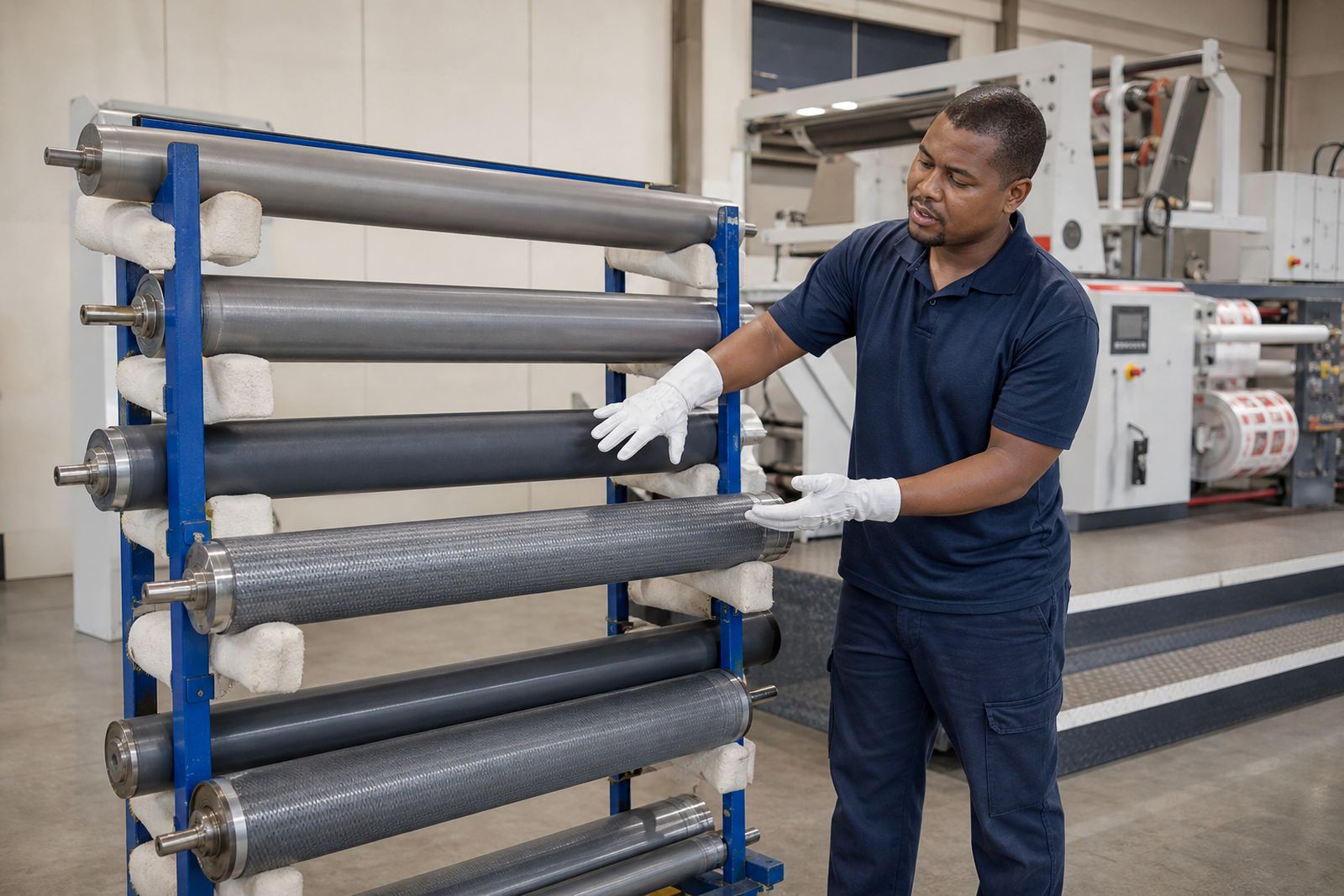
- Storage guidance for idle rollers, sleeves and protective covers
- Support with inspection logs and condition tracking
- Advice on ink, coating and adhesive build-up removal
Where needed, we also help your team review the pressroom layout so rollers are not stored near open wash stations, solvent vapours or areas where dust collects. It sounds simple, but these details matter when you are trying to keep a stable print result.
Our Step-by-Step Process
We keep the process straightforward. First we look at the current cleaning method, the age and use pattern of the rollers, and the type of inks and coatings being run. Then we check how rollers are being handled between the press, the wash area and storage.
- Site review and discussion with the production team
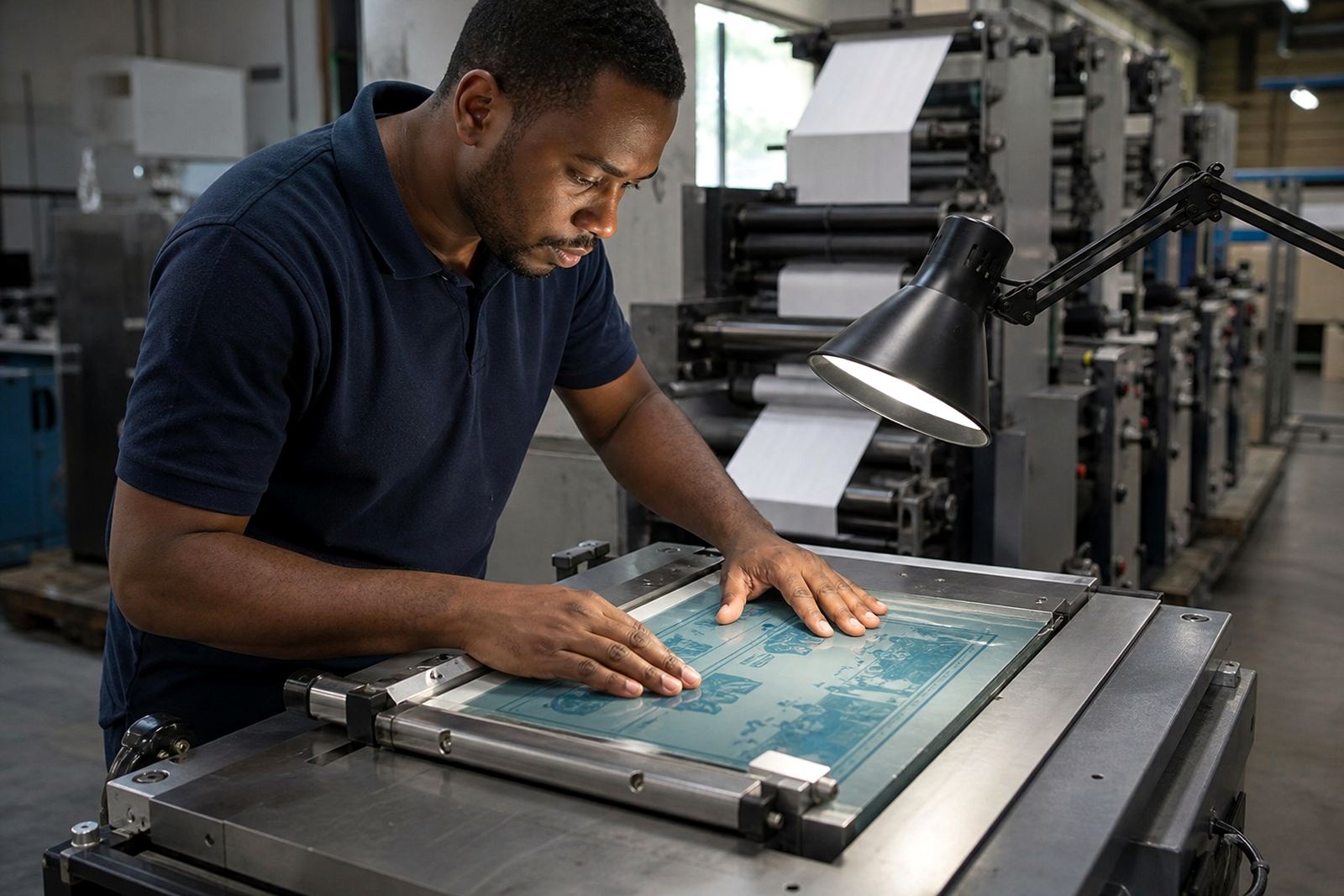
- Inspection of selected rollers for wear, blocked cells and handling marks
- Review of current wash-up products, tools and drying practice
- Practical recommendations for cleaning, drying and storage
- Operator coaching so the process is followed the same way each shift
- Follow-up support by phone or remote check-in when needed
For converter teams in Kempton Park, Johannesburg, Pretoria, Durban, Cape Town and Gqeberha, support can be arranged around production hours so the press does not sit idle. If a line is under pressure, we can focus on the most urgent rollers first and then roll out a fuller routine across the rest of the set.
Cleaning Methods That Protect the Roller Surface
The right cleaning method depends on the ink system, coating and how long residue has been left to dry. A roller that is cleaned too aggressively can lose volume or become polished in the wrong places, while weak cleaning leaves ink in the cells and affects the next job.
We guide your team on selecting the proper balance between routine wash-up and deeper recovery cleaning. That includes keeping pressure, tools and dwell time under control, and making sure rollers are fully dry before storage. In coastal areas, especially where humidity hangs around, a roller that is stored wet can start to pick up grime or show early corrosion on fittings, so dry-down is not optional.
- Use the lightest effective method first
- Avoid metal tools and hard scraping on engraved surfaces
- Check for residue under magnification where practical
- Dry and cover rollers before they go back into storage
- Separate cleaning chemicals from open rollers to prevent contamination
Storage, Handling and Training on the Floor
Good anilox care is not only about cleaning, it is also about how the roller is lifted, carried and stored between jobs. One knock against a frame, a bad rest position or a dusty rack can undo a lot of good work, and these small issues add up over time.
We train operators and supervisors on the habits that prevent damage, including correct lifting, protected transport, label checks and storage discipline. Training is practical and suited to the pace of narrow-web production, with enough detail for new staff but still useful for experienced teams. If your site runs shifts, we can help standardise the routine so each crew handles rollers the same way, even when the line is busy.
- Safe lifting and carrying methods
- Rack and sleeve storage checks
- Labelling for job history and condition notes
- Cover use during idle periods
- Shift handover checks for rollers still in circulation
Turnaround, Support and Pricing Approach
Turnaround depends on whether you need advice, a condition review, operator training or a corrective visit after a recurring print issue. For many sites, we can start with a remote discussion and then schedule an on-site visit where the pressroom needs closer inspection.
Pricing is quoted according to the scope of work, number of rollers reviewed, travel location and whether training or follow-up support is included. We keep it practical and transparent, so you know what you are paying for before the work starts. For routine support, many converters prefer a planned maintenance interval rather than waiting for a print problem to show up mid-run.
As a rule, anilox care should be reviewed whenever you change cleaning chemicals, add new substrates, see colour drift, or notice longer wash-up times. On busy narrow-web lines, a monthly or quarterly review is common, while sites with high turnover or coastal exposure may need tighter checks.
Why Converters in South Africa Use This Service
Label converters do not all run the same mix of jobs, but they all need consistent ink transfer and predictable press performance. That is where anilox care pays off. A roller that is looked after properly helps reduce waste, shortens make-ready time and keeps finishing work moving without unnecessary reprints.
From Spartan in Kempton Park, we support teams across Johannesburg, Pretoria, Centurion, the East Rand, Durban, Cape Town and Gqeberha. Whether your business is dealing with load-shedding, seasonal humidity or tight turnaround dates, our service is built around the realities of South African production floors, not theory.
Key facts
| Service scope | Handling, storage, cleaning and inspection guidance for anilox rollers |
|---|---|
| Press type | Narrow-web flexo label presses |
| Inspection focus | Cell condition, residue build-up, surface wear, handling marks and storage damage |
| Maintenance intervals | Daily wash-up checks, weekly routine reviews and monthly or quarterly condition audits |
| Support modes | On-site visits, remote support, operator coaching and follow-up checks |
| Coverage area | Kempton Park, Johannesburg, Pretoria, Durban, Cape Town, Gqeberha and surrounding regions |