What our finishing setup service covers
Finishing setup is the point where printed material must leave the press cleanly and behave properly for the next step in your line. We help set up the routines around die cutting, slitting, lamination and rewind so your labels arrive in the right format, with fewer web breaks, less waste and less rework. The service is suitable for narrow-web flexo label presses used in food, beverage, cosmetics, household and retail work.
Our support is practical. We look at the running order, the substrate, the adhesive system, the rewind direction and the pack style you need at the end of the job. If the line is moving between short runs, repeat work or seasonal labels, we help the team get back to a consistent setup quicker. That matters when load-shedding interruptions, humidity near the coast, or a rushed changeover can throw the line off by a few minutes and cost a lot more than people expect.
- Die cutting setup routines for clean release and consistent cut depth
- Slitting setup for trim control and repeatable roll widths
- Lamination setup for smooth laydown and correct tension
- Rewind setup for roll build, core fitment and roll finish
How we approach setup on your line
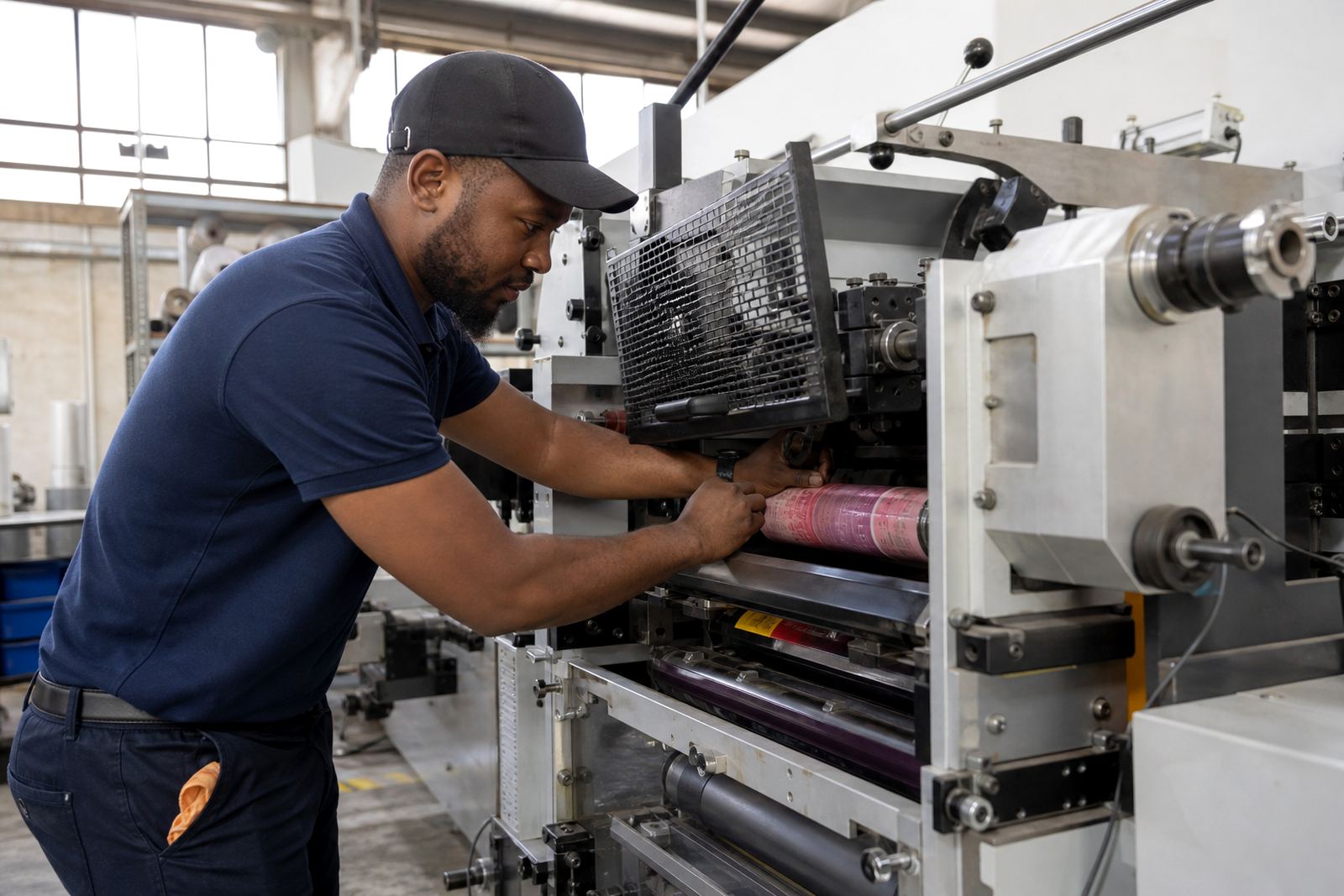
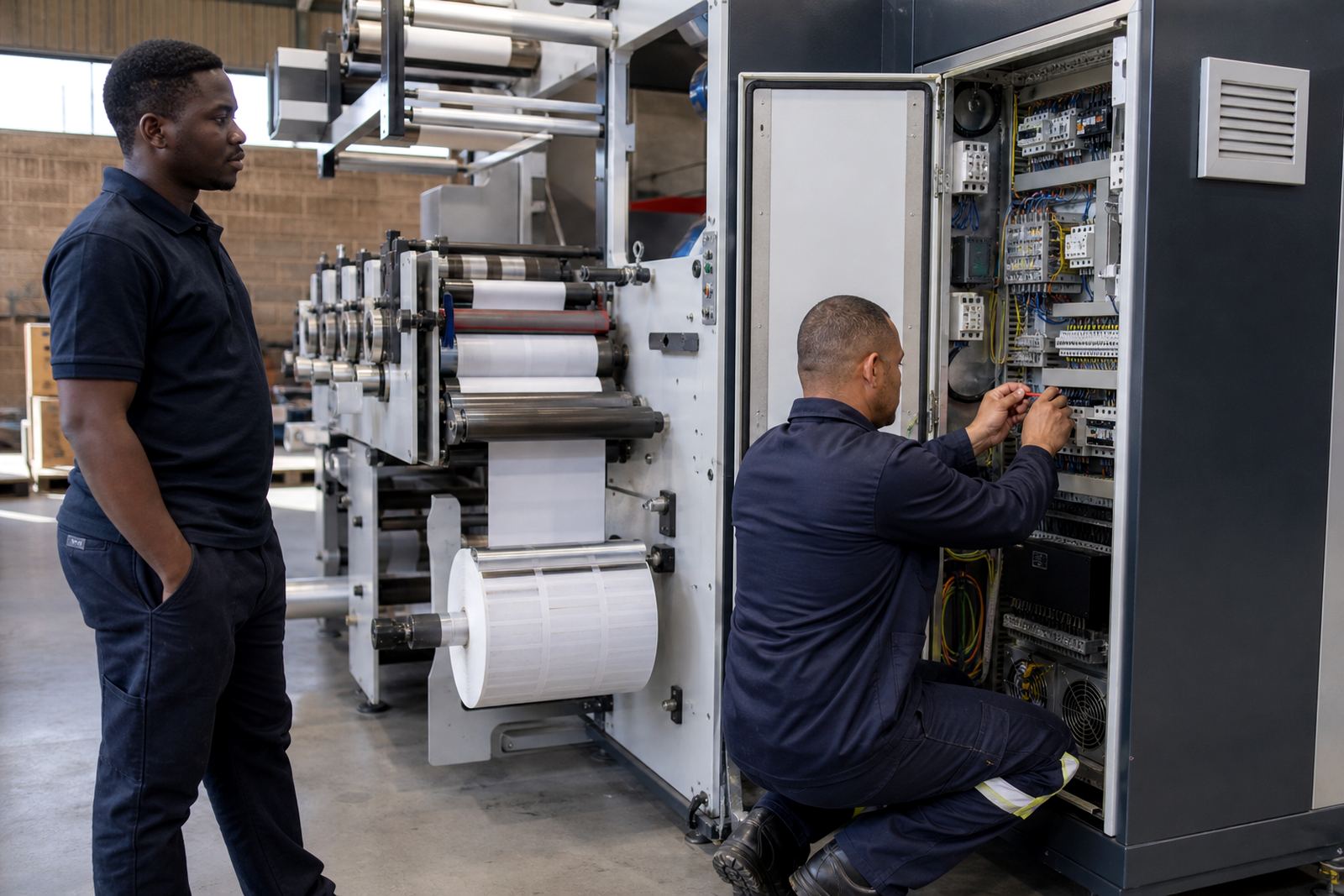
We start with the job brief and the condition of the press, finishing unit and rewind path. Then we check the practical points that affect the run: web tension, guide settings, die pressure, blade alignment, trim removal, web path clearance and the point where the material enters and exits each station. If the press has been standing idle after a power cut, we also check for dried adhesive, dust, slack belts or minor drift before the first pull through.
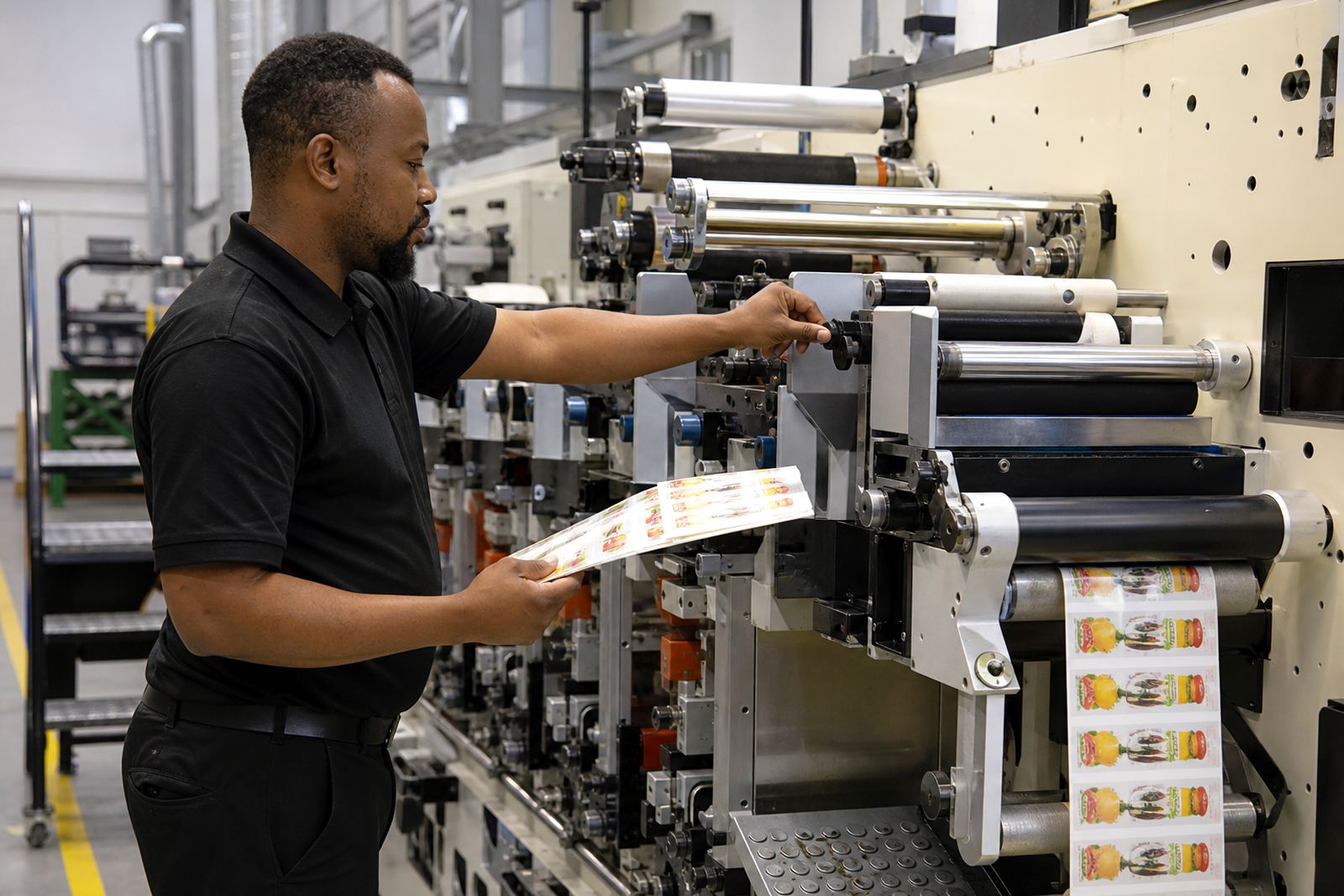
Once the line is ready, we work through setup in a fixed sequence so the team can repeat it later. That usually means setting the web path first, then the cutting or slitting arrangement, then lamination if the job needs it, and finally the rewind. We also watch the first samples and adjust where needed so the finished roll packs neatly and can move to packing, dispatch or downstream finishing without trouble.
- Initial inspection of the finishing unit and web path
- Step by step machine setup with the operator or shift team
- Sample checks and adjustment until the roll is stable
- Hand over of the routine used for that specific job type
Typical finishing elements we support
Every line is different, but the common finishing elements are familiar. Die cutting must release cleanly without tearing the face stock or carrying too much adhesive. Slitting needs straight edges and even roll widths, especially on narrow labels where a small drift becomes obvious on the rewind. Lamination must sit flat, with no wrinkles, bubbles or edge lift. Rewind must build evenly from core to outer layer so the finished roll stays usable in packing, on applicators or in the next conversion stage.
We also help with the small but important details that often get missed in a hurry, like core size checks, trim handling, static control and the way the roll is packed after completion. In coastal areas, humidity can change how the web behaves. In winter or after long idle periods, materials may need a different tension setting than the one used last week. We keep the setup grounded in the actual job, not assumptions.
- Core fit and rewind direction checks
- Trim path and waste handling setup
- Static and web control checks where required
- Laminate edge and surface finish inspection
Turnaround and on-site support options
Turnaround depends on the condition of the press, the number of finishing stations involved and whether the work is part of a new installation, a restart after breakdown or a changeover on an existing line. Simple setup guidance can often be done quickly, while a full finishing routine with operator coaching may take longer. We plan work to reduce disruption and fit around live production where possible.
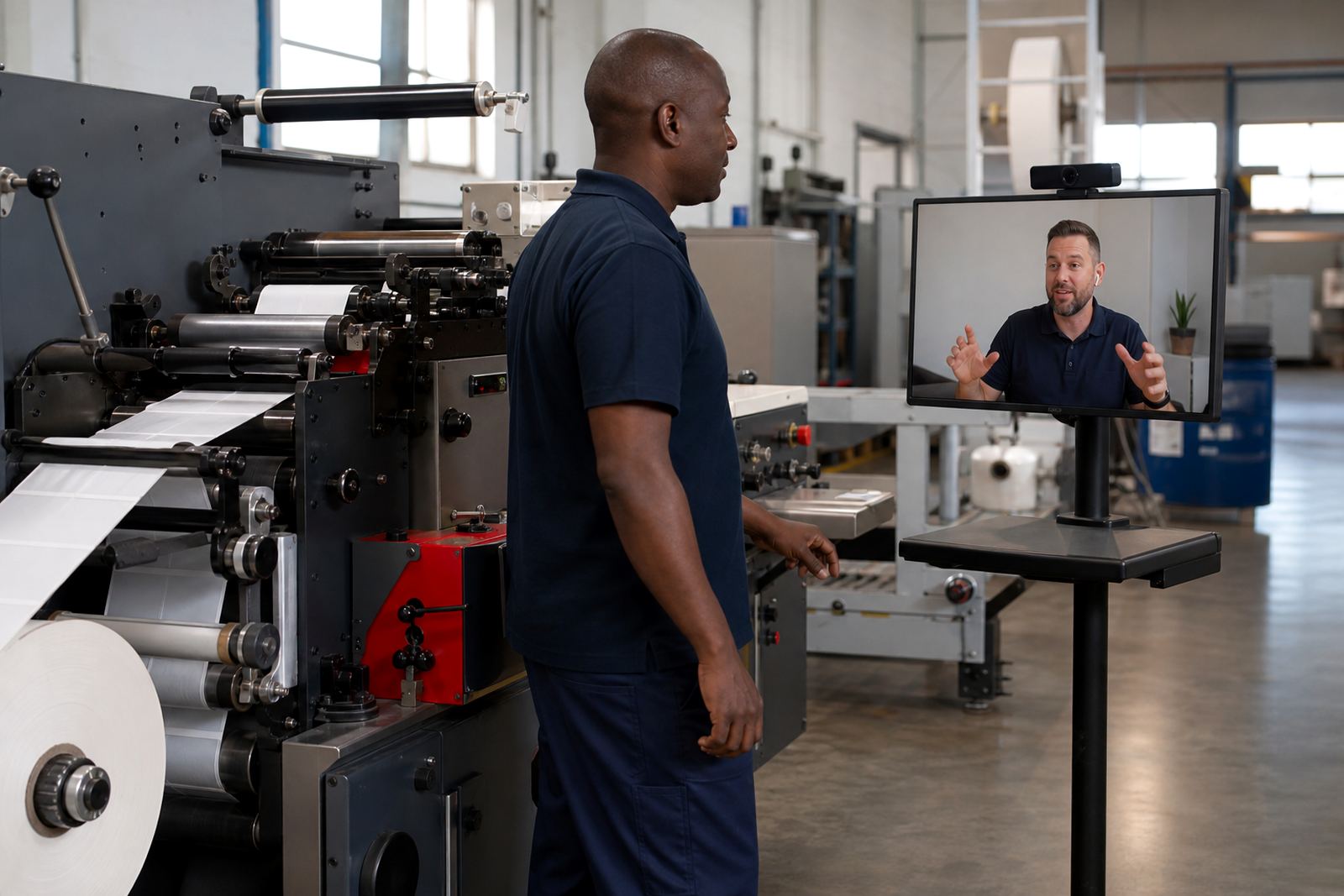
Support is available from Spartan, Kempton Park into Johannesburg, Pretoria, Centurion, the East Rand and further afield including Durban, Cape Town and Gqeberha. When a site cannot wait for a visit, remote support can help with checks, sequence guidance and fault finding before a technician is sent out. That saves time when the issue is a setting, not a failed part.
- On-site setup support for new or changed jobs
- Remote guidance for quick checks and fine tuning
- Urgent follow-up when finishing problems affect output
- Support for converters with multi shift production
Pricing approach for finishing setup work
We price finishing setup work according to the scope, travel, urgency and the amount of hands-on time needed. A focused callout for a single line change is priced differently from a full day of setup, training and follow-up. If a site needs repeat visits, we also look at whether a maintenance plan or bundled support approach will make better sense for the business.
Before work begins, we discuss the job scope clearly so the team knows what is included. That can cover setup, sample verification, operator handover and basic troubleshooting during the same visit. If extra parts are required, or the finishing unit needs more serious attention, we separate that from the setup fee so there are no surprises. The aim is simple: pay for the work you actually need, not for guesswork.
- Single visit setup or multi step support available
- Pricing depends on urgency, travel and machine condition
- Optional bundled support for repeat jobs or line starts
- Parts and repair work quoted separately where needed
Maintenance intervals that keep finishing steady
Good finishing results depend on routine care, not only on a one off setup. We usually recommend checking the finishing section at regular intervals based on run hours, substrate mix and job complexity. For plants with frequent changeovers, short maintenance checks can prevent small alignment issues from becoming a full stoppage. In busy converters, that is often the difference between staying on schedule and losing an afternoon.
Typical maintenance touches include cleaning waste paths, checking roller condition, confirming blade and die alignment, reviewing lamination pressure and looking at rewind build quality. We also advise on when to review the setup after a change in material supplier, adhesive, core size or pack format. The better the routine, the less time the operator spends correcting the same issue every week.
- Regular checks after short run cycles or heavy changeover periods
- Inspect wear points on slitting, cutting and rewind sections
- Review settings after material or pack changes
- Keep records of adjustments for future repeat jobs
Key facts
| Service type | Finishing setup for narrow-web flexo label presses |
|---|---|
| Core functions | Die cutting, slitting, lamination and rewind setup routines |
| Support format | On-site setup, remote guidance and operator handover |
| Coverage area | Kempton Park, Gauteng and major South African production centres |
| Typical use cases | New jobs, repeat runs, restart after stoppage and line changeovers |
| Maintenance focus | Alignment checks, cleaning routines, tension review and sample verification |