Remote Help for Daily Production Questions
Remote support is for label converters that need practical guidance without waiting for an onsite visit. Our team assists with narrow-web flexo label presses used for labels and packaging work, from first setup questions through to repeat faults that need a second pair of eyes. We work with sites in Kempton Park, Johannesburg, Pretoria, Durban, Cape Town and Gqeberha, and we also assist plants in smaller industrial areas when the issue can be handled by phone or online.
The service covers operational questions, fault checks, changeover advice, substrate handling, registration concerns, drying and curing checks, finishing setup and general production support. It is useful when a press is running but not quite right, or when the team needs clear steps before escalating to an onsite callout. For many converters this saves time on stoppages, especially during load-shedding, shift handovers and busy retail runs.
- Fault isolation for print, rewind and finishing sections
- Setup guidance for labels, sleeves and light packaging work
- Advice for setup changes between short and repeat runs
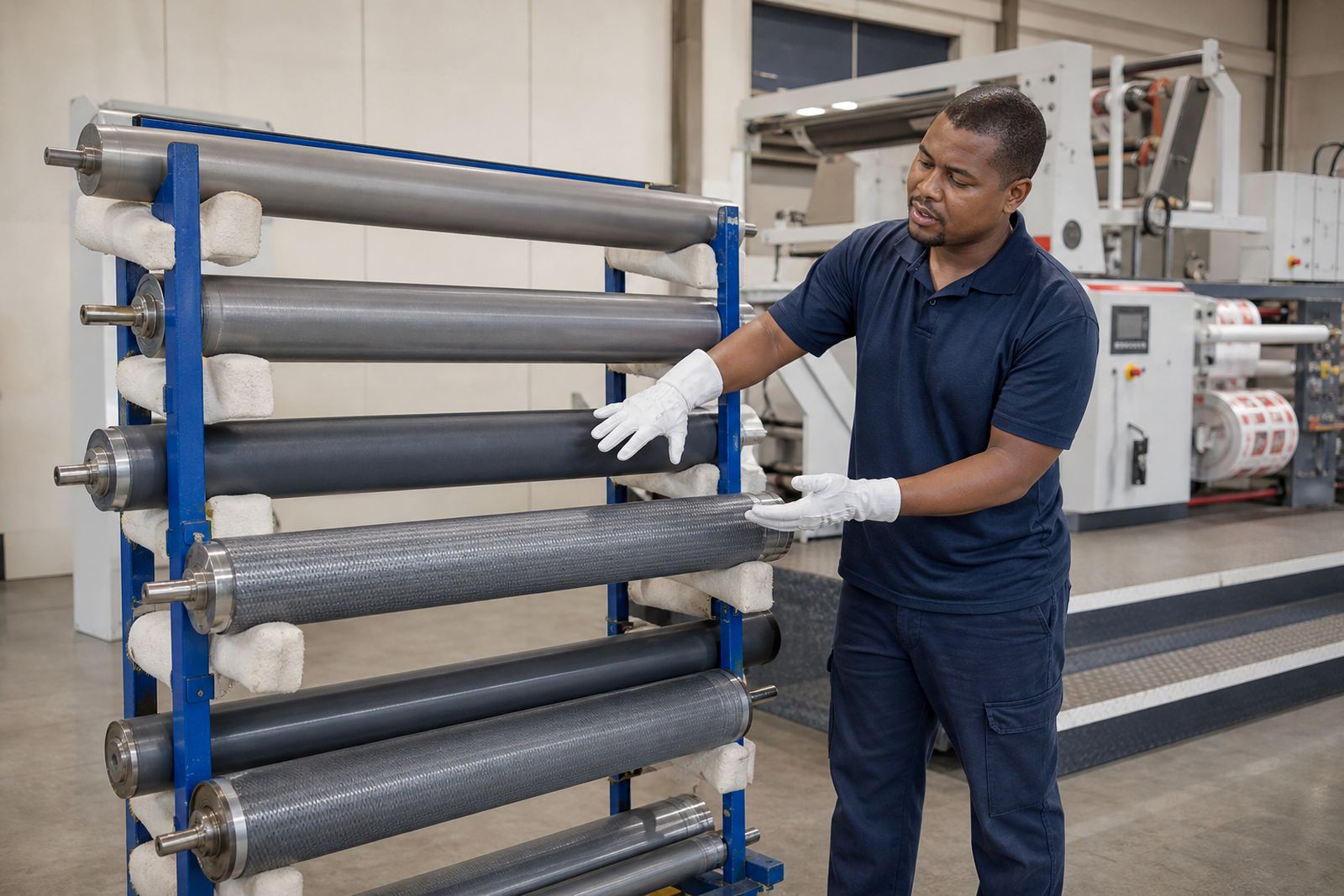
- Support for plate mounting, anilox care and ink handling
What the Remote Support Covers
We keep the support practical and focused on the machines and workflows used in South African label plants. That means we can talk through a press that is printing off-register, a web that is wandering, poor ink laydown, edge build-up, substrate curl, poor drying or a finishing issue that is affecting the final roll. We also help with startup checks after cleaning, after a plate change, or after the press has been idle for a few days.
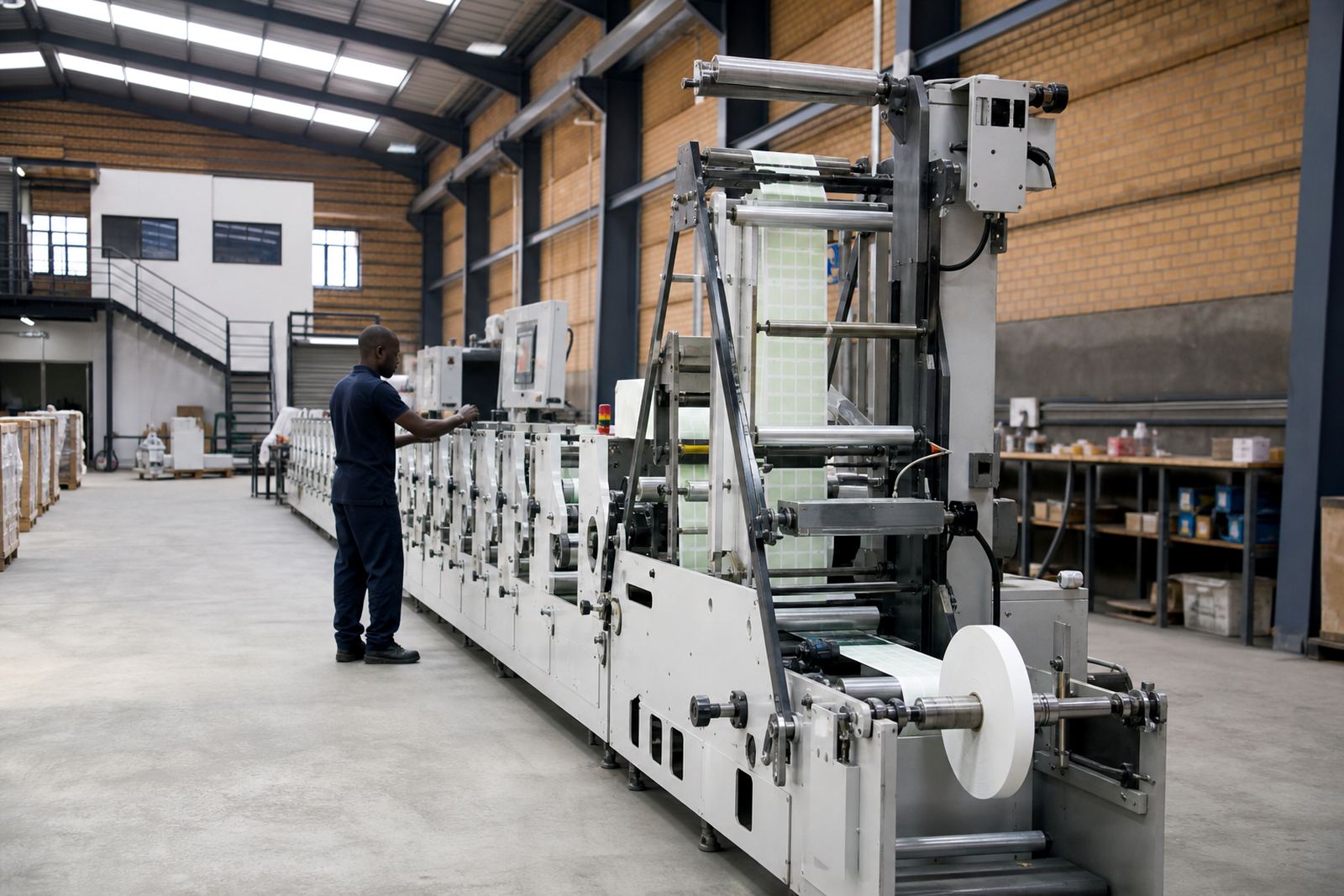
The advice is based on the kind of narrow-web flexo equipment typically used for label work, including presses with multiple print stations, web guiding, slitting, sheeting, rewinding and inline finishing sections. We do not guess. We ask the right questions, review the symptoms and guide the operator through the likely causes in a logical order. If the fault needs physical inspection, we will say so rather than keeping the team guessing.
- Operator guidance for setup and first-off checks
- Fault checks for web path, tension, ink transfer and drying
- Finishing setup help for slitting, rewinding and inspection
- Support for preventive maintenance questions and cleaning routines
How Remote Support Is Handled
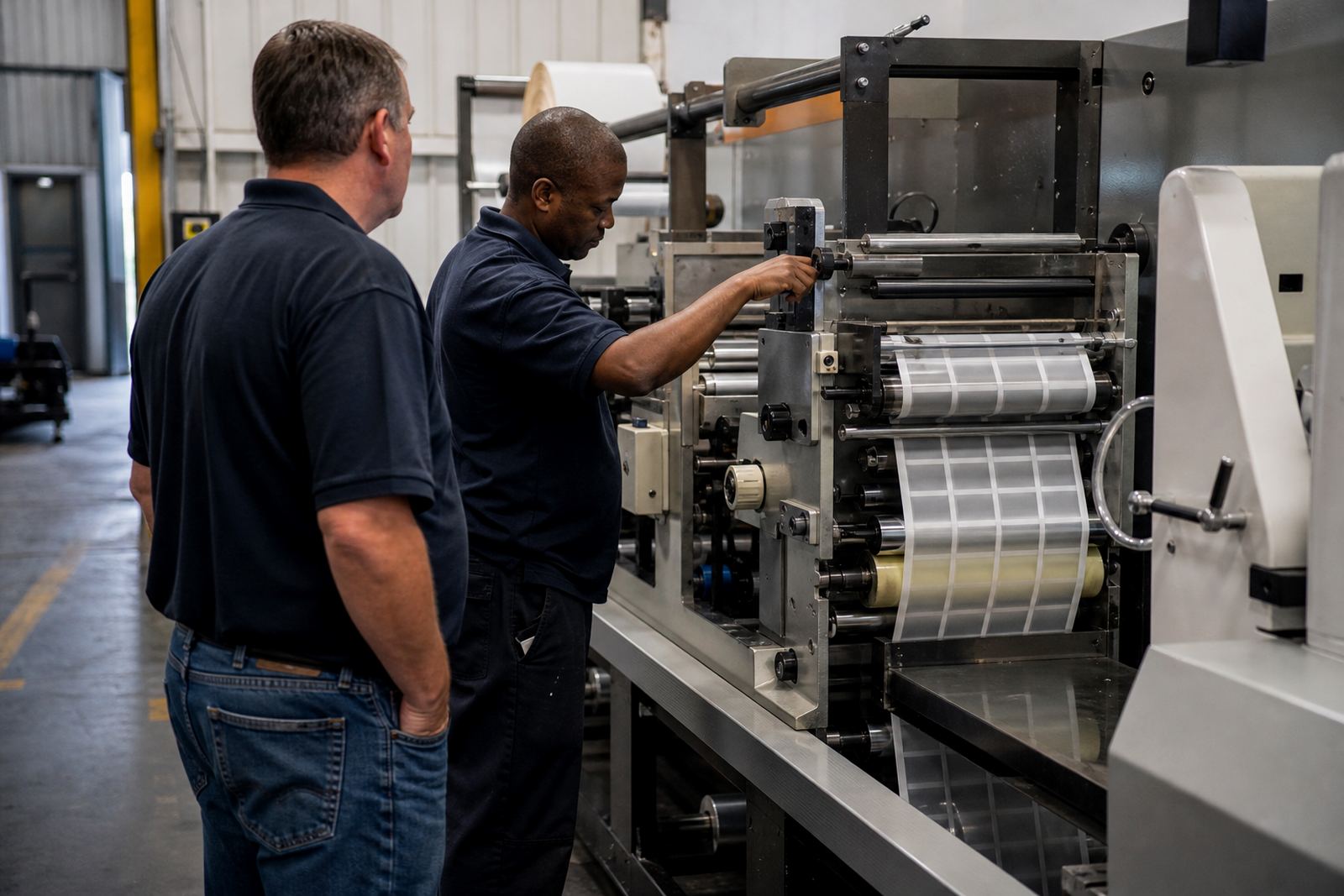
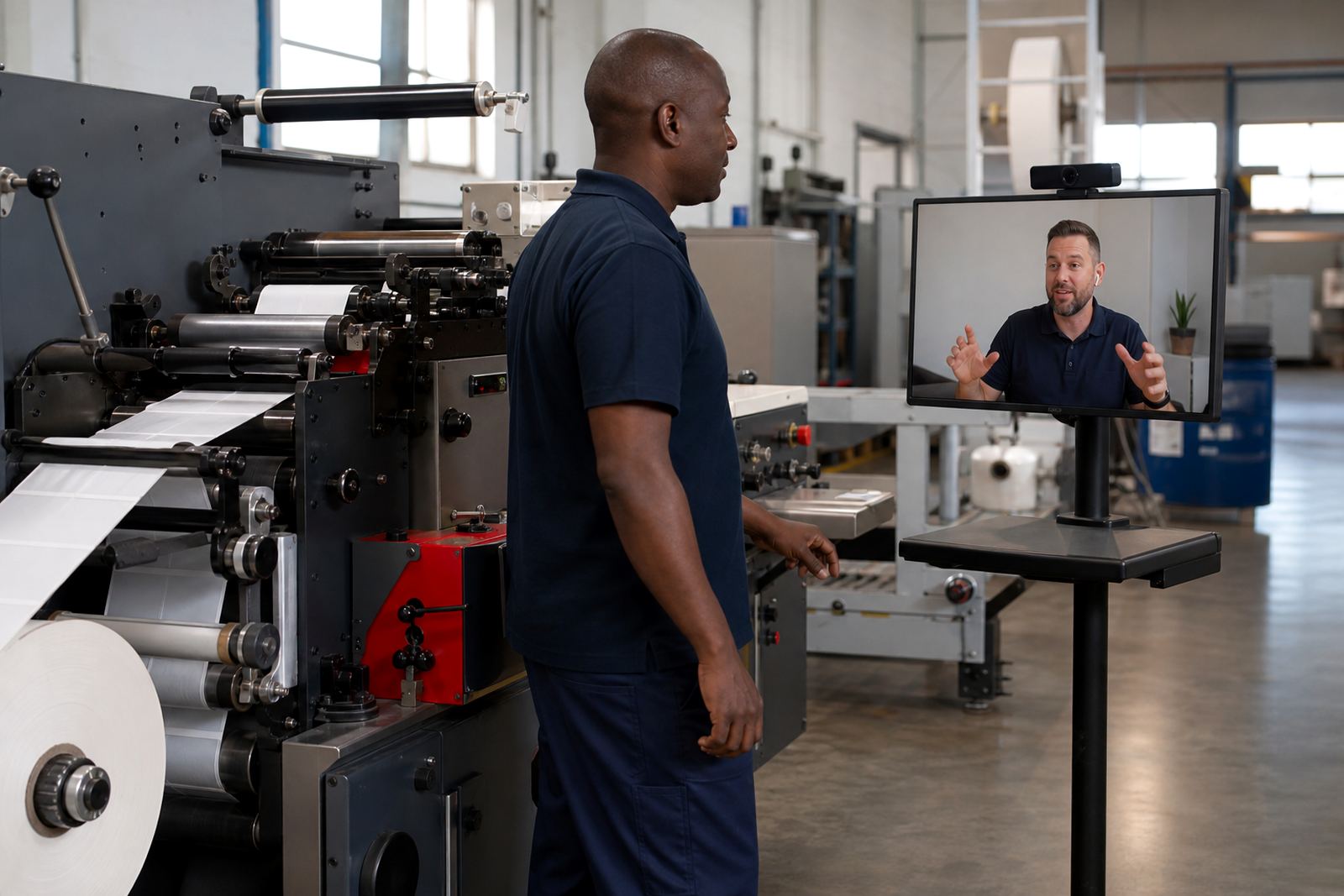
The process is straightforward. Your team sends the job details, the press model type, the material being printed and a short description of what has changed. We then work through the problem with the operator or shift leader by phone or online call. If needed, we ask for photos, short videos or readings from the machine controls so that we can narrow down the cause. The aim is to keep the conversation practical and reduce time spent on trial and error.
Most calls are handled in steps. First we confirm the symptom, then we check the setup, then we move through the press in sequence from unwind to rewind. That matters on flexo lines because one small setting can affect print, registration and finish all at once. If a site has more than one press or more than one operator on duty, we will help separate the issue from the human factor, which is often where the real answer sits.
- Step 1: Send the job and issue details through the enquiry form
- Step 2: Share photos, short clips or control readings if needed
- Step 3: Work through checks with the operator in the correct sequence
- Step 4: Decide whether the issue is solved, monitored or escalated
Response Times, Pricing and Support Scope
Remote support is priced according to the time needed and the complexity of the fault or setup issue. Simple operational questions, basic setup help and quick fault checks are handled differently from detailed process review or repeat troubleshooting across several runs. We keep the approach fair and practical, because not every issue needs the same amount of time on the call. If the matter is better handled onsite, we will say that early so your team is not paying for the wrong kind of support.
Turnaround depends on the time of day, the urgency of the stoppage and whether the issue is during a live production run. Where possible, we aim to respond during the same working day and, for urgent production problems, as quickly as the queue allows. For planned work such as startup preparation, operator coaching or maintenance planning, bookings can be arranged in advance so the team has a set time to work through the job.
- Quoted by job, call block or support session depending on scope
- Urgent production faults handled ahead of non-urgent queries where possible
- Planned support available for changeovers, training and maintenance reviews
- Onsite escalation recommended when mechanical inspection is required
When Remote Support Works Best
Remote support is most useful where the press is mechanically sound but the team needs direction on setup, process or fault finding. It works well for registration drift, ink consistency questions, drying concerns, finishing setup and changeover mistakes that can be corrected without tools. It also helps when a site is dealing with power interruptions, because teams often need to restart in a controlled way and check settings before full production resumes.
For coastal plants in Durban or Gqeberha, humidity can affect materials, drying and roll handling, so remote support is often used to confirm whether the issue is process related or material related. Inland sites in Gauteng may see different challenges such as dust, temperature swings and tighter production windows. We take those conditions into account when advising on setup and maintenance, because the same press can behave differently from one site to another.
Keeping the Press Ready Between Calls
Good remote support is easier when the press is kept in steady condition. That means regular cleaning, checked rollers, sound plate mounting, consistent anilox care and a repeatable startup routine. We can help your team set maintenance intervals based on actual use, not guesswork. A high-output label line will need tighter checks than a press that only runs short jobs a few times a week.
As a rule, it is better to review the press before small issues become stoppages. That may mean a short remote check after a heavy production week, before a new substrate is introduced, or after any electrical interruption that has affected setup. We also guide teams on what to note in the job book so the next shift knows what was changed and what still needs watching.
- Daily checks for cleanliness, tension, registration and ink condition
- Weekly review of rollers, web path and finishing alignment
- Scheduled maintenance planning for repeat jobs and busy seasons
- Job notes to track setup changes and recurring faults
Key facts
| Service type | Remote phone and online support for narrow-web flexo label presses |
|---|---|
| Main use | Operational questions, fault checks, setup advice and production guidance |
| Typical support areas | Unwind, print stations, drying, rewind and finishing sections |
| Response format | Phone call, online call, photo review and short video review |
| Best suited to | Label converters needing fast help without an immediate onsite visit |
| Maintenance planning | Daily, weekly and job-based checks with interval advice by use |