Project brief from a Jet Park food label converter
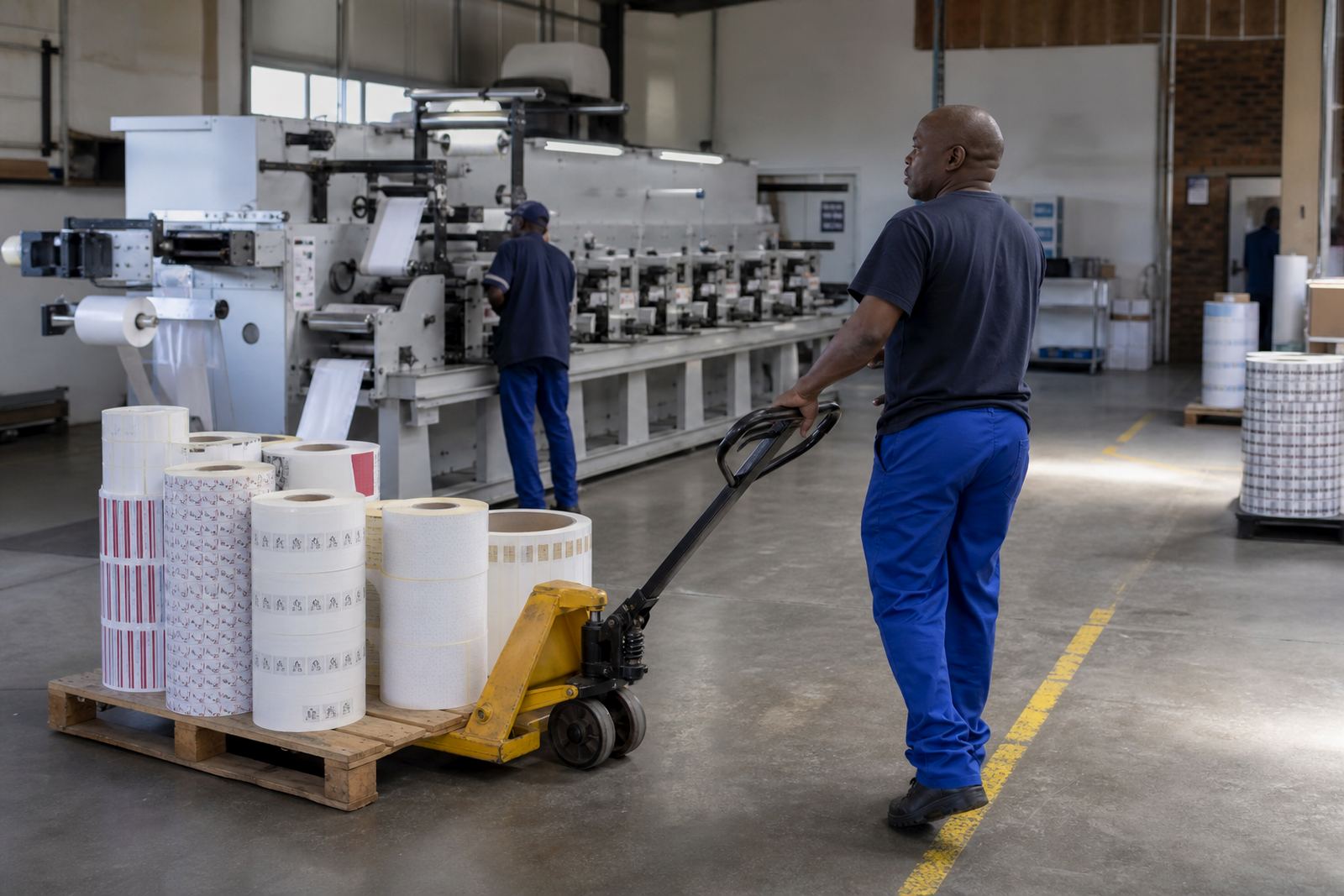
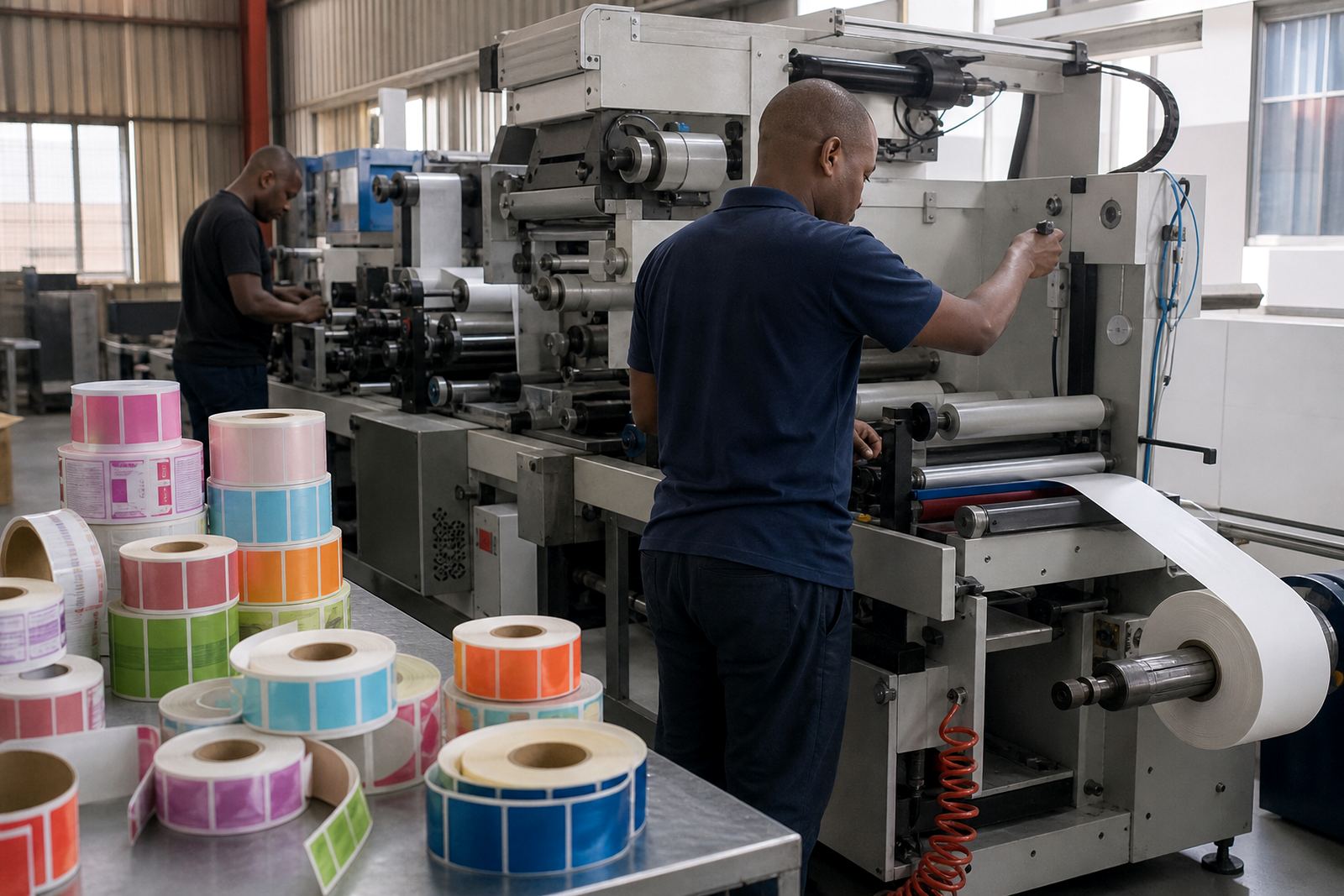
The brief came from a food label converter in Jet Park that needed a narrow-web flexo press brought into a predictable operating pattern. The team wanted consistent labels for food packaging, with cleaner setup between jobs, less waste at start-up, and proper handover to the operators who would run the press day to day. The site was working with a mixed label schedule, so changeovers had to be handled with care and the finishing side had to keep pace with production.
We approached the job as a practical press support project rather than a once-off visit. The aim was to get the machine running in a way that suited the actual workload in Jet Park, where production often has to deal with municipal timing, delivery pressure, and power interruptions that can throw out a shift plan. The client wanted direct answers and a process the team could repeat without relying on outside help every time.
- Client type: food label converter
- Location: Jet Park, Gauteng
- Press type: narrow-web flexo label press
- Main focus: setup stability, handover and finishing guidance
- Working method: on-site support with follow-up assistance
Constraints on site and what had to be managed
The site had the usual conditions that affect label converters across Gauteng. There was limited tolerance for trial-and-error because food labels must stay neat, legible and within the print and finishing standards expected by downstream packers. The team also had to manage stock movement around other production activity, so we kept the work structured and time aware.
Load-shedding planning was part of the conversation from the start. When a press room is interrupted mid-setup, plates, inks and web tension can all be affected, and that means more waste on restart. We also looked at humidity and dust control around storage and finishing areas because both can influence handling, especially when labels are being slit, rewound and packed for dispatch. The workshop needed a method that would still make sense on a Monday morning after a weekend outage.
- Reduced setup drift between repeated jobs
- Better control of the handover from prepress to press room
- Clearer finishing steps for rewinding and packing
- Practical working method for interrupted power or delayed starts
What we supplied and did during the visit
We supplied press installation support, commissioning assistance, operator training and startup production support focused on the actual job flow at the Jet Park site. The work included checking the basic setup sequence, helping the team organise the order of operations, and guiding the operators through the parts of the press that needed the most attention during changeover. We also assisted with plate mounting help and finishing setup so that the printed rolls moved cleanly into the next stage without avoidable handling delays.
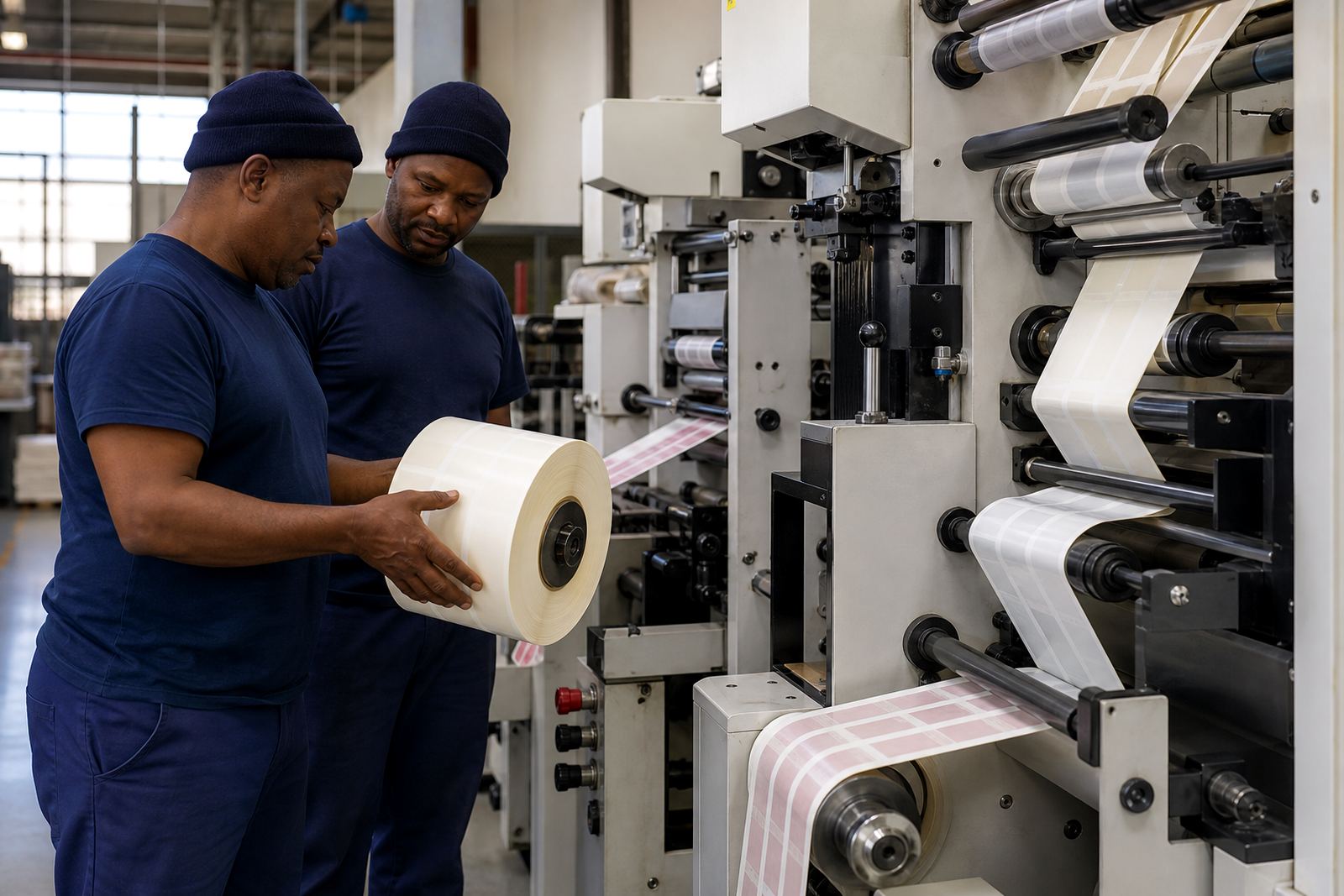
The service was kept practical. Rather than giving broad theory, we worked through the press room step by step with the operators and the technical lead. That included reviewing web path discipline, registration checks, ink handling, and the way the finishing area was receiving material. Where needed, we discussed anilox care so the team understood how cleaning, storage and handling could affect print consistency. The converter also received guidance on when to call for breakdown support versus when a simple adjustment would solve the issue.
- Press installation support
- Press commissioning checks
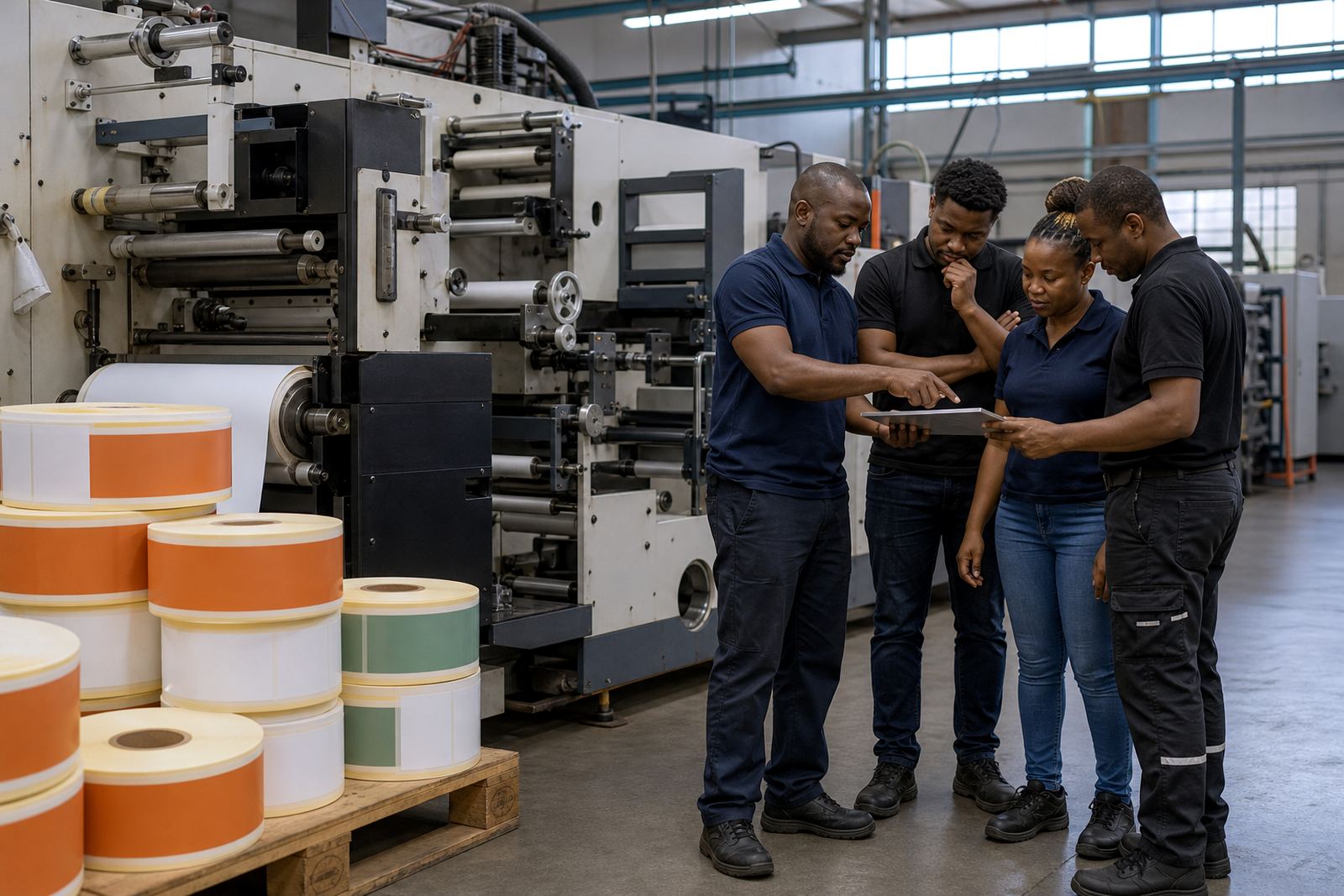
- Operator training on setup and job handover
- Startup production support for the first jobs
- Finishing setup guidance for rewinding and pack-out
- Anilox care and plate mounting help
Timeline over three weeks of support
The project ran over three weeks, with the first stage spent on site setup and initial production checks. That allowed us to see how the press behaved under real job conditions instead of only during a static test. The second stage focused on operator training and workflow handover, where the team worked through repeated job changes and learned the sequence that gave the best results. The final stage covered follow-up support and preventive maintenance checks to make sure the setup stayed steady after the first production runs.
During that period we stayed available for remote support as well, which helped when the team wanted quick guidance between shifts. That matters in a busy plant because a small question about plate mounting or finishing order can save a lot of material later. The aim was not to create dependency but to leave the converter with a process the staff could keep using without extra delays.
- Week 1: installation support and commissioning
- Week 2: operator training and production handover
- Week 3: follow-up checks and preventive maintenance guidance
Results after startup and early production
By the end of the support period the client had a clearer setup routine, better consistency at job changeover and a more controlled finishing sequence. The press room team understood what to check first, what could wait, and how to keep the job moving when production was under pressure. The handover was more practical for the operators, which made it easier for them to keep the line moving without needing repeated intervention.
The biggest improvement was the shift from reactive adjustments to a repeatable workflow. That is especially useful for food labels, where the printed result has to stay clean and dependable across different packs and orders. The client also had a clearer view of maintenance timing and what parts of the workflow needed attention before they became a problem. In simple terms, the job became easier to run and easier to explain to new staff.
- More stable setup between jobs
- Cleaner workflow handover to operators
- Better finishing control for rewinding and packing
- Clearer maintenance scheduling for the press room
What we would repeat for another converter
If we were doing the same type of project again, we would start with the same sequence: establish the job flow, train the people who will run the press, and then check the finishing side before production gets ahead of the room. That approach works well for label converters in Johannesburg, Pretoria, Durban, Cape Town and Gqeberha too, because the basic needs are usually the same even when the product mix changes.
For future projects we would also keep the support structure simple. One contact point, clear shift notes and a practical follow-up plan make it easier to maintain output after commissioning. Thabo Mokoena and the support team use that method because it gives the plant a workable routine, not just a one-time fix. That is the part clients usually value most when they are trying to keep labels moving through the press room in a real production environment.
- Start with workflow mapping before production
- Train operators on the exact job sequence
- Check finishing setup before ramping up output
- Keep preventive maintenance and support lines clear
Key facts
| Project name | Jet Park Food Converter |
|---|---|
| Project type | Food label converter support project |
| Location | Jet Park, Gauteng |
| Timeline | 3 weeks |
| Services used | Press installation, commissioning, training, startup support, finishing setup |
| Support model | On-site work with remote follow-up from Kempton Park |