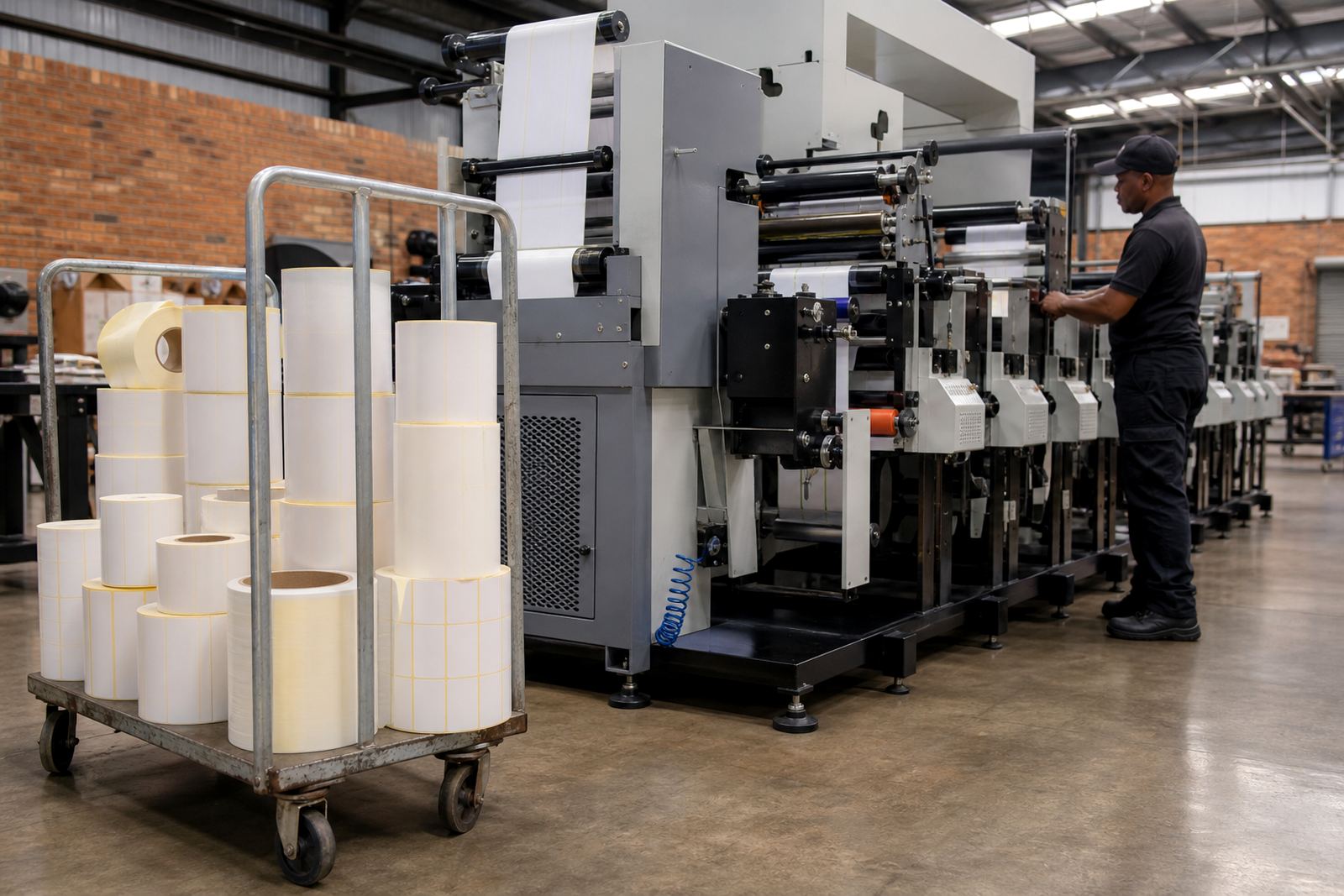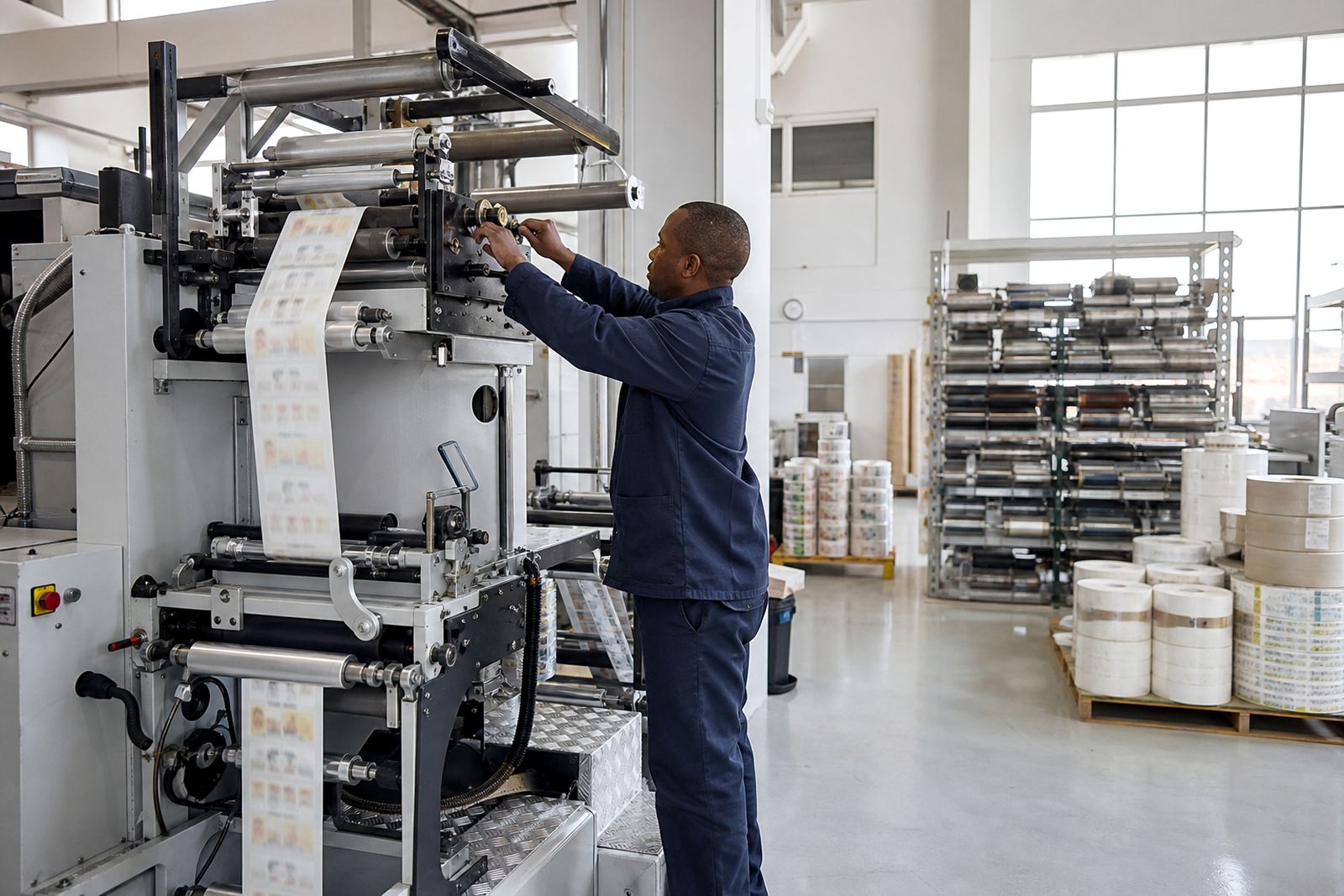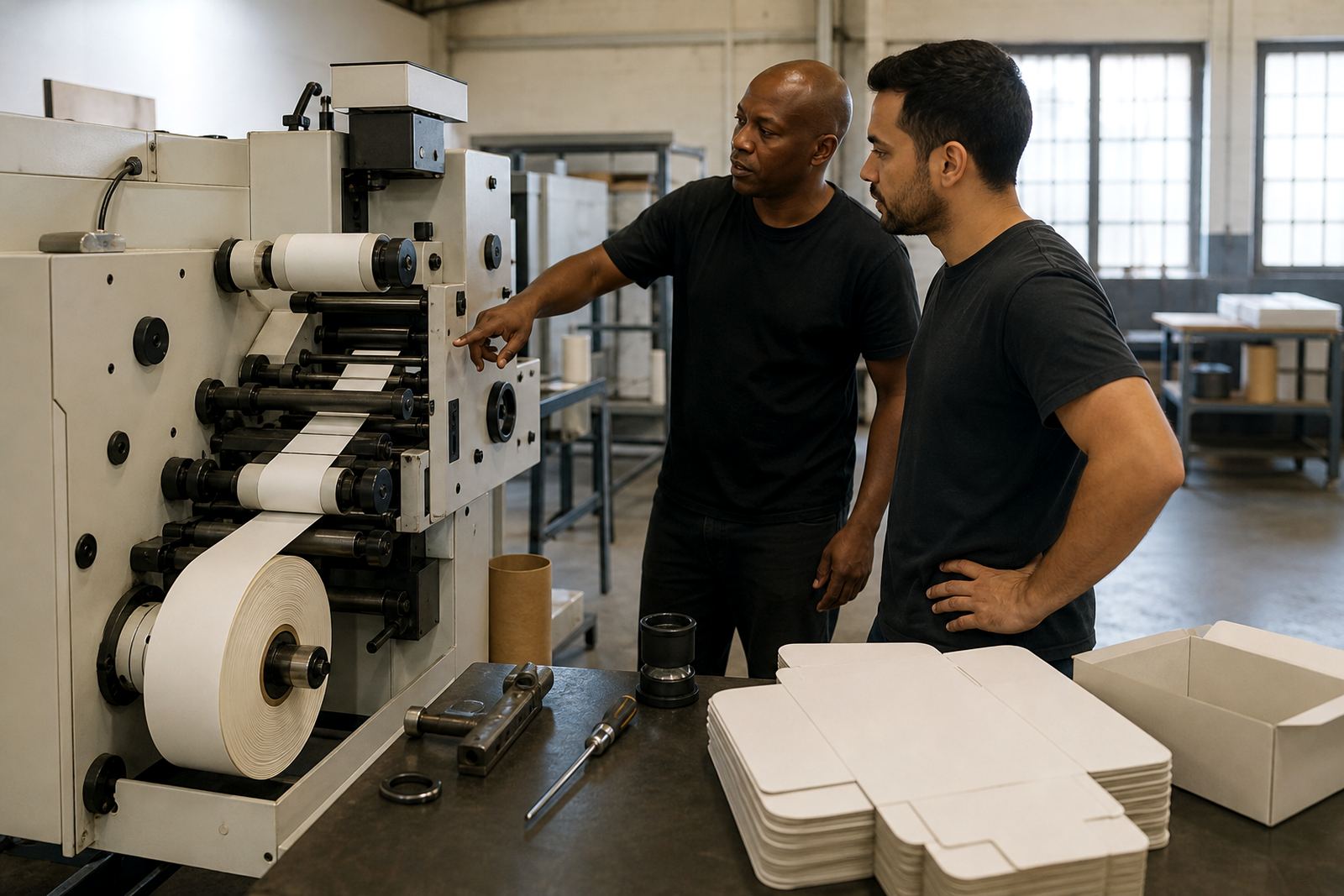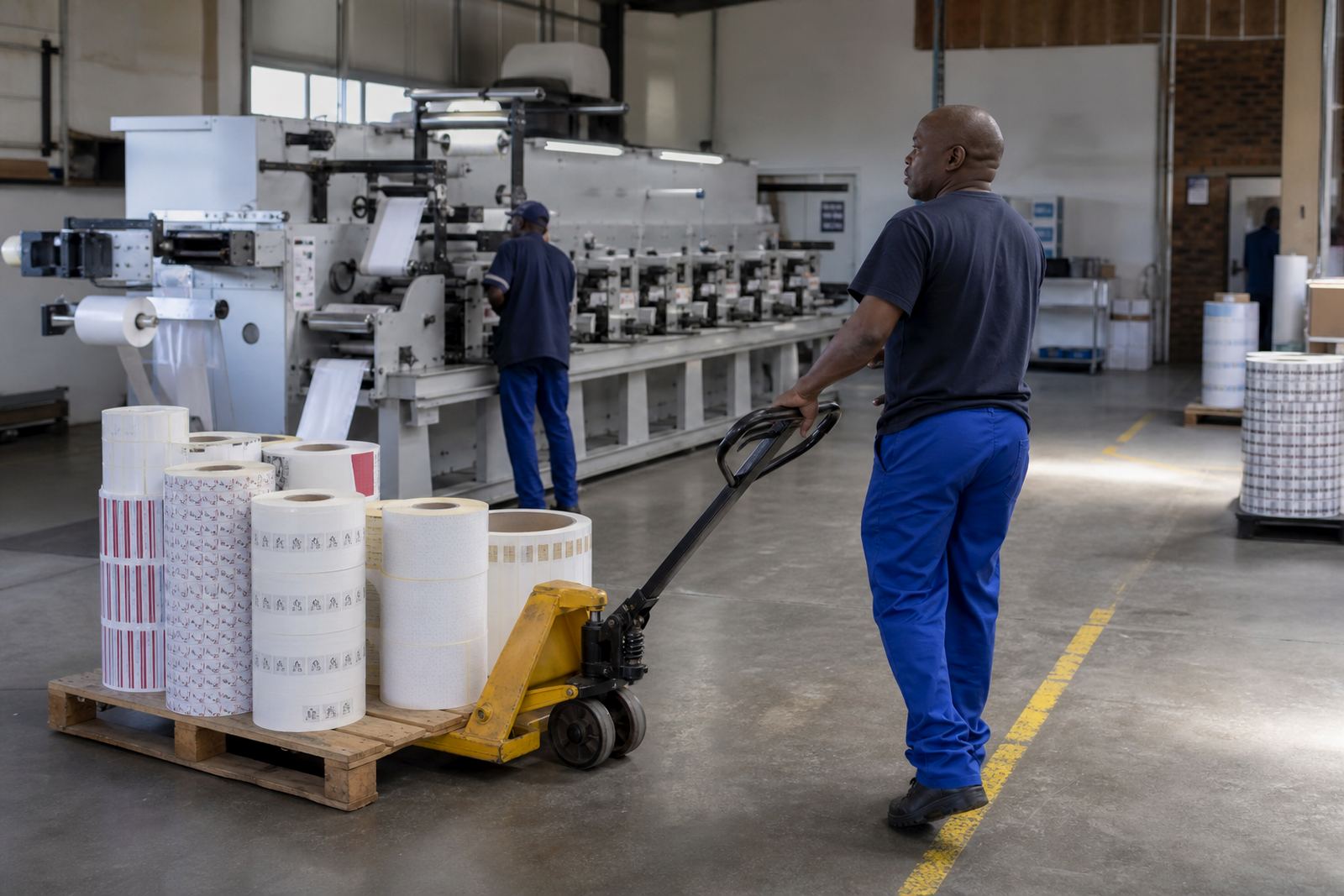
Project brief from a busy Pinetown label floor
The converter needed a narrower, more controlled print process for logistics labels that could handle repeat orders, variable artwork changes and short lead times. The work had to suit a plant running in a coastal climate, with the usual humidity shifts that can affect materials, drying and roll handling if the process is not set up properly.
The brief centred on clean label presentation, easy checks during make-ready and a workflow that would not depend on one person knowing every step by memory. We kept the scope practical and focused on the press, setup routine and finishing handover so the team could work with fewer delays and less rework.
Constraints we planned around before install day
This site was not looking for a showpiece. It needed a reliable narrow-web flexo label press process that could fit into a working converter environment, with limited downtime windows and production already committed to customers in logistics, warehousing and distribution. Power interruptions were also part of the picture, so the team needed a method that could recover quickly after load-shedding or a stop in line.
- Short production windows and changeovers between label runs
- Humidity in Pinetown affecting stock, adhesives and roll storage
- Need for straightforward quality checks at press and finishing stages
- Operator handover that would work across shifts, not just with one skilled person
- Support that could continue after commissioning without waiting for a full site visit every time
We also kept municipal and site safety requirements in mind, especially around access, housekeeping and the movement of rolls and finished work in the production area. Nothing complicated, just the kind of practical control that keeps a label line moving.
What we supplied and how the workflow was set up
We supplied press installation, press commissioning, finishing setup and hands-on operator training for the line. The setup work was centred on narrow-web flexo label production, with attention on repeatable register, stable web handling and a finishing path that made inspection and packing simpler for the team.
The process was arranged so the operator could follow a clear sequence from job prep through to final output. We helped align the setup routine for plates, anilox care, basic ink control, finishing checks and changeover discipline. The aim was not to overcomplicate the floor but to give the team a method they could follow under pressure and still keep quality consistent.
- Press installation and commissioning on site
- Plate mounting help and setup checks
- Finishing setup for label inspection and final handling
- Operator training for day-to-day make-ready and output checks
- Startup production support during early runs
Timeline and support over the first few weeks
The project ran over a short, staged timeline of four weeks. Week one covered site prep, equipment placement and planning around the converter's production schedule. Week two focused on installation and commissioning. Week three covered startup runs, operator coaching and the first practical adjustments from live production. Week four was used for follow-up support, fine-tuning and a final handover on the working routine.
That stepped approach made sense because it let us correct small issues before they became habits. By the end of the fourth week the team had a clearer rhythm for make-ready, finishing checks and basic fault response, which mattered more than rushing through a single day of setup. It gave the floor time to settle, and the supervisors could see where support was still needed.
What improved once the line was running properly
The main gain was steadier throughput. With the process tightened up, the team spent less time repeating setup steps and more time producing work that passed inspection the first time. That matters on logistics labels where batches can be repetitive but the pressure to dispatch is constant.
Quality checks also became easier to manage. The finish looked more consistent across repeat orders and the operators had a better routine for spotting minor issues before they moved into packing. We did not chase unnecessary complexity, just a cleaner production flow that matched the client's work pattern. In plain terms, the floor was easier to run and there was less stop-start frustration.
- Fewer setup delays between repeat jobs
- Cleaner sign-off on print and finishing checks
- Better handover between operators on different shifts
- Less confusion when the line stopped and needed to restart
What we would repeat on a similar project
If we were doing this again on another logistics converter site, we would use the same approach: keep the scope tight, train on the actual line and build the support plan around the shop floor rather than a textbook. That is what helps when the plant is busy and the customer needs labels out the door without excuses.
We would also keep the focus on preventive maintenance, anilox care and plate mounting discipline from the start, because those are the habits that protect output over time. In a place like Pinetown, where humidity and power interruptions can affect production, a simple and repeatable setup routine is worth more than fancy talk. It makes life easier for the operators, and for the supervisor trying to meet dispatch deadlines.
Key facts
| Project location | Pinetown, KwaZulu-Natal |
|---|---|
| Client type | Logistics label converter |
| Work scope | Narrow-web flexo press setup, finishing setup, training and support |
| Timeline | 4 weeks |
| Key focus | Steady throughput and straightforward quality checks |
| Support included | Installation, commissioning, startup support and follow-up |