The brief from a Midrand cosmetics converter
The client was a cosmetics label converter in Midrand supplying product labels for skincare, bath and personal care ranges. Their main requirement was simple to say but not simple to achieve: sharper print presentation, better colour consistency across short and repeat runs, and a finishing process that could keep pace with the press without creating bottlenecks.
They were working in a busy production space with limited downtime windows, so the plan had to suit live operations. The site team also needed support that made sense for Gauteng conditions, including dust control in the pressroom and practical load shedding planning for press start-up and safe shutdown. We kept the scope focused on the press, the setup path and the handover to operators.
- Narrow-web flexo label press installation for cosmetics labels
- Improved print presentation for fine text, solids and brand colours
- Cleaner finishing flow from print to rewind and inspection
- Operator training for day to day running and basic fault finding
What we supplied and set up on site
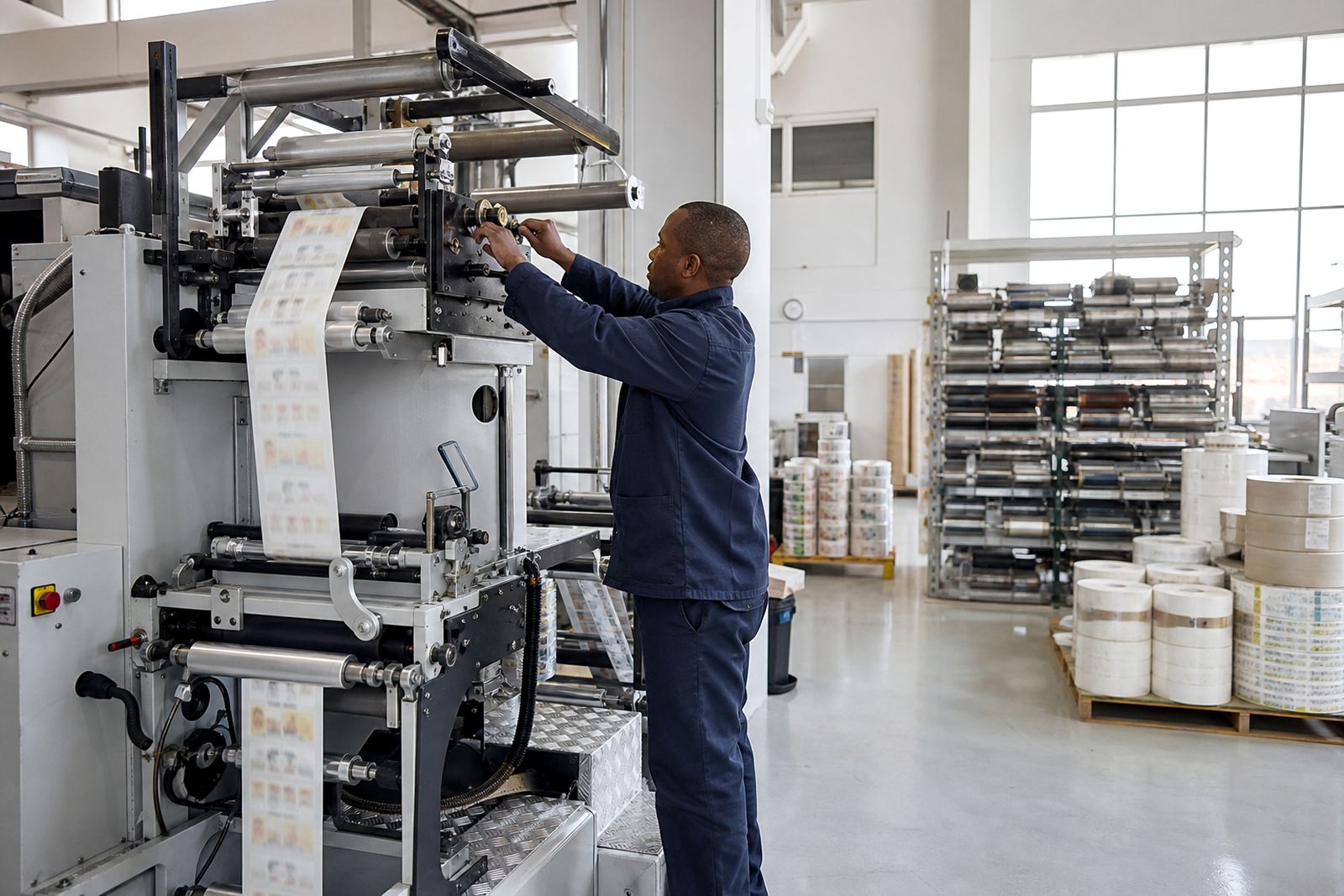
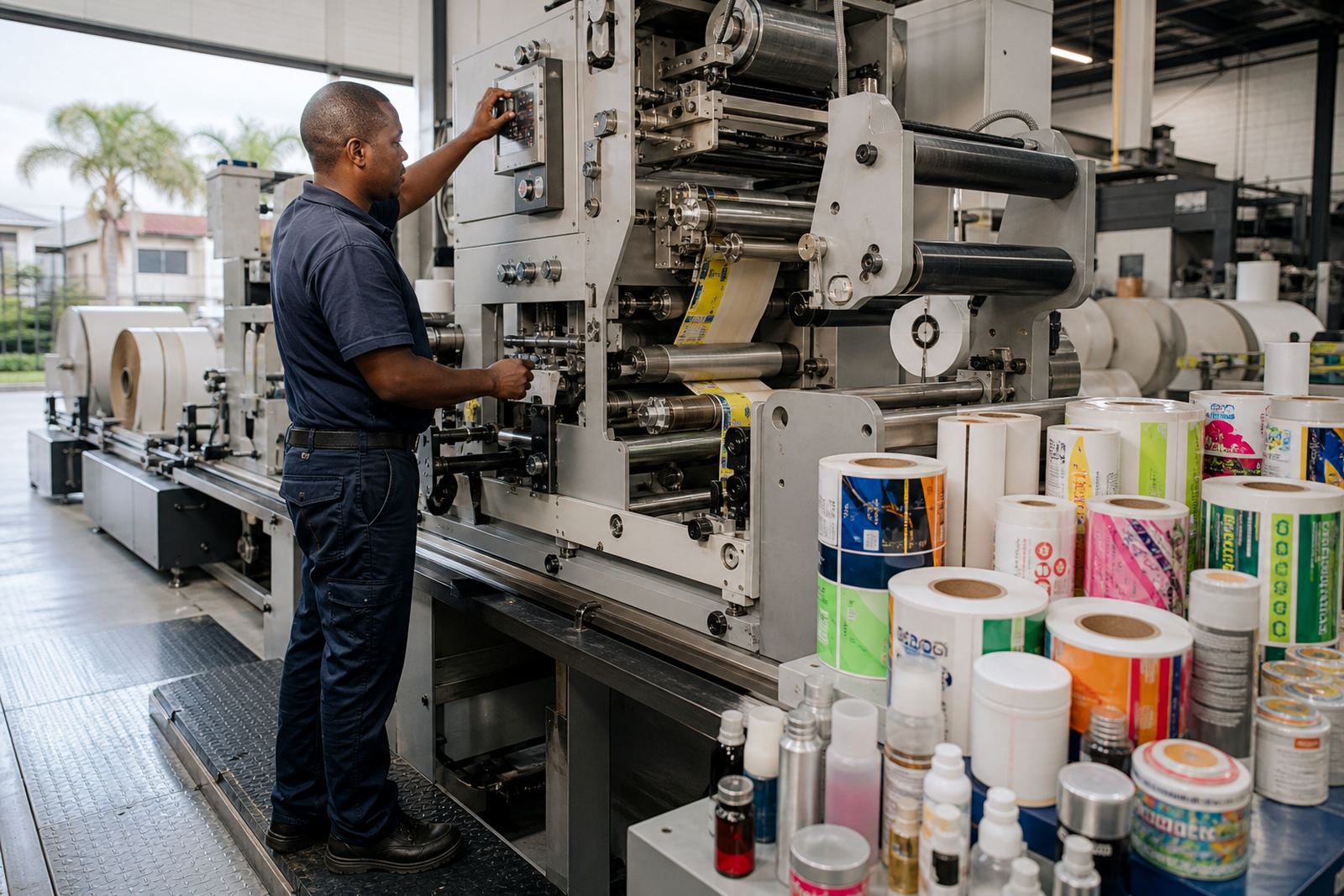
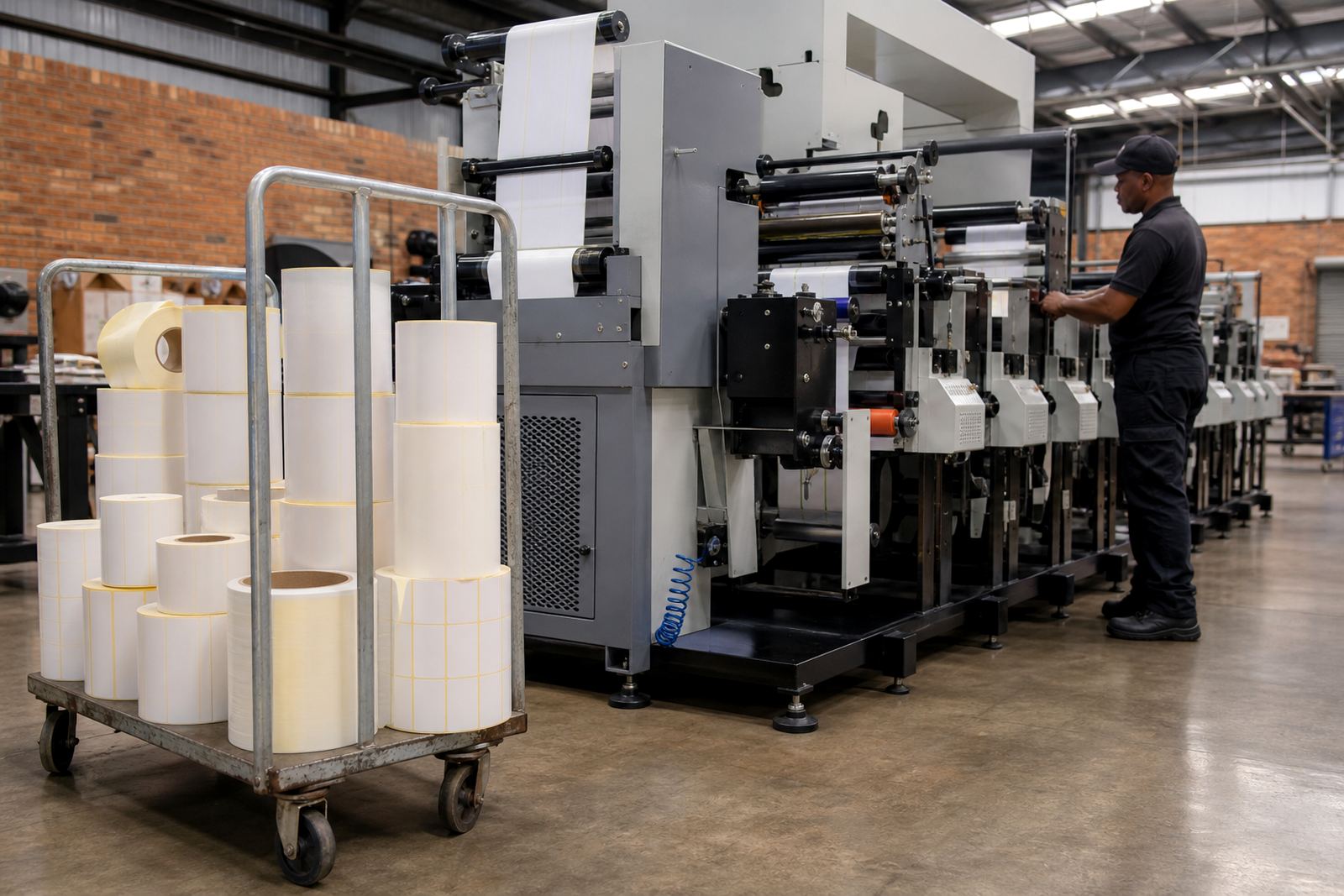
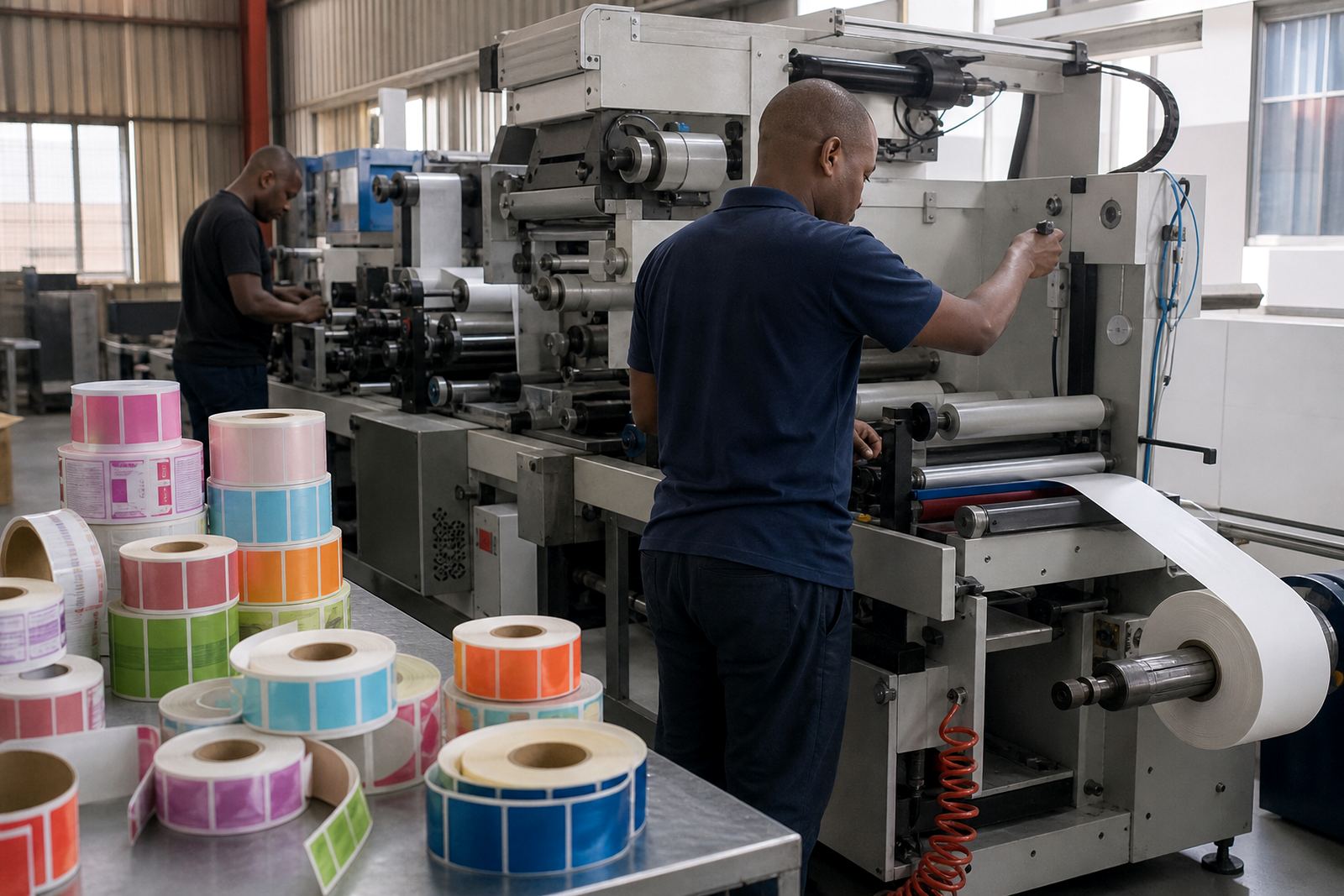
We supplied a narrow-web flexo label press setup suited to labels rather than general packaging work, with the usual support around mounting, web handling, setup checks and finishing alignment. The exact machine build was matched to the job mix at the plant, and the main focus was on getting stable register, neat web travel and reliable repeat performance. The client needed the line to handle cosmetic label artwork where presentation matters, especially on smaller packs where every millimetre shows.
On site in Midrand, we handled installation, press commissioning and finishing setup as one workflow. That meant the press, plate mounting method, rewind path and inspection points were all treated together instead of as separate tasks. It saved a lot of back and forth during start-up, and helped the operators see how each setting affected the finished roll.
- Press installation and mechanical alignment
- Commissioning checks for basic running stability
- Plate mounting help for repeatable set-up
- Finishing setup for rewind and handling flow
Constraints in the plant and how we planned around them
The site had a compact production area, a mixed workload and scheduled interruptions for other conversion work. That meant we had to plan the installation carefully and work in phases. There was also the usual Gauteng pressure on production time, with power interruptions and short turnaround requests making it harder to lock in long setup windows. We planned the support around what could be done during each shift, and made sure the team had practical shutdown and restart steps in hand.
Cosmetics labels also bring their own constraints. The job mix often includes smaller runs, frequent artwork changes and a need for tidy finish quality even on short orders. For that reason we spent time on make-ready discipline, label path checks and how to keep the finishing stage from slowing the press. The team wanted less waste and fewer stop-start issues, not just faster running. That was the right ask.
- Limited floor space for install and access during production hours
- Short windows for commissioning and operator handover
- Load shedding planning for controlled restart and safe shutdown
- Coastal-free site, but still plenty of dust and heat to manage indoors
Installation, commissioning and setup flow
The project ran over three weeks from arrival to handover. Week one covered installation, positioning and basic mechanical checks. Week two focused on commissioning, setup routines and early production trials. Week three was used for operator coaching, finishing adjustments and support during live runs. The timeline was tight, but not rushed, which matters when you are working with label stock, adhesives and product-sensitive artwork.
We paid close attention to the first production steps, because that is where most label issues show up. If the press is slightly out on set-up, the problem usually appears later as waste at finishing or complaint at packing. We checked repeat behaviour, web tracking and the handling points between print and rewind. One or two fine adjustments made a big difference to the final roll quality, and the team could see the gain straight away.
- Week 1: installation and physical alignment
- Week 2: commissioning and trial production
- Week 3: training, finishing setup and live support
Operator training and practical support for the team
The training was built around the actual line and the production habits of the plant, not a classroom version of the job. We covered set-up checks, plate mounting help, colour consistency basics, register control, rewind discipline and what to watch during the first metres of a run. The operators also wanted support on common interruptions, like web breaks, changing jobs and restarting after a power cut. That part of the handover was well received because it matched what they deal with every week.
After the initial handover, we stayed in contact for startup production support and remote support when the team needed a second opinion. That included small process corrections and guidance on keeping the finishing stage from becoming a bottleneck. It is often the simple things that make the biggest difference, like how material is staged before a changeover and how the rewind is checked before the next roll starts. There was one point where a plate mounting sequence needed a small correction, and once that was sorted the run became much steadier.
- Operator training for press start-up and shutdown
- Guidance on first-run checks and daily routine
- Remote support for early production questions
- Help with changeovers and job handover discipline
Results and what we would repeat on the next cosmetics job
By the end of the project, the converter had a cleaner production flow and more confidence in the way the press and finishing steps worked together. The team was able to set up faster, keep a steadier register and manage short-run cosmetics work with less waste. The finished labels had a neater look on press and at rewind, which mattered to the client because cosmetics packs live or die by presentation. The line also became easier to explain to new operators, which helps keep production consistent when staff change over.
If we were doing the job again, we would follow the same approach: install in phases, keep the commissioning practical and train the operators on the actual jobs they will run. For cosmetics converters, we would also keep a close eye on finishing setup from day one, because print quality and finishing quality have to work together. That is where good label production saves time, not just on the press but right through packing and dispatch.
- Cleaner label presentation on repeat and short runs
- Better setup discipline and fewer avoidable stoppages
- More predictable finishing flow from print to rewind
- Stronger operator confidence after handover
Key facts
| Project type | Midrand cosmetics label converter installation |
|---|---|
| Region | Midrand, Gauteng |
| Scope | Press installation, commissioning, training and support |
| Timeline | 3 weeks from install to handover |
| Equipment | Narrow-web flexo label press setup |
| Support | Finishing setup, maintenance and remote support |