
A Beverage Label Brief With Tight Production Demands
The client was a beverage label converter in North End, Gqeberha, serving bottling work where colour consistency, registration and clean finishing matter from the first roll to the last. Their brief was simple to say and hard to do well: get the narrow-web flexo label press set up properly, improve changeover discipline, and build confidence in the team so they could keep production steady without depending on outside help for every small adjustment.
The main pressure points were familiar to anyone running labels in coastal South Africa. Humidity can affect material handling, adhesive behaviour and drying conditions. The site also had to plan around power interruptions, so the team needed a sensible restart routine and a way to protect work in progress when the supply dipped. The converter wanted support that was practical, not theoretical, with clear steps the operators could repeat on their own.
What We Found On Site In North End
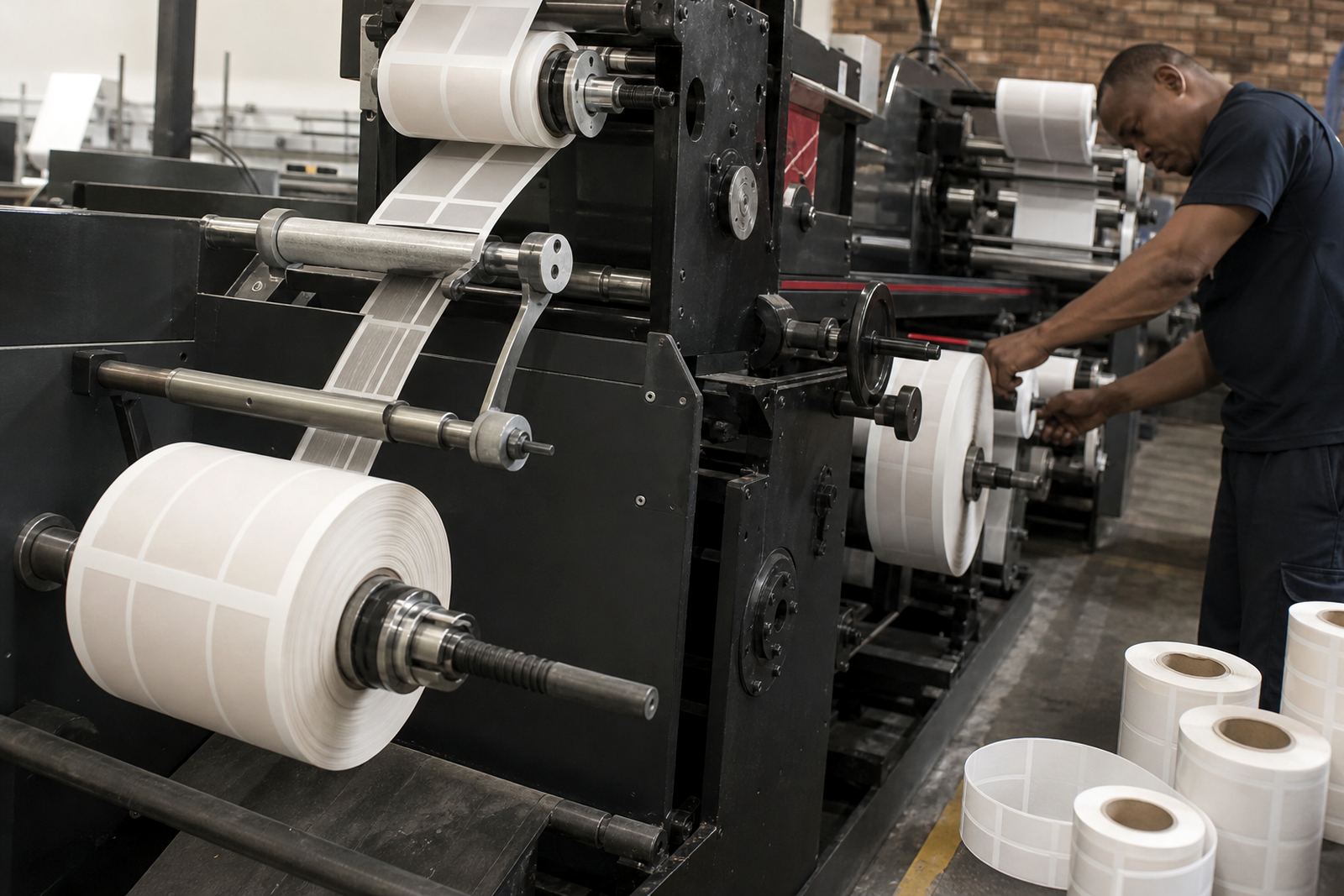
We started with a full walk-through of the press area, finishing tables and material flow. The machine was already in place, but the settings, job handover notes and cleanup routine all needed tightening. There was good equipment on site, yet the setup was being handled in a way that left too much variation between jobs. That can show up as waste, slow start-ups and rework, especially when a beverage customer expects repeatable labels across multiple runs.
- Press setup needed a clearer sequence for web path, tension and registration checks
- Operator handovers were informal, which made fault tracing slower than it should be
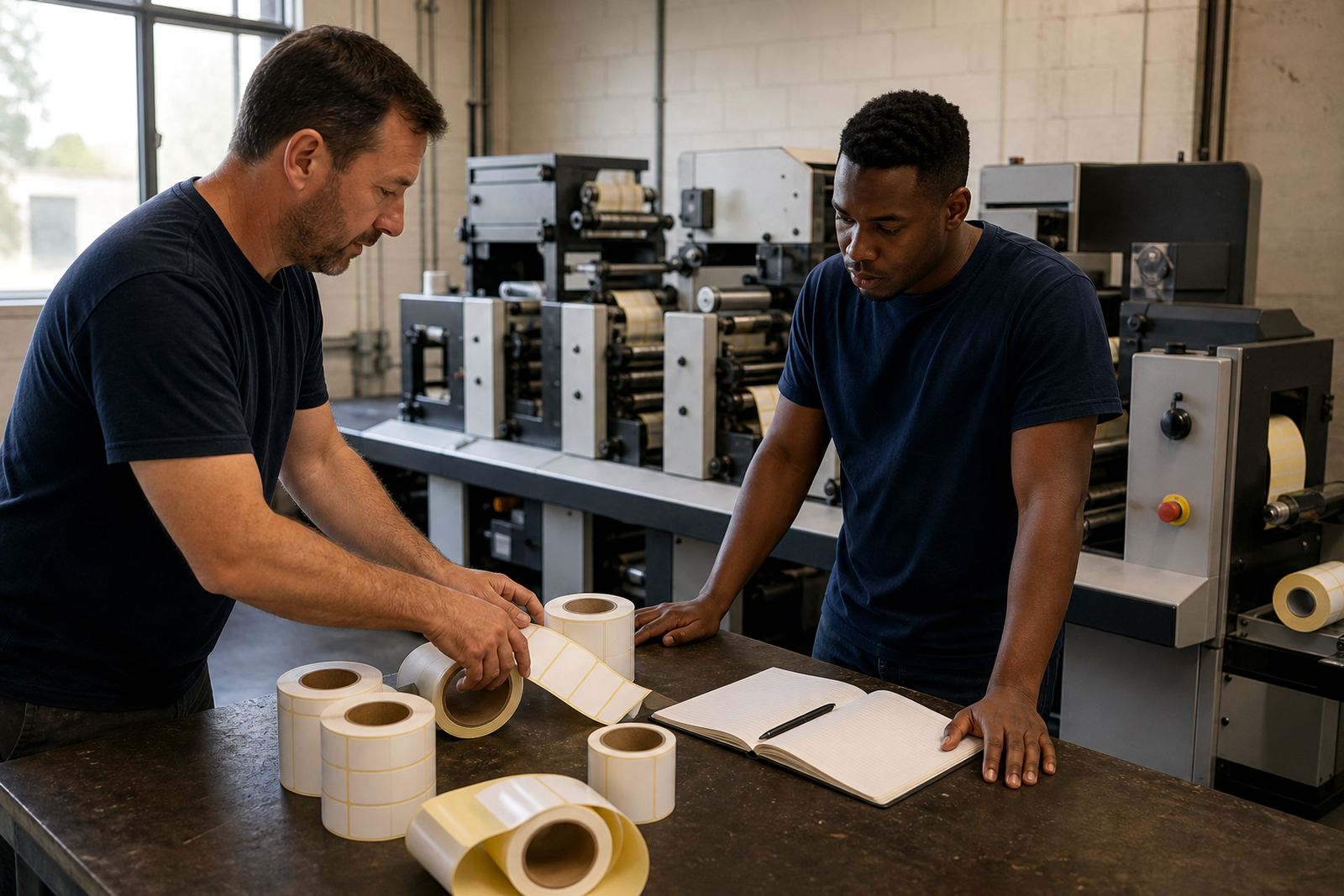
- Finishing work needed a more consistent method for inspection, trimming and pack-off
- Maintenance tasks were being done, but not on a fixed enough schedule
- Team members wanted more confidence in spotting problems before they spread through the run
We also checked the surrounding workflow, from plate mounting help to job documentation and spare parts planning. In a busy label environment, small delays add up quickly. If one reel is set up badly or a fault is left until the next shift, the loss is rarely just one job. It affects the queue after it as well.
Setup Support, Commissioning And Production Mentoring
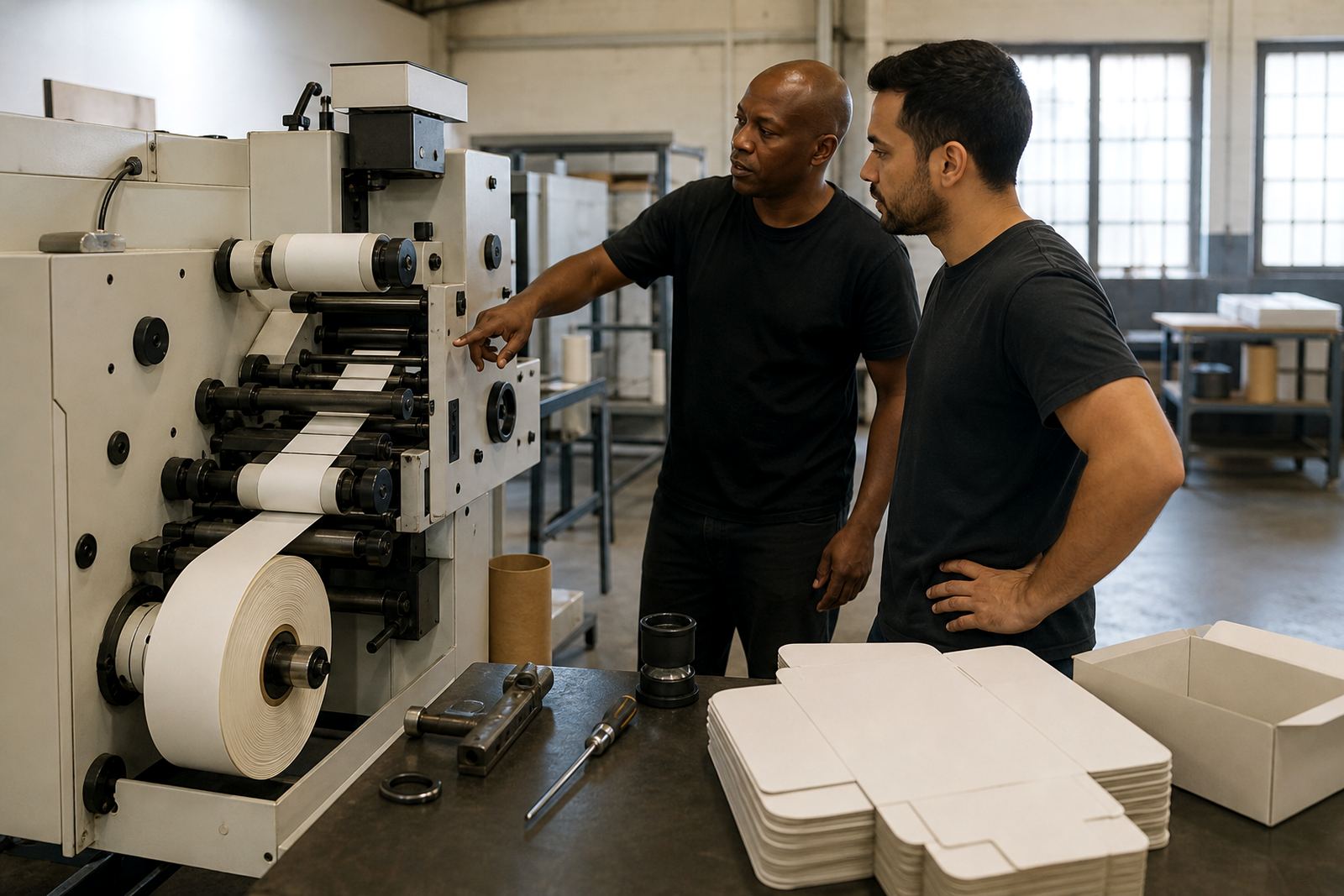
Our work was carried out over 4 weeks in stages, beginning with press commissioning checks and followed by on-site production support. The goal was not only to get the press running, but to leave the team with a repeatable way of working. We supported the operator group through setup routines, print checks and the first production runs, then stayed close while they took over more of the decision making themselves.
We covered the main production points in a practical way:
- Press installation review and machine alignment checks
- Commissioning support for start-up, registration and print stability
- Operator training on setup sequence, job changeovers and basic fault finding
- Startup production support for the first beverage label runs
- Finishing setup for inspection, rewind discipline and pack-off handling
- Production consulting on routine control, waste reduction and shift handover notes
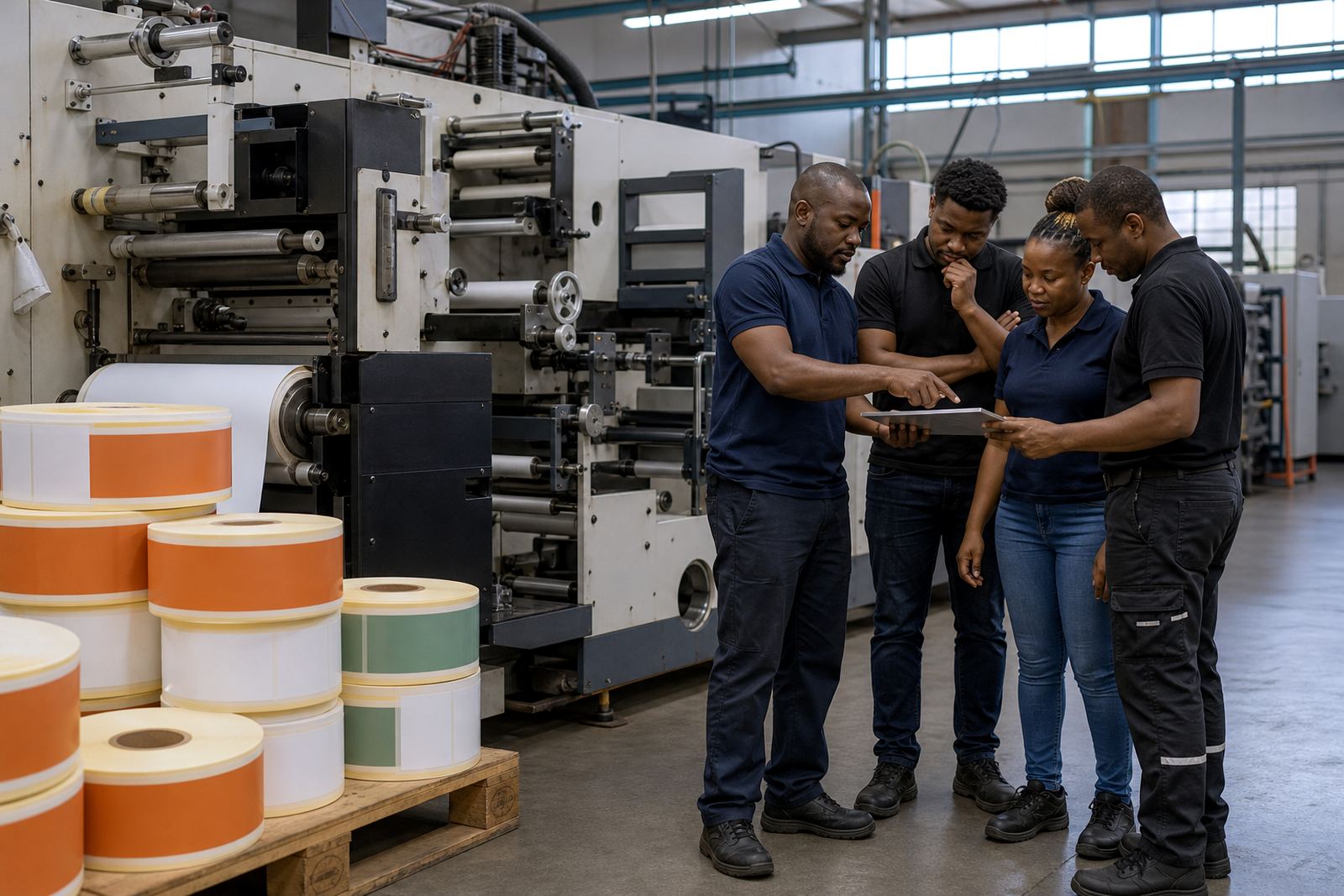
Training was done with the actual jobs the converter needed to run, not with abstract examples. That meant the team learned on their own materials, their own label formats and their own working pace. We kept the guidance direct and plain, with enough repetition for the newer operators and enough detail for the experienced hands who wanted a better reason for each adjustment.
Handling Coastal Conditions And Load-Shedding
Because the site is in Gqeberha, we took coastal conditions seriously. Materials were being stored in a way that left them exposed to unnecessary moisture changes and some of the finishing issues were linked to that. We advised on basic storage discipline, cleaner handling at the press and a better habit of checking material condition before the job went live. These are small things, but they matter when you are trying to keep a beverage label line stable through a full shift.
We also worked through a practical load-shedding recovery routine. The team needed to know what to isolate, what to check first and how to bring the press back into production without rushing into a bad restart. That included the order of checks after a stoppage, how to inspect the last good set-up, and when to call for breakdown support instead of pushing on and making the fault worse. It is the sort of discipline that saves time later.
- Clear restart sequence after power interruption
- Basic checks for tension, registration and print condition before restart
- Better handling of partially completed jobs during a stoppage
- Guidance for humidity-sensitive storage and material movement
Results Seen During The First Production Weeks
By the end of the 4 week support period, the converter had a clearer setup routine and a more settled production rhythm. The operators were making fewer ad hoc adjustments, and the shift handover process became easier to follow. Finishing was more orderly, with less confusion around inspection points and pack-off sequence. The work did not depend on one person knowing all the answers, which was an important part of the brief from the start.
The most useful result was not a single number, but a better way of running the line. Jobs were being prepared with more care, the team understood what to check before print started, and faults were being handled earlier. That gave the client more control over day-to-day output and reduced the stress that often comes with first runs on a new or newly managed press.
For a beverage converter, this kind of support is valuable because beverage label work often needs repeatability across different pack sizes and seasonal orders. A steady setup, clean finishing and disciplined operator habits make it easier to meet customer expectations without overcomplicating the floor.
What We Would Repeat On The Next Site
If we were starting the same project again, we would keep the same approach: get close to the live production work, train on the real jobs, and make sure the team leaves with a repeatable routine rather than just notes. For converters in Johannesburg, Pretoria, Durban, Cape Town or Gqeberha, that approach holds up well because it respects local conditions and the pace of a working label floor.
We would also spend the same time on preventive maintenance planning and spare parts support. A press that is set up well today still needs regular care tomorrow, especially in a busy converter environment where the next order can land before the last one is fully packed. Keeping an eye on anilox care, plate mounting help, cleaning discipline and finishing setup is what keeps the line productive over time.
Thabo Mokoena and the team at Flexography Printer work with that mindset on every support call. The aim is always the same: get the press running properly, help the team use it well, and leave the site in better shape than when we arrived.
Key facts
| Project type | Beverage label converter setup support and production mentoring |
|---|---|
| Town | North End, Gqeberha |
| Equipment | Narrow-web flexo label press |
| Timeline | 4 weeks |
| Main services | Press commissioning, operator training, finishing setup, startup production support |
| Support focus | Registration, changeovers, load-shedding recovery, coastal humidity handling |