Project brief for a busy Cape Town label converter
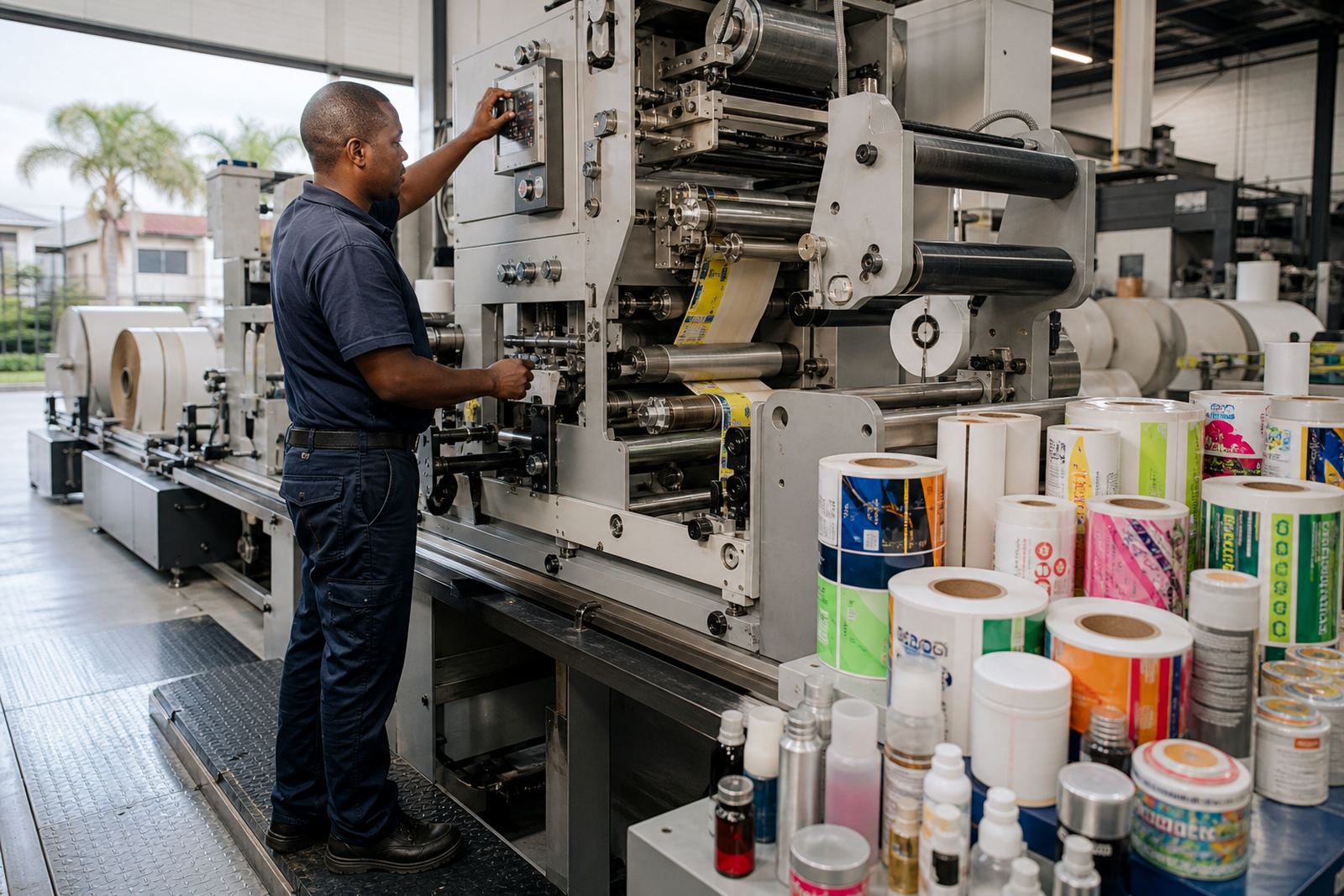
The brief was straightforward on paper but practical on the shop floor. The converter needed a narrow-web flexo label press solution suited to shorter label runs, frequent artwork changes and consistent print quality across different substrates. The work was for a label business in Paarden Eiland, Cape Town, where space is tight, schedules are full and downtime quickly affects order flow.
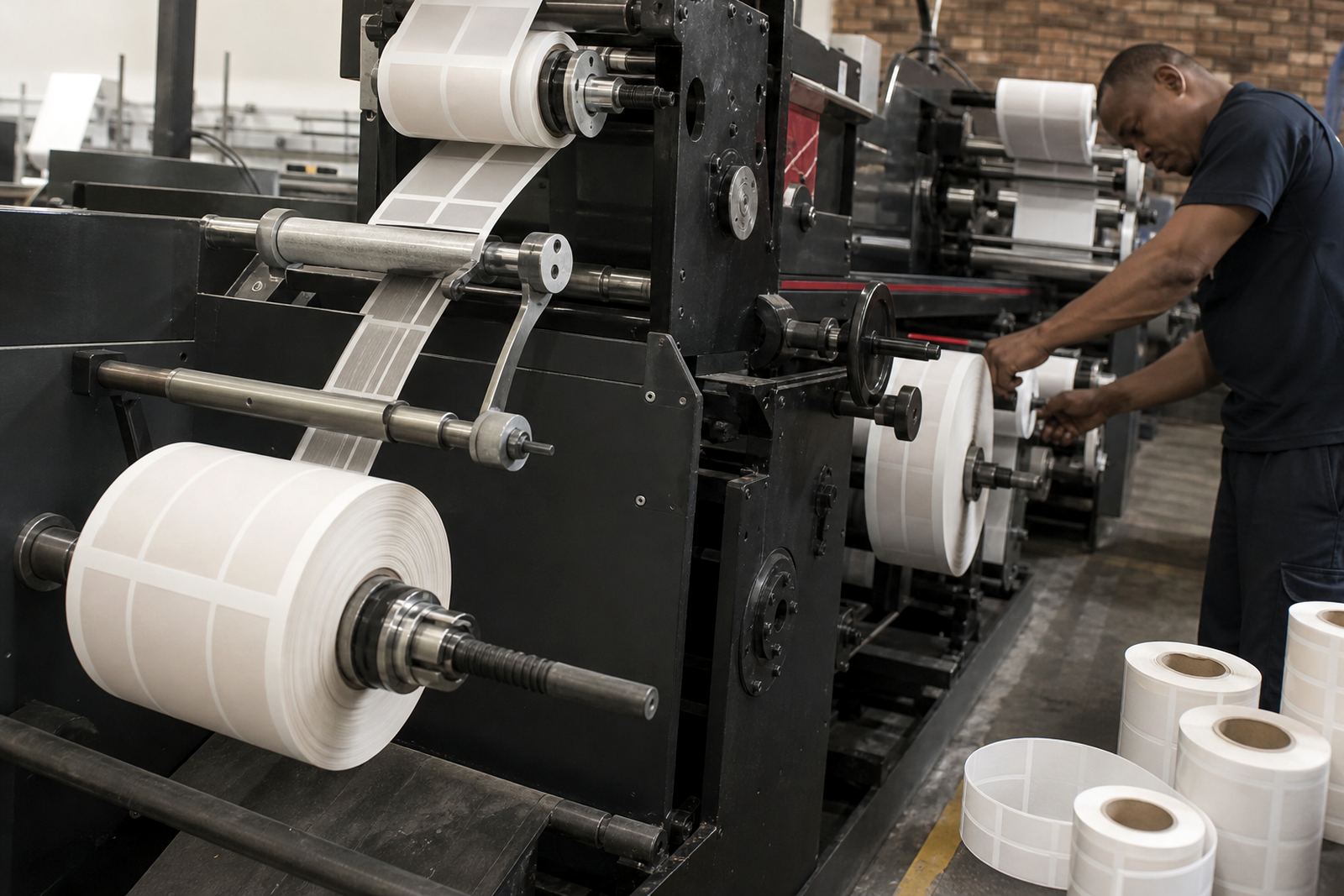
The product mix included speciality labels with varied shapes, finishes and repeat orders in small to medium batches. That meant the press setup had to support clean registration, stable web handling and a finishing flow that would not slow production when the team moved from one job to the next.
- Client type: speciality label converter
- Location: Paarden Eiland, Cape Town
- Production focus: shorter runs and varied label designs
- Application: labels for retail, food and beverage, and related packaging work
What the converter needed from the press line
The main need was not just a machine, but a working production method. The converter wanted a narrow-web flexo press that could be set up quickly, hold registration properly and support the kind of finishing work that gives labels a clean, saleable look. In Cape Town, with coastal humidity and regular power interruptions to plan around, the team also needed a process that could recover quickly after stoppages and still keep waste under control.
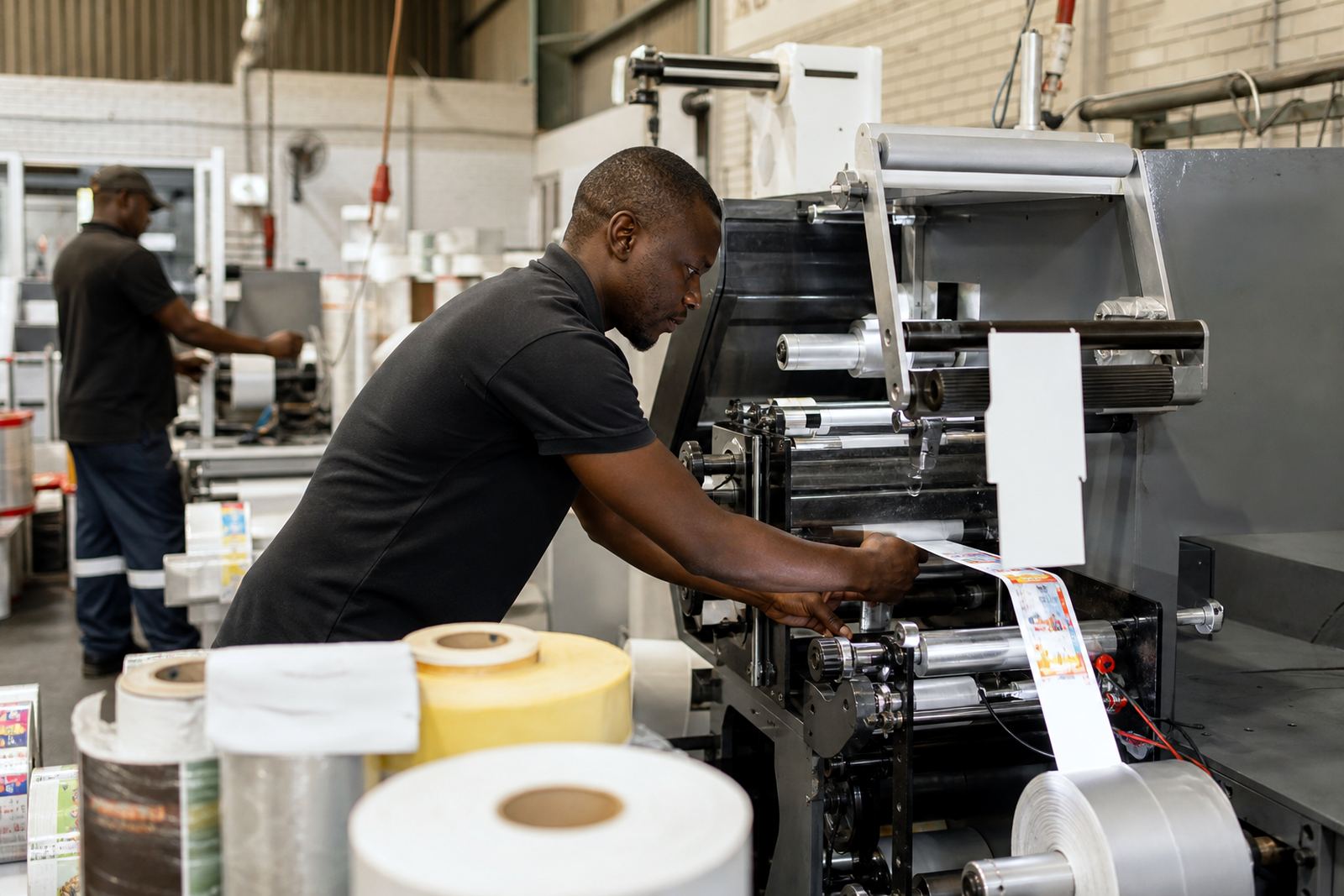
We paid attention to the basics that matter in daily use: substrate handling, anilox care, plate mounting accuracy, ink consistency and repeatable setup notes for the operators. The aim was to make the line practical for real orders, not just for ideal conditions. A neat pressroom helps, but a press still has to behave when the workload changes through the week.
- Short-run suitability
- Repeatable setup for mixed artwork
- Controlled finishing for better presentation
- Support for local power fluctuation planning
Our supply and support scope in Paarden Eiland
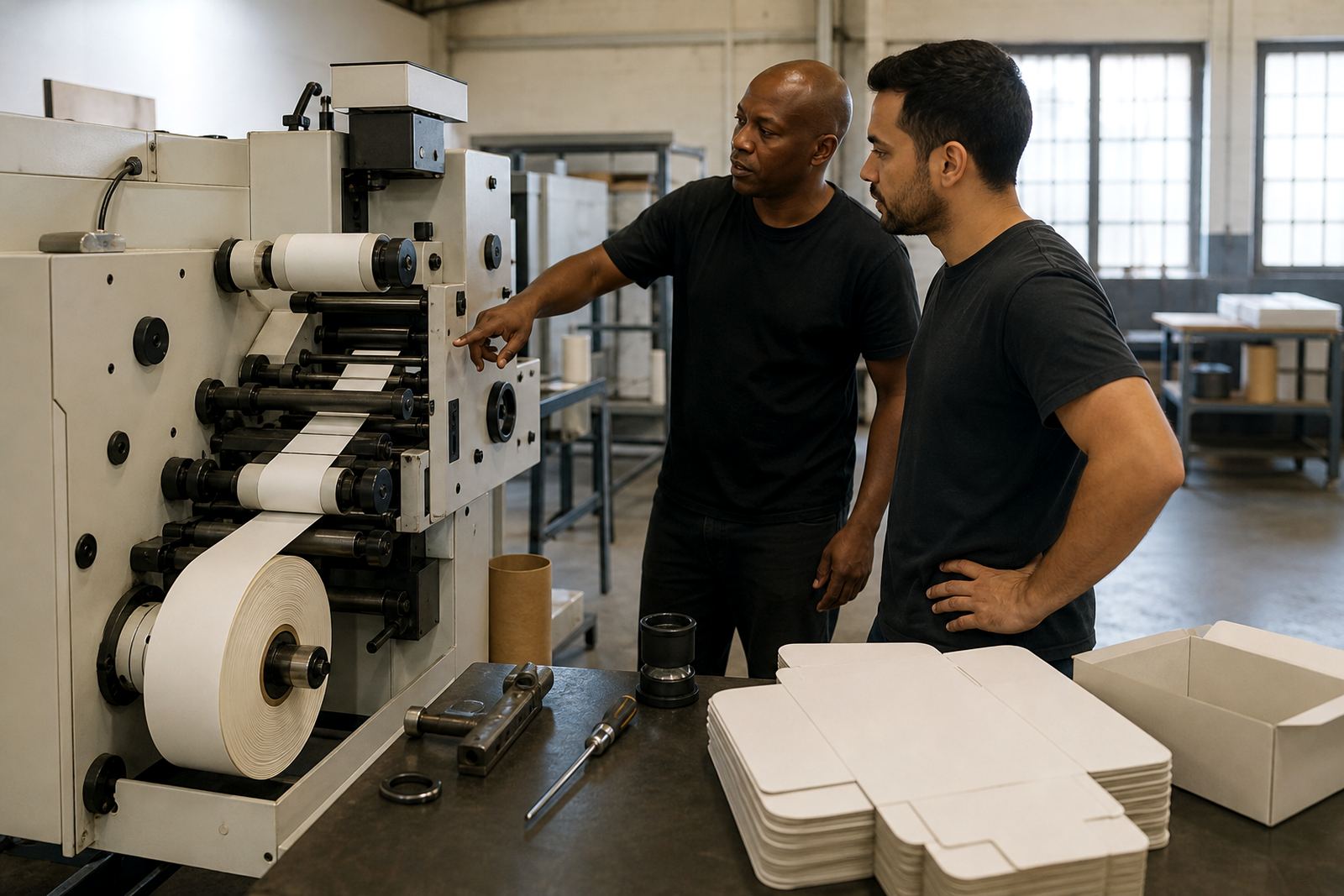
For this project we supplied the press-related support around the narrow-web flexo operation and worked through installation, commissioning and the handover process. The focus was on getting the line ready for production and making sure the operators understood the sequence from setup to finishing. That included plate mounting help, finishing setup and production consulting around job changeovers.
Our team also guided the converter on maintenance routines that suit South African production conditions, including preventive care, breakdown response planning and remote support for quick troubleshooting. As a South African supplier founded in 2008 and based in Spartan, Kempton Park, we are used to helping converters in Johannesburg, Pretoria, Durban, Cape Town and Gqeberha without losing sight of the small issues that slow a shift down.
- Press installation and commissioning
- Operator training and startup production support
- Preventive maintenance planning
- Remote support and spare parts support
- Anilox care and plate mounting help
Timeline and how the handover was managed
The project ran over a practical multi-week timeline, with the work paced to suit the converter’s production schedule and available floor time. We started with site preparation checks, then moved into installation, alignment and commissioning. After that came operator training, test jobs and adjustments to the finishing setup so the team could move into normal production with less hesitation.
By keeping the process staged, the converter could stay active while key tasks were completed. That matters in Paarden Eiland where industrial units are often compact and shared access can limit how much work can happen at once. We also allowed time for the team to raise questions during real job runs, because the first few batches usually show where extra guidance is needed, not just the machine manual.
- Week 1: site review and planning
- Week 2: installation and core setup
- Week 3: commissioning and test production
- Week 4: operator training and finishing adjustments
What changed after commissioning
Once the press and finishing flow were settled, the converter had a more reliable path for mixed label work. Changeovers became easier to manage, setup notes were clearer, and the team could approach shorter runs with less waste from trial-and-error. The finishing side also improved because the line was configured to suit the actual way the shop handled labels, not a generic production assumption.
The result was a better match between machine, material and staff routine. That is often where a label project succeeds or fails. When the operators know what to check, where to adjust and how to keep the press stable, the business can take on more varied work without making every run feel like a problem. It is not glamorous but it is the difference between a press that sits well and one that gives you grief every week.
- Cleaner changeovers on shorter runs
- Better consistency across varied designs
- More predictable finishing output
- Less stoppage time from avoidable setup issues
What we would do again for a similar label project
For another craft converter in Cape Town or anywhere else in South Africa, we would follow the same approach: check the product mix first, match the press setup to the run lengths and make sure the finishing line is part of the plan from day one. Too many projects treat finishing as an afterthought, then wonder why the last stage slows everything down.
We would also keep training close to the actual jobs the team is likely to run. A good operator learns faster when the samples, substrates and changeover steps are the real ones, not theory. The same goes for support. When a converter knows who to call for breakdown support, spare parts support or remote troubleshooting, the shop is better prepared for load-shedding and the normal knocks of production.
- Plan for real order sizes, not ideal ones
- Train on actual label formats and substrates
- Include finishing in the setup discussion early
- Build a maintenance routine the team can keep
Key facts
| Project name | Paarden Eiland Craft Converter |
|---|---|
| Project type | Speciality product label project |
| Location | Paarden Eiland, Cape Town |
| Production focus | Shorter runs and varied label designs |
| Primary equipment | Narrow-web flexo label press support |
| Timeline | Multi-week installation, commissioning and training |
| Company base | Spartan, Kempton Park |
| Founded | 2008 |