Retail label brief from Bellville
The client was a retail label converter in Bellville supplying short and medium runs for packaged goods, shelf labels and promotional packs. Their main concern was not only print quality but how quickly the press could move from one job to the next when artwork, substrate and finishing changed through the week.
The brief was straightforward. Reduce wasted setup time, improve repeatability at press start-up and make the finishing steps easier to manage for the team on shift. They also wanted support that could be used by operators on the floor, not only by senior staff. That meant proper handover, simple checks and a plan that could still work when production was under pressure.
- Client type: retail label converter
- Town: Bellville, Western Cape
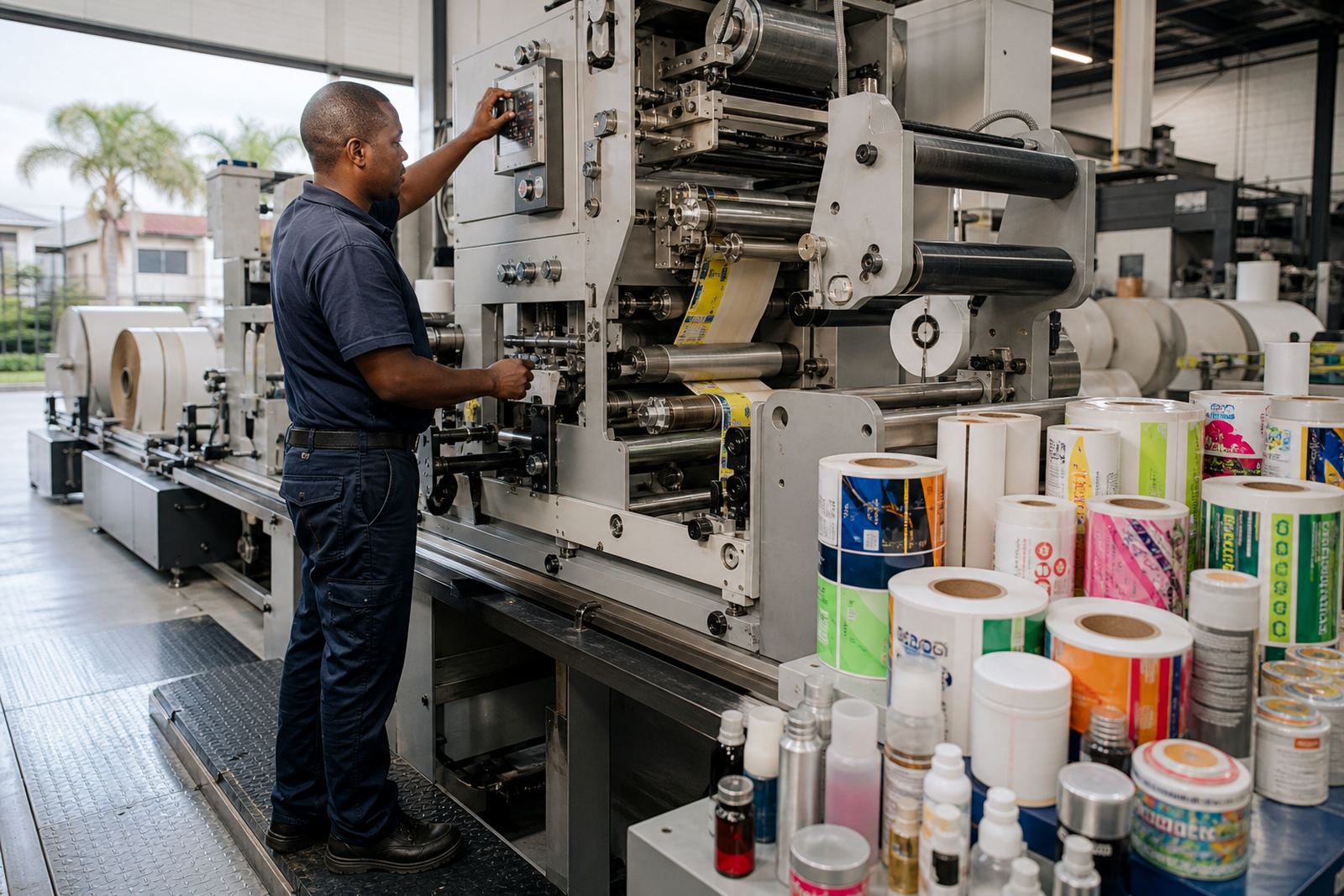
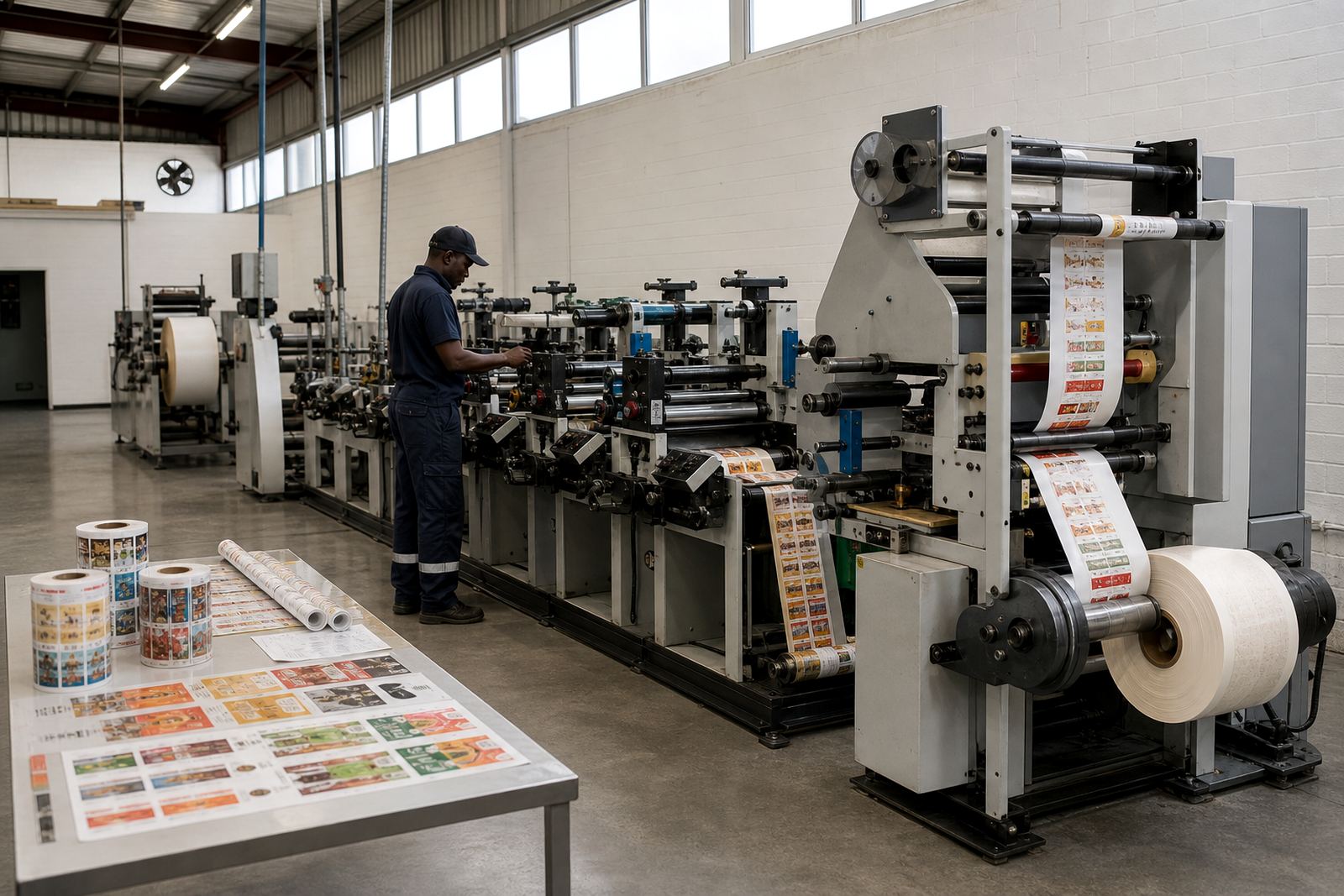
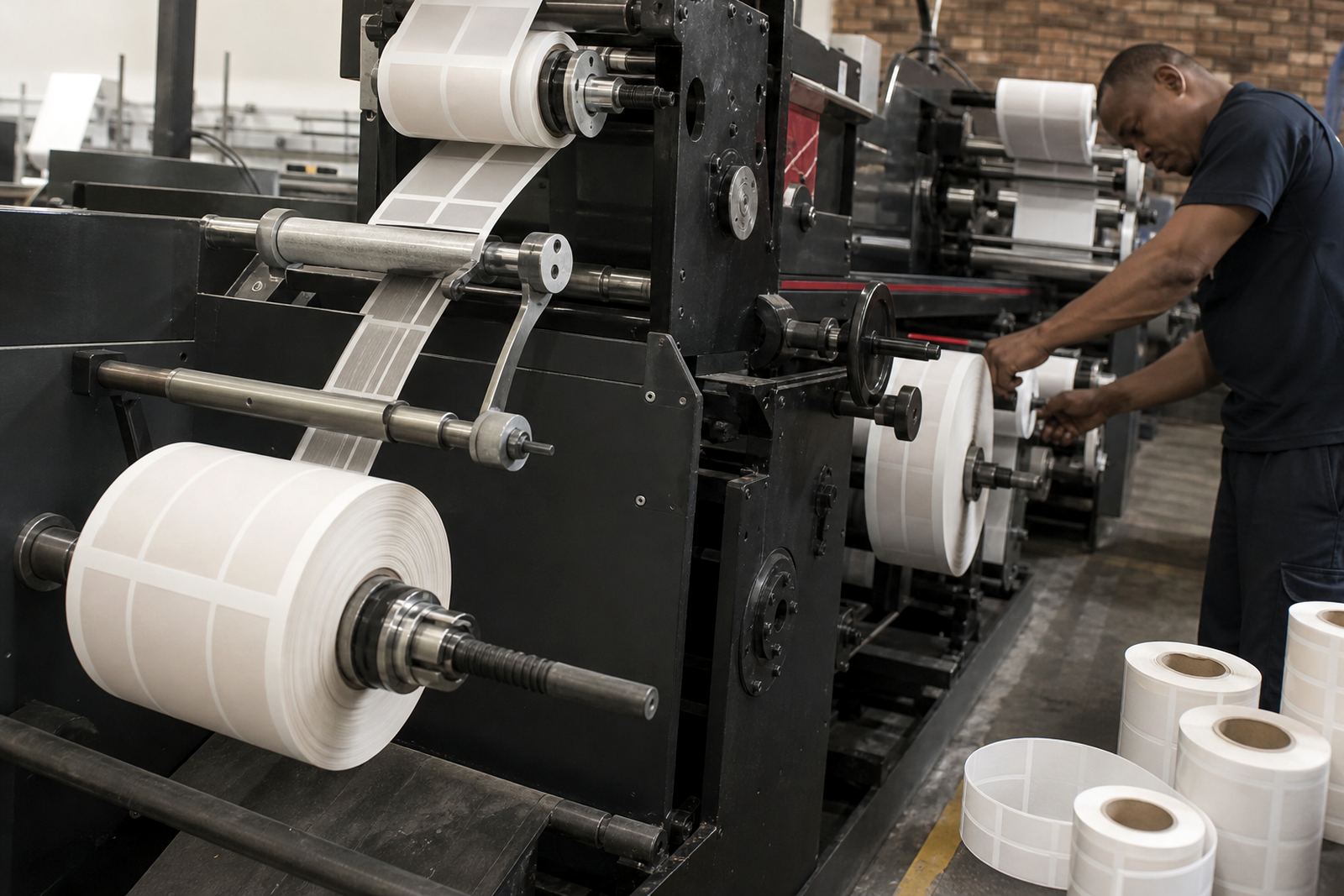
- Press type: narrow-web flexo label press
- Focus: setup, finishing and operator confidence
What was holding production back
The plant was already producing labels, but the team was spending too much time on trial-and-error during make-ready. Small changes in web tension, plate mounting and ink balance were creating extra stops. On a busy retail schedule that quickly turns into missed handovers and pressure on the finishing room.
There was also a practical challenge around loading work around normal South African conditions. Bellville can get warm on the floor in summer, and the business had to deal with occasional load-shedding and the usual interruptions that come with it. The client needed a support plan that would keep the press ready, even if power dips or shift changes caused delays. We took note of the room layout, the sequence of changeovers and the way the finishing area fed back to dispatch.
- Frequent job changes across different label formats
- Need for more consistent plate mounting and registration
- Pressure to keep finishing aligned with print output
- Site needed a plan that could cope with power interruptions
Support supplied over three weeks
We worked with the client over a three-week period. In week one we reviewed the press line, watched a live changeover and checked the main points where delays were happening. In week two we focused on press installation checks, commissioning support and practical operator training on the steps that mattered most to the day shift. In week three we moved into startup production support, finishing setup and a short period of close follow-up while the team ran regular orders.
The support covered setup discipline, plate mounting help, anilox care, simple maintenance checks and a cleaner way of handling finishing. We did not try to overcomplicate the process. The goal was to make sure the same job could be repeated with less rework and fewer small errors. That included helping the team prepare for a job, verify the key settings and hand the press over between operators without losing control of the run.
- Week 1: site review and production observation
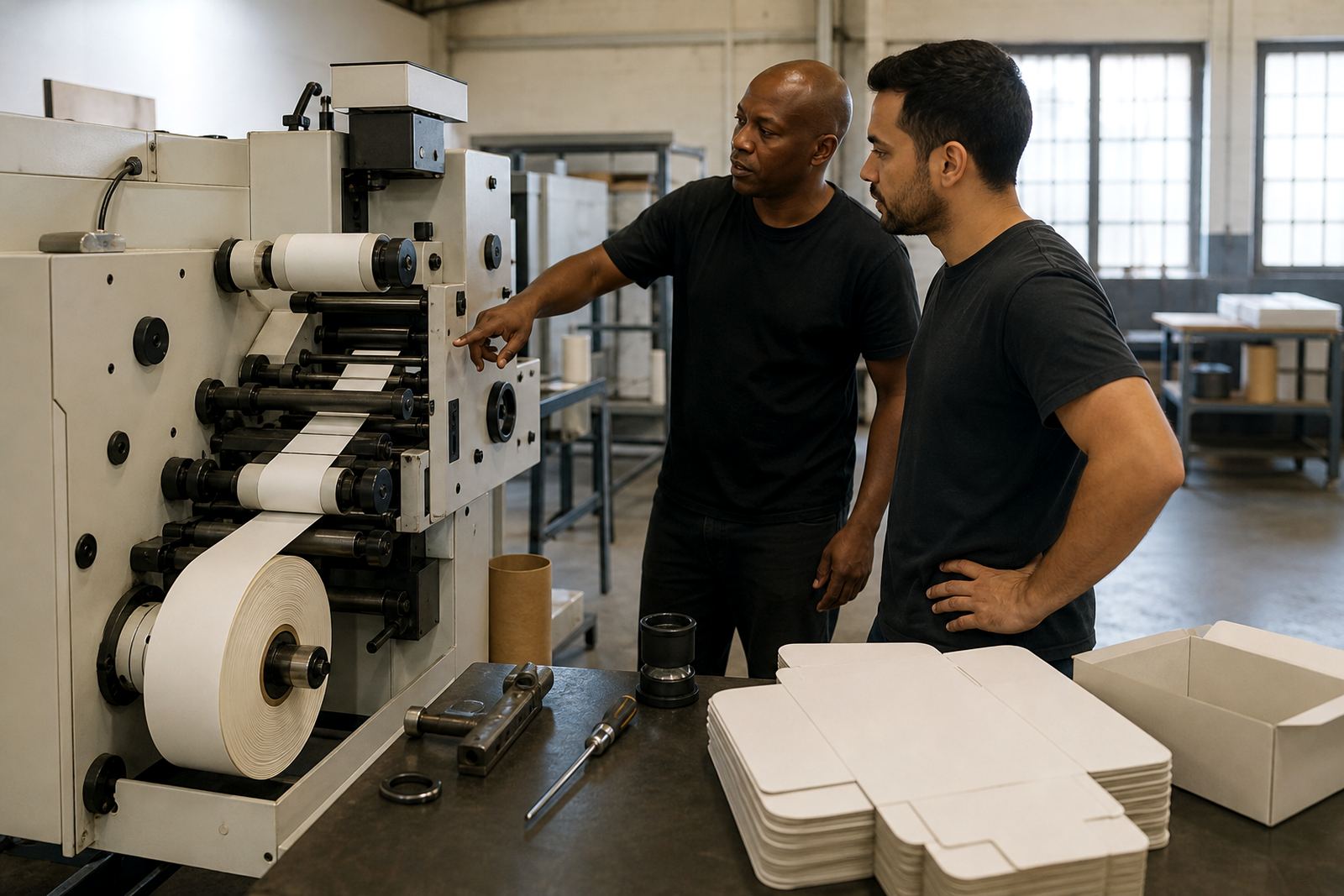
- Week 2: commissioning support and operator training
- Week 3: startup production support and finishing setup
- Ongoing: remote support and spare parts guidance
Key facts that shaped the setup
The most important part of the project was matching the support to the type of work the converter was doing. Retail label work tends to involve frequent changeovers, tighter visual expectations and plenty of attention to finishing detail. The press itself was narrow-web flexo equipment suited to label production, with setup tasks that needed to be repeatable across different runs.
We worked around the client’s material mix and the way their jobs moved from print to finishing. The setup plan covered the points that usually cause trouble: registration, web handling, ink consistency and clean transfer into the finishing stage. It also gave the operators a clearer sequence for start-up and shutdown, which matters when the team is trying to keep production steady over a full shift.
- Production type: retail labels and short run packaging work
- Equipment class: narrow-web flexo label press
- Support areas: setup, finishing, maintenance and training
- Operating focus: repeatability, handover and day-to-day control
What improved on the floor
By the end of the project the team had a better handle on setup timing and a clearer process for getting the press into production. They were able to reduce avoidable stops during make-ready and carry jobs through to finishing with less backtracking. The practical value was not just cleaner print, but less pressure on the whole line.
The client also gained a better understanding of what to check before a run, what to note during a changeover and when to call for support. That matters in a retail environment where one late order can affect several customers down the line. The result was a more predictable workflow, better use of operators on shift and fewer interruptions when the job moved from press to finishing. It gave the team a calmer way to work, even on a busy day.
- Faster and clearer job changeovers
- Better consistency during startup production
- Less rework between print and finishing
- Operators more confident with routine checks
What we would repeat on the next retail project
If we were repeating this project for another retail converter, we would keep the same practical order: observe the live work first, set the press discipline early and only then tighten the finishing steps. That sequence works because it deals with the real bottlenecks rather than treating every issue as a separate problem.
We would also keep the support local to the way the plant operates in South Africa. That means planning around load-shedding, building in time for operator handover and keeping spare parts support simple enough to use when production is under pressure. For a Bellville converter, or a similar site anywhere from Johannesburg to Cape Town, the main aim stays the same. Keep the press ready, keep the team trained and keep the finished labels moving out on time.
- Start with live observation, not assumptions
- Keep setup steps simple and repeatable
- Link print checks to the finishing room early
- Plan support around local power and shift realities
Project outcome for Bellville retail labels
This Bellville retail converter project showed how the right support plan can take pressure off a busy label line. With better setup control, finishing setup and operator training in place, the client had a clearer routine for day-to-day production and a better way to handle repeat work. It was a practical fix for a practical problem, and that is usually what makes the biggest difference.
For converters who need narrow-web flexo support in Bellville, across the Western Cape or further afield, we keep the focus on production reality. That means installation, commissioning, training, maintenance and support that fits the job on the floor, not just the paper plan. It keeps the press moving and the team ready for the next order.
Key facts
| Project town | Bellville, Western Cape |
|---|---|
| Client type | Retail label converter |
| Press class | Narrow-web flexo label press |
| Project duration | 3 weeks |
| Main support delivered | Setup, commissioning, training and finishing support |
| Core outcome | Cleaner changeovers and steadier daily production |