
Start With the Surface, Not the Artwork
Before choosing any adhesive, look closely at the surface the label will land on. A paper carton, a glossy bottle, a flexible pouch, a chilled jar and a powder-coated drum all behave differently. Some surfaces are easy to bond to, while others have low surface energy and need a stronger adhesive or a different label construction altogether.
On press, this affects more than just adhesion. It can influence release from the liner, how the label feeds through the press, and whether the final label lays flat or lifts at the edges. If the product will face rough handling in warehouse racking, repeated touching at point of sale, or condensation after refrigeration, the surface choice becomes even more important.
Think About Temperature From Filling to Final Use
Temperature is one of the biggest reasons labels fail in the field. A label might be applied in a warm plant in Spartan, then sent to a cold room in Johannesburg or onto a delivery route through coastal humidity in Durban. Adhesive that looks fine on the bench can struggle once the pack sees heat, cold or fast temperature changes.
Ask these questions early:
- Will the product be applied to warm containers straight off the line?
- Will it sit in a fridge, freezer or chilled display cabinet?
- Will the pack pass through steam, washdown, or sunlight near a loading bay?
- Will the adhesive need to hold during storage, then release cleanly later?
There is no single answer for every line. The right choice depends on the use case, and sometimes a small change in application temperature can make a big difference.
Permanent, Removable or Repositionable
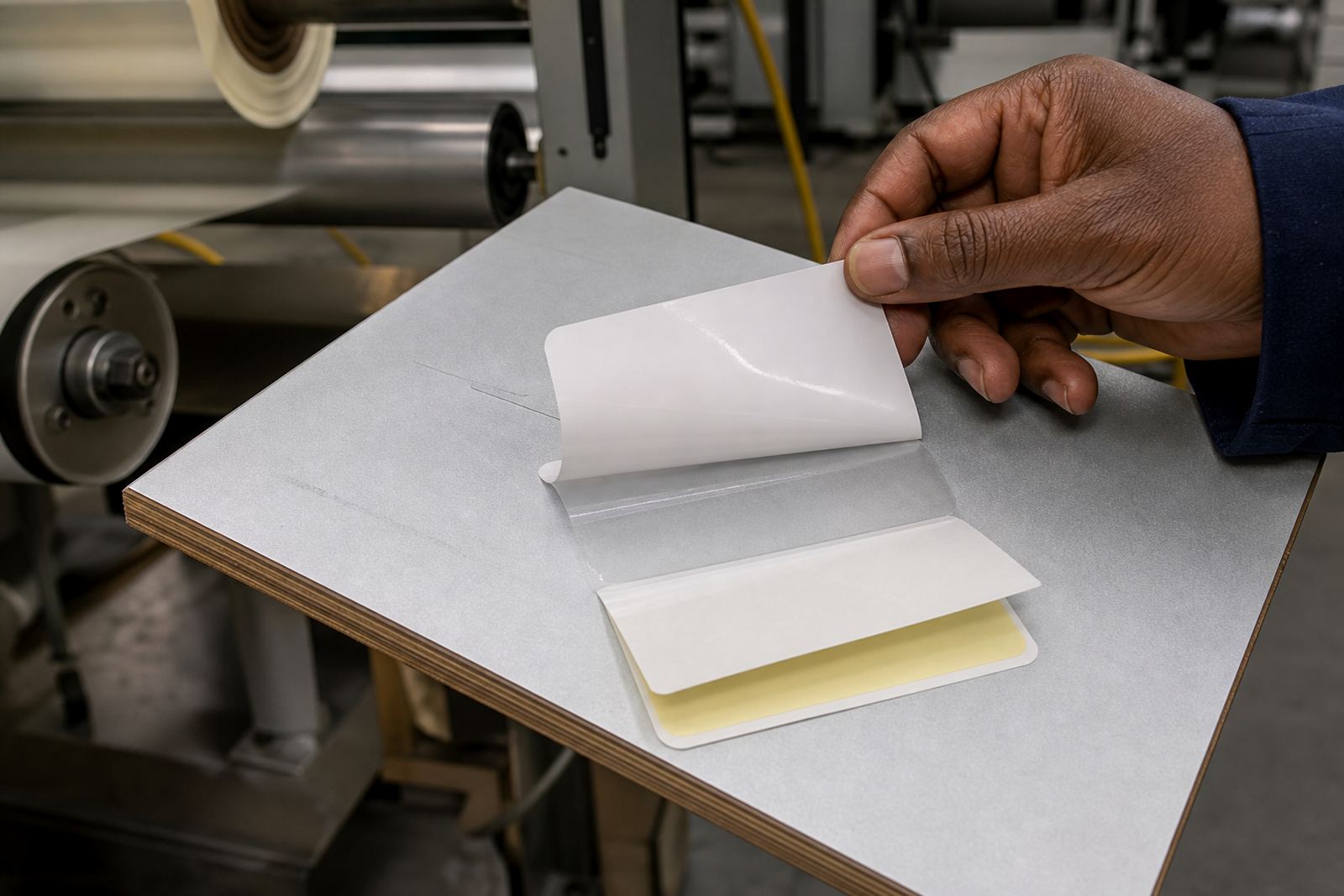
Adhesives are usually selected for one of three broad outcomes. Permanent labels are meant to stay in place for the life of the product. Removable labels need to come off without leaving heavy residue. Repositionable labels give a short window for adjustment during application, which can help on hand-applied lines or where label placement must be exact.
Each option has trade-offs. A stronger bond may be useful on a logistics label or a chemical container, but it may be a poor fit for a promotion sticker on a retail pack. A lighter adhesive may suit a short-life label, but if the product is handled often it may curl or lift. The point is to match the label to the real use, not just the brief.
- Permanent: long-term hold, suited to most product labels and warning labels
- Removable: better for temporary promotions and surface-sensitive packs
- Repositionable: useful where application accuracy is tricky
Moisture, Oils and Cleaning Chemicals Matter
Many labels are exposed to more than ordinary handling. Food packs can pick up moisture, cosmetics may carry oils or lotions, and industrial containers may be wiped down with solvents or cleaning chemicals. In these cases the adhesive must keep its grip without breaking down or staining the pack.
Coastal conditions also matter. In places like Gqeberha and Durban, higher humidity can affect both the substrate and the adhesive response. In humid storage areas, some labels lift at the corners or lose tack before the customer even opens the carton. That is why product testing in real conditions is worth the time.
If the label must survive refrigeration, condensation or washdown, consider the full environment around it, not just the print spec. A label can look perfect at dispatch and still fail after 48 hours in a cold room, which is a costly mistake.
Construction Must Suit the Finish and the Line Speed
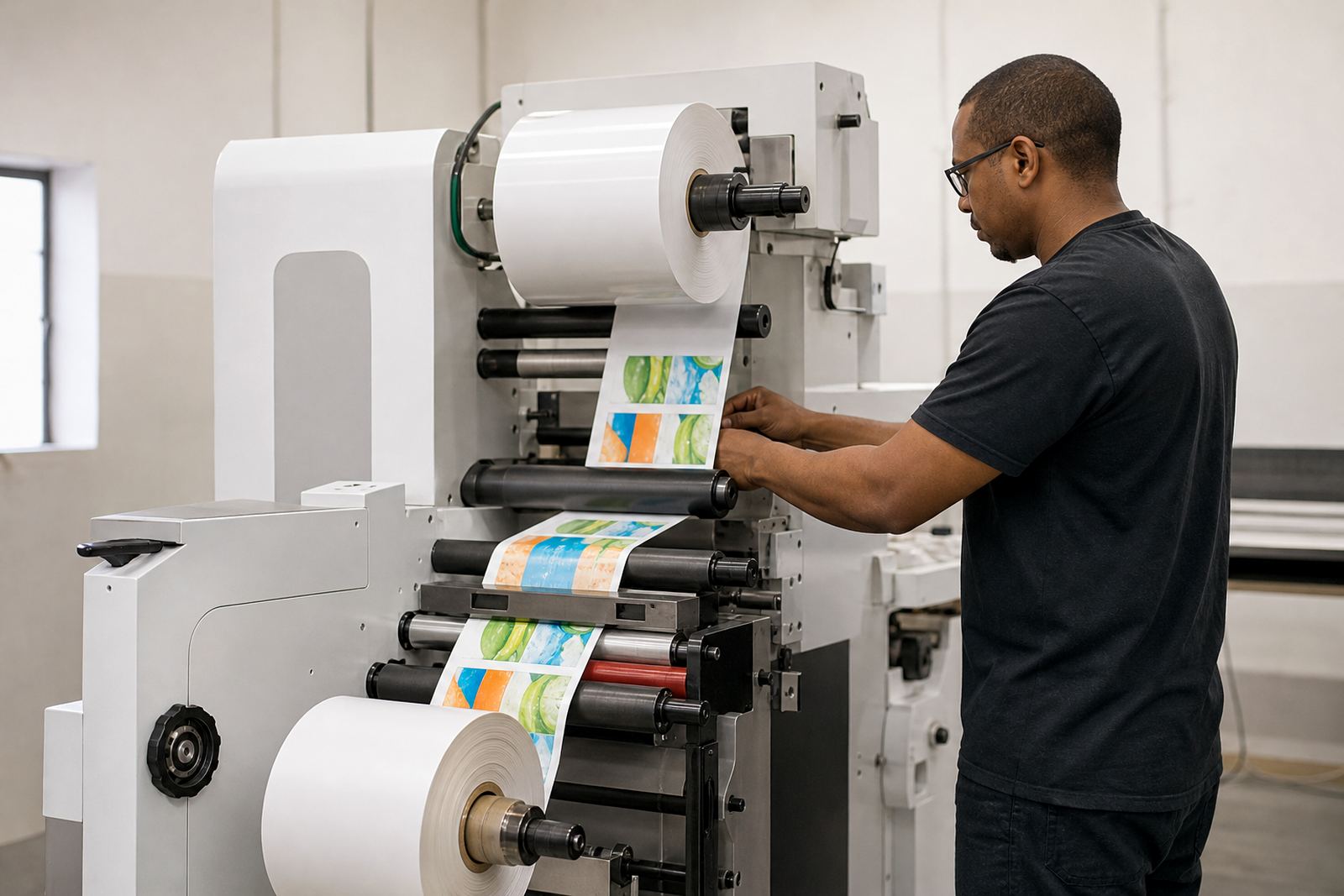
Adhesive choice does not sit on its own. It works with the face material, liner, die-cutting and the finishing process. A label that is being overprinted, varnished, cut and rewound needs to run cleanly through the press and then convert well after printing. If the construction is wrong, you may see label lift, bleed through, poor stack release or edge picking during finishing.
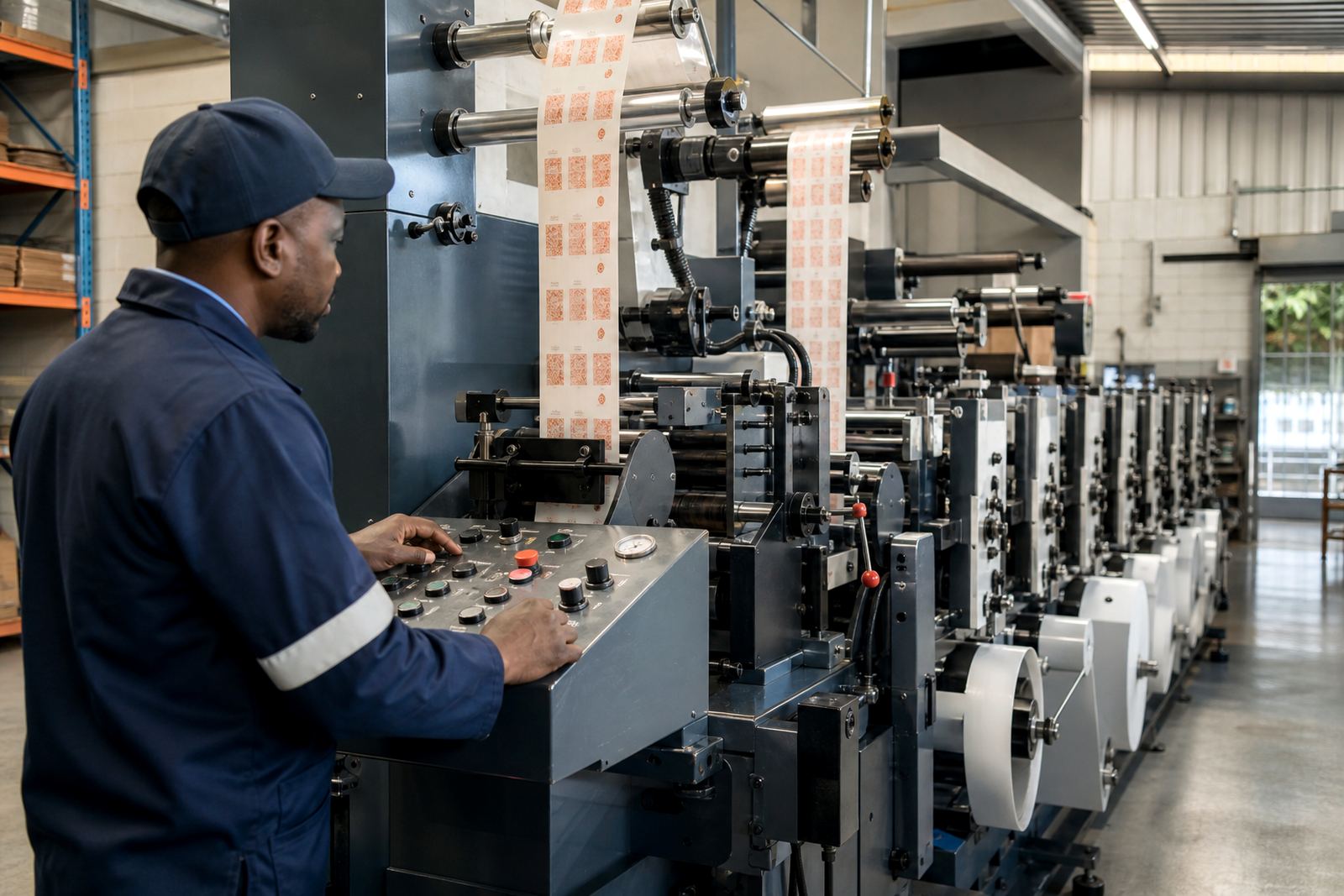
For converters running narrow-web flexo presses in South Africa, this often means checking the label at every stage: print, die-cut, rewind, application and end use. A construction that seems fine at one speed may behave differently once the line is pushed harder. The finishing team should also check whether the adhesive makes post-print stripping harder than expected.
- Confirm compatibility with the face stock and liner
- Check if adhesive ooze could affect cutting or rewinding
- Review release performance for clean finishing
- Test the final pack, not only the printed web
Regulatory Labels Need Extra Care
Some labels do more than carry a logo or product name. They may need to remain readable for ingredients, batch details, safety wording or handling instructions. In these cases the adhesive must support the job through the full shelf life of the product. If the label lifts, creases or smudges, the information can become hard to read and that creates avoidable risk.
For food and beverage packs, cosmetics and certain retail products, good adhesion is part of the overall presentation and compliance picture. The label must stay in place on the container shape used, whether that is a flat carton, a round bottle or a curved tub. If the product is stored in a fridge or stacked tightly in transit, the adhesive needs to stand up to pressure and movement, not just look neat on the reel.
A Practical South African Example
Consider a label converter supplying a chilled dairy pack for Gauteng retail. The label may be applied in a packing room in Kempton Park, then moved through cold storage and delivered into stores across Johannesburg and Pretoria. If the adhesive is chosen only for the first stage, it may not cope with the rest of the journey. Add a humid week in Durban or a warmer loading bay in Cape Town, and the risk grows again.
That is why our approach is to discuss the product, the surface, the packing area and the final destination before anything goes to press. We can help with setup, anilox care, plate mounting help and finishing setup so the label construction suits the press and the end use. In practice, that means fewer returns, fewer complaints and less wasted material, which is what every production manager wants.
At the end of the day, the best adhesive is the one that matches the real product route. Not just the sample on the bench, but the full trip from application to shelf.