Start with the pressroom conditions, not the first label
Before plates go on and ink starts moving, check the room. Narrow-web flexo presses are sensitive to temperature, dust, humidity and power quality, especially in Gauteng where load-shedding and summer storms can affect production at short notice. A stable setup begins with a clean floor, dry air and enough space around the machine for safe access to unwind, print, dry and rewind stations.
In Kempton Park and other industrial areas around Johannesburg and the East Rand, many label converters work under pressure to turn jobs quickly. That makes it tempting to start as soon as the roll arrives, but basic setup is what saves time later. If the substrate is stored near an open roller door or a wet wall, it can pick up moisture and curl, which leads to web wander and poor register.
- Clear dust and loose trimmings before the shift starts.
- Check that compressed air, power and ventilation are available.
- Store rolls flat and sealed until needed.
- Confirm that the room is ready for the full job, not just the first reel.
Mount the web path so the material runs true
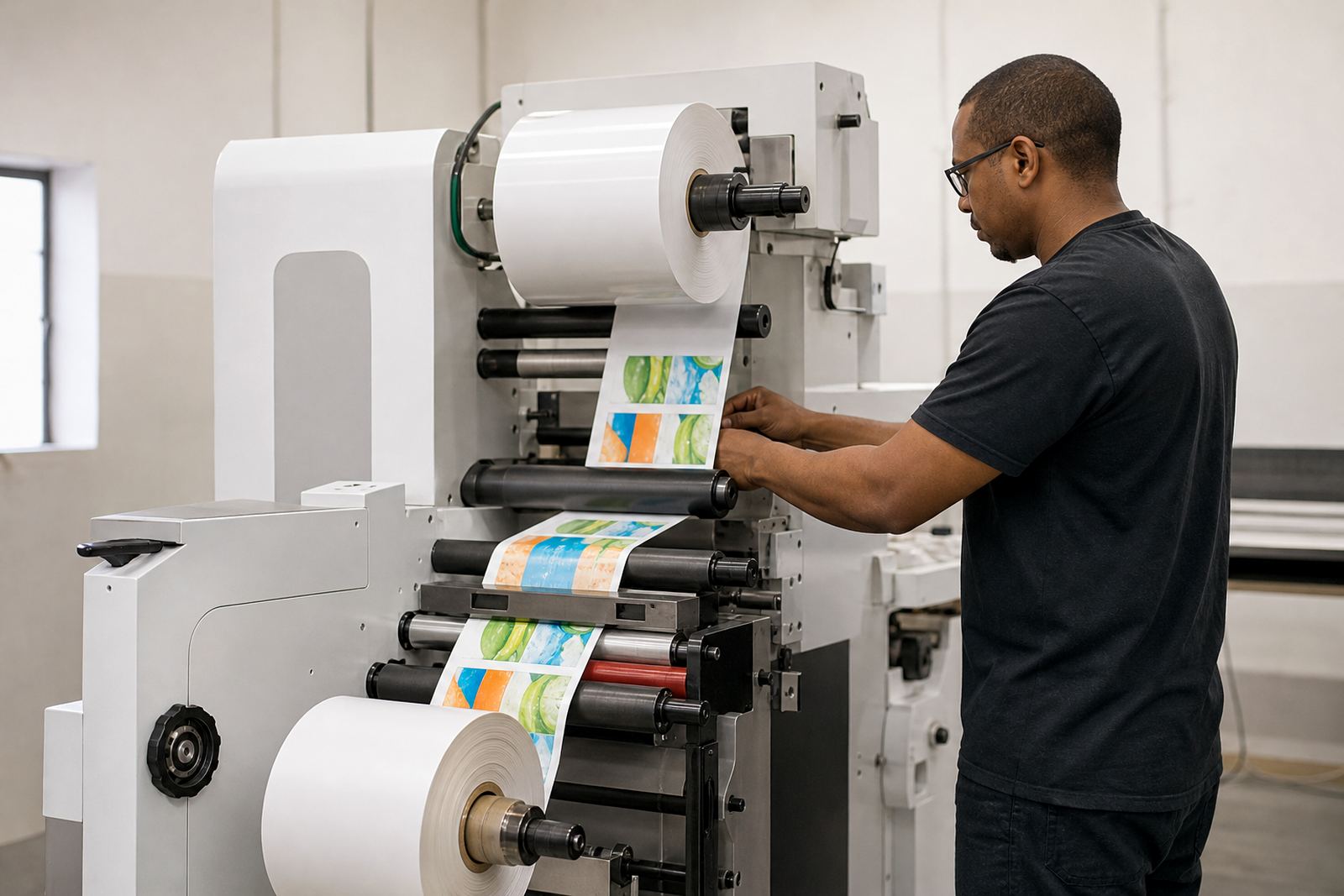
The web path is the backbone of the job. If the material is threaded badly, every later adjustment becomes harder. Start by checking unwind tension, guide rollers and web alignment from the first metre. The goal is to keep the substrate running straight and stable through the print stations, drying sections and slitting or finishing units.
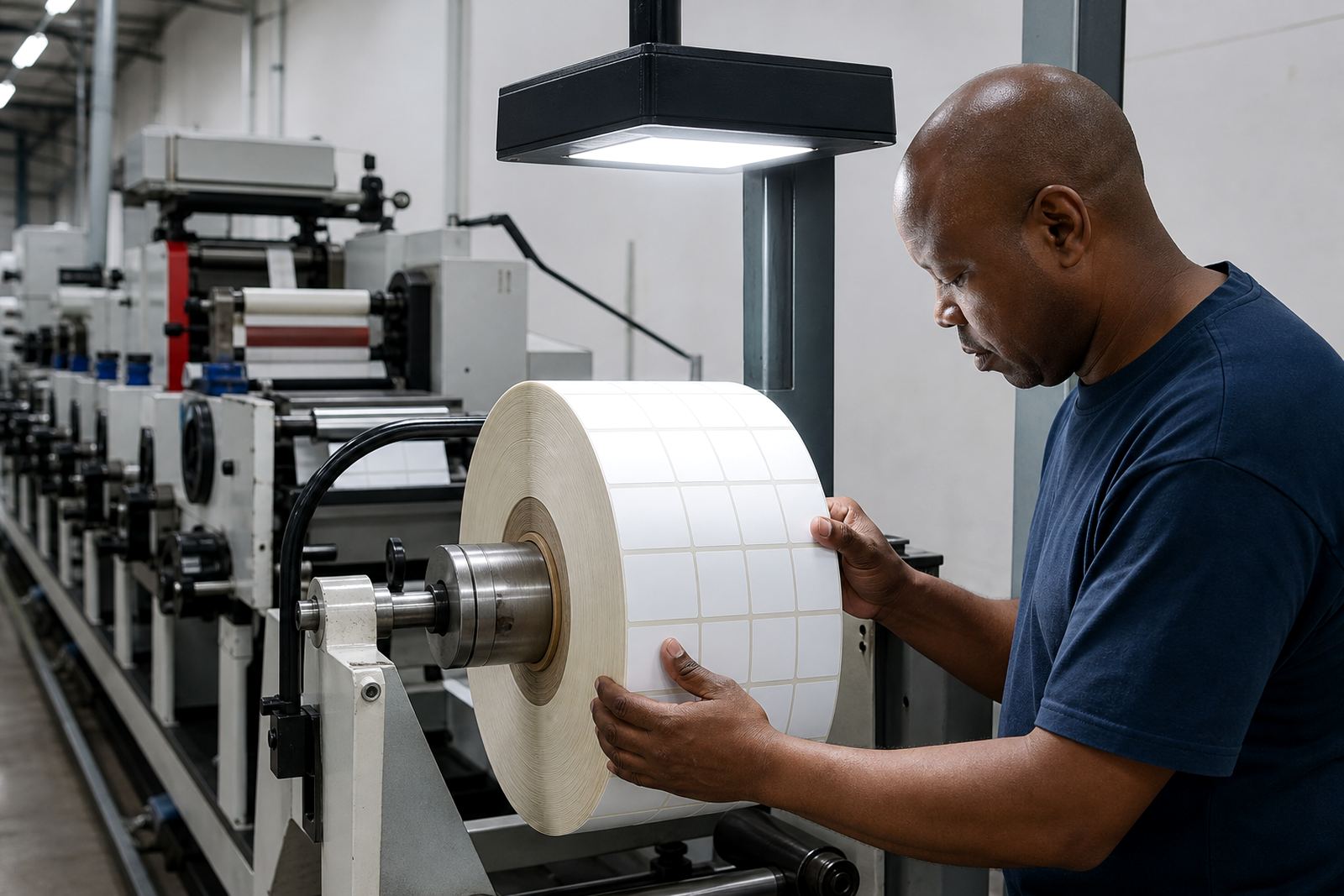
For label work, a small tracking error can turn into wasted material fast. Operators should look for edge damage, telescoping rolls, loose cores and any sign that the web is not sitting square on the guide rollers. On narrower labels, even a slight misfeed can cause skewed print, poor die-cut placement or uneven varnish laydown. That is why setup should be done slowly and with two sets of eyes where possible.
- Inspect the roll before loading it onto the unwind.
- Thread the web according to the machine path, keeping tension even.
- Watch the edges as the press moves up to speed.
- Stop early if the web drifts, rather than trying to correct it mid-run.
Set plates, impression and anilox contact with care
Basic press setup is not only about getting the press running. It is about getting the print right from the first pull. Plate mounting should be neat, clean and consistent, with no lift at the edges and no trapped dust. Once the plates are on, impression and anilox contact need to be adjusted step by step, not forced into place. Too much pressure can flatten detail, while too little pressure gives weak coverage and unstable colour.
Anilox care also matters at this stage. If the engraved cells are dirty or damaged, the press will struggle to deliver an even ink film. A quick check before the run can prevent streaks, pinholing and colour drift. On food and beverage or cosmetics labels, where appearance matters on shelf, these issues show up quickly and they are harder to fix once production is underway.
- Keep plate backs and sleeves clean before mounting.
- Confirm register marks are positioned consistently.
- Set impression lightly first, then fine-tune.
- Check anilox condition before blaming the ink.
Match ink, drying and substrate before the first long run
Setup should always respect the job material. Paper, film and synthetic substrates behave differently, and each one responds differently to ink laydown and drying. A press set for one substrate may not perform the same way on another. That is why short test pulls are useful before production gets moving. They show whether the ink is curing properly, whether the colour is holding, and whether the web can travel through the press without picking up smudges or blocking.
In Durban, where coastal humidity can affect handling and drying, converters often need a little more care during setup than they expect. In Cape Town and Gqeberha, wind and seasonal moisture shifts can also affect storage and print consistency. The point is not to chase perfection from the first minute. The point is to confirm that the setup suits the material on hand and the conditions in the plant that day.
Operators should also check that finishing steps, such as slitting, varnish, laminating or die-cutting, are aligned with the print setup. If the print is right but the finishing stations are off, the job can still fail at the last step.
Use a repeatable checklist for each changeover
Changeovers are where good habits matter most. A simple checklist keeps the team from missing basic steps when the pressure is on. This is especially useful in busy converter plants that run mixed jobs for retail, cosmetics, food and household products. With a checklist in place, the operator can move through the same sequence every time, which makes the start-up calmer and more predictable.
At Flexography Printer, our team supports presses in Kempton Park, Johannesburg, Pretoria, Durban, Cape Town and Gqeberha, and the same pattern shows up often: the plants that follow a set process spend less time correcting small faults later. The checklist does not need to be complicated. It just needs to cover the essentials and be used every shift.
- Confirm the job ticket, substrate and plates before loading.
- Check tension, registration and impression settings.
- Review ink levels, drying and finishing settings.
- Record any adjustment that improves the run.
Train the operator to spot trouble early
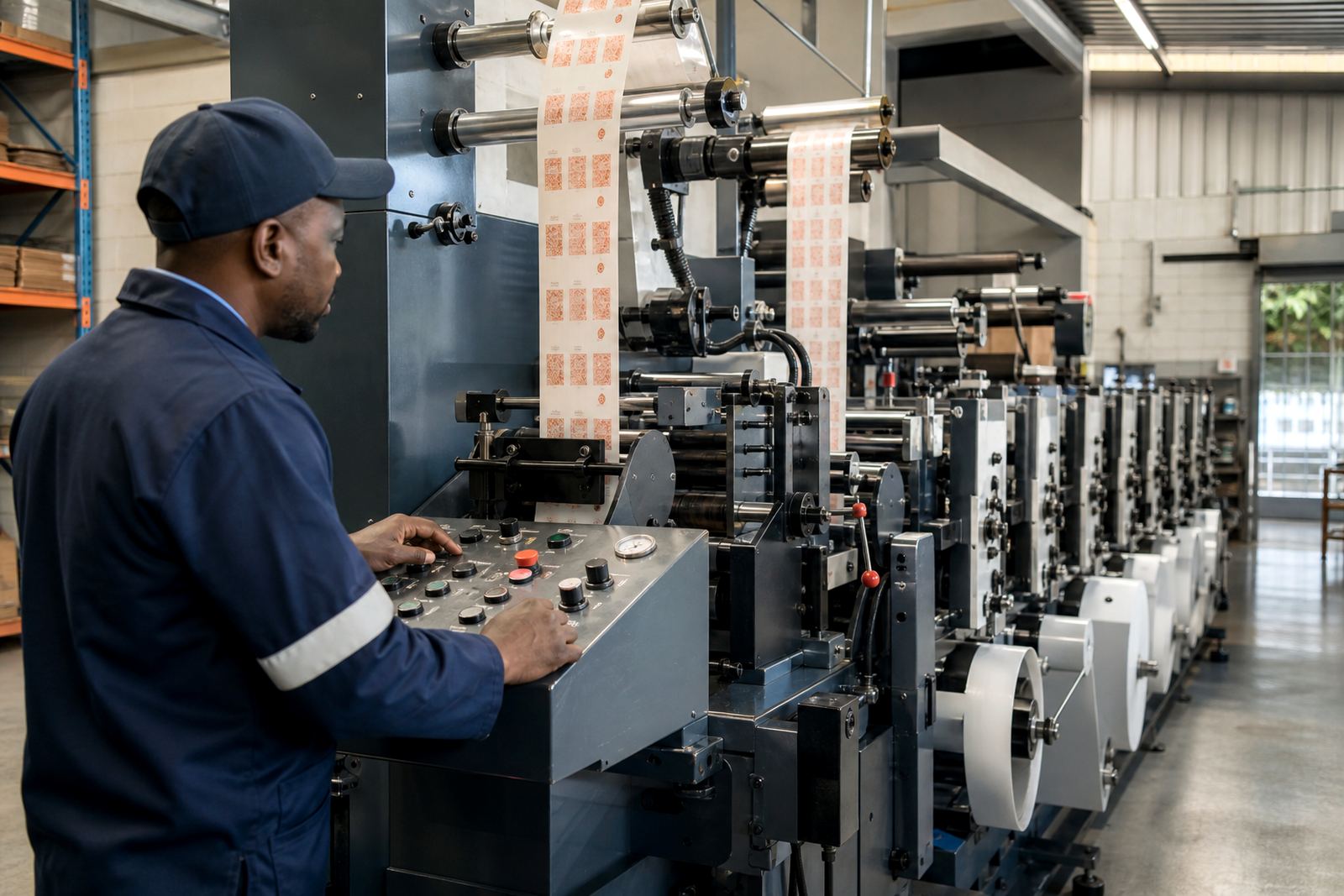
Even the best setup can drift if nobody is watching the right signs. Operator training should cover more than button pressing. It should teach the person on the press to recognise early warning signs such as edge wander, colour shift, dirty print, weak drying, noisy rollers or a change in rewind quality. When these are picked up early, the correction is usually small. When they are ignored, the press can chew through metres of material before anyone notices.
This is where practical support makes a difference. In a Spartan plant with a full order book, or on a late shift in Centurion, the operator needs clear steps for what to check first and when to call for help. The goal is not to create dependence. It is to build confidence so the team can handle everyday setup issues and keep production moving.
For many sites, startup support and preventive maintenance go hand in hand. A press that is checked regularly is easier to set up, easier to keep in register and less likely to lose time on small recurring faults.
Keep the setup clean for the next shift
Basic press setup does not end when the job is running. A tidy shutdown makes the next start easier. Plates, rollers, ink areas and finishing stations should be cleaned properly, and any worn parts or repeated faults must be noted before the next changeover. If a press is left dirty or partly adjusted, the next operator starts with the same problem already waiting.
For label converters across South Africa, steady production comes from small disciplined steps done well. Press installation, commissioning, training, remote support and spare parts all matter, but daily setup is where the habit is built. If the machine is prepared properly, the job begins cleaner and stays steadier through the run.
Clients reach us through the enquiry form on our contact page when they need help with press installation, setup, operator training, finishing setup or breakdown support. For basic setup advice, the best time to ask is before the job starts, not after the waste pile grows.