Why spare parts readiness matters before the press stops
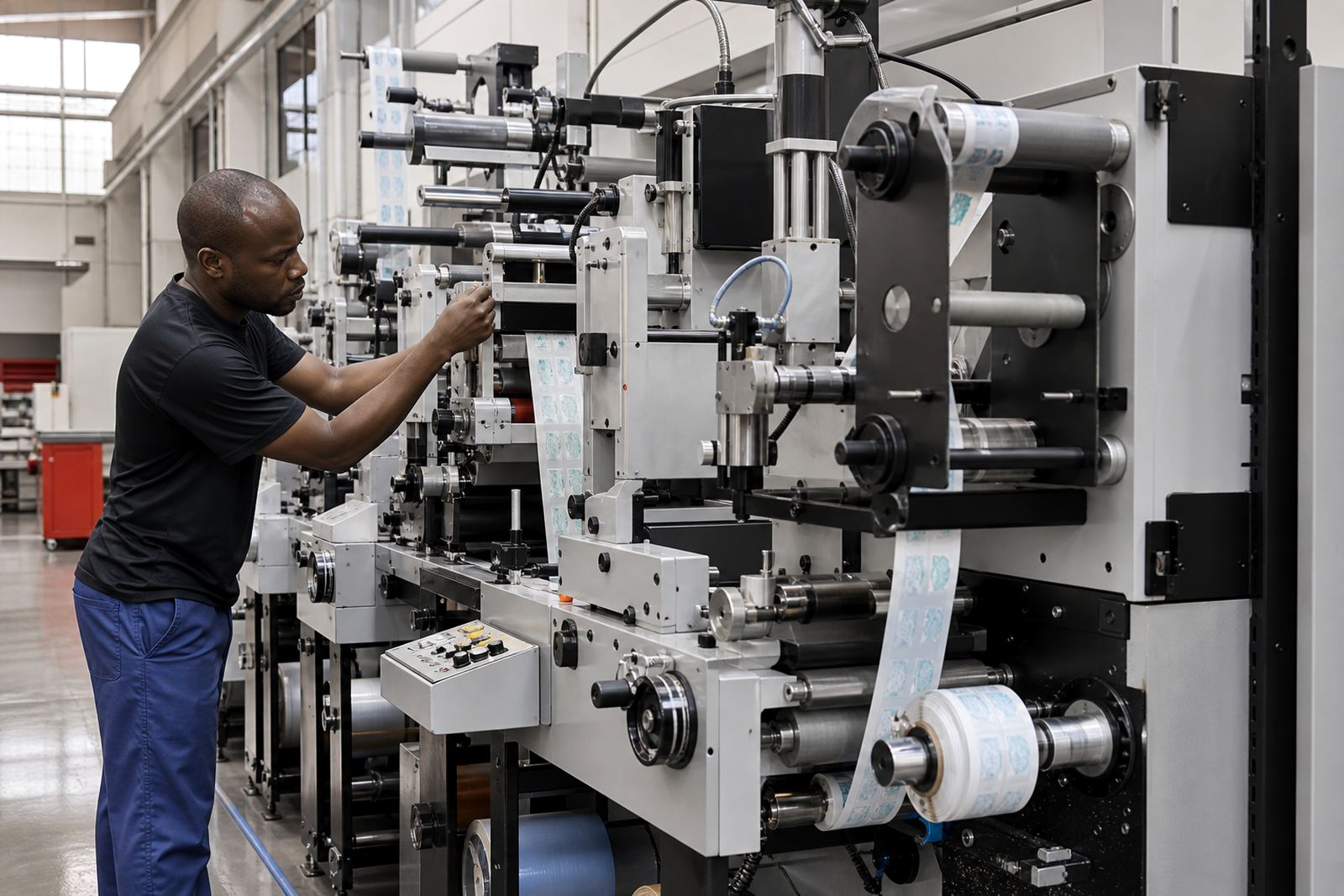
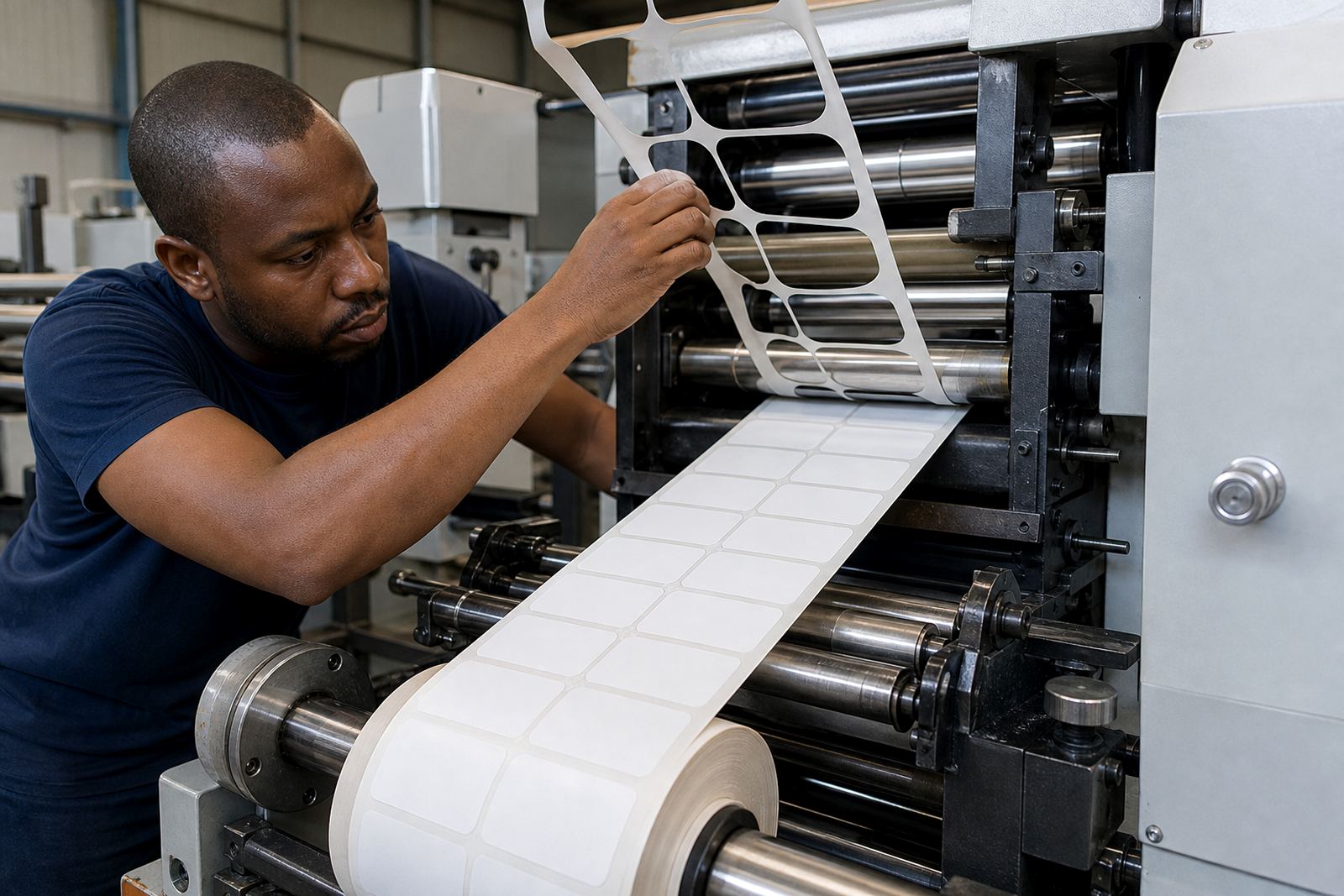
On a label press, the parts that fail most often are not always the expensive ones. Small wear items, fittings, rollers, sensors, belts and seals can bring a line to a halt if they are not on hand or clearly listed. For converters in Johannesburg, Pretoria, Durban, Cape Town and Gqeberha, the cost is not only the part itself. It is the wasted substrate, the lost labour time, and the pressure on delivery dates.
Spare parts readiness is about knowing what you use, how fast it wears, and what must be available locally. A press that runs daily for food labels will have different needs from one doing short cosmetic runs with frequent changeovers. If you wait until breakdown day to make that list, support slows down because everyone is trying to identify the same item at once.
The wear items worth listing first
Every installation is a bit different, but most narrow-web flexo presses share a group of parts that should be tracked from day one. The aim is not to overstock everything. It is to keep the parts that fail often and the parts that stop production if they are missing.
- Belts and drive-related wear parts
- Bearings, seals and bushings
- Sensors, switches and small electrical components
- Anilox-related cleaning and handling items
- Plate mounting consumables and tape
- Ink system seals, hoses and fittings
- Doctor blade and chamber related wear items
If a site prints in a humid coastal area, seals and electrical fittings may need closer attention. If the plant is in a dusty industrial zone, sensor faults and cleaning issues often appear earlier. That is why a general list is only the start. The real value comes from matching the list to the actual machine and its work patterns.
How to build a parts list that actually helps
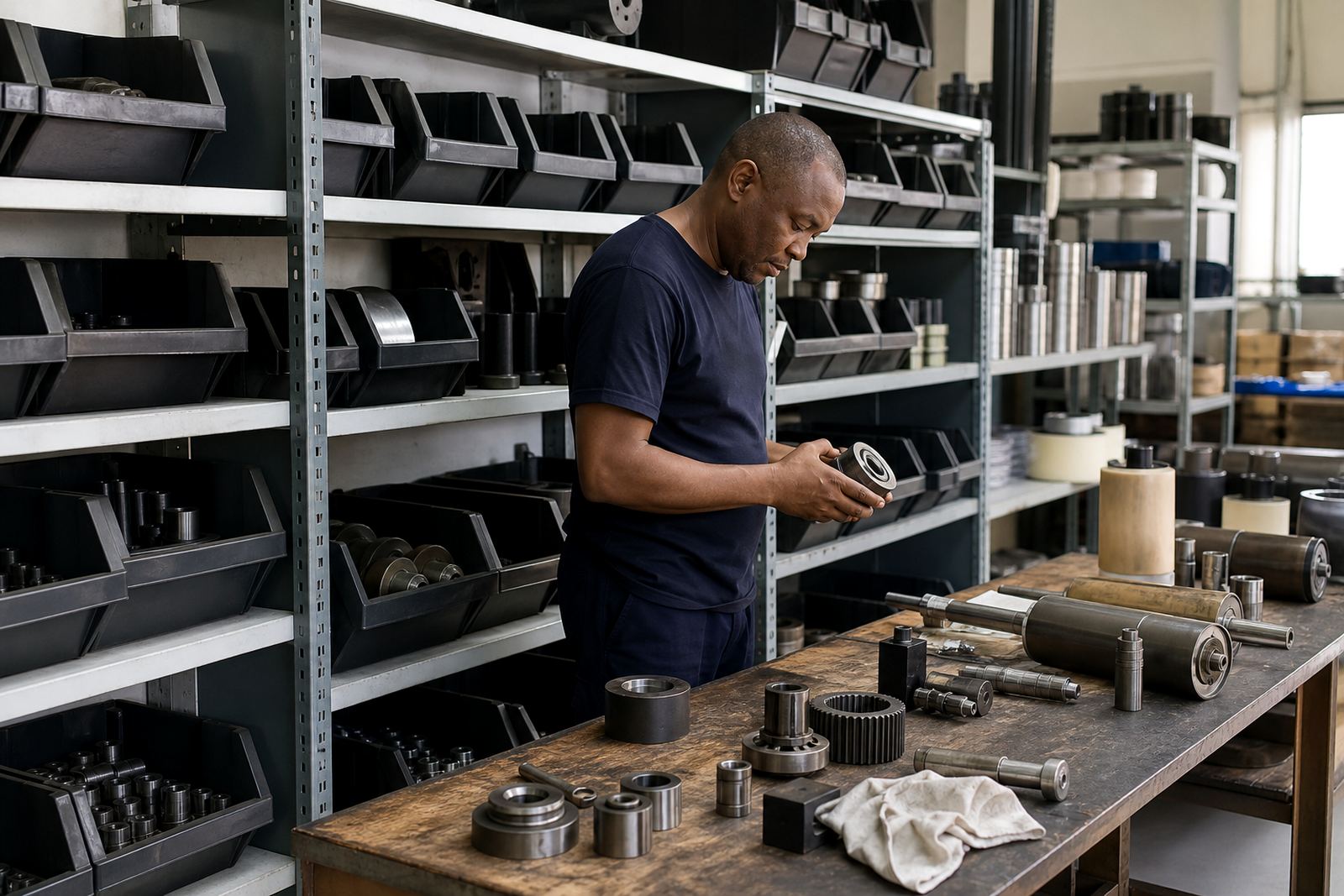
A useful spare parts list should be simple enough for the floor team to use and detailed enough for the service team to act on. Start with the machine’s basic sections: unwind, print units, drying, rewind and finishing. Then identify the wear items in each section and record the exact description used internally on site. A clear photo next to the item helps too, especially where several fittings look alike.
Keep the list in one place and update it after every service visit. If a part was replaced early because of wear, add that note. If a component was checked and found to be fine, note the date. Over time this gives a better picture than memory alone, and it stops repeat delays caused by guesswork.
- Record the part name as used on site
- Add a photo or sample if identification is difficult
- Note machine section and position
- Mark what is in stock, what is on order, and what is critical
- Review after major changeovers or service work
Local sourcing and support planning in South Africa
In South Africa, support delays often come from logistics rather than the repair itself. A converter in Kempton Park may need a part on the same day, while a plant in Cape Town or Gqeberha may need a shipping plan that takes weather, route timing and public holiday delays into account. Even a simple fitting can become a problem if nobody knows the exact size or material needed.
Good planning means identifying which items should sit on the shelf at the plant, which can be held by the support team, and which can be ordered when needed. For sites with load shedding, it also helps to keep critical electrical spares organised so power interruptions do not turn into longer downtime. A clearly labelled cupboard with stock counts is better than a box of mixed parts nobody wants to sort through at 7am.
What changes after installation, commissioning and training
Spare parts readiness should begin during installation and commissioning, not after the first breakdown. When a press is being set up, the team can identify the wear items that are most likely to need replacement during start-up production. This is the best time to agree on part naming, storage, and who signs off on stock use. It also gives operators a chance to see how each item fits into daily production, which reduces handling mistakes later.
Operator training should include basic part recognition. If the floor team can spot early wear on a roller, seal or sensor bracket, the support call is more useful from the start. That saves time for everyone and it often stops a small fault becoming a full stop. In practice, readiness is a habit. The more the team sees the same parts, the quicker they can act when something changes.
- Set stock levels during commissioning
- Train operators to identify wear early
- Agree on part naming and storage locations
- Review spare usage after the first production runs
A practical example from a busy Gauteng label plant
A converter in the East Rand was running mixed label work for food and retail clients. They had no trouble with print quality, but every time a small wear item failed, the line waited while staff searched for the correct replacement. The issue was not a major breakdown. It was the delay in identifying the exact part, then checking who could source it. Production kept slipping by hours, not days, which still caused frustration and overtime.
After a spare parts review, the site grouped its critical wear items by press section and added clear stock labels. The service team also helped separate parts that should be held locally from those that could be ordered on demand. The result was simpler decision-making when faults occurred. No miracle, just less time spent hunting through boxes and calling around. The plant manager later said the change was small but it made Monday mornings easier, which is often what matters most.
A simple readiness routine for every converter
Spare parts readiness works best when it becomes part of weekly production housekeeping. A short check takes less time than a breakdown search and gives the team a clearer picture of what is available. It also helps service technicians arrive with the right items first time, instead of returning later with a second van trip.
Use a practical routine: confirm the top wear items, check what has been used in the last month, review what is running low, and update the list after any service intervention. Keep the process simple enough for operators and maintenance staff to follow without confusion. The goal is not a perfect inventory system. It is a press room that can answer one question quickly: do we have the part, or do we know exactly where to get it?