
What Tamper Labels Are Meant to Do
Tamper labels are not just another label on the pack. Their job is to show clear evidence if a closure, seal, flap or lid has been opened, shifted or lifted. That makes them useful for food, beverages, cosmetics, household goods and many retail items where the buyer needs confidence that the pack is untouched.
In practical terms, the label must stick properly, break or distort in a controlled way, and still look neat on shelf before use. If the material is wrong, the adhesive is too weak or the finish is badly set up, the result is usually waste, complaints and rework. That is why converter setup matters as much as the label design itself.
Common Places Tamper Labels Are Used
Different packs call for different tamper solutions. A carton, jar, tub or bottle all behave differently, especially when the pack is handled in distribution, stored in hot warehouses, or moved through cold rooms and humid coastal conditions.
- Carton flaps and outer packs for added opening evidence
- Jar lids and tubs where a label bridges the closure
- Bottle caps and neck areas on food and beverage packs
- Cosmetic jars and dispensers where presentation still matters
- Retail packs that need visible opening indication on shelf
The main point is simple: the tamper solution must suit the pack shape and the way the product is sold. A label that works on a straight carton flap may fail on a curved lid, so setup needs proper testing not guesswork.
Material Choice Starts With the Pack Surface
Tamper labels rely on consistent contact with the pack surface. That means the converter has to consider whether the surface is glossy, matte, textured, coated or slightly flexible. Some packs also carry dust, mould release residue or filling oils that make adhesion difficult if the surface is not prepared correctly.
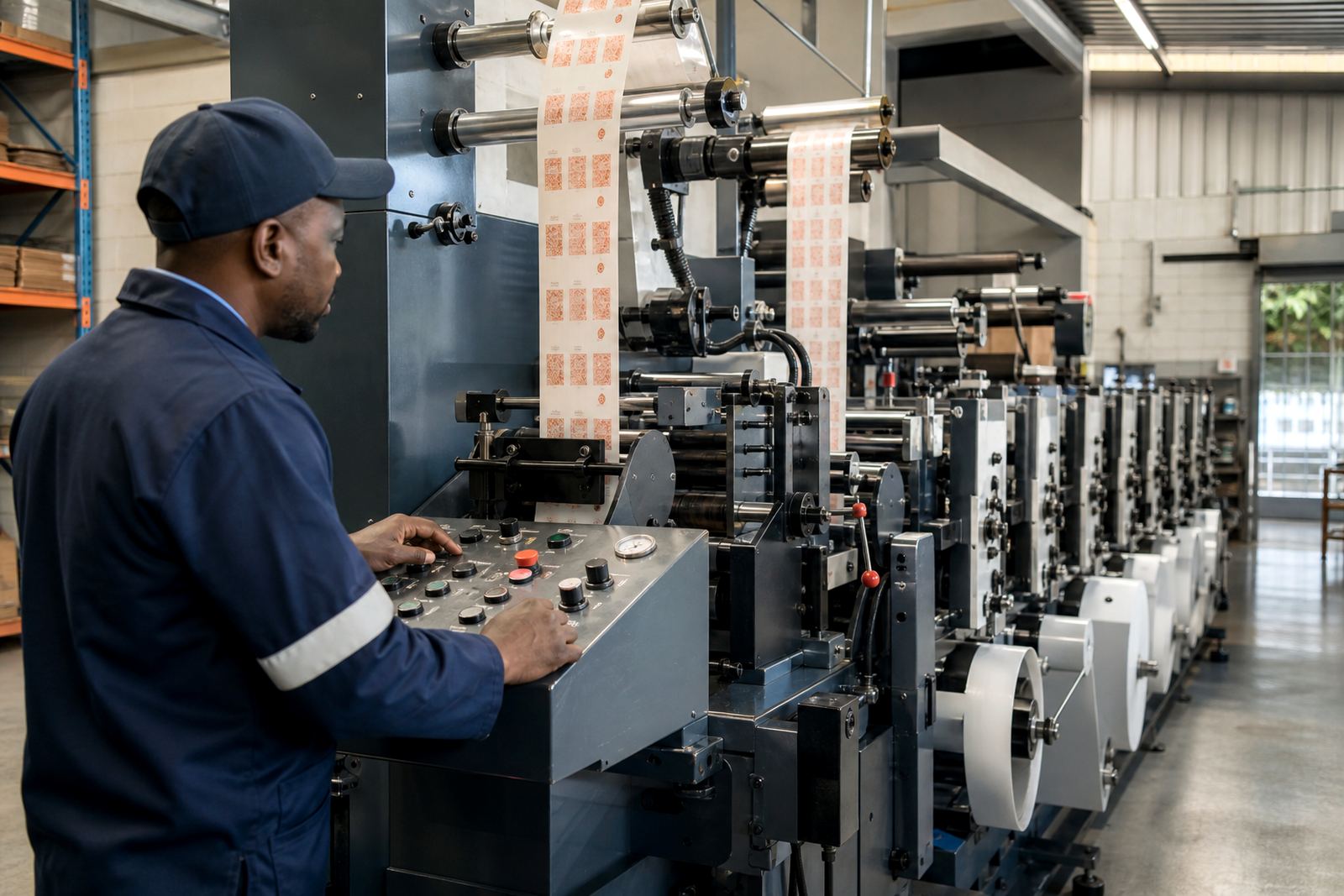
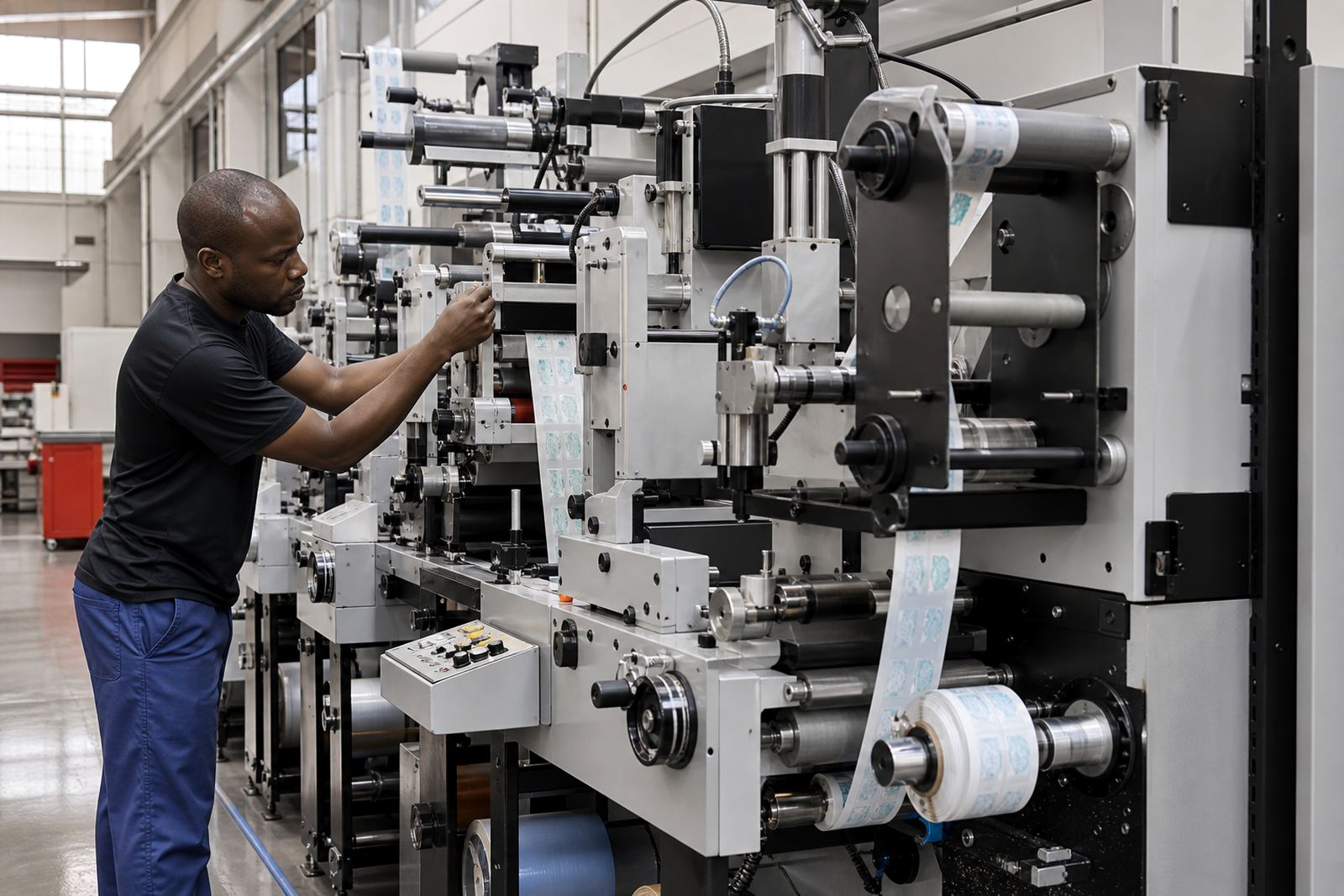
For label converters, this is where narrow-web flexo setup earns its keep. Clean web handling, steady tension, accurate registration and reliable finishing all help the label perform once it reaches the pack line. If the label is intended to tear, bridge or leave a clear void pattern, the print and finishing stages need to be controlled from the start.
Local conditions matter too. In Gauteng, dry air and dusty environments can affect static and handling. In Durban and other coastal areas, humidity can change how stock behaves on press and in storage. That is why a label that runs well in one site may need adjustment before it is released for another plant.
Why Print Setup and Finishing Affect Performance
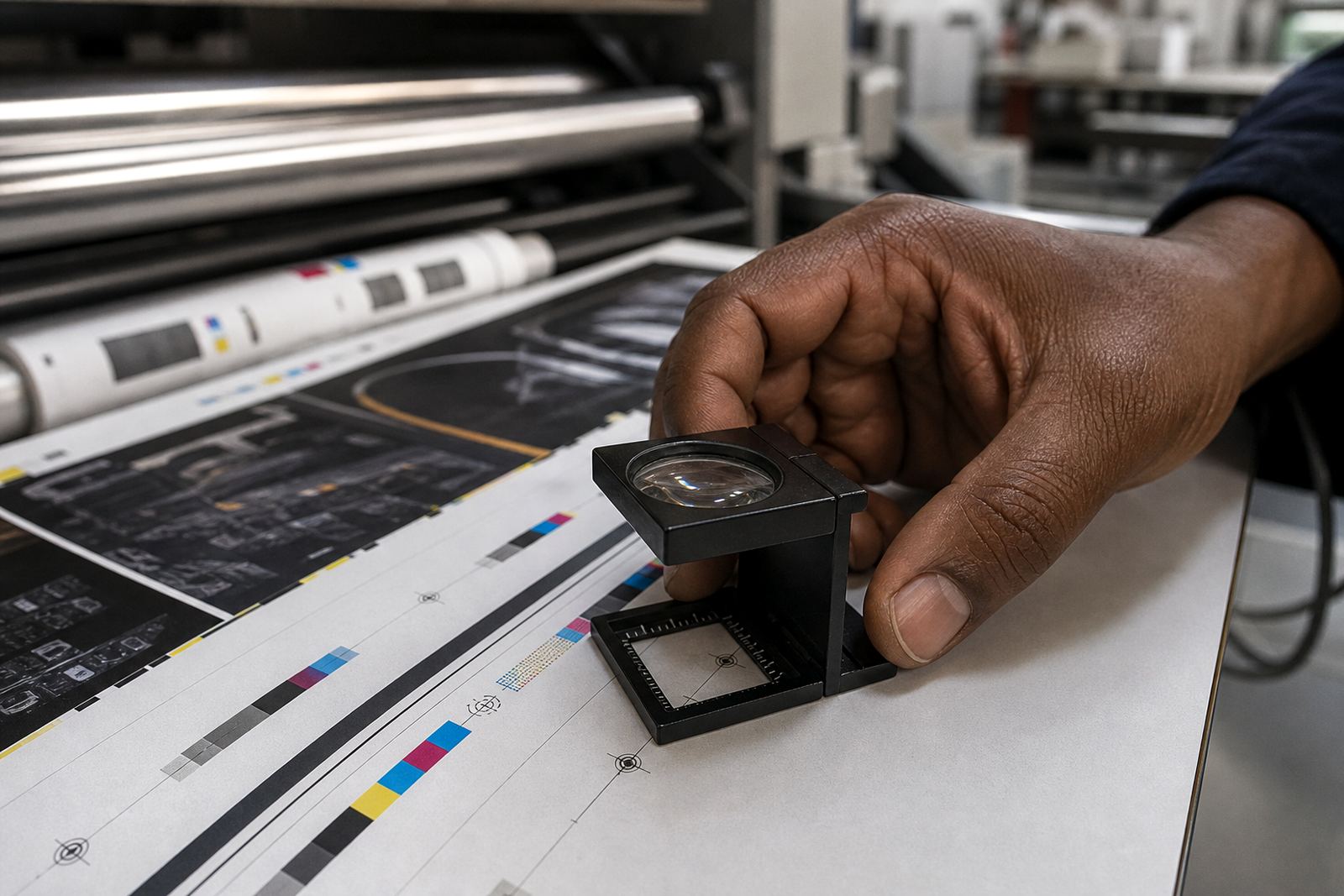
Good tamper labels depend on more than artwork. The press setup, plate mounting, ink laydown and finishing choices all influence how the label looks and how it behaves on the pack. If a label needs to bridge a lid seam or tear in a controlled way, the converter must match the finishing method to the application.
Useful finishing considerations include:
- Die-cut accuracy so the label removes cleanly from the liner
- Controlled slitting and rewinding for stable rolls
- Varnish or overprint choices that do not interfere with adhesion
- Careful plate mounting to keep text and seals in register
- Release testing on the actual pack before full production
On a narrow-web press, small setup errors can show up quickly. A slight shift in registration, a pressure issue on the die, or uneven ink transfer may not seem serious on press but can affect how the tamper feature performs on the filling line. This is why practical setup support and operator training are worth the time.
What Label Converters Should Check Before First Run
Before a tamper label goes into full production, it should be checked on the real container, not only on a sample sheet. The packer needs to know that the label applies cleanly, stays in place and gives visible evidence when opened. A neat print sample means very little if the label lifts at the corner after two days in a warm storeroom.
- Does the label hold on the exact surface used by the customer?
- Does opening the pack create clear and obvious evidence?
- Does the label still look neat after transport and storage?
- Will the roll feed and unwind smoothly on the applicator?
- Is the finish suitable for the product environment, including moisture and handling?
For converters serving Johannesburg, Pretoria, Durban, Cape Town and Gqeberha, this kind of checking saves a lot of trouble. It also avoids the awkward situation where a label looks fine on press but fails once the customer starts applying it at speed.
A Kempton Park Example From the Packaging Floor
Consider a small Gauteng packer in Spartan, Kempton Park supplying jars to retail outlets in Johannesburg and Pretoria. The pack is neat, but the closure needs visible opening evidence for store staff and buyers. The converter must set up the tamper label so it bridges the lid in the right place, tears properly, and still leaves a clean finish on shelf.
In a case like this, the work is not only about printing. It includes press installation, commissioning, operator guidance, finishing setup and then support once production starts. If the line is new to the application, the team may also need help with plate mounting, anilox care, startup production support and a few runs of practical training until the job is stable.
That is where local support matters. When a label converter in the East Rand or Centurion is under pressure to meet a dispatch date, having technical support that can assist remotely or on site keeps the job moving without unnecessary downtime.
Getting the First Run Right and Keeping It Steady
Once the label is approved, the real challenge is repeatability. Tamper labels are often supplied in regular runs, so the converter needs a process that stays consistent across jobs, shifts and different operators. Preventive maintenance, breakdown support and spare parts support all help keep narrow-web presses reliable when volumes are tight and deadlines are close.
Good production habits also matter:
- Keep stored rolls clean and dry
- Check adhesives and release performance before each run
- Train operators to spot early signs of setup drift
- Record the settings that worked on the approved run
- Review complaints quickly and adjust the process, not just the artwork
Tamper labels are simple in concept but unforgiving in production. When the pack needs visible opening evidence, there is little room for weak setup or rushed finishing. A converter that treats the label as a functional part of the pack, not just decoration, usually gets better results and fewer returns.