Where Die Cutting Sits in an Inline Label Line
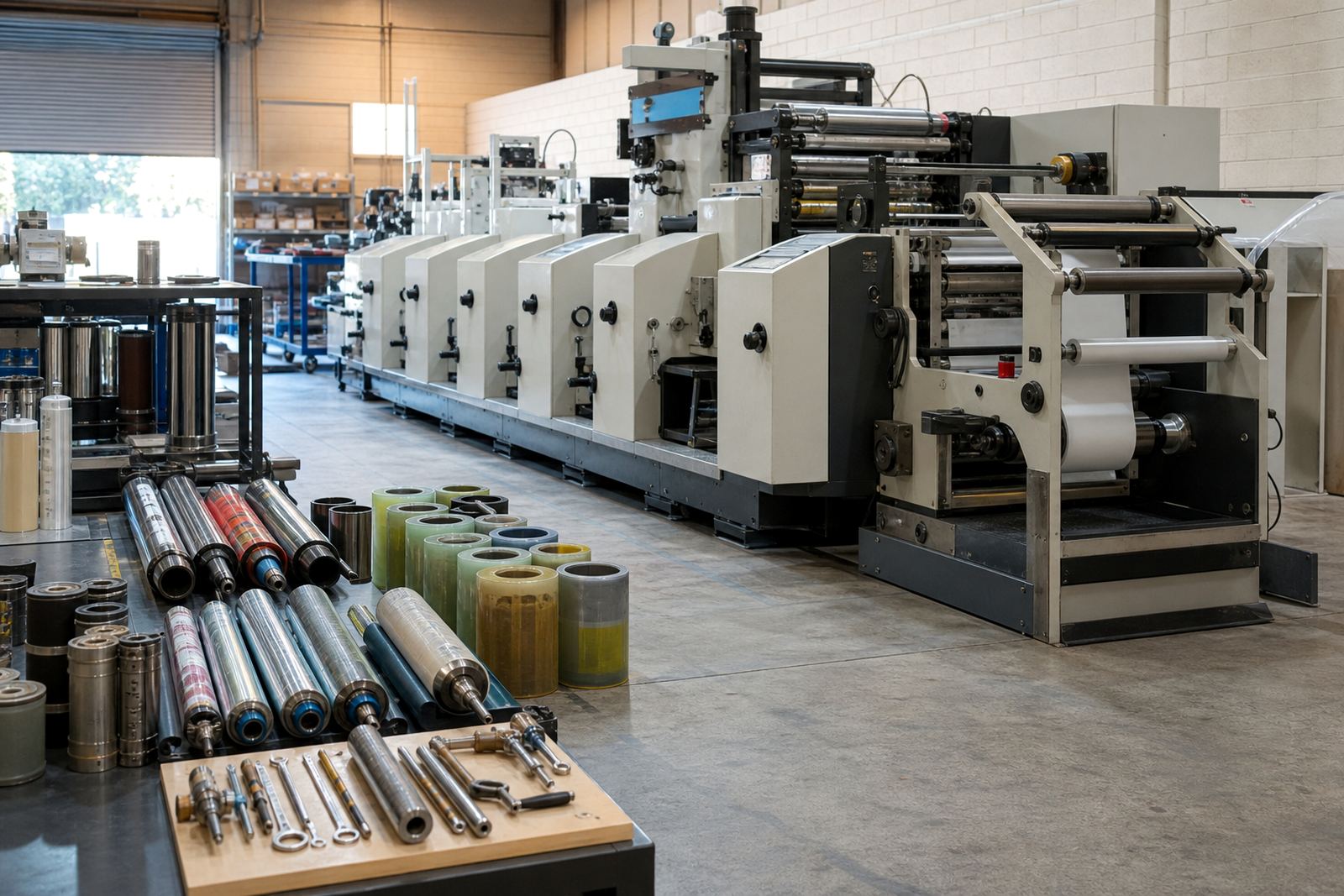
In a narrow-web flexo workflow, die cutting normally happens after the print stations and any varnish or other finishing steps. The printed web moves through the press, the die cuts the label shape, and waste matrix is removed before the finished web is rewound or sheeted for the next stage. When that sequence is set up properly, the line runs with less waste and fewer stoppages.
For label converters in Johannesburg, Pretoria or Cape Town, the practical question is not only whether the die will cut cleanly. It is whether the whole line can keep tension, register and web path under control from start to finish. If the print is out, the die will not land where it should. If the web is tracking badly, the matrix can tear and the job slows down quickly.
That is why die cutting should be planned with the rest of the production flow, not treated as a separate afterthought. A clean cut on press saves time at slitting, rewinding and packing.
What Makes a Good Cutting Result on Labels
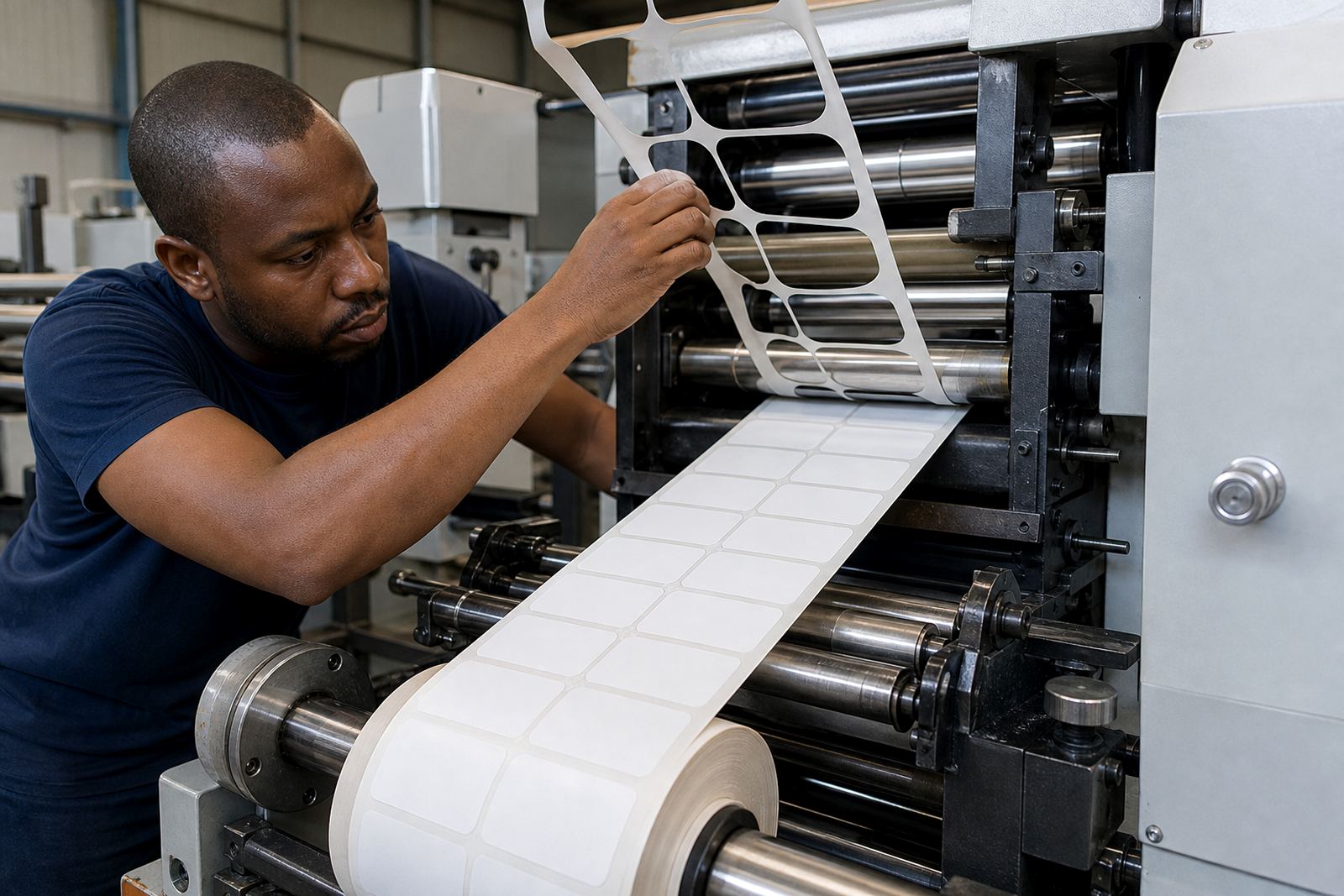
A good die cutting result is simple to spot. The label shape is clean, the backing liner stays intact, and the waste matrix strips away without pulling up edges or distorting the print. On pressure-sensitive labels, this matters even more because the customer wants labels that apply neatly on bottles, tubs or cartons without lifting at the corners.
The main factors are usually the die condition, pressure setting, web speed and the quality of the printed substrate. Too much pressure can damage the liner or make the cut too deep. Too little pressure leaves bridges in the waste and forces the operator to stop the line. Both problems cost time and materials.
- Check the die sharpness before the run begins
- Confirm the cut depth on the actual substrate, not just on a sample
- Watch for waste matrix build-up at corners and tight shapes
- Keep an eye on registration marks where the cut follows print
On coastal jobs sent through Durban or Gqeberha, humidity can also affect release and web handling. Labels may behave differently on a damp morning than they do in a dry inland plant, so small adjustments are often needed.
Inline Finishing Choices That Affect the Cut
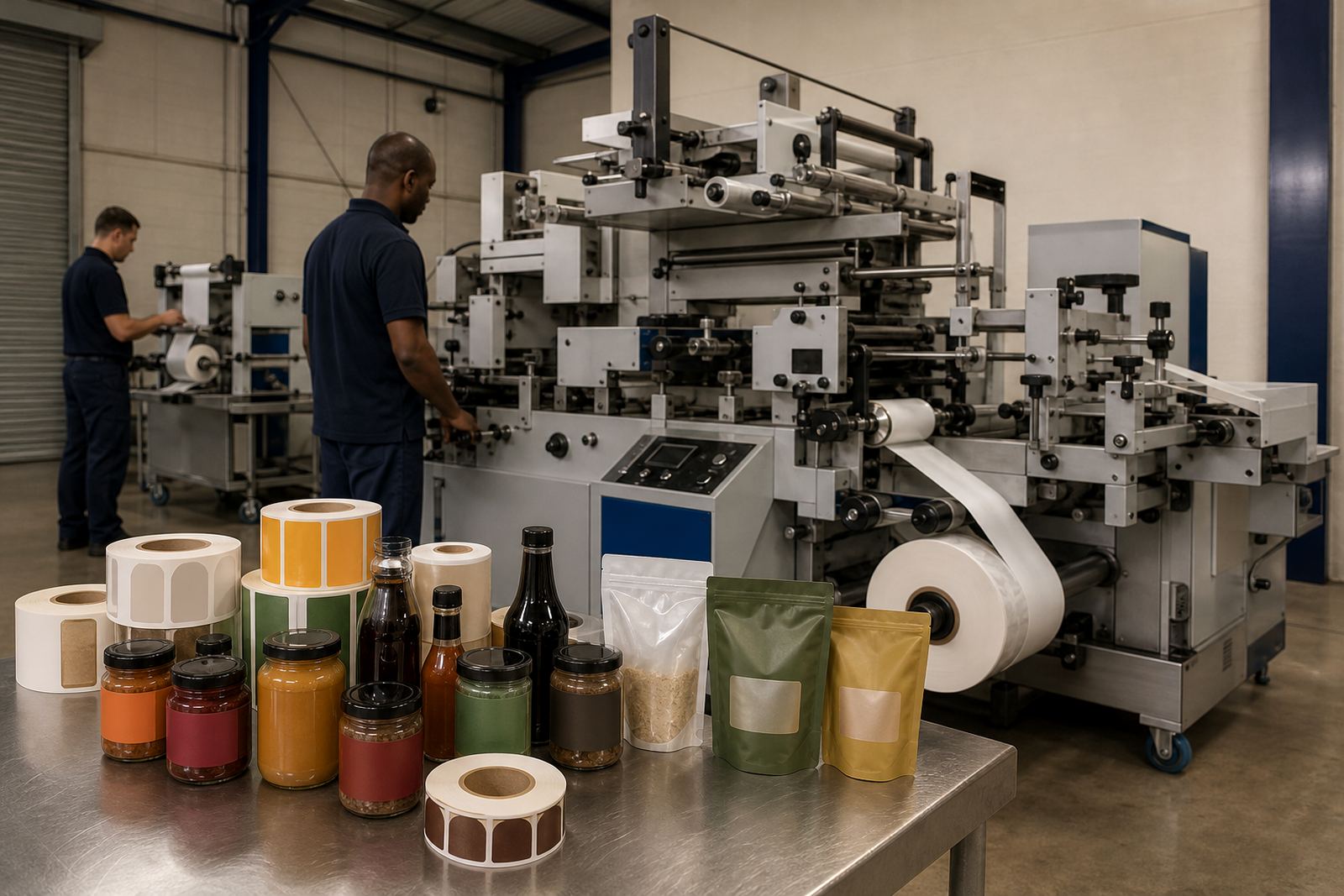
Die cutting does not work alone. The finish before and after the cut can change how the labels behave on press. A coating can improve rub resistance and handling, while certain overprints may affect how the web releases from the die. If a converter is running a glossy label stock for retail packaging, or a matt label for cosmetics, the finish needs to be considered during set-up.
Inline finishing also helps the customer see the label as a finished product, not only a print job. This may include varnish, lamination, slitting, rewinding and inspection. The order matters. If the job is cut before the finishing is stable, edge lift and scuffing can become a problem. If the web is not rewound neatly, the finished rolls are harder to pack and dispatch.
In practice, a converter should ask a few basic questions before the run starts:
- Will the label need extra surface protection for transport or cold storage?
- Is the substrate easy to cut cleanly at production speed?
- Will the finished roll be used on an automatic applicator or hand-applied?
- Does the customer need narrow gaps between labels or a wider matrix?
Setting Up for Less Waste and Fewer Stops
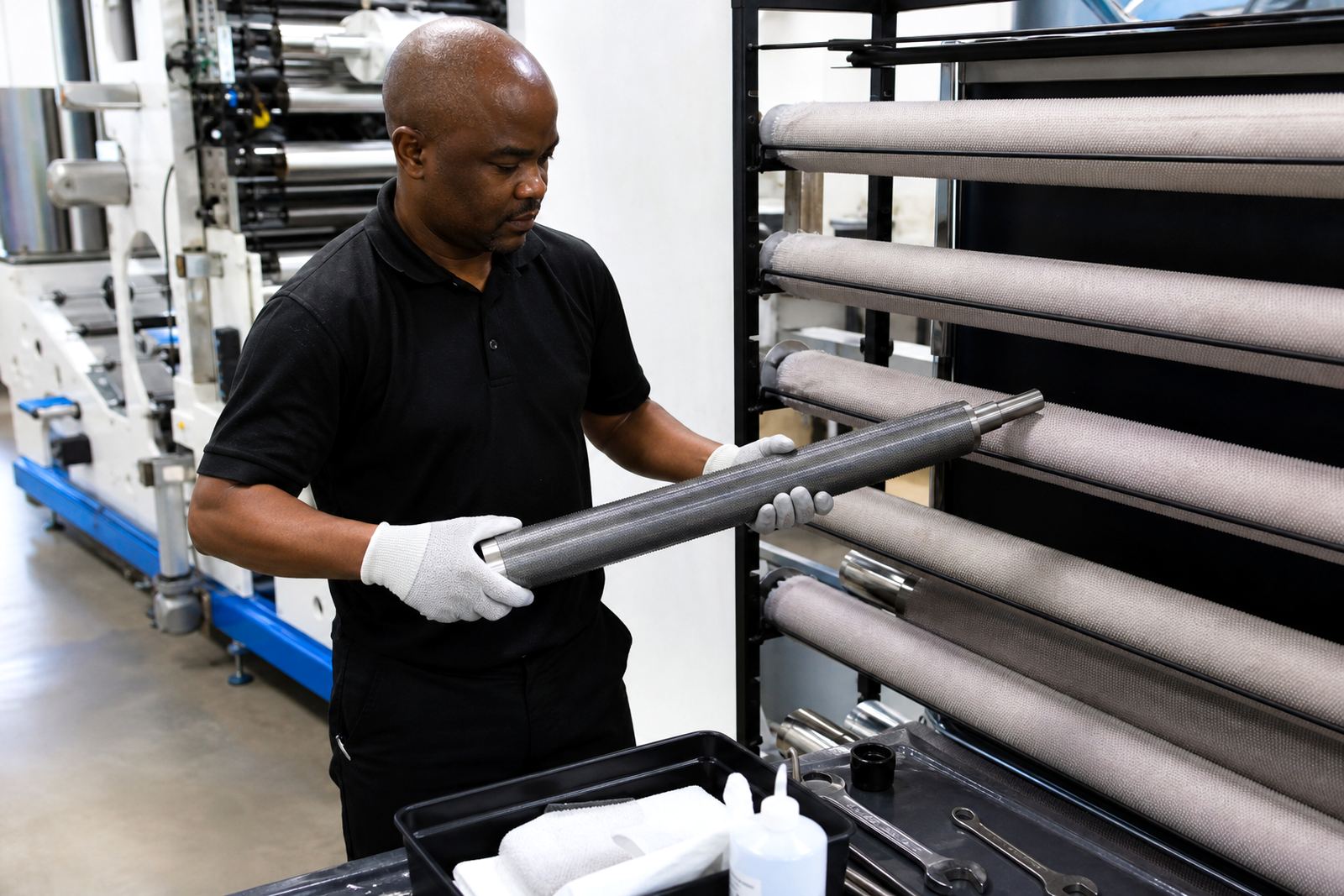
Most die cutting trouble starts in setup. A press that is mechanically sound can still struggle if the tooling is not seated properly, the web path is poor, or the operator is forced to chase register all shift. Good setup begins with a clean press, the right anilox and plate mounting, and proper alignment of the die station before production starts.
Start-up checks should cover tension, edge guiding, cylinder condition and waste removal. If the waste is not pulling away evenly, do not push ahead and hope it improves. Stop, inspect and correct the cause. On some jobs, a small change in web tension or impression pressure makes the difference between a smooth run and repeated breaks.
Load-shedding adds another layer for local converters. If power interruptions are common, production teams need a plan for restarting safely, checking registration again and making sure the die station has not shifted. In Spartan, Kempton Park, that kind of routine support is often what keeps a plant on schedule when the work is time-sensitive.
Training Operators to Spot Problems Early
Die cutting works best when operators understand what they are looking at, not only what buttons to press. Training should cover web tracking, cut depth checks, matrix removal, fault finding and safe stop-start procedures. It should also teach the team how to read the signs of a job that is drifting out of spec before waste starts piling up.
Our team sees the same issues across the country, from East Rand lines to larger converters in Cape Town and Durban. The common thread is usually not one big failure but a few small misses that build up through the shift. An operator who notices a faint tug in the matrix or a slight shift in print-to-cut register can save a full roll.
- Teach operators how to inspect the first roll before releasing production
- Record the preferred pressure settings for repeat jobs
- Show the team how to check for liner damage at the rewind stage
- Keep a simple fault log so patterns are easier to spot
That training also helps with product changeovers. A label for food and beverage may behave differently from one for cosmetics or retail packaging, and the crew needs to know the difference.
A Practical Example from a Kempton Park Line
A converter in the Kempton Park area might run a batch of narrow-web labels for a local food packer in the morning, then switch to a different shape for a retail client after lunch. The print could be correct on both jobs, but the die cutting setup may need to change between runs because the label size, liner type and waste pattern are not the same.
In that situation, the most useful support is not theory. It is quick checks on press installation, commissioning and startup production support, followed by hands-on help with plate mounting, finishing setup and preventive maintenance. If a fault appears mid-run, breakdown support and remote support can keep the line moving until the cause is found. Sometimes it is a worn die, sometimes it is a tracking issue, and sometimes it is just a small setting that has drifted.
For converters across Johannesburg, Pretoria, Centurion, Durban, Cape Town and Gqeberha, the lesson is the same: die cutting works best when it is treated as part of the full workflow. Get the print stable, keep the web controlled, train the team, and check the finish before the job leaves the floor. That approach gives cleaner labels and fewer surprises at dispatch.
When to Bring in Support Before the Job Slips
If a die cutting line keeps tearing matrix, drifting off register or leaving rough edges, it is usually cheaper to call for help early than to waste another shift trying to push through. Preventive maintenance, anilox care, spare parts support and production consulting can all play a role in getting the line back to a steady state.
Practical support is especially useful when a converter is taking on a new label format, new substrate or a tighter production deadline. A short review of the press setup and finishing sequence can prevent repeated stoppages and keep the job on spec.
At the end of the day, die cutting is about turning printed web into labels that are ready for use. When the process is planned properly, it becomes a predictable part of the line instead of a problem area.