Beauty labels need more than good colour
Cosmetic labels often carry small text, batch codes, ingredients, warnings and barcodes, so the print has to stay sharp at close range. On bottles, tubes, jars and cartons, the label also has to cope with handling, moisture, oils and repeated contact from consumers and packers. For many converters in Johannesburg, Pretoria and the coast, the first step is not the press itself but how the label will be used on the pack, because a lotion bottle in a humid bathroom behaves very differently to a dry retail carton.
A narrow-web flexo label press is well suited to this work because it handles short to medium label runs efficiently and can be set up for multiple substrates. The right approach depends on the finish you need, whether that is a simple self-adhesive label, a decorative wrap or a premium label with varnish, foil effects or tactile detail. Good planning saves time at changeover and reduces waste on press.
- Plan for fine type and strong contrast on small label sizes.
- Allow for moisture, hand oils and shelf wear in the final finish.
- Choose materials that match the container surface and application method.
- Keep the layout clear enough for ingredients, warnings and batch information.
Typical press set-up for cosmetic work
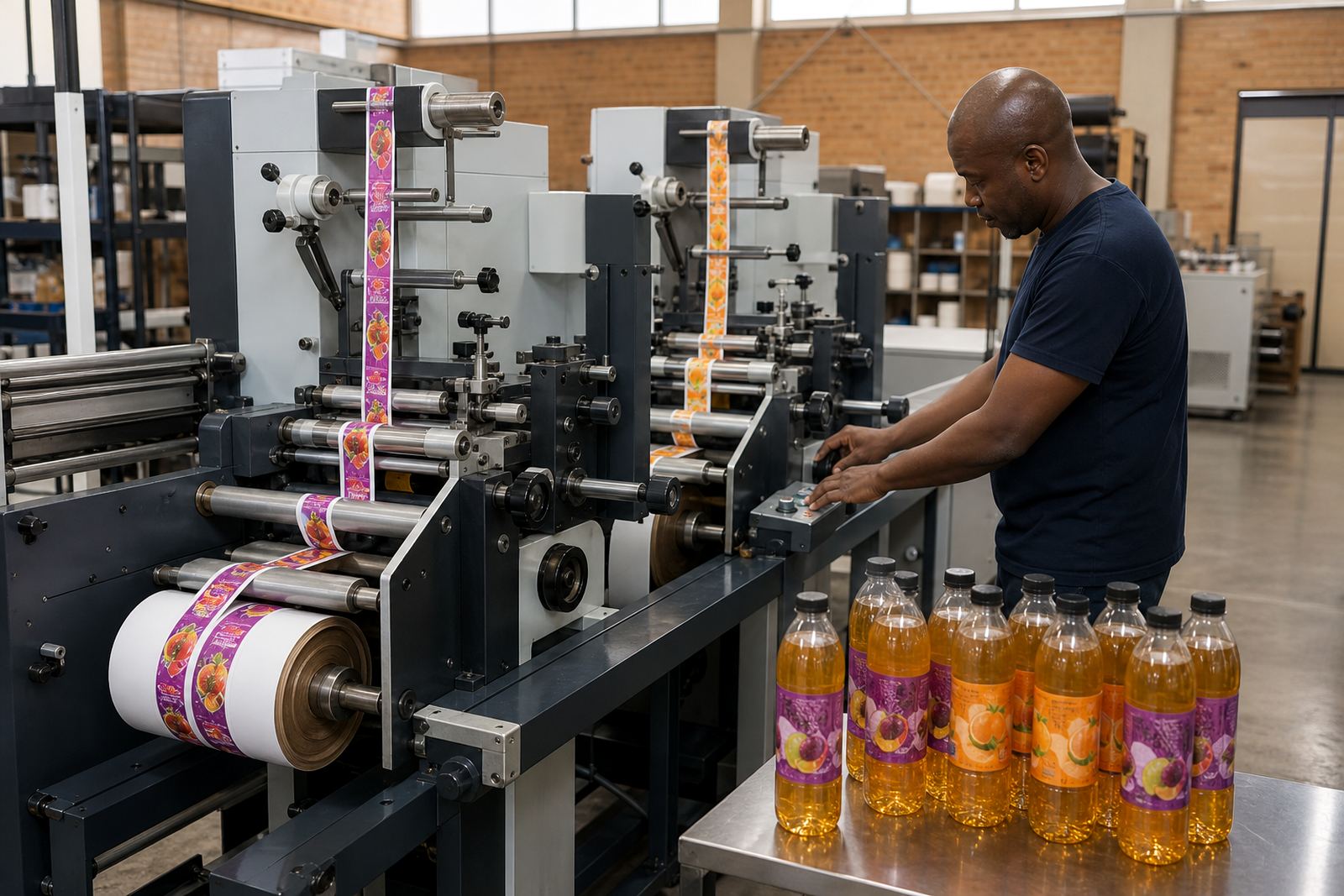
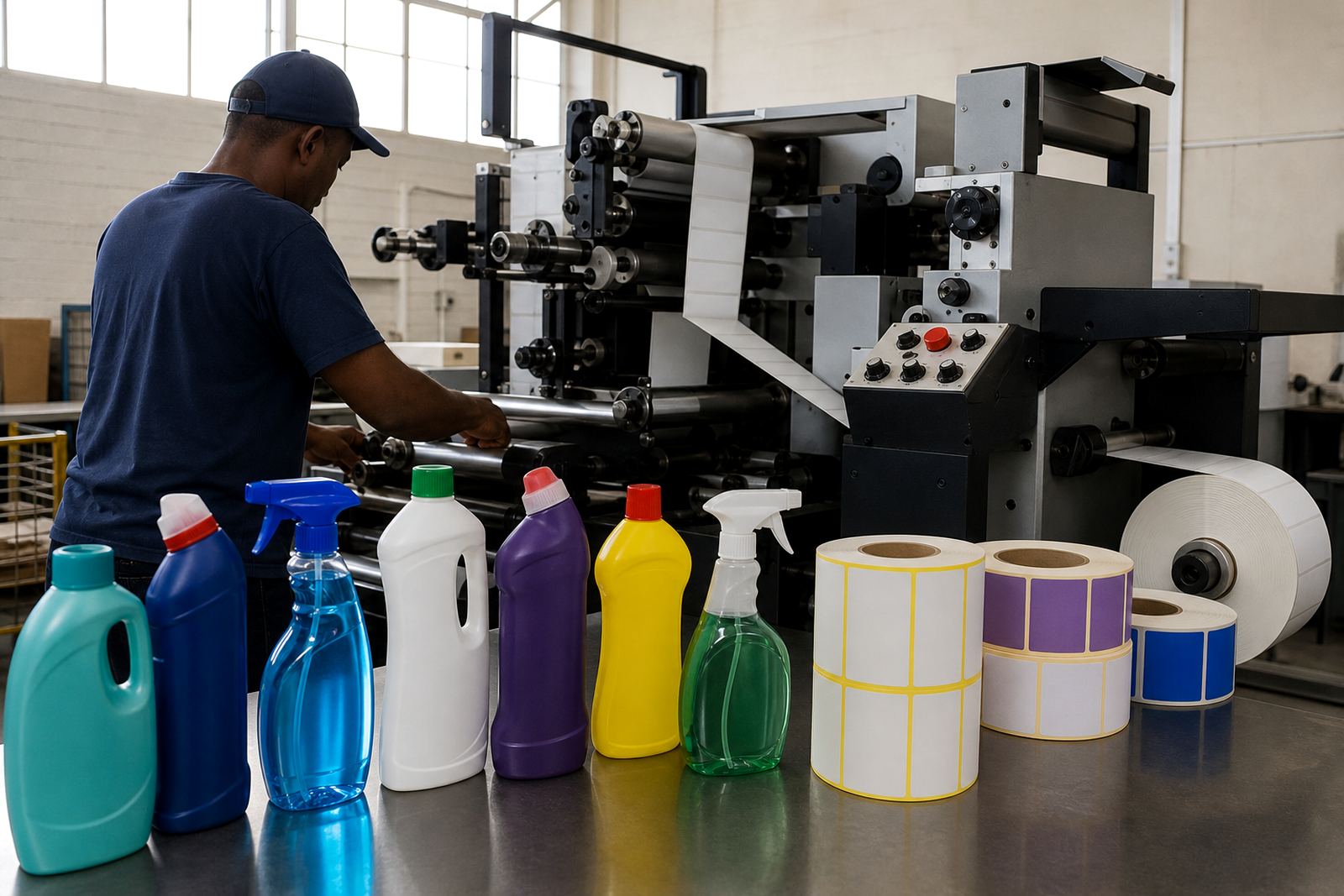
A practical cosmetic label set-up usually starts with a narrow-web flexo press paired with the right printing units, drying arrangement and finishing sections for the job. Depending on the label style, a converter may need die-cutting, slitting, varnishing, lamination, cold foil style decoration or overprint for variable data. The aim is to keep the production line moving while still giving the pack a neat, high-end look.
At our Spartan, Kempton Park base, we work with converters who need a press line that can move from plain product labels to more decorative cosmetic packs without creating daily bottlenecks. That includes press installation, commissioning, operator training, startup production support and help with anilox care, plate mounting and finishing set-up. For many teams, the main challenge is not the press alone but getting print, web handling and finishing to work together properly.
- Label converters often need a mix of print, finishing and inspection in one line.
- Web tension, registration and drying must be stable for small text and fine detail.
- Easy access for cleaning and changeovers matters when SKUs change often.
- Remote support can help when production is under pressure and time is tight.
Material and finish choices that suit bathrooms and retail shelves
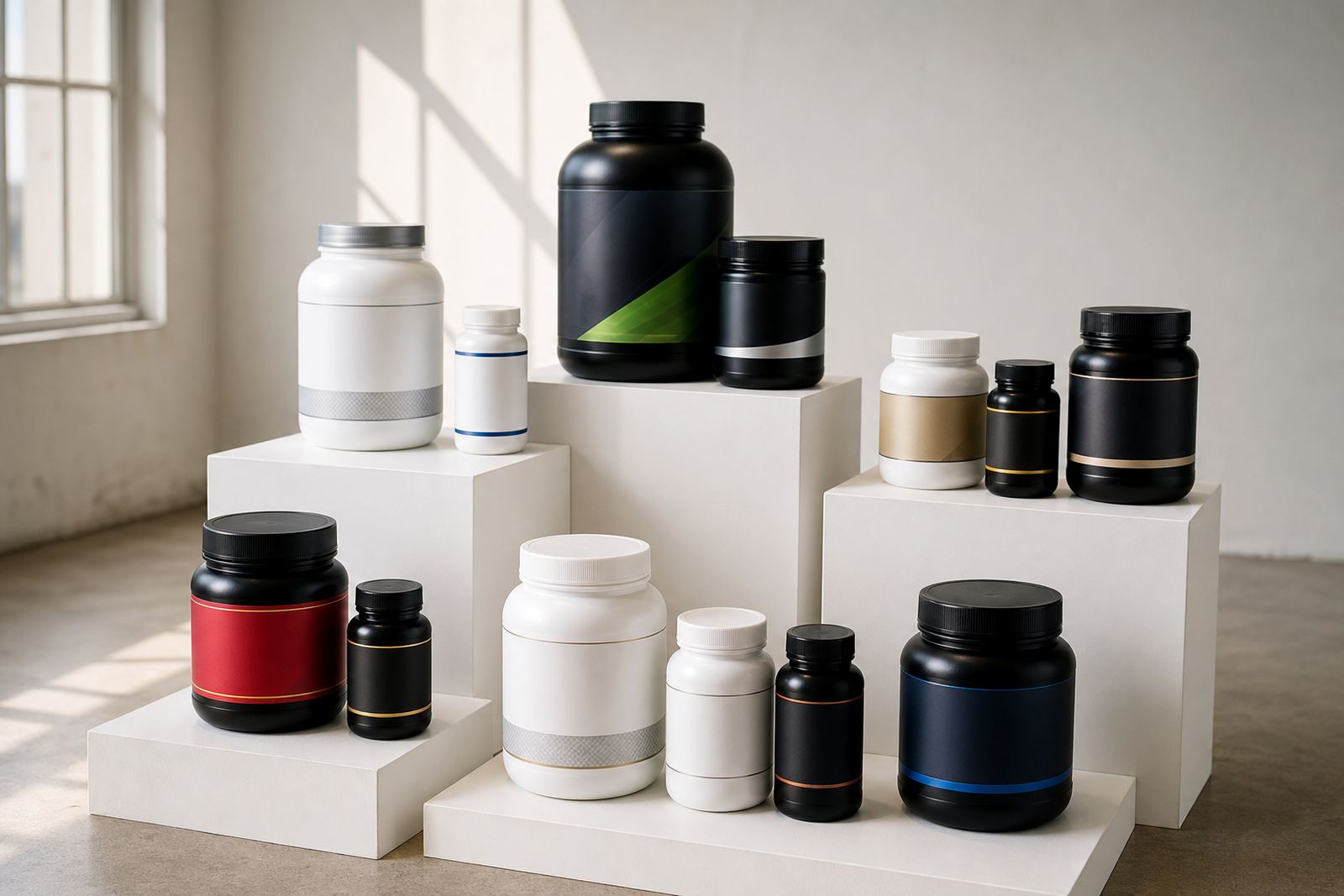
Cosmetic packaging may sit on a vanity, in a shower or in a store fridge, and that changes what the label needs to do. A label for face cream may need a smooth premium look, while a shampoo bottle may need stronger water resistance and better grip during application. If the client is supplying product into the Western Cape, Durban or Gqeberha, coastal humidity should be considered early because it can affect label stock, adhesive choice and storage conditions.
Finishing should be chosen for the actual pack use, not just for appearance on a sample. Gloss, matt and spot varnish each have their place, but over-finishing can add cost without adding value. The same is true of decorative effects. If a label spends its life in a cabinet, a simple clear finish may work well. If it sits in a steamy bathroom or in transit for long periods, the label needs more practical protection.
- Check adhesion on glass, PET, HDPE and other common cosmetic containers.
- Test performance after cold storage, wet handling and shelf rubbing.
- Make sure the finish does not hide small text or reduce barcode readability.
- Allow for outer packaging and secondary labels if the product range is growing.
Layout planning that keeps small labels readable
Cosmetic labels are often small, and that means every millimetre matters. Before press setup, the artwork should be checked for text size, line weight, barcode quiet zones and enough space around cut lines. A common mistake is trying to fit too much information on a label that is already busy with branding and product claims. When the layout is crowded, the finished pack can look untidy and the technical details become hard to read.
Converters should also plan for different pack shapes. A round bottle, a curved tube and a flat carton do not all behave the same on press or on the filling line. If a product range includes multiple sizes, it helps to standardise where possible so plates, setup times and finishing settings can be reused. That keeps the line simpler and cuts down on avoidable waste.
Our team, led by Thabo Mokoena with support from Aisha Patel, Johan van der Merwe, Lerato Ndlovu, Sibusiso Khumalo and Megan Naidoo, helps customers assess the job before production starts. That can include startup production support and production consulting for converters looking to tighten their process and avoid repeat corrections.
Common mistakes on cosmetic label jobs
Cosmetic labels fail for practical reasons more often than people expect. The most common problems are poor substrate selection, weak ink curing, bad plate mounting, incorrect web tension and labels that were never tested on the final container. Another issue is finishing choices that look good on a sample but crack, scuff or lift once the product moves through filling, packing and dispatch.
It is also worth checking how the label will be applied. Some bottles are labelled by hand, others on automatic applicators and some on mixed lines where both happen. If the label stock is too stiff or the release is inconsistent, production slows down and waste rises. On South African production floors, that extra waste can become expensive very quickly, especially when power interruptions and load-shedding squeeze available shift time.
- Do not approve artwork before confirming the final pack dimensions.
- Do not skip test runs on the actual container and adhesive.
- Do not assume a finish suited to cartons will work on bottles.
- Do not leave plate mounting and register checks to the last minute.
Budget ranges for cosmetic label production and line support
Budget depends on press condition, finishing needs, job complexity and the amount of support needed after commissioning. A simple cosmetic label set-up can stay relatively controlled if the artwork is straightforward and the line is already stable. A more detailed beauty label with multiple colours, varnish, special finishing and tighter register control will need more time, more set-up attention and a larger allowance for waste during approval.
For South African converters planning a new line or upgrading an existing one, it helps to budget in layers. Basic startup support may sit at a lower level than a full installation and commissioning project, while preventive maintenance, spare parts support and training should be treated as part of the running cost rather than an afterthought. For many businesses, a sensible working budget for cosmetic label production support can range from about R25 000 for limited assistance on a small job to R250 000 or more where installation, setup, training and repeated optimisation are required. Larger projects or heavier finishing requirements can go higher depending on scope.
We support customers from Kempton Park through Johannesburg, Pretoria, Durban, Cape Town and Gqeberha, with branch coverage in nearby areas such as the East Rand and Centurion. Enquiries come through the contact page form, and from there we can discuss installation, commissioning, maintenance, breakdown support, remote support and spare parts support for narrow-web flexo label presses.