Wine Labels Need More Than Good Artwork
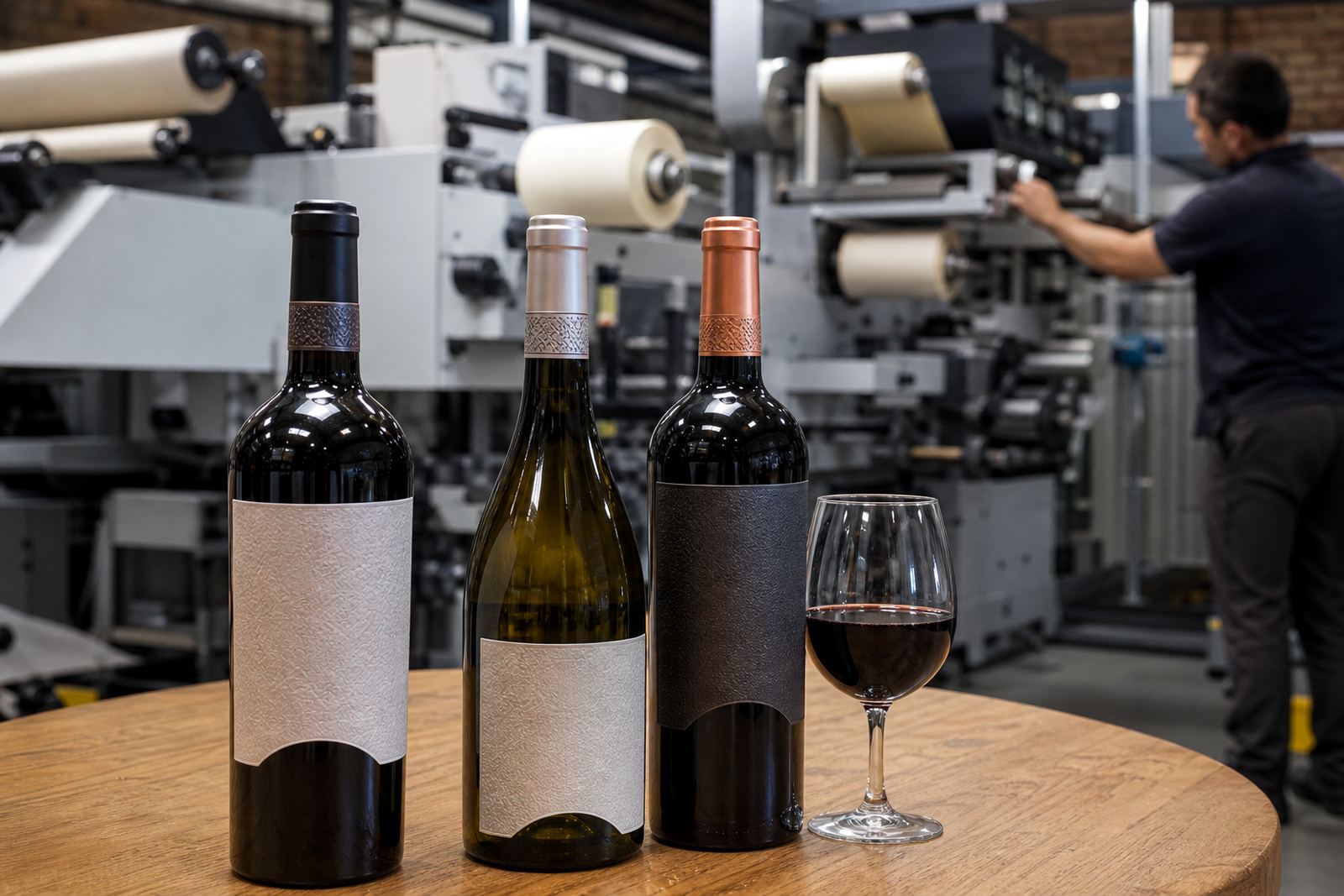
Wine labels are judged quickly. A bottle has to read well from a distance, then hold up close when the customer checks the paper, foil, embossing or varnish. For converters in Johannesburg, Pretoria, Durban, Cape Town and Gqeberha, that means the press has to handle fine text, solid blocks, accurate registration and repeatable finishing without wasting material.
We work with label converters who need narrow-web flexo label presses for short premium runs, seasonal releases and repeat orders that must match previous work. In wine packaging, the challenge is usually not only print quality but the full process around it, from plate mounting and ink control to drying, rewinding and final inspection. Coastal humidity in Durban or Cape Town can affect handling and storage, while inland sites in Kempton Park or Centurion often need a tighter grip on dust control and warm-up routines.
- Short runs for boutique labels and special editions
- Repeat jobs that must match colour and layout exactly
- Finishing that supports a premium shelf look
Typical Press Setups For Wine Label Work
Wine label production usually calls for a narrow-web flexo press set up for stable web handling, controlled ink transfer and finishing steps that suit the chosen material. The exact press configuration depends on the label structure, but most converters need a layout that can manage multiple colours, spot varnish, cold foil or similar effect work, and clean rewind. If the job includes pressure-sensitive labels, clear film or textured stock, setup becomes even more important.
A practical equipment set often includes a press with careful tension control, plate cylinders, anilox rolls matched to the job, drying or curing support, inspection tools and finishing equipment for slitting, die-cutting, sheeting or rewinding. For wine labels, the plate mounting stage needs attention because small shifts show up fast on neck labels and front labels. We also help with finishing setup so the label comes off the line neat and ready for application at the cellar or packing table.
- Press installation and commissioning for new lines
- Plate mounting help for fine registration work
- Anilox care for steady ink laydown on detail-heavy artwork
- Finishing setup for clean edges, slitting and rewind
Layout And Planning Advice Before The First Run
Good wine label production starts before the first sheet or roll goes through the press. The label size, bottle shape, glue area, application method and finishing choice all affect how the job should be planned. If the label has a border or small serif text, the press room needs a tighter tolerance than a simple flat-colour retail label. It is also worth planning for reorders, because wine ranges often change only a year later or when a harvest release needs a small design tweak.
We advise converters to keep artwork, proofs and production notes organised by stock type, adhesive type and finish. That makes repeat work easier and helps avoid mix-ups when the same winery asks for multiple labels across white, red and sparkling ranges. Operators should also confirm label orientation, application direction and the exact panel sizes needed for front, back or neck labels before setup begins.
- Confirm bottle diameter and label wrap before plate work
- Check whether the finish must handle moisture, ice buckets or cellar handling
- Keep a record of approved colour targets and finishing steps
Common Mistakes On Premium Wine Labels
Many label problems on wine jobs come from rushing the setup. The most common issues are over-inking fine detail, poor plate mounting, inconsistent drying and finishing settings that are not matched to the stock. A label may look fine on press but still fail if the rewind is too tight, the varnish is uneven or the edges are not cut cleanly. On some jobs, operators also push too much speed too early and then spend time correcting waste, which is never ideal when the material is premium.
Another common mistake is treating every wine label like a standard retail label. Wine packaging often needs a cleaner visual finish and a slower, more controlled production rhythm. For converters in Gauteng, KwaZulu-Natal and the Western Cape, load-shedding planning also matters. If power cuts are part of the day, production needs a sensible restart routine and support for keeping print quality stable after stoppages.
- Skipping a proper proof against the actual stock
- Using the wrong anilox or ink laydown for fine type
- Ignoring rewinding tension and edge quality
- Not planning for power interruptions or restart checks
Budget Ranges For Wine Label Press Projects
Budget depends on whether you are adding a press, commissioning a line, upgrading finishing, or improving support around existing equipment. For narrow-web flexo label press projects in South Africa, the spend can vary widely based on line size, number of colours, finishing requirements and how much work is needed on installation and training. A smaller support project may sit in the tens of thousands of Rand, while a more involved press installation, commissioning and production start-up can move much higher.
As a practical guide, converters often budget separately for press installation, operator training, preventive maintenance and spare parts support. If the wine range depends on regular repeat work, it makes sense to set aside a maintenance budget as well, because downtime on a premium label line can delay packing and dispatch. We help clients in Spartan, Kempton Park and across South Africa plan these costs around actual production needs rather than guesswork.
- Support visits and production troubleshooting: from smaller service budgets upward
- Training and start-up assistance: often planned as a separate line item
- Major press installation or commissioning: budgeted according to line scope and site work
Support For Converters Across South Africa
Flexography Printer supports label converters from our Spartan, Kempton Park base, with service coverage that reaches Johannesburg, Pretoria, Durban, Cape Town, Gqeberha, East Rand and Centurion. Our team includes Thabo Mokoena, Aisha Patel, Johan van der Merwe, Lerato Ndlovu, Sibusiso Khumalo and Megan Naidoo, and we work with clients who need practical help on the shop floor rather than general advice. Whether the issue is press setup, operator training or a breakdown that has stopped production, we focus on getting the line back into useful output.
Clients reach us through the enquiry form on our contact page. From there, we can look at press installation, commissioning, startup production support, preventive maintenance, remote support, spare parts support, anilox care, plate mounting help, finishing setup and production consulting. For wine labels, that support is often what keeps the finish consistent from one batch to the next, especially when the job needs to look polished on shelf and through the bottling line.
- Johannesburg Support and Pretoria Support for inland converters
- Durban Support for coastal production conditions
- Cape Town Support and Gqeberha Support for premium label work near the coast