
Why logistics labels need more than basic print quality
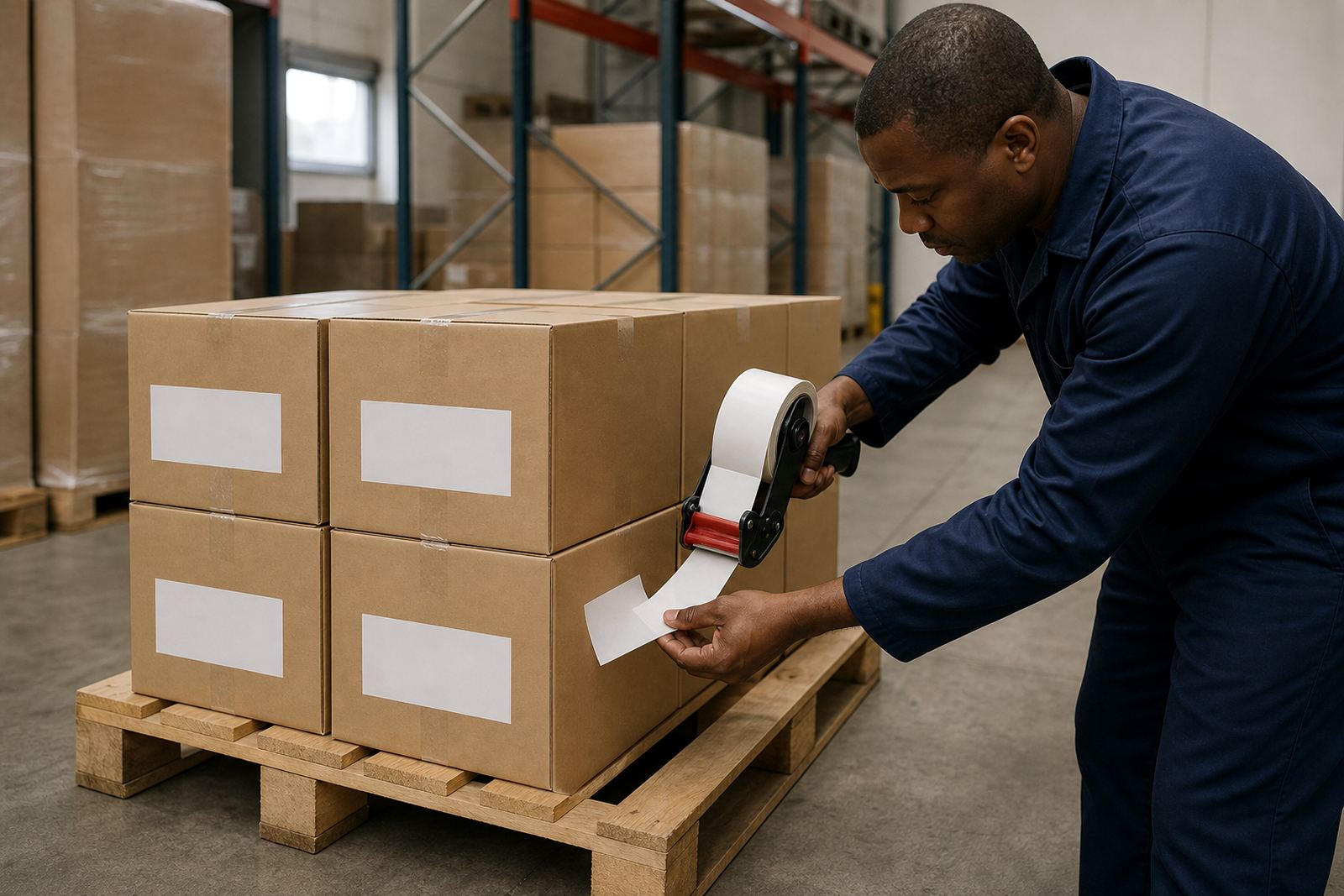
Shipping and warehousing labels work hard. They must read clearly under fast handling, barcode scanning, pallet wrap, dust, vibration and storage in hot depots or cold rooms. In Johannesburg and Pretoria the demand is often for short runs with frequent artwork changes, while Durban and Cape Town converters also have to think about humidity, salt air and adhesive performance on cartons that sit near loading bays.
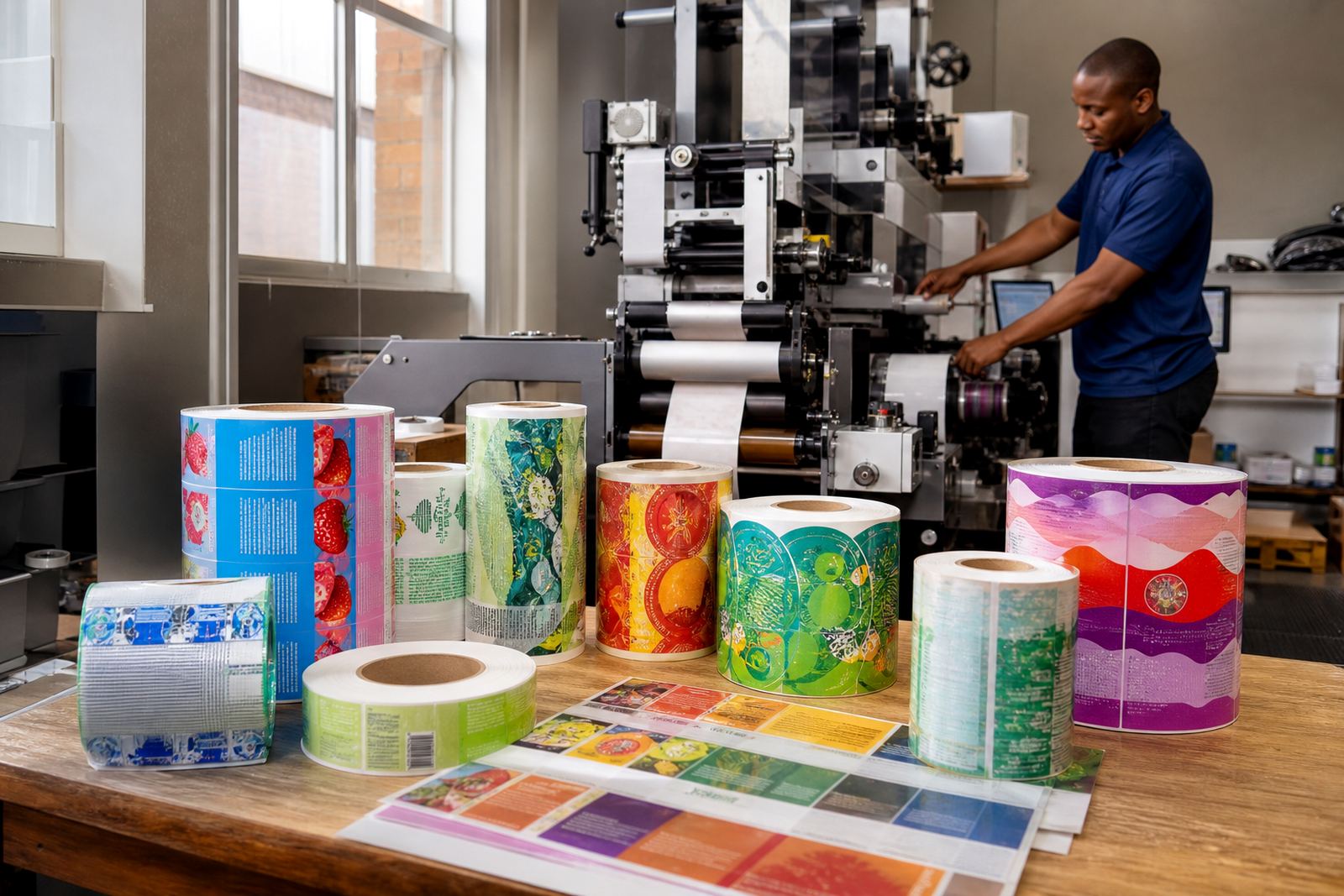
For this use case, the press line has to support clean text, sharp barcodes and consistent registration from one job to the next. A narrow-web flexo label press suits this type of work because it can handle pressure-sensitive labels, product identifiers, courier labels and supply chain tags without wasting floor space. Good setup matters as much as the machine itself, especially where customers want same-day turnarounds or repeated reprints for seasonal stock.
Typical equipment set for logistics label production
A logistics label line is usually built around a narrow-web flexo press with the right units for spot colour work, variable information and finishing in one pass or across linked processes. The exact set depends on the label type, volumes and the customer mix. Some converters focus on plain shipping labels, while others need branded warehouse labels, warning labels and traceability labels for food, beverage or retail supply chains.
- Narrow-web flexo label press for short to medium runs
- Unwind and rewind control for stable web handling
- Printing units for text, symbols, colour blocks and barcodes
- In-line or near-line finishing for die cutting, slitting and rewinding
- Plate mounting and anilox care to keep print repeatable
- Support for setup checks, operator handover and start up production
Where customers also need thermal transfer or digital variable data, the layout should allow room for integration without crowding the press room. That avoids bottlenecks later on.
How to plan the press room for logistics work
Logistics work is usually time-sensitive, so the room layout must reduce walking, lifting and waiting. Keep raw material storage close to the press, but not so close that dust or forklift traffic interferes with setup. In Kempton Park and the East Rand, many operations work from industrial units with limited space, so it helps to plan a straight material flow from receiving to print to finishing to dispatch.
Power stability should also be part of the plan. Load-shedding can interrupt registration and waste stock if the line is not prepared with sensible stop-start procedures and back-up power where practical. On the coast, add humidity control and storage discipline for plates, inks and adhesive stock. Good planning also means allowing room for maintenance access, spare parts storage and operator movement around the machine.
- Keep the press near finishing to shorten job handovers
- Separate clean material storage from waste and trimming areas
- Allow space for pallet access and safe operator movement
- Plan for maintenance access and changeover space
- Use clear job cards for repeat warehouse and courier work
Common mistakes on logistics label lines
One common mistake is choosing a press set-up for retail labels and expecting it to perform well on plain logistics work. Shipping labels often need speed, clarity and cost control rather than decorative features. Another mistake is underestimating the effect of poor plate mounting or worn anilox components, which can cause weak barcodes, uneven colour and rework.
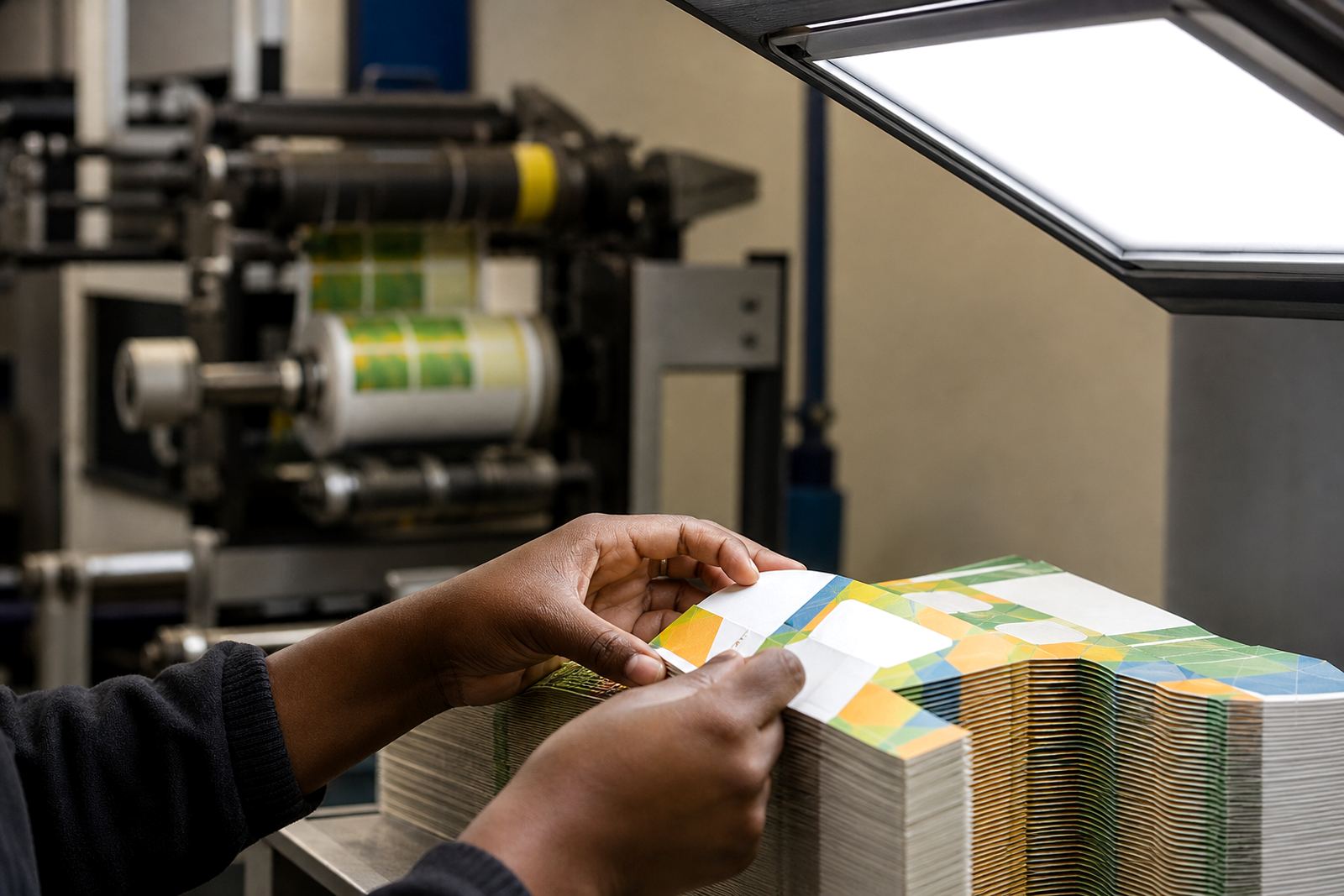
Converters also run into trouble when they do not match the finishing setup to the end use. If the labels are for cartons, drums or pallets, the cut size, adhesive choice and rewinding method must suit the application. A small error in layout can lead to jams, blocked scanners or labels that peel during transport. It is also easy to overlook operator training, then blame the press when the real issue is inconsistent setup.
We often see producers keep too much stock of the wrong face materials, or order adhesive grades that do not suit freezer use, rough cartons or damp storage. That creates extra cost and delay for the customer.
Budget ranges for logistics label production in Rand
Budget depends on whether a converter is buying a new line, upgrading one section, or improving setup and support on an existing press. A basic logistics label operation can often start with a smaller narrow-web setup and grow into more finishing or automation later. The important thing is to match the equipment to the actual order book and not overspend on features that will sit idle.
For planning purposes, many South African converters look at three broad ranges. Entry level press and setup projects may sit from about R750 000 to R1.5 million depending on condition and scope. Mid-range line upgrades with installation, commissioning and training can move into the R1.5 million to R4 million area. More complete production lines with finishing, support tooling and extra workflow equipment can go higher, especially if the site needs room changes or electrical work.
Maintenance and support should be budgeted separately. Preventive maintenance, breakdown support, spare parts and operator refresher training are easier to manage when they are planned into the year rather than left until production stops.
Support for converters across South Africa
Based in Spartan, Kempton Park, we support label converters in Johannesburg, Pretoria, Durban, Cape Town and Gqeberha, plus surrounding areas such as Centurion and the East Rand. The service team works with press installation, commissioning, startup production support, preventive maintenance and remote support where that is the fastest way to keep production moving. For logistics labels, that kind of support matters because jobs are often repeat orders with tight dispatch dates.
We also assist with finishing setup, plate mounting help, anilox care and production consulting. If a converter is adding a new customer for warehouse labels, courier packs or supply chain identification, we can help plan the room, set the workflow and train the operators so the line runs properly from the start. Clients reach us through the enquiry form on our contact page, which keeps the first contact simple and clear.
- Press installation and commissioning for new sites
- Operator training for setup, changeovers and daily checks
- Breakdown support and remote support when urgent issues arise
- Preventive maintenance to protect uptime and print consistency
- Spare parts support and production advice for repeat label work