
What an anilox storage rack does in a busy pressroom
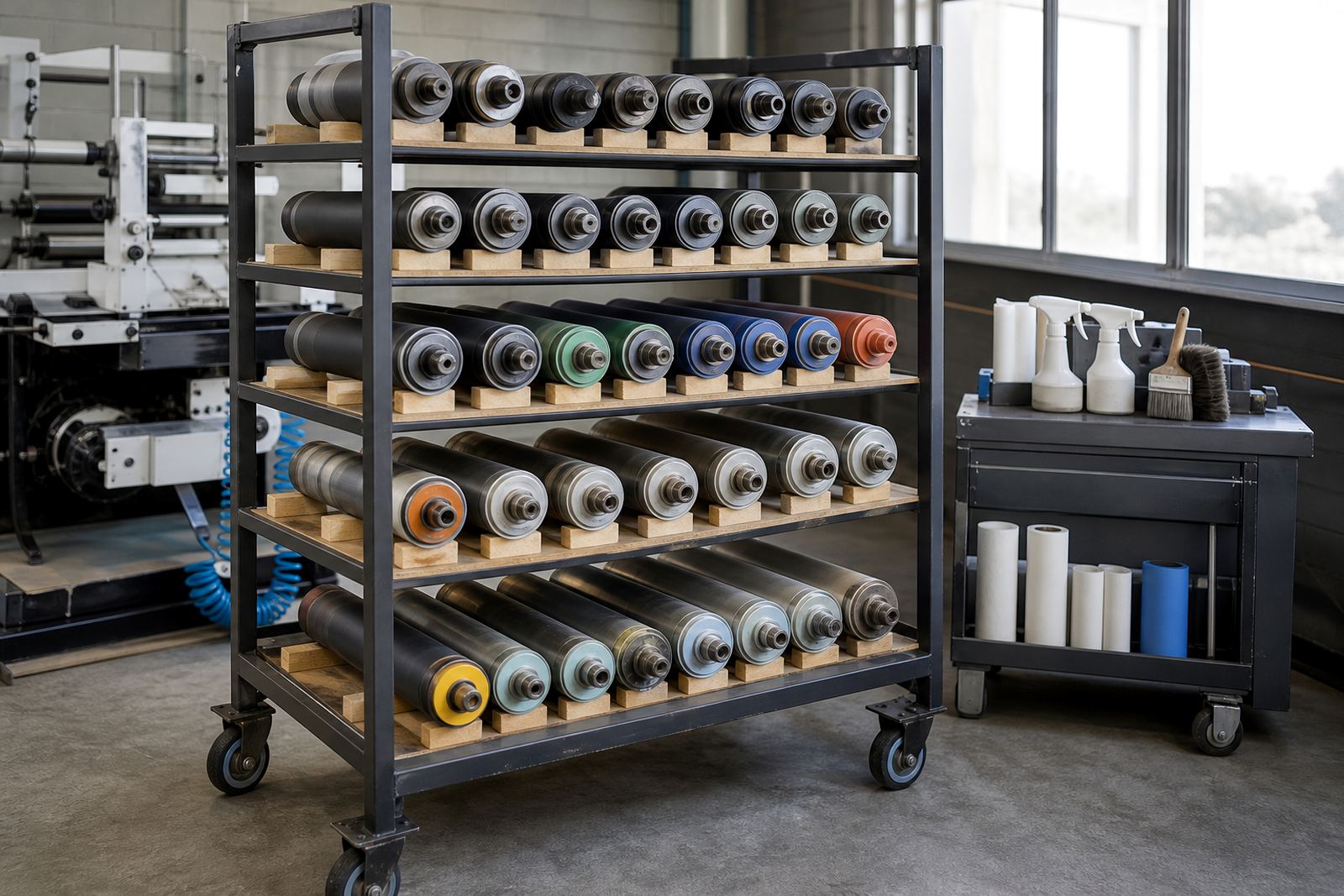
An anilox roller does a careful job, so it should not be left lying on the floor, wedged against a wall or stacked where the cell surface can be knocked. An anilox storage rack gives each roller a fixed place, with supports that keep the roller shell off hard surfaces and make it easier for operators to find the correct roll for each job. In a label plant, that matters when you are moving between short runs, repeat orders and colour-critical work for food, beverage, cosmetics and retail labels.
In practical terms, the rack is there to reduce handling, keep rollers sorted by size or line count, and support a cleaner pressroom routine. It also helps with traceability. When rollers are stored in one place and marked properly, the team can see which unit is due for cleaning, which one is in service and which one needs inspection before the next setup.
- Keeps anilox rollers off the floor and away from knocks
- Supports orderly storage by job, line count or size
- Helps avoid mix-ups during press setup
- Makes cleaning, inspection and returns easier to manage
Typical sizes, layouts and storage options
Anilox racks are usually specified by the number of rollers to be stored, the length of the roller body and the available wall or floor space in the pressroom. Some converters want a compact wall-mounted unit near the wash-up area. Others need a freestanding frame with multiple bays so rollers can be separated by press, by line count or by finishing cell. The right layout depends on how many presses you run, how often you change jobs and how much floor space you can spare.
Options can include fixed cradles, removable support arms, roller identification labels, end stops and load-rated shelving for heavier units. In some rooms, the rack is placed close to plate mounting, ink preparation or the cleaning station so the roller does not travel far. In larger plants, a central storage point works better, with clear access for forklifts or trolleys where required.
- Wall-mounted or freestanding frame options
- Single-level or multi-level storage bays
- Capacity matched to your roller inventory
- Supports for different roller lengths and diameters
Where an anilox rack suits best in label and packaging operations
This kind of storage system suits narrow-web flexo converters, label finishers and packaging printers that keep more than one anilox on hand. It is useful in plants handling frequent changeovers, multi-colour work and repeated product lines where the same roller returns to service after cleaning. It also suits operations in Gauteng, KwaZulu-Natal and the coastal cities where humidity, dust and busy floor traffic can make poor storage even more risky.
In a smaller workshop, one well-planned rack may be enough to store the main working set plus a few spare rollers. In a larger converter, separate racks can be assigned to press halls, wash-up areas or maintenance zones. The aim is to keep the roller safe, easy to identify and ready when the press team needs it. Where municipal or site rules apply, the rack should also keep walkways clear and not block fire exits, especially in tight pressrooms with limited floor space.
- Label converters with several anilox rollers in circulation
- Pressrooms needing cleaner storage and faster changeovers
- Sites with limited floor space and strict walkways
- Operations wanting better control over roller care and tracking
Installation, fixing points and site needs
An anilox storage rack normally needs a level site, proper anchoring and enough clearance for safe loading and removal. Wall-mounted units need a solid fixing surface that can take the working load. Freestanding frames need a stable floor and correct positioning so rollers can be lifted in and out without strain. Before installation, it is worth checking access routes, doorway widths and whether the rack will pass through existing wash-up or maintenance areas.
There is usually no gas requirement for this product. Power is generally not required unless the rack is supplied with added inspection lights or a related handling accessory, and even then the need is modest. The main focus is on safe placement, good identification and practical movement in the room. If your site experiences load-shedding, the rack itself is unaffected, but a tidier storage system helps the team keep the pressroom moving when production time is limited.
- Level floor or solid wall fixing point required
- Allow space for safe lifting and removal of rollers
- No gas connection needed
- Power only needed for optional accessories, if fitted
Care, cleaning and servicing between jobs
A storage rack should be kept clean, dry and free of ink residue, paper dust and loose packing material. Roller supports should be checked for wear or sharp edges that may damage end caps or roller shoulders. If the rack is used near wash-up, it should be wiped down regularly so cleaning fluids and sludge do not build up at the base. In humid conditions, keeping the storage area dry and ventilated is a simple way to reduce corrosion risk on surrounding metalwork.
During servicing, the team should check alignment, fixings, labels and support points. If a rack is overfilled, rework the layout rather than forcing extra rollers into a bay. The storage system should stay easy to use, because if it becomes awkward the press team will stop using it properly. That is when damage starts. Regular preventive maintenance helps keep the rack safe and useful for the long term.
- Wipe down supports and frames during routine cleaning
- Check fixings, labels and support surfaces
- Keep the storage area dry and free from loose waste
- Do not overload bays or force oversized rollers into place
What to check before ordering an anilox storage rack
Before ordering, measure the roller length, end clearance and the number of units you need to store now and in the near future. It also helps to know whether the rack will hold mixed roller sizes, only one press set or a wider inventory for several lines. Check the available wall length or floor area, the pathway into the room and whether the rack needs to fit beside a cleaning station, consumables store or press prep area.
At enquiry stage, it helps to share the roller quantity, approximate dimensions, preferred storage layout and whether you need identification tags or a record system. If your team works across Johannesburg, Pretoria, Durban, Cape Town or Gqeberha, it is also useful to note where the rack will be used and how it will be moved into position. A clear brief makes it easier to match the storage system to the pressroom instead of forcing the pressroom to fit the rack.
- Roller quantity and approximate sizes
- Wall space or floor space available
- Preferred storage style and access route
- Need for labels, tracking or mixed-size storage
Key facts
| Product type | Anilox storage rack for narrow-web flexo rollers |
|---|---|
| Storage format | Wall-mounted or freestanding, depending on site layout |
| Capacity | Specified by number of rollers and available bay count |
| Compatible use | Narrow-web label and packaging pressrooms |
| Site requirements | Level floor or solid fixing surface, clear access for handling |
| Utilities | No gas required; power only if optional accessories are added |