
What a linerless label press does on the line
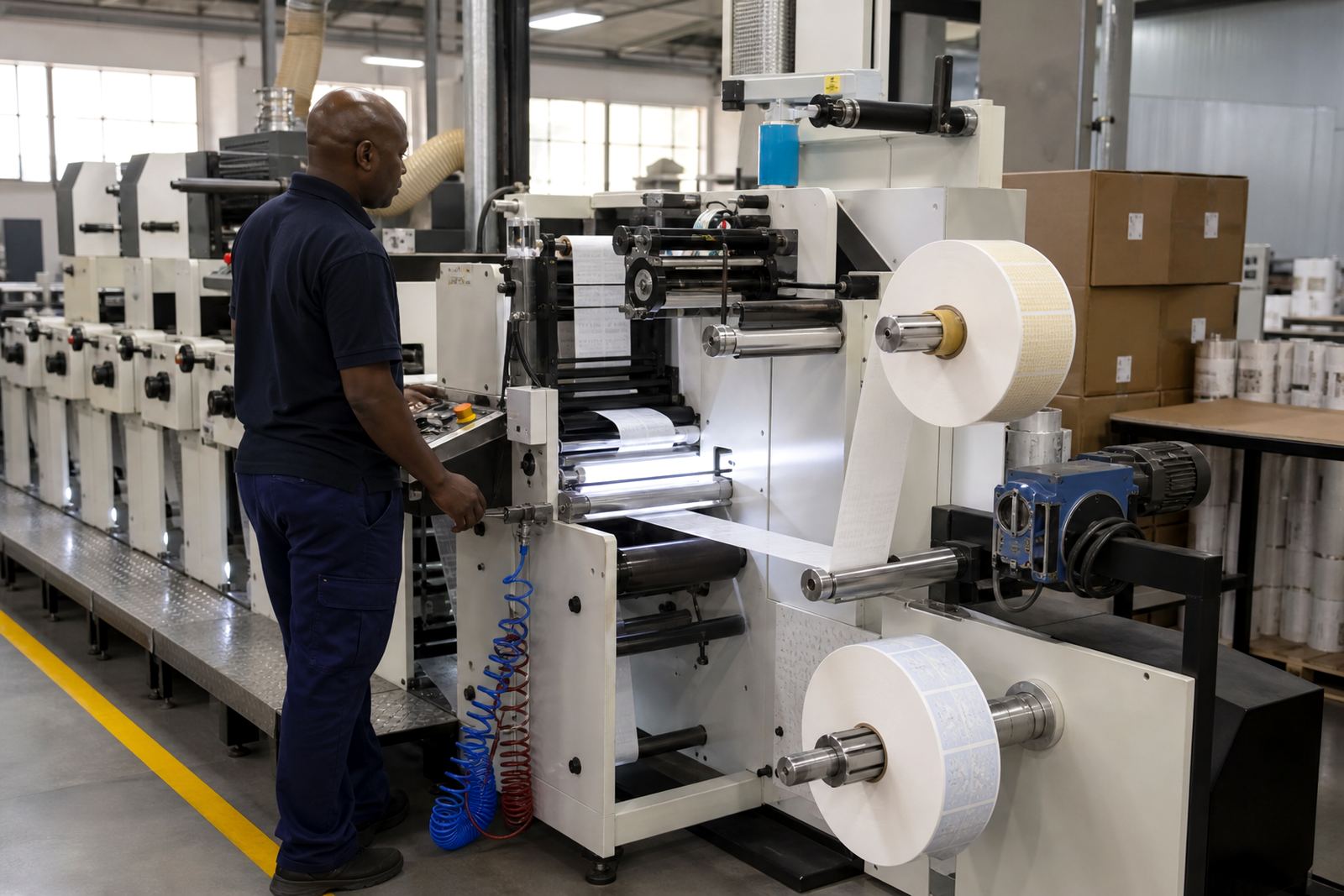
A linerless label press is set up to print labels that are supplied without a backing liner, so the press line must handle the material, adhesive and rewinding process with care. In practice that means steady web control, accurate print registration and a finishing section that suits the label format and end use. For converters in Gauteng, KwaZulu-Natal, the Western Cape and the Eastern Cape, the main value is in reducing waste material and keeping the production flow tidy when the job has been specified for linerless output.
This type of press is generally considered where the client already understands the linerless conversion process and wants a line that can support repeat work. It is not a one-size-fits-all machine. The press build, drying method, die-cut arrangement and rewind setup all depend on the substrate, adhesive and the customer’s finishing requirement. If the line is being planned for food, retail or logistics work, the print and converting stages need to be matched right from the start.
- Suitable for converter lines needing linerless label output
- Needs accurate web tension and stable registration control
- Works best when the finishing sequence is planned before ordering
Sizes, formats and press options to consider
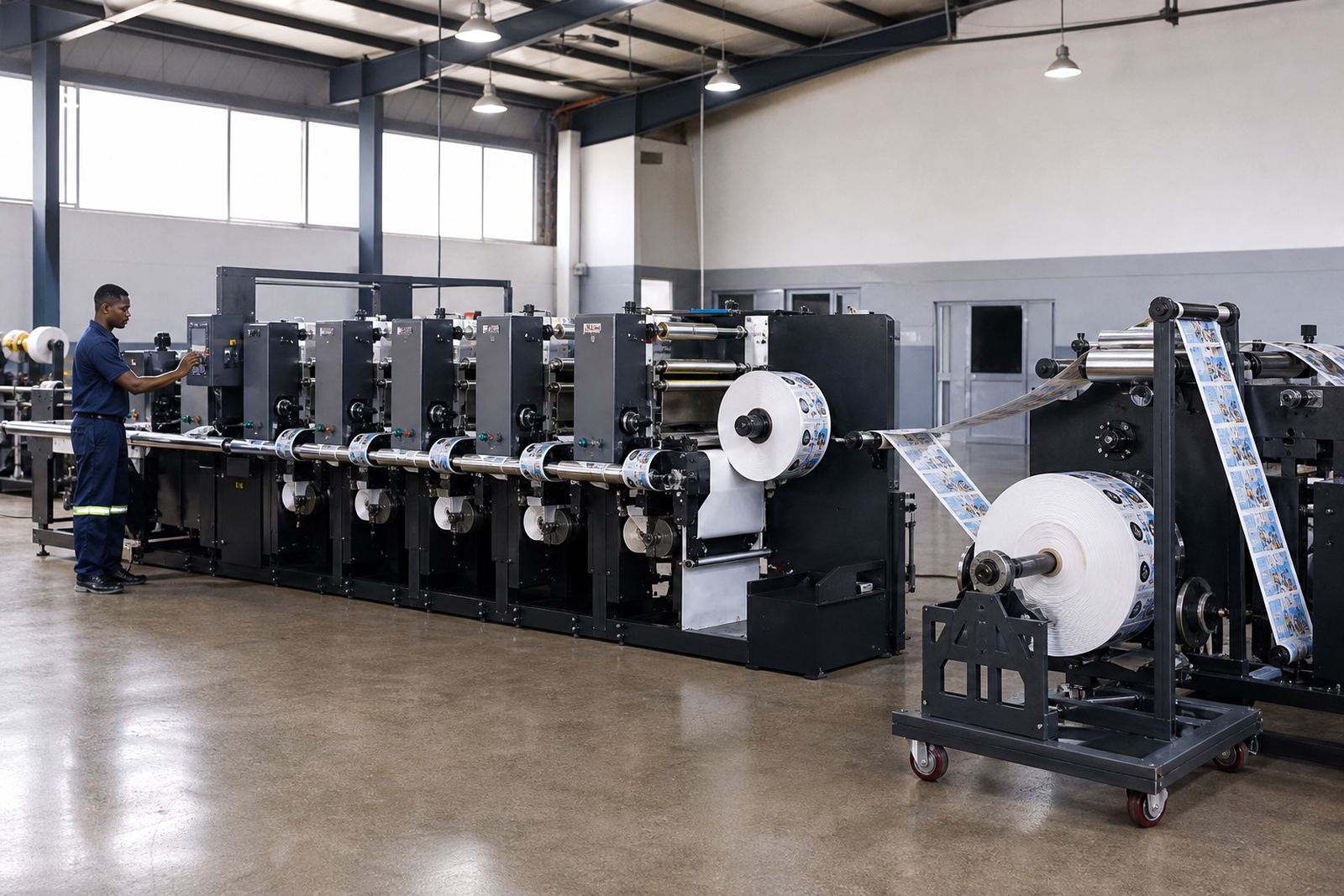
Linerless label projects are usually planned around the label width, repeat length and the style of converting required. Narrow-web flexo equipment can be specified with different station layouts, drying options and finishing units depending on whether the work is simple roll-to-roll output or a more involved setup with slitting, die-cutting and rewinding. Some converters need compact line layouts for tighter floor space in Spartan or Silverton, while others need longer lines for higher throughput in larger Johannesburg or Durban plants.
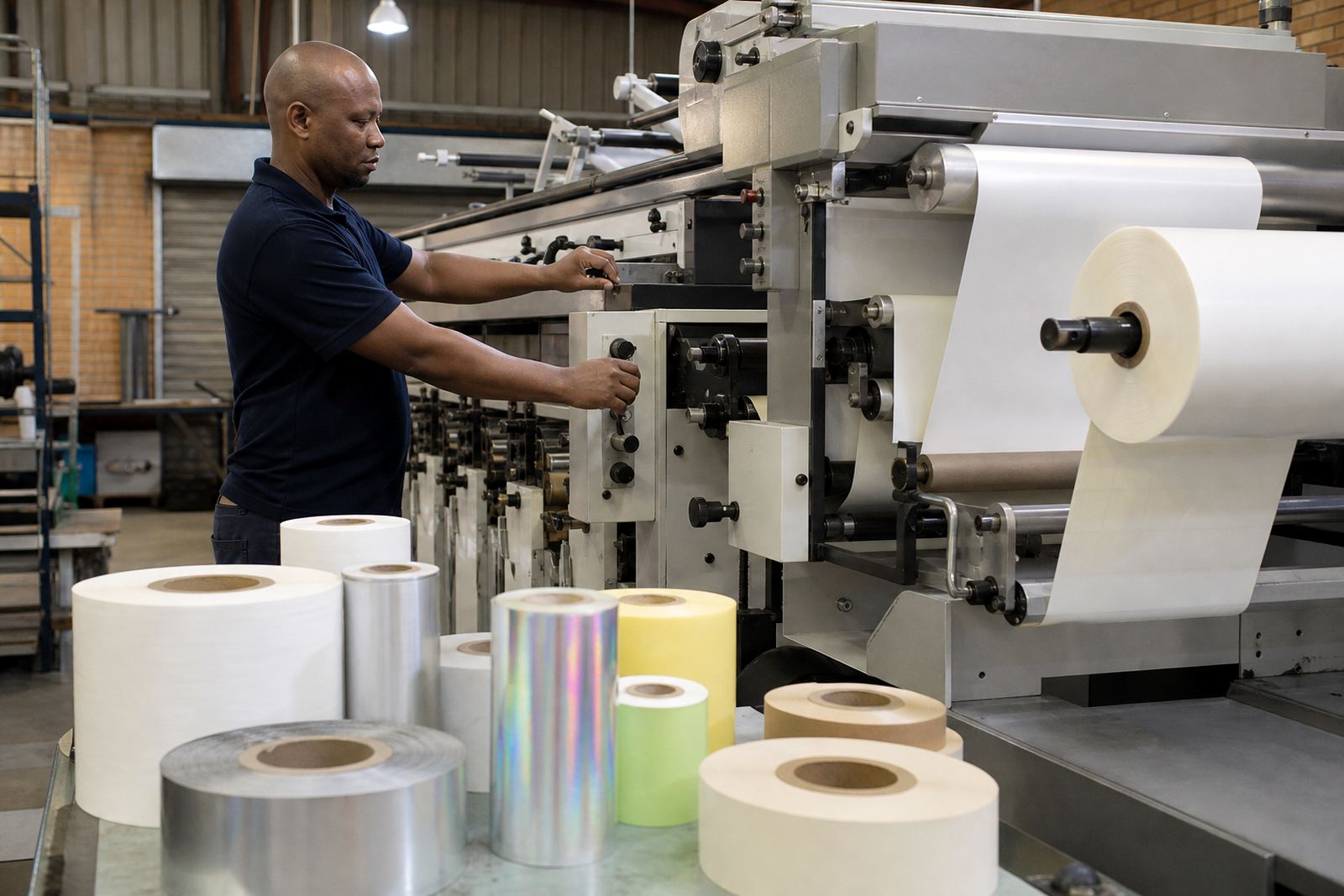
When comparing options, focus on the practical points rather than the badge on the machine. Ask how the press handles tension across the web, how easy the changeover process is, whether the ink system matches the substrate and if the rewind arrangement can support the finished roll size your customers want. In a humid coastal area like Cape Town or Gqeberha, material handling and storage conditions also matter because humidity can affect consistency during production and before the rolls are packed.
- Web width and repeat length should match the intended label range
- Can be arranged for basic print only or print plus finishing
- Changeover access matters when the press will run shorter jobs
- Coastal sites may need extra care with material storage and drying
Where linerless label production suits best
This kind of press is often considered for converters serving food, beverage, take-away packaging, retail and logistics applications where the label format has been planned for linerless use. It can also suit certain industrial work where waste reduction and neat roll presentation are important. The key is to confirm that the full line from print to rewind is suited to the exact material structure.
It is less about general label printing and more about a controlled process. If a converter is handling mixed jobs, the linerless press should be evaluated as a dedicated line or a clearly defined production path. That helps with setup time, operator understanding and ongoing consistency. For plants in Kempton Park, Pretoria, Centurion and Johannesburg, it also helps when production teams need a practical system that can be trained and maintained without constant interruption.
- Food and beverage packaging where waste reduction is important
- Retail labelling where roll presentation must stay neat
- Logistics and short run production with repeatable formats
- Dedicated converter lines needing controlled operation
Installation, utilities and site readiness
Before installation, the site should be checked for floor space, access for delivery, electrical supply and the general flow of material in and out of the line. A linerless label press may also need supporting equipment for finishing, web handling or drying depending on the configuration chosen. In South African plants, load-shedding planning is part of the conversation from day one, especially where production cannot stop in the middle of a run. Backup power needs to be matched to the actual equipment load and not guessed.
Power requirements, air supply and any heat or curing needs depend on the chosen setup, so it is best to confirm them before the machine is ordered. If the line will use peripheral equipment such as web guides, finishing units or inspection aids, those loads must be included as well. For sites in industrial areas such as Spartan, East Rand or Centurion, the practical matters are usually access, service clearances and whether the floor layout allows safe roll movement without congestion.
- Confirm electrical supply and backup power planning early
- Check air, heat or drying needs based on the selected configuration
- Allow space for roll movement, maintenance access and operator flow
- Plan the line around the real production path, not just the machine footprint
Care, servicing and day to day support
Linerless production depends on consistency, so regular care is part of keeping the line steady. Press teams should pay attention to web path cleanliness, guide condition, tension settings and the condition of any rollers or converting elements. If the line uses anilox components or mounted plates, those parts need proper handling and cleaning so the print stays even and colour remains reliable from job to job. Small issues on linerless jobs can show quickly, so routine checks save time later.
Preventive maintenance is useful for converters who run the press most days. That can include inspection of drive components, checkups on finishing settings, basic operator coaching and support when a setup changes. Where a site is remote or production hours are tight, remote support can help with fault finding before a technician is sent out. For plants in Durban, Cape Town and Gqeberha, servicing schedules should also take local humidity and storage conditions into account.
- Keep the web path clean and check tension settings regularly
- Inspect rollers, guides and finishing units on a planned schedule
- Maintain plates and anilox components correctly for print consistency
- Use preventive maintenance to reduce breakdowns and downtime
What to confirm before placing an order
When ordering a linerless label press, ask for the full production picture rather than only the machine name. The most important questions are what label range you want to run, what finishing steps are needed, how the rewind should be delivered and what power and utilities the site can support. It is also wise to confirm the training plan for operators and maintenance staff, because a linerless workflow can be sensitive to setup changes and handling mistakes.
You should also check whether the press can be supported locally for commissioning, startup production support, spare parts and breakdown assistance. If the line is going into a busy converter environment, after-sales response matters just as much as the spec sheet. In South Africa, it helps when the supplier can support Johannesburg, Pretoria, Durban, Cape Town, Gqeberha and the wider East Rand without delay. That way the line stays productive instead of waiting on avoidable trips and parts.
- Exact label range, repeat length and finishing requirement
- Power, air and drying needs for the selected configuration
- Operator training, spare parts and service support plan
- Installation timeline and commissioning process
Key facts
| Press type | Narrow-web flexo line for linerless label workflows |
|---|---|
| Material use | For linerless label production where the application is specified for that format |
| Configuration | Print only or print with finishing, slitting and rewind options |
| Web handling | Tension and registration control set for stable converter production |
| Utilities | Electrical supply, air and drying needs depend on the chosen setup |
| Support | Installation, commissioning, training, maintenance and breakdown support |