Booklet label press use on narrow-web flexo lines
A booklet label press is used when a customer needs more space than a standard self-adhesive label can offer. It suits jobs where ingredients, languages, legal notes, safety details or promotional copy must sit in a compact folded format. In a narrow-web flexo setup, the press must handle repeat accuracy, stable tension and good print consistency so the booklet sits neatly on the parent label and opens without tearing.
For label converters in Johannesburg, Pretoria, Durban, Cape Town and Gqeberha, this type of press is often used for food and beverage, cosmetics, household products and retail packs. The workflow can include printing, coating, laminating, die cutting, slitting and booklet application or finishing, depending on the line arrangement. We work with converters who need a practical setup that can run local jobs reliably, even when load shedding means planning for restart and job changeovers is part of the day.
Typical press sizes, build options and line layout
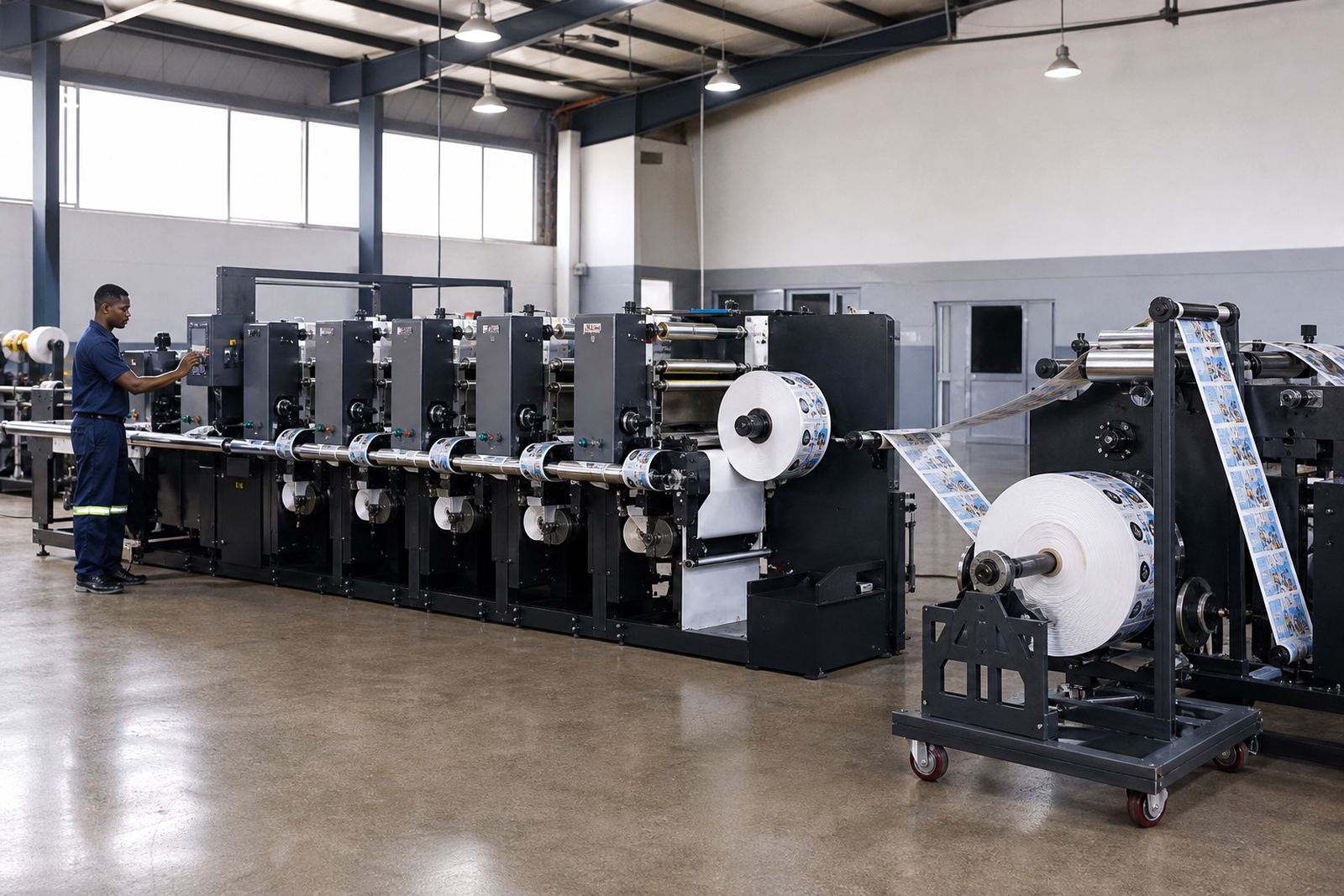
Booklet label production is usually set up on a narrow-web flexo press with enough stations for print, varnish and finishing steps. The right configuration depends on label size, substrate, number of colours and whether the booklet is added in line or as a separate finishing stage. A good order starts with the web width, unwind and rewind arrangement, core size, register control and the finishing units needed for the label format.
- Web width matched to the label repeat and booklet format
- Station count selected for colour work, white, varnish or special effects
- Inline or near-line finishing, depending on output needs
- Die cutting and slitting arranged for the intended roll supply
- Substrate compatibility for paper, film or laminated stocks
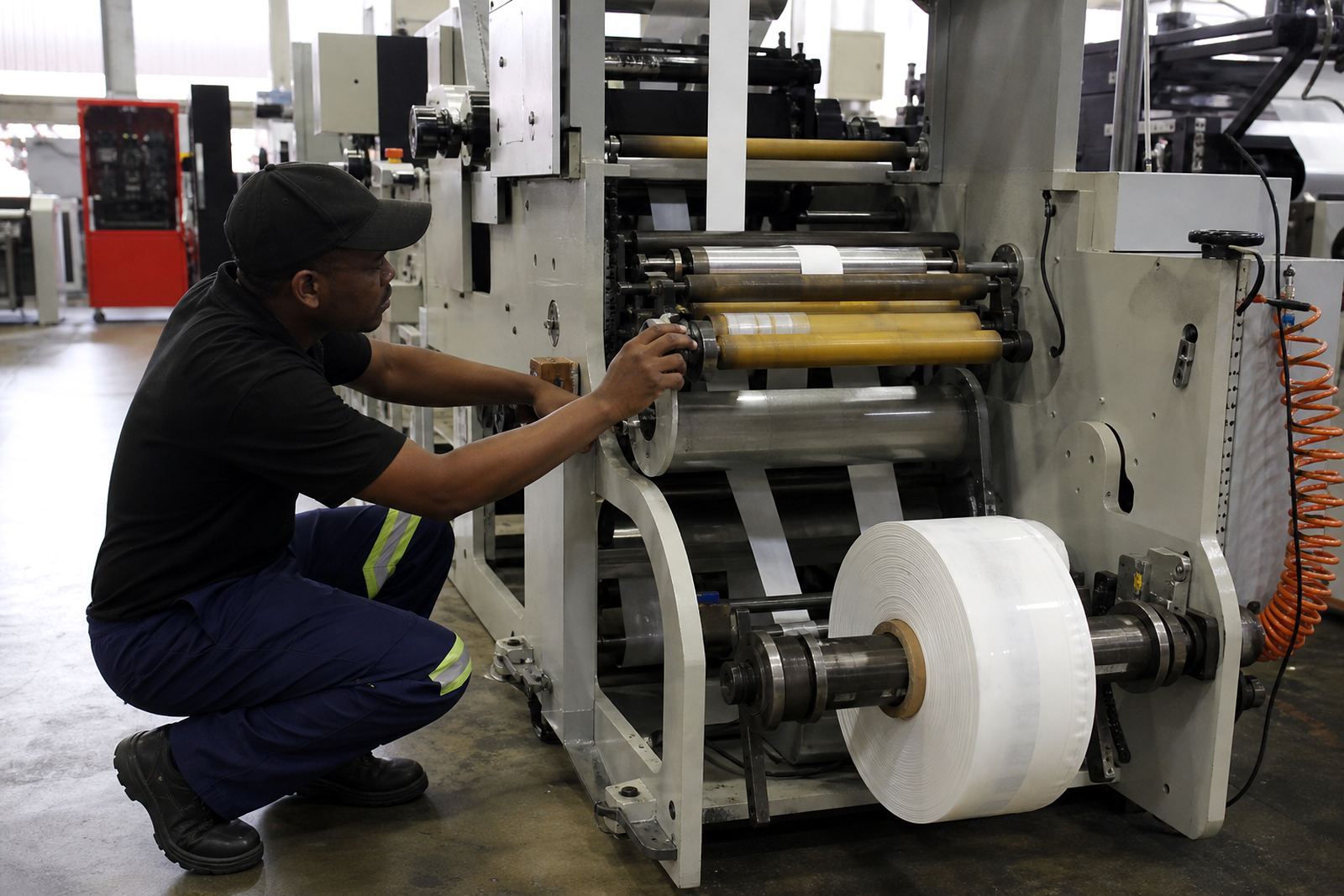
If the line must handle short runs and frequent changeovers, simple setup access and clear operator controls matter a lot. If the converter is running coastal work in Durban or Gqeberha, corrosion resistance and careful storage also become important because humidity can affect plates, rollers and finished rolls.
What the booklet label workflow suits best
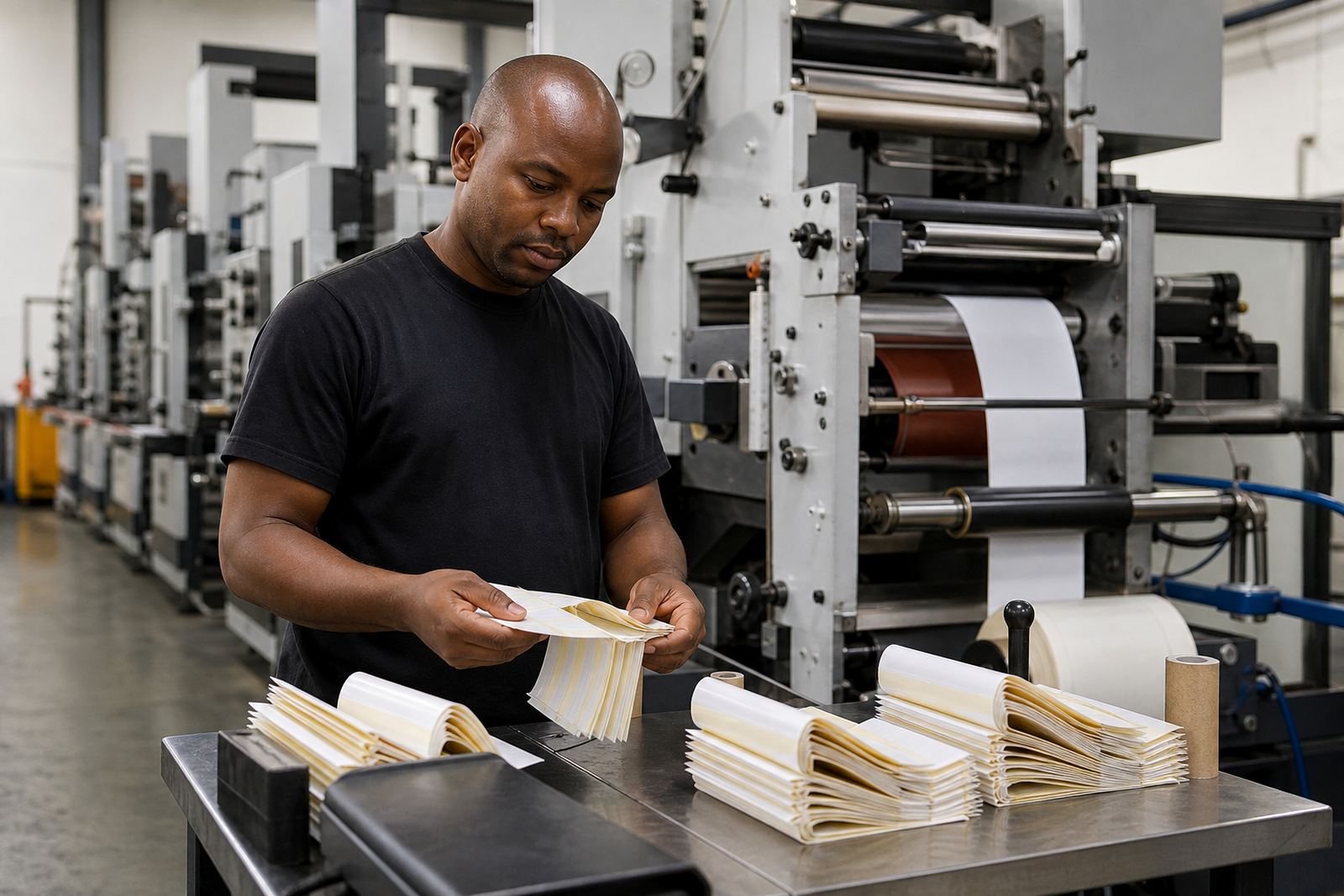
This press type suits converters who need more information on pack, but still want a compact label format that can be machine applied or hand applied. It is useful where product details change often, or where different markets need different language panels. The press workflow also suits products that need instructions, dosage guides, legal copy or fold-out content without moving to a separate carton format.
Common applications include:
- Food and beverage labels with ingredients or multi-language copy
- Cosmetics and personal care packs with directions and warnings
- Retail and promotional labels with coupons or extended messages
- Household and chemical products needing safety information
For South African converters, booklet jobs often come with tight turnarounds and mixed batch sizes. A line that is easy to set, clean and check can make the difference between smooth production and a day of repeat adjustments. That is where proper operator training and startup support matter, because the setup has to suit the job, not just the machine.
Installation, power and workshop planning
Before installation, the floor space, access routes and service clearances must be checked. The press should be sited where reels, plates, inks and finished rolls can move through the room without bottlenecks. In Spartan, Kempton Park and across the East Rand, many converters work in shared industrial space, so planning the workflow around power points, forklift access and safe storage is part of the installation.
Power needs vary with the configuration, but a stable electrical supply is essential for the press, control systems and any finishing units. If the site uses backup power or generator support during outages, the restart process should be tested so production can resume without damaging web tension or registration. Gas needs, if any, depend on the drying or curing method chosen for the line. Ventilation, earthing and municipal safety rules should also be checked before handover.
- Confirm floor loading and machine footprint before delivery
- Check incoming electrical supply and backup arrangement
- Allow space for reels, plates, inks and finished stock
- Plan ventilation and waste handling for inks, solvents or coatings
- Train staff on safe start up after power interruptions
Care, servicing and production uptime
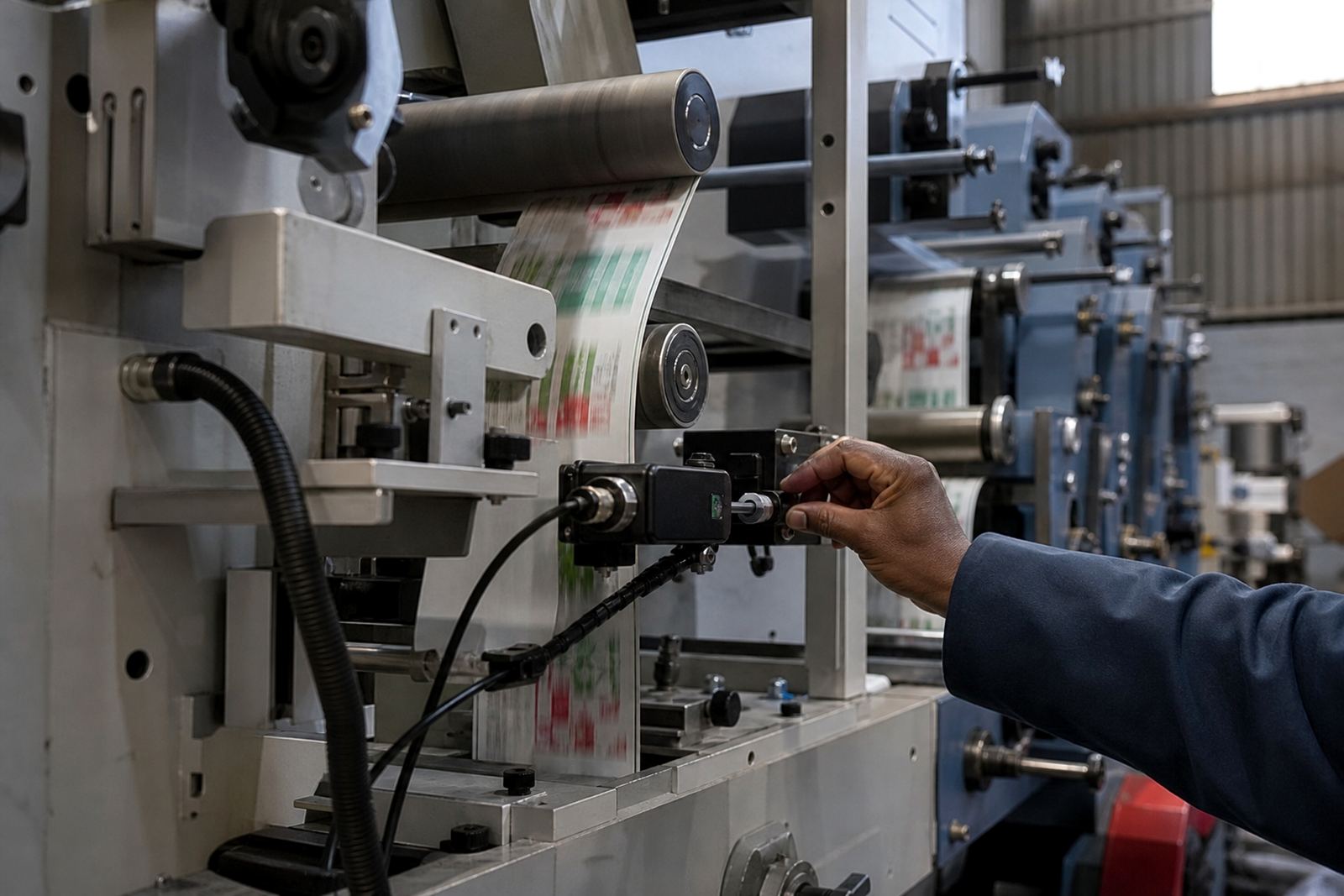
Booklet label work depends on clean, even production. Regular care should cover roller cleaning, web path checks, plate mounting, tension settings and inspection of cutting or folding elements. If the press is used for varied jobs, operators should also monitor register marks, adhesive build-up and any wear that might affect fold quality or label finish.
Preventive maintenance helps avoid stoppages that can throw off the job or damage stock. We support converters with preventive maintenance, breakdown support, remote support, spare parts support, anilox care and plate mounting help. Where the press includes finishing equipment, those units need the same attention, since poor slitting, dull blades or misaligned guides can ruin an otherwise good run. Small faults can become big problems quickly on a busy line, so it pays to catch them early.
For sites near the coast, moisture control and careful storage of consumables matter as much as the machine itself. In Gauteng, dust and temperature swings are often the bigger issue. Either way, a planned service schedule keeps the press ready for the next run, and it helps operators work with confidence instead of guessing when something feels off.
What to check before you order
Ordering a booklet label press is easier when the job list is clear from the start. The first question is what the booklet must carry and how it will be finished. Then check the substrate, roll size, print method, and whether the booklet is applied inline or as a separate step. It also helps to know the monthly volume, the number of SKUs and the typical changeover time you can live with.
- Label size, booklet size and fold count
- Roll diameter, core size and unwind or rewind direction
- Substrate type, adhesive type and liner specification
- Colours needed, including white, varnish or special coatings
- Whether you need inline finishing or separate finishing setup
- Operator skill level and training needs at handover
If you are comparing options, ask how the line will behave on short runs, what support is available after startup, and how service will be handled if a fault shows up mid shift. A press can look right on paper but still cause grief if the setup does not suit the way your team actually works day to day.
South African support from Spartan, Kempton Park
We are based in Spartan, Kempton Park and support label converters across South Africa, including Johannesburg, Pretoria, Durban, Cape Town and Gqeberha. Our team works on press installation, press commissioning, operator training, startup production support, preventive maintenance, breakdown support, remote support, spare parts support, finishing setup and production consulting. For booklet label projects, that means helping with the press workflow, the finishing sequence and the practical bits that keep production moving.
From first setup to routine servicing, the focus is on steady output and clear handover. That includes helping your staff understand the line, checking the job requirements, and keeping the press running within the limits of the chosen materials. When the setup is right, booklet label work becomes much easier to manage, especially when deadlines are tight and the next order is already waiting.
Key facts
| Press type | Narrow-web flexo press workflow for booklet labels |
|---|---|
| Web width | Configured to suit the label and booklet format |
| Print stations | Configured to suit colour count and finishing needs |
| Finishing options | Inline or separate finishing setup depending on job |
| Substrate support | Paper, film and laminated label stocks |
| Support scope | Installation, training, maintenance and spare parts support |