
What an Inline Finishing Press Does on the Shop Floor
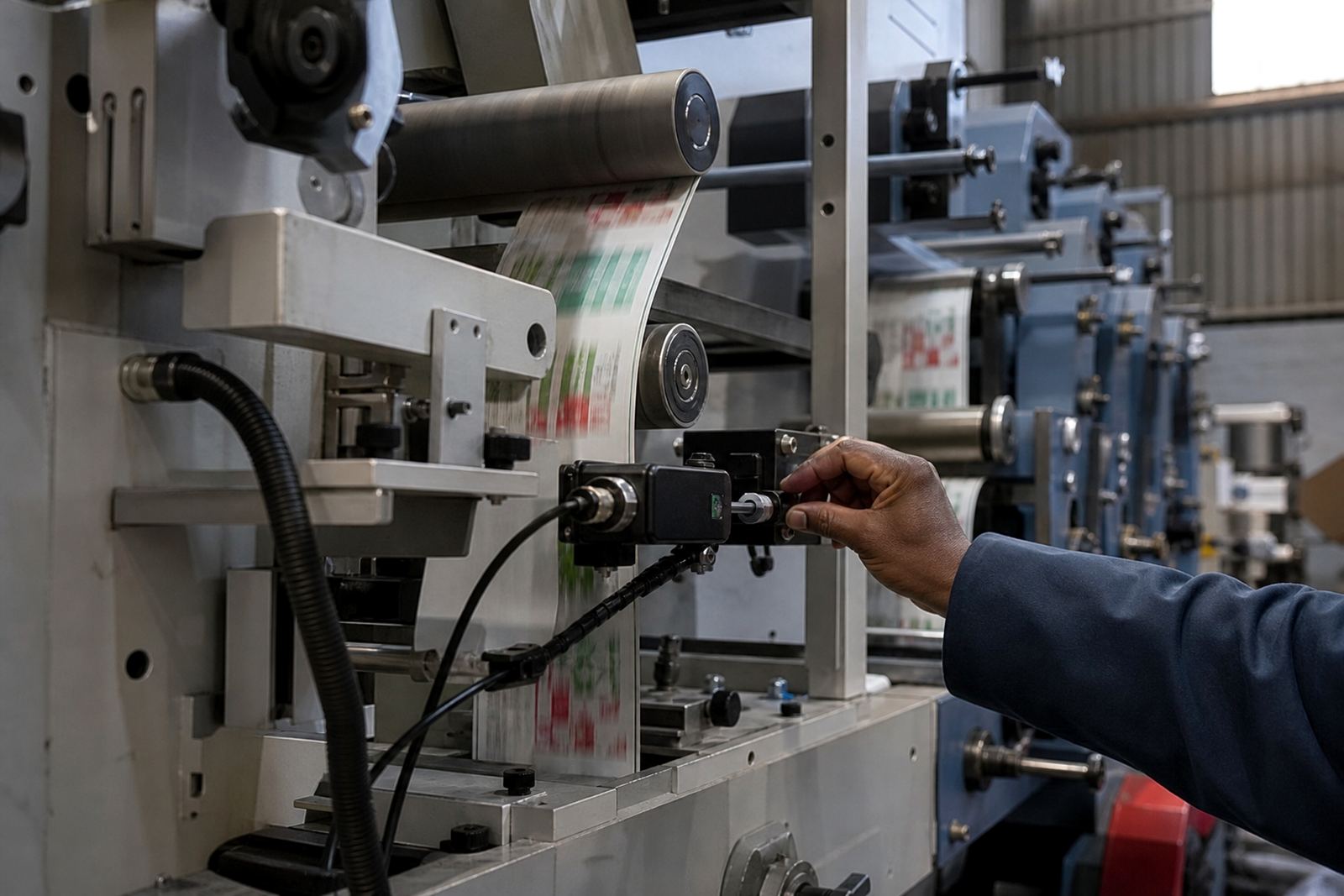
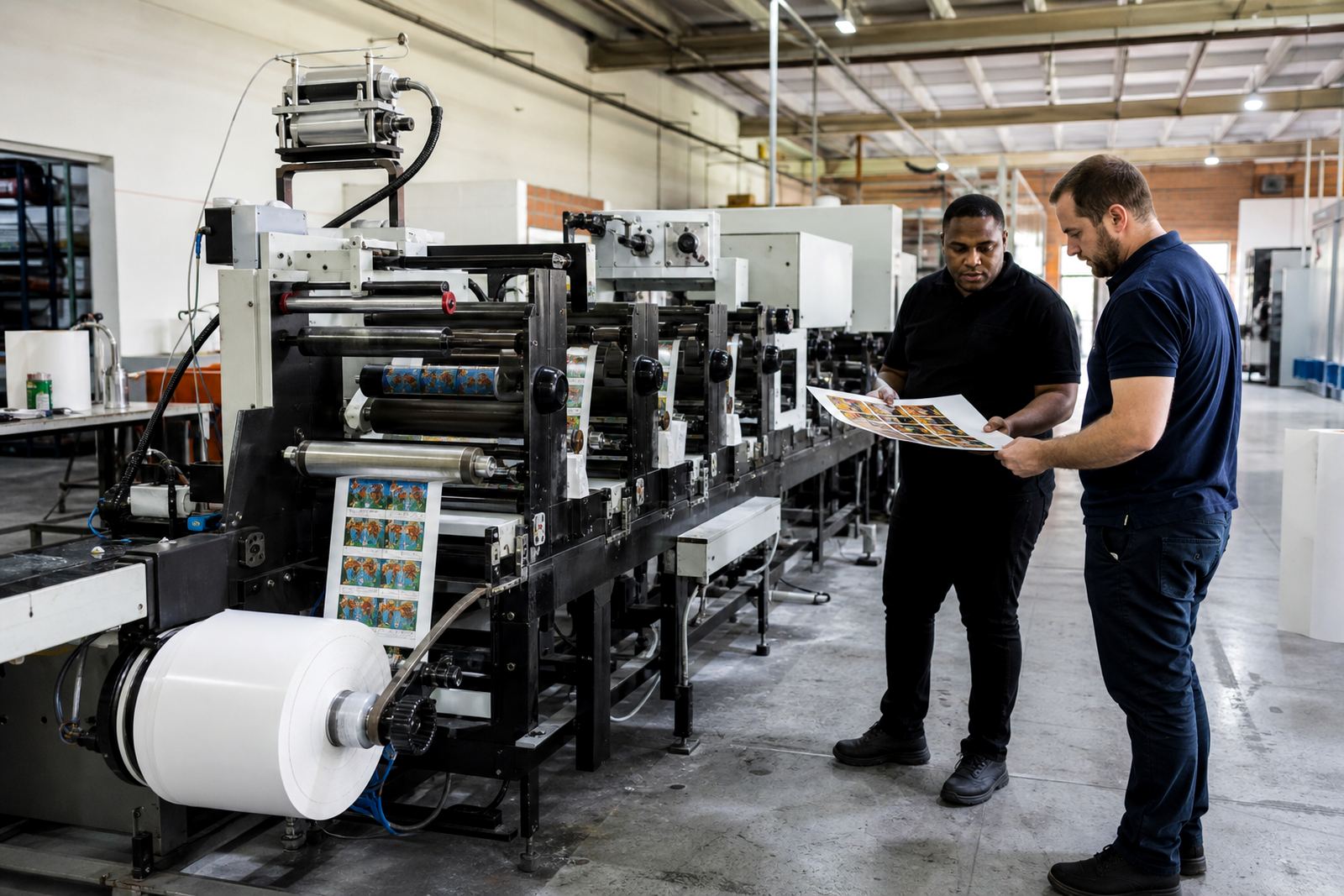
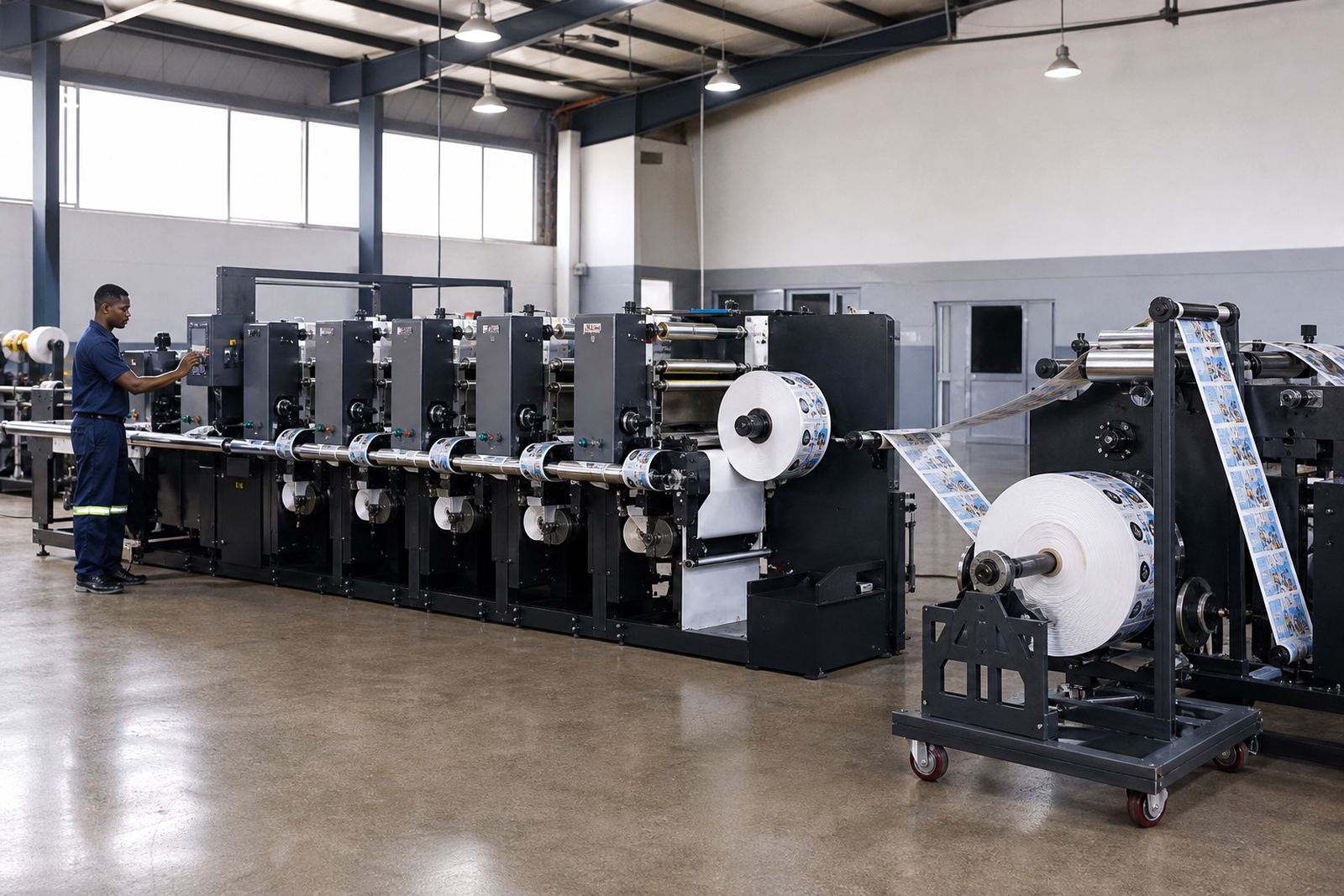
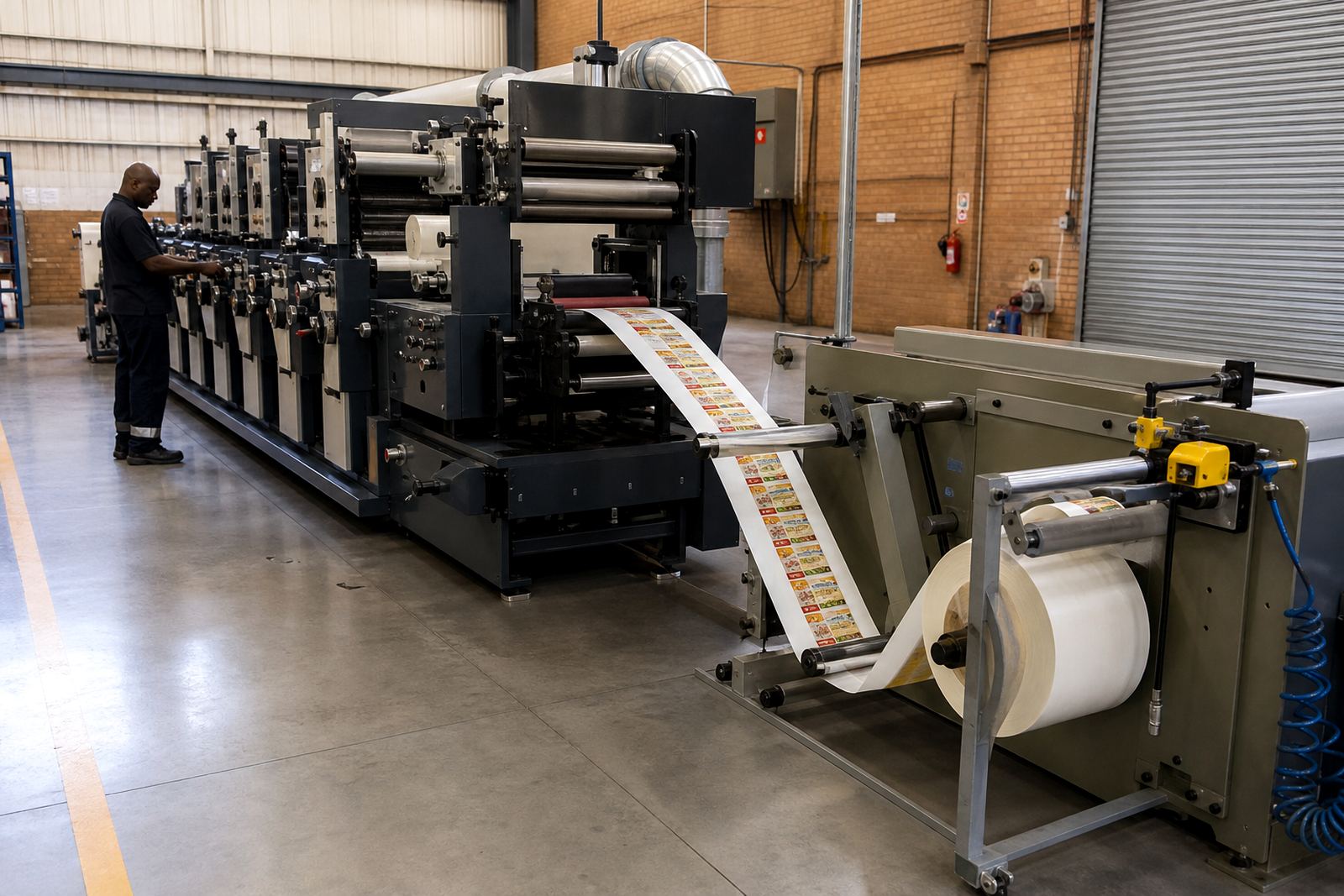
An inline finishing press is set up to print and complete selected finishing steps in the same line, so the web does not need to move off to separate converting equipment after printing. Depending on the configuration, that can include varnishing, die-cutting, slitting, sheeting, cold foil, lamination, gap punching or waste removal. For label converters in Johannesburg, Pretoria, Durban, Cape Town and Gqeberha, this can cut down on extra handling and help keep jobs moving, especially when turnaround times are tight.
It is a practical choice for narrow-web label work where repeatability matters. You can run pressure-sensitive labels, product branding labels, care labels, warning labels and short packaging runs with the finishing steps set to match the substrate and end use. The key is not just print quality, but making sure the finishing path is stable, the rewind is neat and the web tension stays under control through the whole cycle.
Typical Sizes, Web Widths and Configuration Options
Inline finishing presses come in different widths and module layouts, depending on the labels you produce and how much finishing you want to keep in-line. For narrow-web work, buyers usually compare the press by web width, number of print units, the finish functions needed, and how easily the line can be changed over between jobs.
- Web widths commonly selected for narrow-web label production
- Print unit count based on colour requirements and artwork mix
- In-line finishing modules such as die-cutting, slitting and varnish
- Options for hot foil, cold foil or lamination where required
- Rewind and unwind layout suited to roll sizes and core sizes in use
- Servo or conventional drive choices depending on the production setup
For many South African converters, it is worth planning around the label formats you do most often rather than trying to cover every possible job. A machine that suits cosmetics and food labels may need different finishing tools from one used mainly for retail promotions or variable packaging. A short review of your current roll sizes, substrate range and finishing steps will help match the press to the work you actually do, not just the jobs you hope to take on later.
Where Inline Finishing Makes the Most Sense
This type of press suits converters that want more control over the full label process in one line. It is a strong fit for food and beverage labels, cosmetic labels, retail labels, health and wellness packaging, and other narrow-web jobs that need a clean finish before dispatch. If your operation handles frequent repeats, smaller batches, or mixed artwork, inline finishing can make planning simpler and reduce the amount of material moved between stages.
It also helps where floor space is limited. In premises around Spartan, Kempton Park or other industrial areas with tight layouts, combining printing and finishing can free up space that would otherwise be needed for separate converting equipment. That matters when the site also has to manage deliveries, stock holding and load-shedding planning. In coastal areas such as Durban or Gqeberha, the setup also needs proper attention to humidity and storage conditions so materials stay consistent from shift to shift.
- Converters handling short to medium runs with varied artwork
- Businesses wanting fewer handovers between print and finishing steps
- Operations that need neater roll presentation for dispatch
- Sites where floor space is limited and efficiency matters
- Plants looking to improve control over finishing quality on repeat jobs
Installation, Power and Utility Checks Before the First Run
Before installation, the site should be checked for floor loading, access paths, incoming power and any compressed air or extraction needs linked to the finishing setup. Some finishing functions may also need extra attention to heat control or ventilation, depending on the materials in use. On industrial sites in Gauteng, this often means planning the install around existing production lines, panel positions and service access so the press can be maintained without disrupting the rest of the operation.
Power requirements vary by configuration, so the correct electrical supply should be confirmed before equipment arrives. If the line includes any heated or pneumatic finishing steps, those utility points need to be in place and tested. We also recommend checking backup power planning for load-shedding periods, especially where changeovers or finishing cycles cannot be left half-complete. A proper installation should include levelling, web path set-up, registration checks and a clean start-up sequence, with operator familiarisation built in from day one.
- Confirm incoming power and phase requirements before delivery
- Check compressed air supply where pneumatic functions are used
- Allow space for roll loading, rewind clearance and maintenance access
- Plan for ventilation or extraction where heat or fumes are involved
- Test backup power strategy for outage periods and controlled shutdowns
Care, Servicing and Keep-Up for Daily Production
Like any narrow-web press, an inline finishing line performs best when the web path, rollers, knives, tension settings and finishing stations are checked regularly. Daily wipe-downs, careful cleaning around adhesive areas and correct storage of plates, sleeves and finishing tools help keep the line steady. It is also important to keep an eye on wear points such as bearings, bearings and guide parts, because a small issue there can show up later as registration drift or poor edge quality.
Preventive maintenance is easier than chasing breakdowns in the middle of a shift. We assist with planned servicing, breakdown support, remote troubleshooting and spare parts support, along with anilox care, plate mounting help and finishing setup. Training the operators to spot early signs of trouble also saves time. Things like unusual vibration, dust build-up, uneven rewind or poor cut quality should be dealt with quickly, not left until the next big order. A line that is kept in good order tends to be easier to set up and less likely to waste material.
What to Check When You Are Ordering an Inline Finishing Press
When ordering, it helps to work from the jobs you need to produce rather than the brochure terms alone. Start with your label range, substrate types, roll widths, finishing steps and target output format. That will guide the choice of modules, rewind arrangement and operator controls. You should also confirm whether you need room for future upgrades, since a press that is too fixed can become awkward once your product mix changes.
- Current and planned label widths, roll diameters and core sizes
- Printing colour count and whether finishing must stay fully inline
- Substrate types, including paper, film or specialist label stock
- Need for die-cutting, slitting, varnish, lamination or foil
- Available power, air supply and floor space at the installation site
- Operator experience level and training needs for the team
It is also worth asking how the press will fit into your daily production flow. If you run mixed jobs, remote support and good startup support can make the first few weeks much smoother. If you are based in Johannesburg, Pretoria, Durban, Cape Town, Gqeberha or elsewhere in South Africa, our team from Spartan, Kempton Park can help you compare the configuration against your real production needs and support the install from commissioning through to ongoing use.
Key facts
| Press type | Inline finishing press for narrow-web label production |
|---|---|
| Web width | Configured to suit common narrow-web label widths |
| Functions | Printing with selected inline finishing steps |
| Finishing options | Die-cutting, slitting, varnish, lamination, foil and waste removal, depending on setup |
| Installation needs | Level floor, suitable electrical supply, and air or ventilation where required |
| Support available | Press installation, commissioning, operator training, maintenance and breakdown support |