What the Repeat Job Press is built for
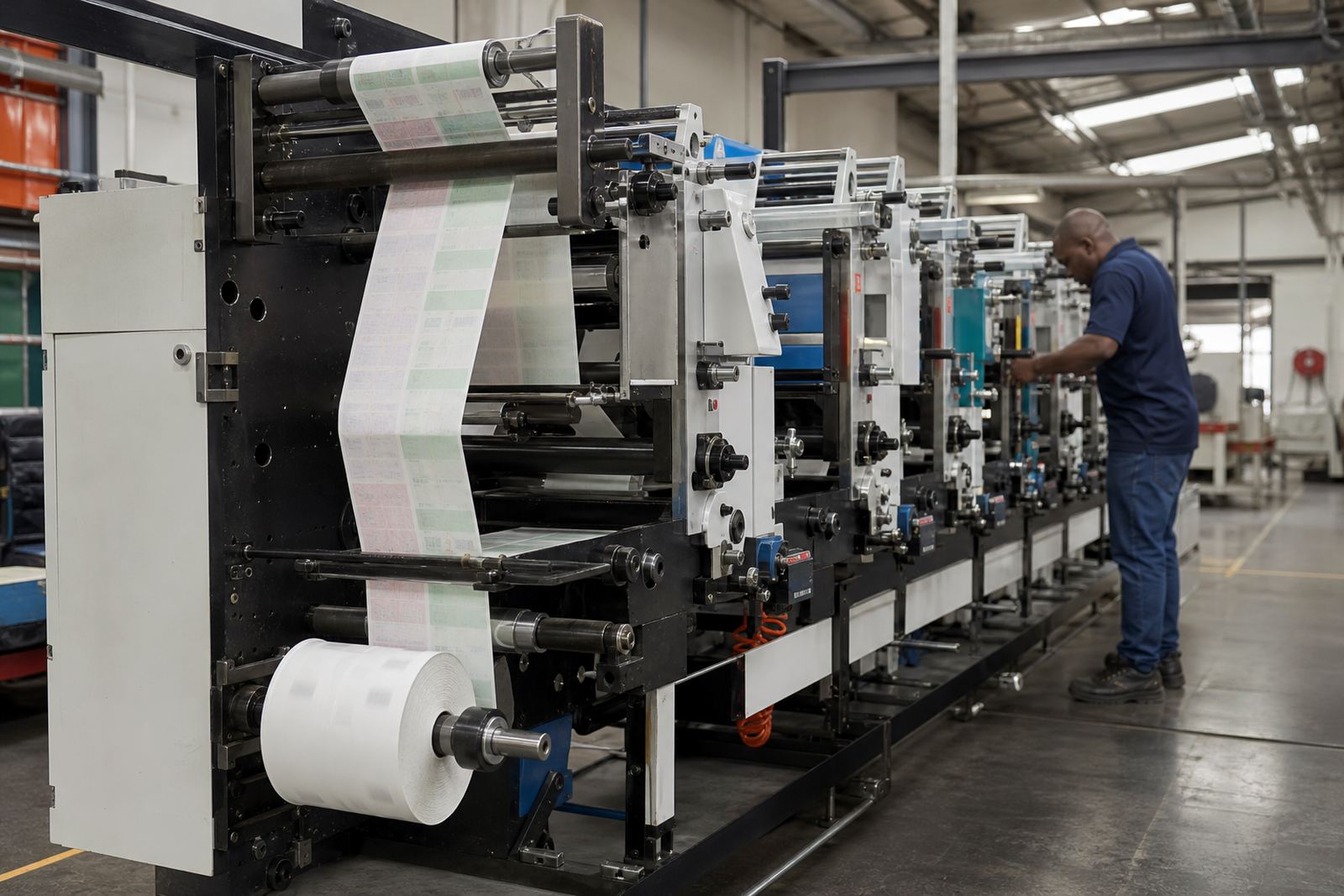
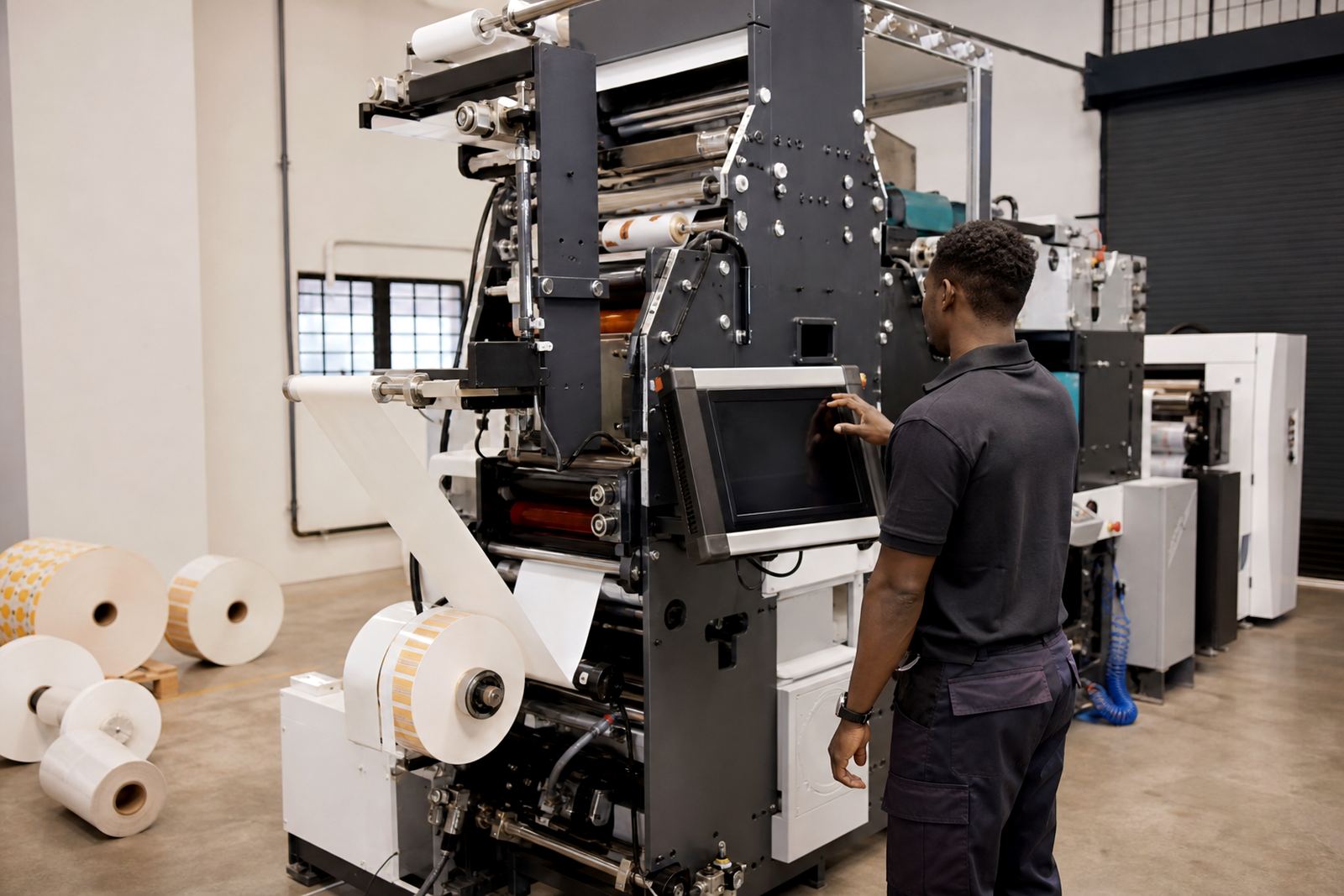
A Repeat Job Press is a narrow-web flexo press package intended for established label work, where the artwork, substrate and finishing approach are already known. It is a practical option for converters handling repeat orders for food labels, beverage wraps, household products, cosmetics and retail labels, especially where short changeovers and reliable setting records matter.
The aim is consistency. When a job comes back after a few weeks or months, the press team needs to recover the same impression, ink flow, web tension and register with as little trial and error as possible. That makes this type of press useful for businesses that want stable production on common label sizes, clear tracking of repeat settings and less wasted material during startup.
In South African production rooms, that also helps with real-world pressures such as load-shedding, temperature swings, humidity on the coast and the need to keep municipal and site safety rules in order. A repeat-oriented setup should be easy to document, easy to service and suitable for daily use.
Typical widths, modules and finishing options
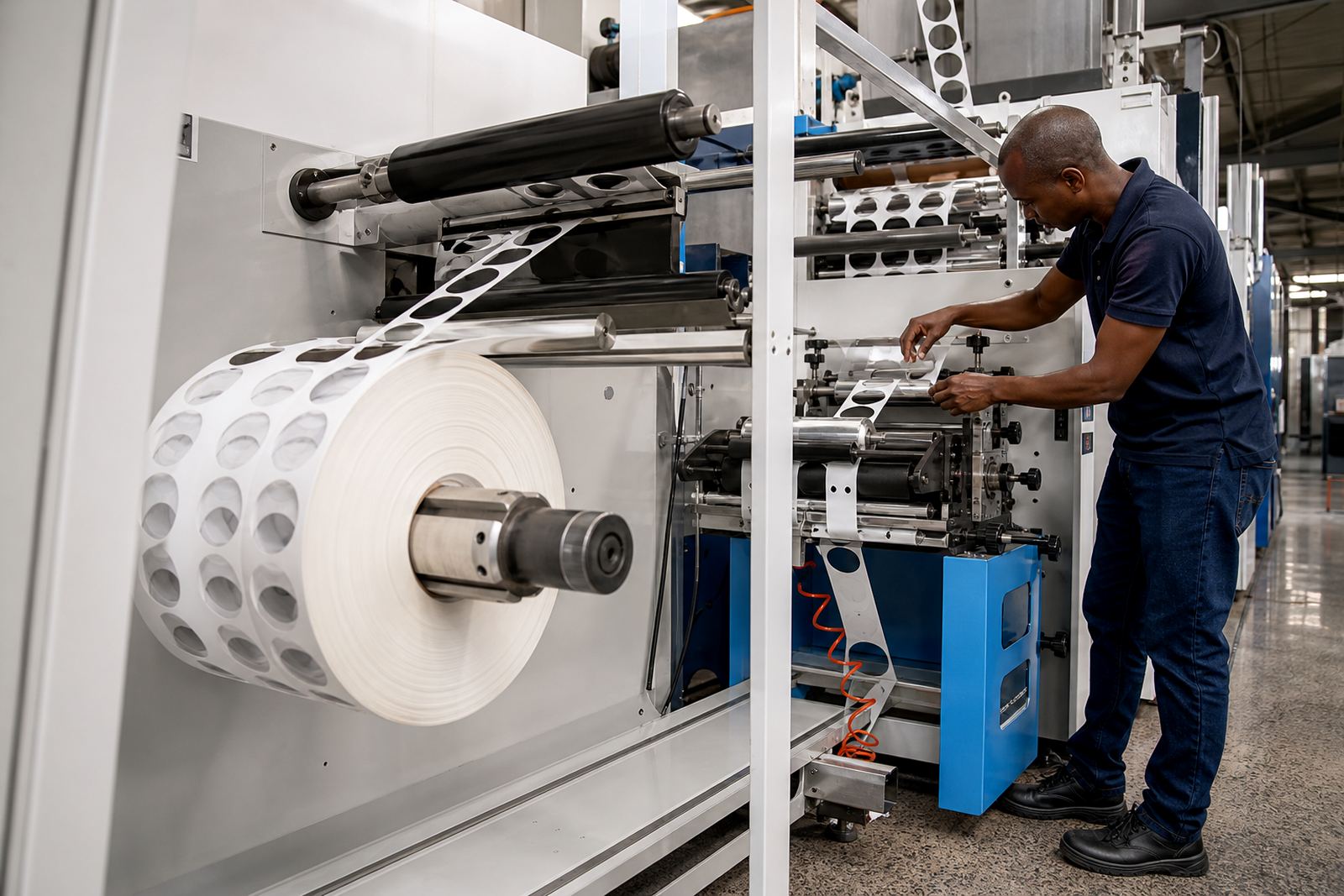
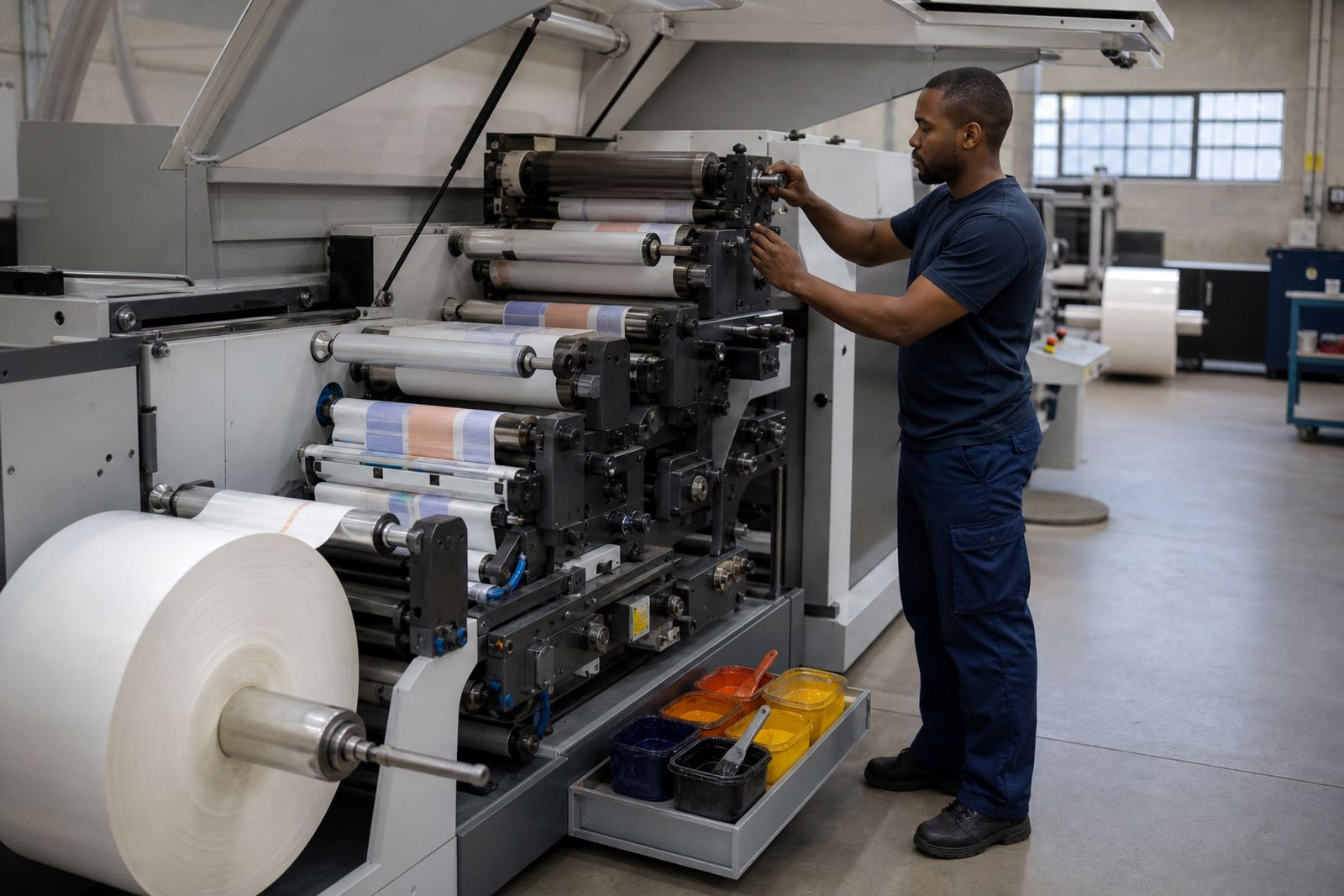
Because every converter works differently, the Repeat Job Press is usually discussed in terms of web width, unit count and finishing layout rather than one fixed machine. Narrow-web label work commonly falls into compact production lines that can handle self-adhesive labels, wraparound labels or other converted label products depending on the chosen setup.
- Web width matched to the label format and substrate roll size
- Print stations arranged for the ink system and colour count required
- Inline finishing choices such as slitting, die cutting, varnishing or laminating
- Options for repeat registration aids and job-setting references
- Space for inspection, rewinding and waste control devices
For repeat jobs, the important point is not adding every available option, but selecting the setup that matches the label range you run most often. A converter in Gauteng may need faster job turnaround for retail labels, while a coastal plant might prioritise drying control and material handling that copes better with humidity. The right layout keeps the press practical and reduces unnecessary handling steps.
Where this setup suits best
This press format is a good fit for label converters that already have steady customers and recurring artwork. It works well where the production mix includes batches that return in the same format, same substrate and same finish, so the team can use saved settings and repeatable make-readies.
It suits operations in Johannesburg, Pretoria, Kempton Park, Durban, Cape Town and Gqeberha where there is regular demand for consistent label supply. It is also useful for converters serving distributors and packers who need reorders done without changing the product every time. In many cases the press is chosen not because it is flashy, but because it keeps things moving and the operators know exactly what to do on the next run.
- Best for repeat label orders with stable artwork
- Useful for converters wanting predictable startup times
- Suitable for plants that need clear job records and setting notes
- Helpful where finishing steps are part of the regular workflow
Installation, power and site preparation
Installing a Repeat Job Press starts with the site itself. The floor must be level, the access routes should allow for delivery and positioning, and the area needs enough working space around the machine for reels, cleaning and service access. If the line includes ancillary equipment, the layout should allow safe movement between print, drying and finishing points.
Power requirements depend on the chosen configuration and the support equipment around it. Before commissioning, the electrical supply, protection devices and earthing should be checked by a qualified person. If the press uses compressed air, the air supply must be clean and dry, with the right pressure available at the point of use. Some sites also need local ventilation or extraction, depending on inks, coatings and the way the finishing section is arranged. Planning this early avoids delays when the machine arrives and helps the team get to production quicker.
For coastal sites, corrosion control and storage discipline matter. For inland plants, dust control and stable power are often the bigger issue. Either way, a proper installation makes a difference to repeat accuracy from the first run onward.
Care, servicing and keeping repeat jobs stable
Repeat work only stays repeatable if the press is cared for properly. Routine cleaning, roller checks, lubrication where required and regular inspection of wear parts all help keep results in line with previous runs. Anilox care, plate mounting discipline and correct storage of repeat job records are especially important on narrow-web flexo equipment.
Operators should know how to recognise drift before it becomes waste. Small changes in tension, doctoring, drying or register can affect the final label, so the team should have a clear process for checks during startup and during the run. Preventive maintenance is cheaper than waiting for a breakdown, and on a busy production floor it is also less disruptive to customers who are waiting on the next delivery.
Flexography Printer provides installation, commissioning, operator training, startup production support, preventive maintenance, breakdown support, remote support and spare parts support from Spartan, Kempton Park. Our team also assists with finishing setup, production consulting and plate mounting help so the press keeps doing the same job properly, again and again.
What to confirm before you order
Before ordering a Repeat Job Press, it helps to go through the production list in detail. The more clearly you define the work, the easier it is to match the press layout and the finishing section to your actual output. That includes the label sizes you run most often, the materials you use, the type of ink system required and how much of the finishing process must happen inline.
- Typical label widths, repeat lengths and substrate types
- Whether the work is mostly short repeat runs or longer production runs
- Colour count, varnish needs and any special finish requirements
- Available floor space, power supply and compressed air provision
- Whether operators need full startup training or refresher training
- Spare parts, service access and your preferred maintenance schedule
If the converter serves multiple towns or branches, it is also worth checking how jobs will be shared across shifts and teams. A press that is easy to document, easy to clean and easy to reset is usually the one that gives the best long-term value. That is especially true when the same labels come back week after week, with only small changes that still have to be handled properly.
Key facts
| press type | Narrow-web flexo press for repeat label production |
|---|---|
| application | Repeat label jobs and established packaging formats |
| web width | Matched to job range and converter requirement |
| finishing | Inline or near-line finishing options |
| installation support | Site check, installation and commissioning available |
| service cover | Training, maintenance, breakdown and remote support across South Africa |