
Wrap-around label work and why press setup matters
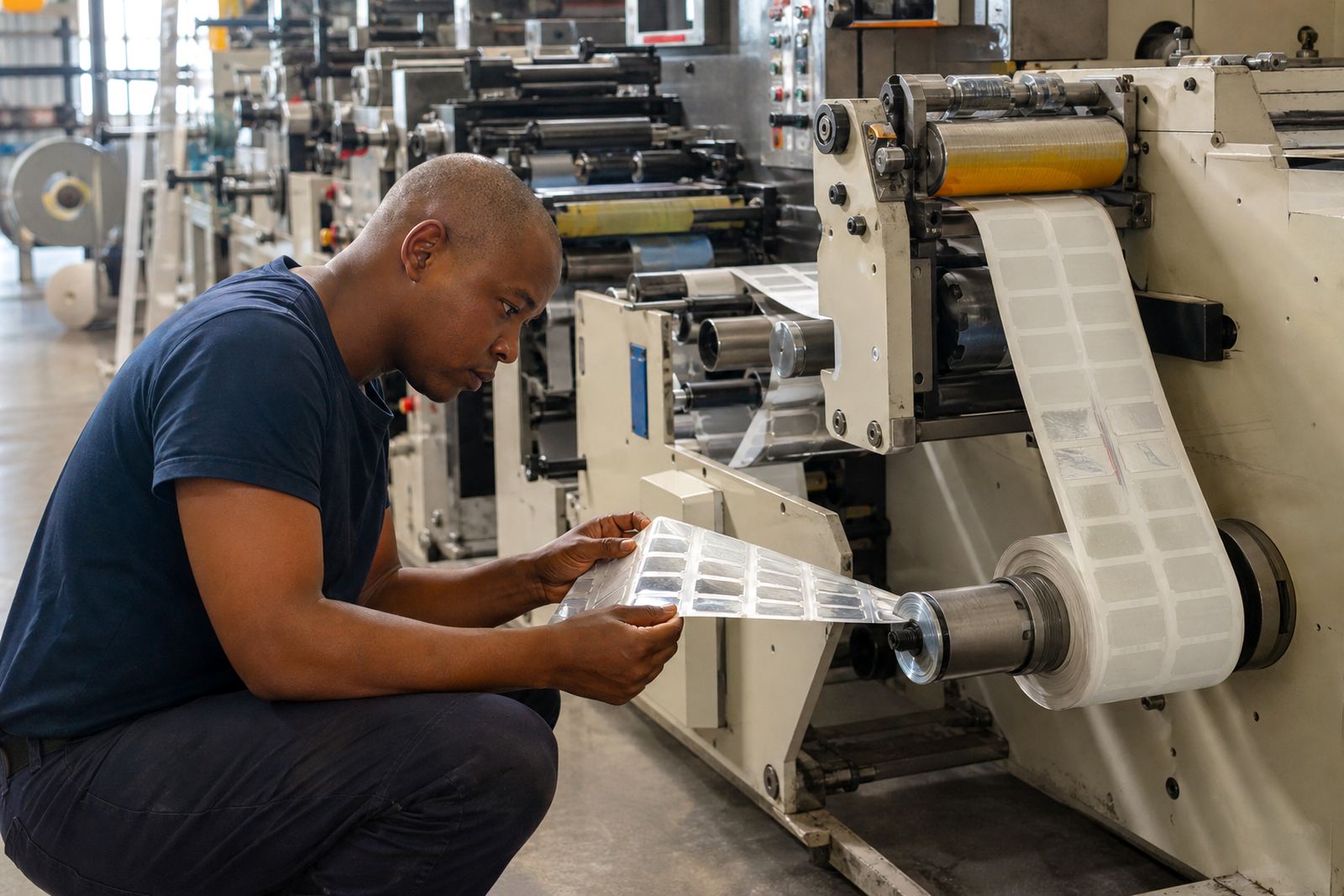
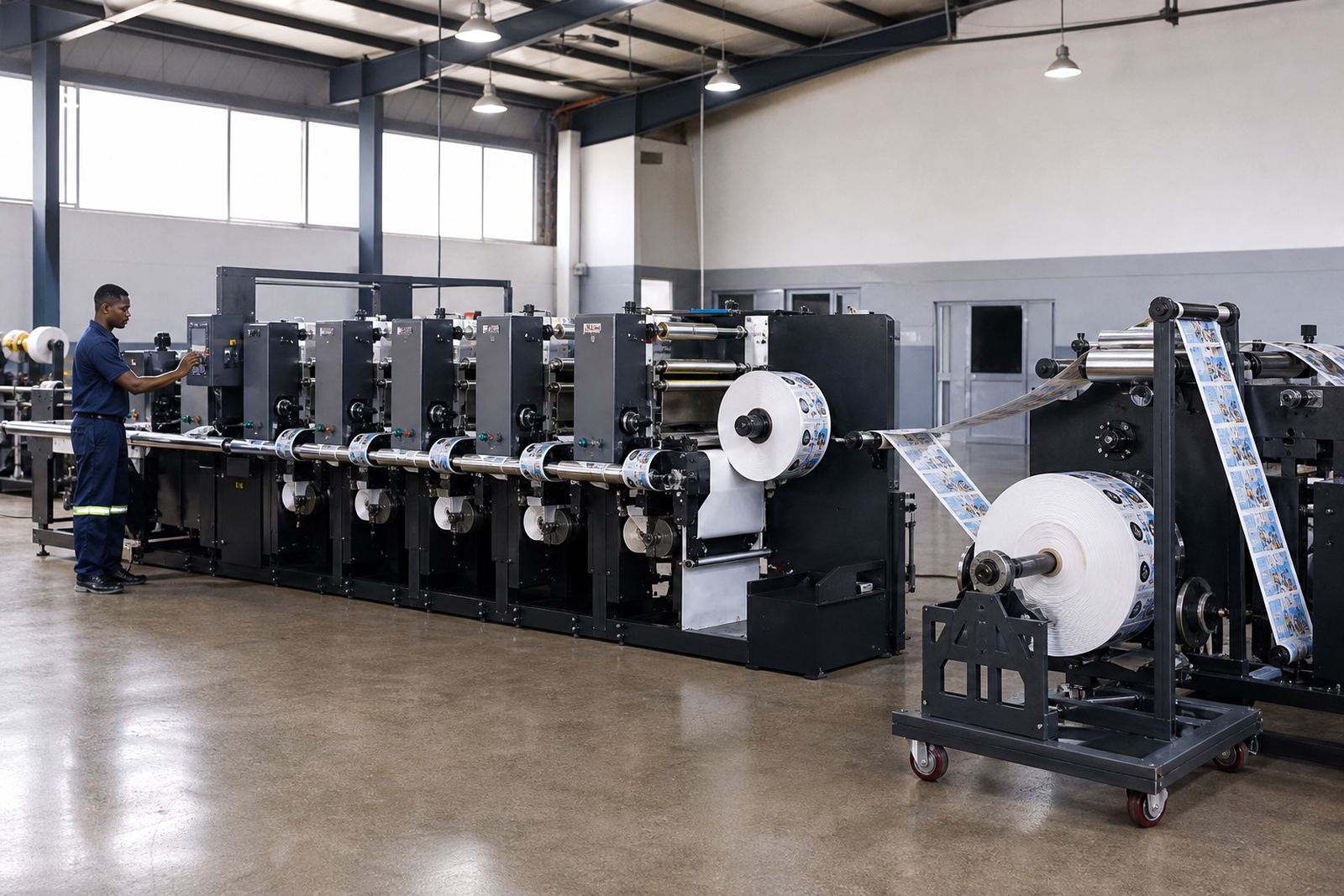
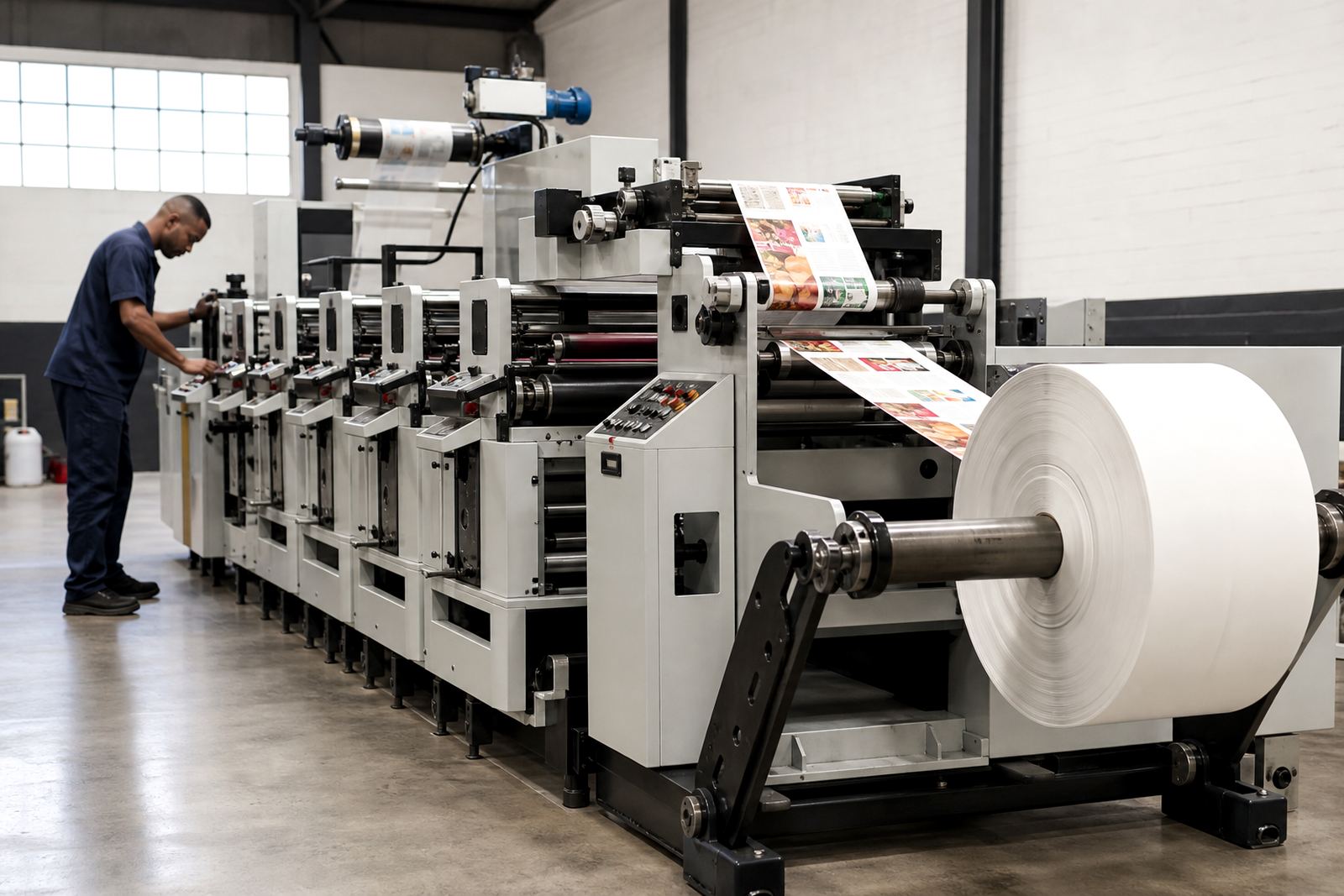
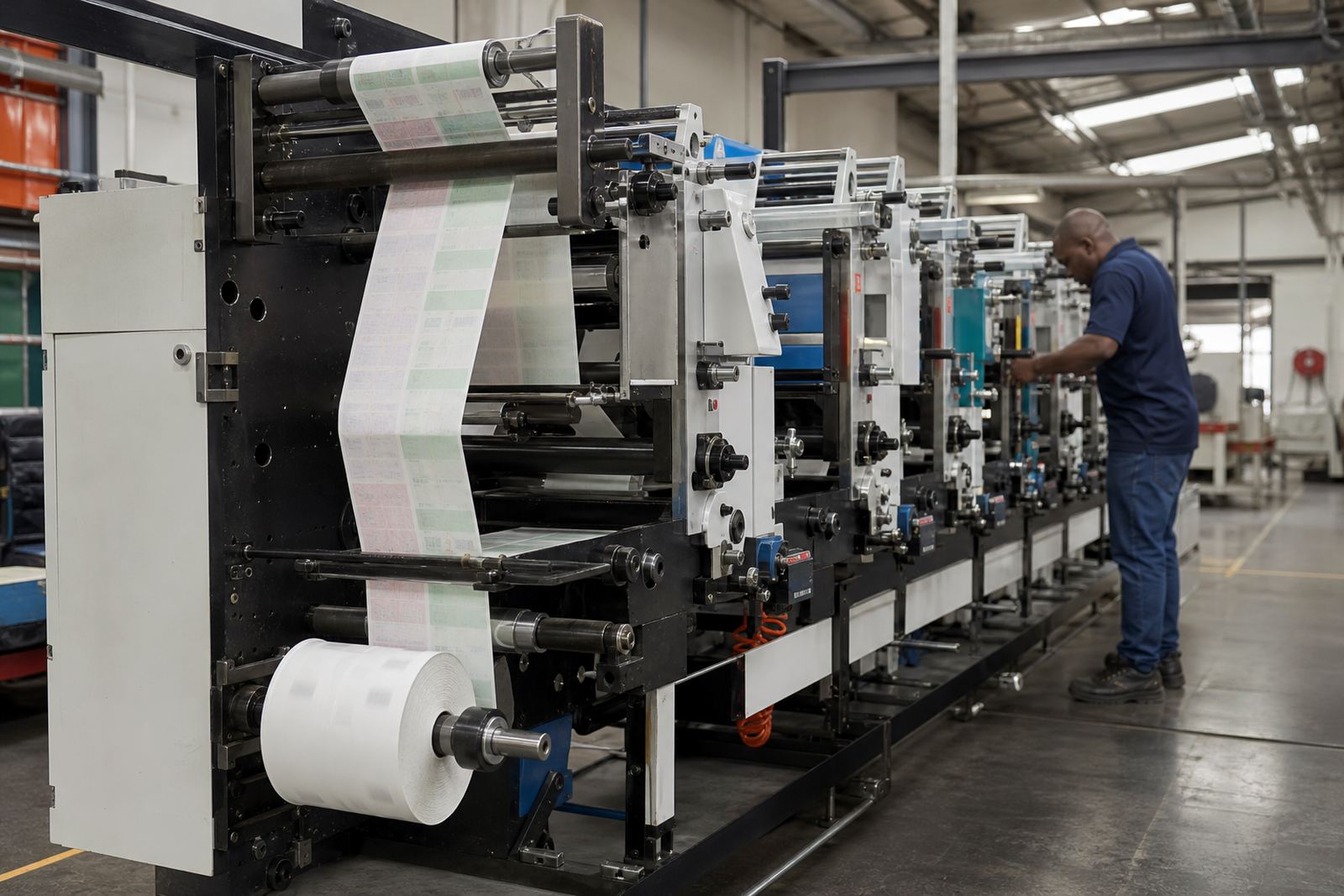
Wrap-around labels are built for containers that carry the label all the way around the pack, so the press has to keep repeat length, web tension and print position consistent from start to finish. On narrow-web flexo work that usually means careful setup on the unwind, print stations, drying path and rewind, with the finishing section matched to the label construction and release liner in use.
This type of press suits beverage labels, food packs, household products, personal care ranges and retail items where the artwork must land cleanly every time. For converters in Johannesburg, Pretoria, Durban, Cape Town and Gqeberha, the main issue is often not only print quality but repeatability when the same job comes back after a few weeks or months. Good setup saves waste, reduces web breaks and makes the changeover more predictable for the operator.
Press sizes and options for wrap label production
We work with narrow-web flexo press configurations suited to wrap label production and similar pressure-sensitive label work. The right setup depends on label width, repeat length, substrate type and how much finishing needs to happen inline. Some jobs only need standard print and die-cutting, while others need extra stations for varnish, cold foil or other finishing steps.
- Common web widths and print widths are selected to suit the label format and waste control
- Multiple colour stations can be arranged for the artwork and substrate mix
- Drying or curing can be matched to the ink system and production speed
- Inline finishing can include varnish, die-cutting, slitting and rewinding
- Registration and tension control must suit repeat work and short runs alike
We always look at the label structure first, then the press layout. A wrap label that looks simple on artwork can still need tighter control if the film is slippery, the liner is light, or the glue line needs exact placement. In coastal areas, humidity can affect stock handling and storage, so the press room and material prep should be planned for local conditions.
Where a wrap label press fits best in South Africa
A wrap label press is a good fit for label converters serving food and beverage, cosmetics, cleaning products, health and personal care, and general retail packing lines. These sectors often need clear print, repeat accuracy and a neat finish because the label sits in full view on shelf packed bottles, jars and tubs. A press that handles repeat jobs well also helps converters serving brands that use several pack sizes across the same range.
For Gauteng based operations in Spartan, Kempton Park, East Rand and Centurion, the benefit is a practical one: lower downtime, easier scheduling and better control over reorders. In Durban and Cape Town, where humidity and storage conditions may vary, the ability to keep press settings stable matters just as much as the artwork. A wrap label press is also useful where municipal or retail packaging rules require clear ingredient, batch or barcode areas on the label face.
- Best suited to label converters handling repeated pack sizes
- Useful where clean finishing and barcode legibility are important
- Suitable for short runs and scheduled production alike
- Works well where the same artwork must return with limited setup changes
Installation, power and site preparation
Press installation starts with the room, floor loading, access and power supply. A narrow-web flexo press needs a clean, level space with enough working room for roll handling, plate mounting and routine servicing. The site should allow safe movement around the machine and enough space for finished rolls, waste handling and operator access. If drying or curing equipment is part of the setup, ventilation and extraction must also be planned properly.
Power requirements depend on the final machine arrangement and the ancillary equipment fitted with it. Before ordering, check whether the site has stable three-phase supply, correct isolators and capacity for the press, drying units and any air or vacuum systems that may be included. Load shedding is still a reality in many parts of South Africa, so backup planning is worth discussing early, especially for converters that cannot afford a half-finished reel sitting in the machine. Where compressed air is needed, the supply must be dry and steady, not patchy or noisy.
We can assist with press installation, commissioning and startup production support, so the machine is set up properly from day one and the first jobs run with less trial and error.
Care, servicing and day to day support
Wrap label work depends on consistency, so routine care is not something to leave until there is a fault. Press maintenance should include cleaning, inspection of rollers and guides, checking of tension systems, lubrication where needed, and careful attention to web path alignment. Anilox care and plate mounting also matter because small setup errors can show immediately on a wrap-around label. A slight shift in repeat or pressure can affect the whole roll, and that means wasted stock.
We support converters with preventive maintenance, breakdown support, remote support and spare parts support. Training is available for operators and supervisors who need practical guidance on setup, changeover and daily care. If a converter is using a press for mixed work, the team must know how to keep the wrap label settings repeatable without slowing production. That also applies to finishing setup, where slitting, rewinding and die-cutting need to stay accurate as the job runs. A tidy machine often gives fewer surprises, simple as that.
- Daily cleaning of print stations and guides
- Regular check of tension, registration and rewind quality
- Inspection of wear parts before long production runs
- Operator refresher training when job types change
What to check before you order a wrap label press
Before placing an order, it helps to define the label format in plain terms. Check the finished roll width, repeat length, substrate type, whether the label is pressure-sensitive or another construction, and whether finishing must happen inline or off line. If you print several wrap-around pack sizes, make sure the chosen setup can handle the smallest and largest jobs without constant rework. The clearer the spec sheet, the easier it is to match the press to the work.
It also helps to note where the machine will run and who will operate it. A converter in Pretoria might need a different support rhythm from a plant in Gqeberha, especially if one site has a small team and another runs multiple shifts. Consider training needs, planned maintenance access, and whether you need startup production support after installation. If you are unsure about plate mounting, finishing setup or changeover time, say so early. That is the point where a practical spec saves money later.
- Label width and repeat length
- Substrate type and liner construction
- Print colours and finishing steps needed
- Site power, floor space and ventilation
- Operator skill level and training needs
- Service response expectations for your area
For enquiries, clients use the contact page enquiry form and we respond with the next practical step for the job at hand.
Key facts
| Product type | Narrow-web flexo press setup for wrap-around label formats |
|---|---|
| Application | Repeatable wrap label production for labels and packaging |
| Typical width range | Sized to suit the label format and job mix |
| Configuration options | Print stations, drying or curing, slitting, rewind and finishing |
| Installation support | Press installation, commissioning and startup production support |
| Service coverage | Johannesburg, Pretoria, Durban, Cape Town, Gqeberha and surrounding areas |