What a tamper evident press is used for
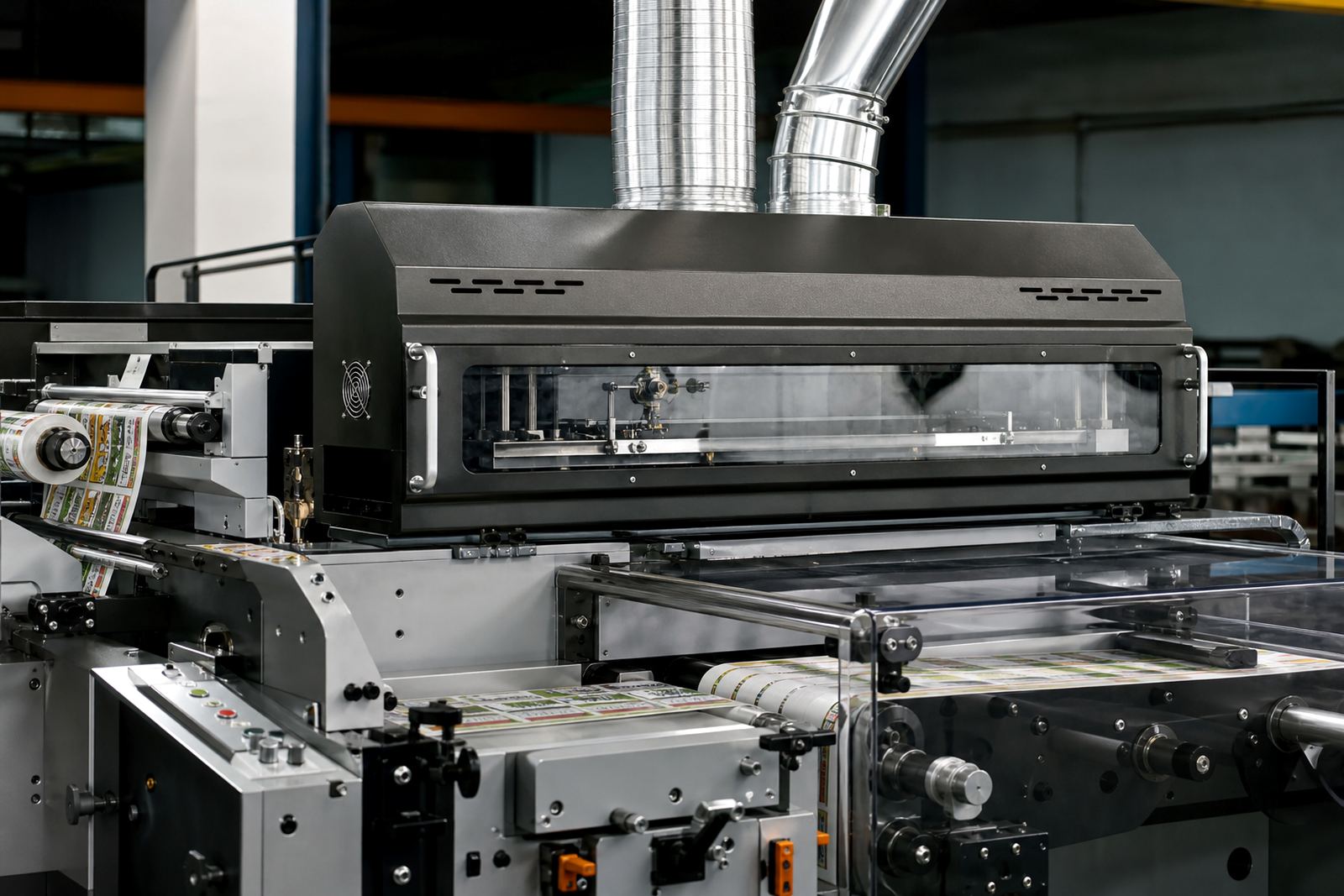
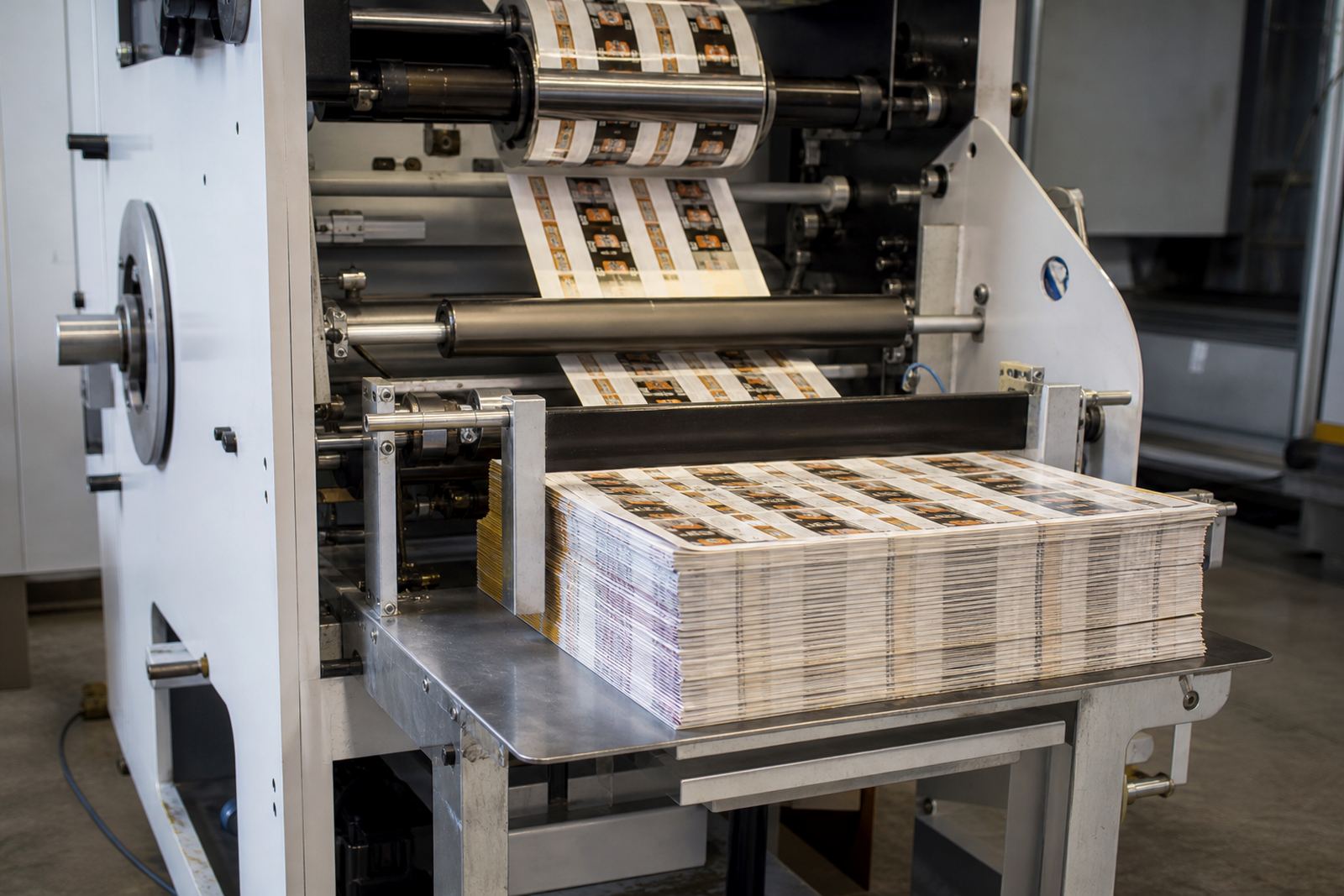
A tamper evident press is a narrow-web flexo label press configured for formats that need clear opening evidence, controlled application of security features and good register on short or medium label runs. It is commonly used where the label must show if a cap, closure, carton flap or seal has been opened. In practical terms, the press is set up to handle fine print, small repeat lengths and finishing that keeps the label intact until the end user breaks the seal.
For label converters in Johannesburg, Pretoria, Durban, Cape Town and Gqeberha, this type of setup is useful when customers want secure closures without giving up neat presentation. It can suit food and beverage, personal care, household chemicals and retail packs. The press itself is selected and configured around the web width, unwind and rewind needs, the type of substrate and the finishing steps required on the line.
Press sizes and line options to consider
We supply narrow-web flexo press configurations for tamper evident work in a range of practical line widths and station layouts. The right choice depends on label size, repeat length, number of colours and whether you need inline finishing such as varnish, die cutting or slitting. For some converters a compact line is enough. Others need extra print stations, better drying capacity or more finishing room for security features and multiple label formats.
- Web width: selected to suit the label format and waste control
- Print stations: enough for the colour count and special marks required
- Finishing: inline die cutting, slitting, varnishing or release features where needed
- Substrate handling: paper, film and other label materials used for closure and security jobs
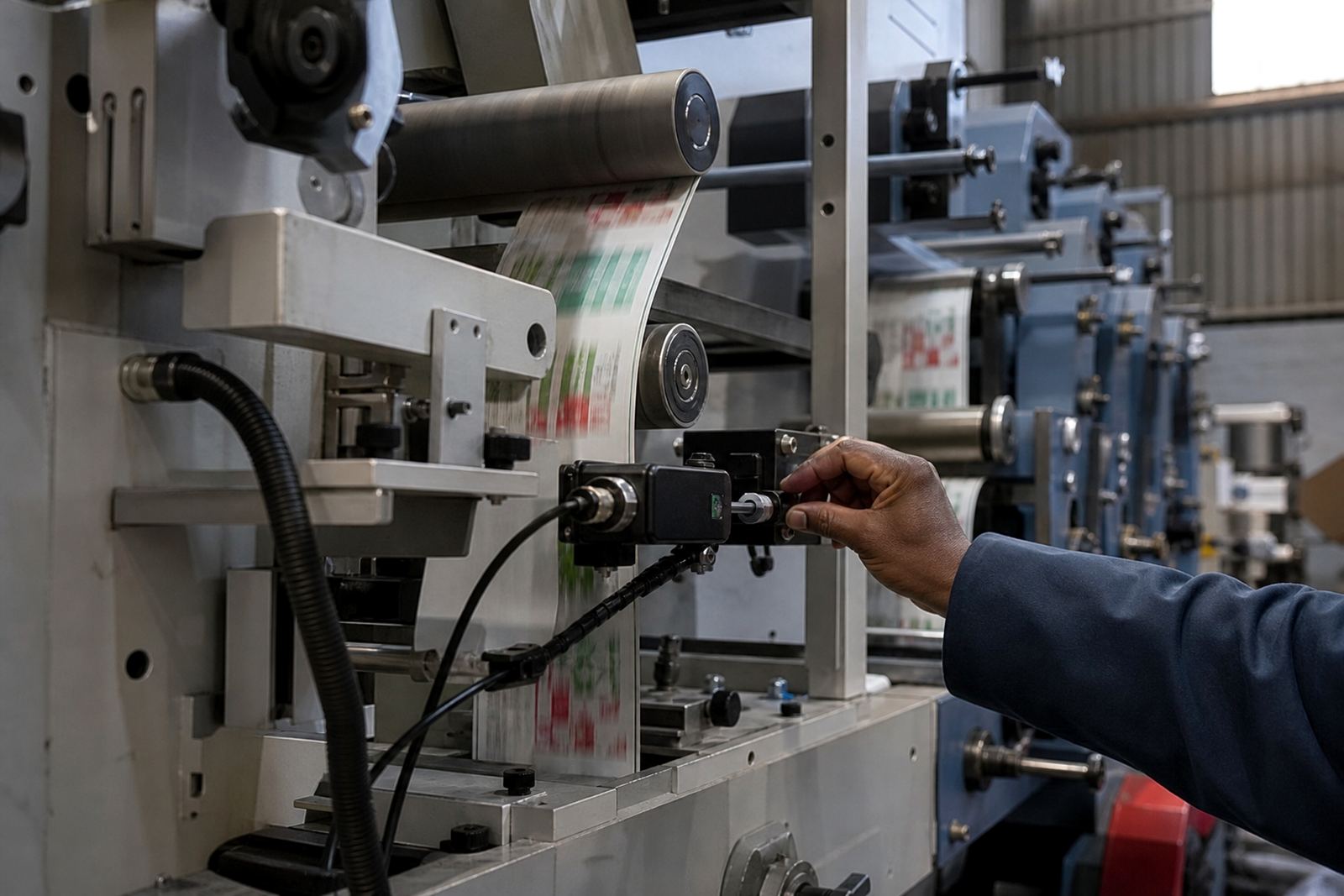
- Registration control: important for small text, codes and repeat accuracy
At Spartan in Kempton Park, we help customers match the press configuration to the work they actually run, not only the brochure spec. That matters when you are printing short runs, switching between closures and security labels, or moving between retail and industrial orders.
Where this setup suits best
Tamper evident label work is often ordered by clients who need closure labels, void labels, security seals or labels that must show signs of removal. A suitable press setup gives better control over print placement, adhesive related finishing and neat edge quality. It also helps when the customer needs labels that must survive handling, transit and changes in temperature. In coastal areas such as Durban and Cape Town, material choice and storage conditions need more care because humidity can affect web handling and finishing consistency.
This press type suits converters supplying:
- Food and beverage closures
- Cosmetics and personal care seals
- Household chemical containers
- Pharmaceutical and healthcare packaging where allowed by the job spec
- Retail labels that need anti-tamper features
For municipal and contract work, clear traceability and repeatable finishing are often part of the brief. A properly set up narrow-web flexo line helps keep those jobs steady from first print to final rewind.
Installation, power and site preparation
When a tamper evident press is installed, the site needs enough floor space for the press, material staging and safe operator movement. The room should allow for clean substrate storage, finished roll handling and maintenance access. In many South African plants, load-shedding planning is also part of the setup, so power continuity and restart procedure need to be considered before commissioning starts. If the site uses compressed air for certain functions, the air supply must be clean and stable and the line should be checked for leaks and pressure loss.
Before commissioning, we normally check the following:
- Floor loading and level surface for press placement
- Power supply capacity and protection for sensitive controls
- Air supply where the configuration requires it
- Lighting, ventilation and dust control
- Material flow from unwind to rewind and finishing stations
We support installation, press commissioning and startup production support in Johannesburg, Pretoria, Durban, Cape Town, Gqeberha and the East Rand. If your site has limited power stability or frequent interruptions, the line plan should allow for safe restart, inspection and set-up repeatability after each outage.
Care, servicing and production support
Tamper evident work depends on clean set-up and steady press condition. Registration, tension control, anilox condition, plate mounting and finishing alignment all affect the final result. If any of those drift, the security feature can look untidy or the seal can fail earlier than expected. Regular care helps avoid waste, especially on shorter runs where setup time already carries a cost.
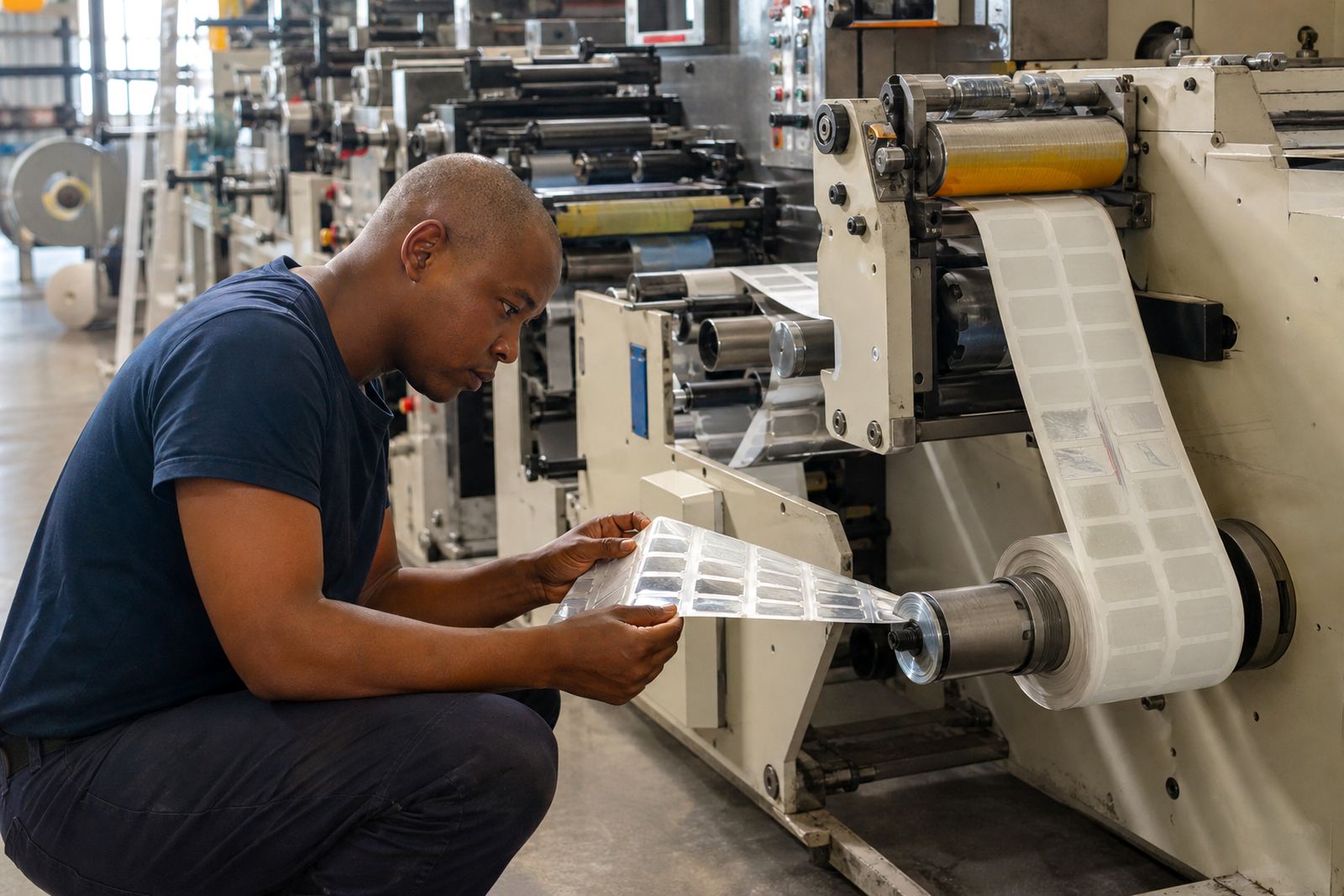
Our support services include preventive maintenance, breakdown support, remote support, spare parts support, anilox care, plate mounting help, finishing setup and production consulting. We also provide operator training so your team understands how to change over between jobs, check the rewind, keep the web tracking straight and spot problems before they grow. In plant conditions where dust, humidity or long operating shifts are part of the day, a simple maintenance routine makes a real difference.
What to check before you order
Before you place an order for a tamper evident press, it helps to have the job mix and plant conditions clear. The wrong configuration can leave you with a line that is too wide, too slow or not flexible enough for the work coming in. A good checklist keeps the buying decision practical and easier to explain to finance and production teams.
- Label types you will run most often
- Web width and repeat length requirements
- Number of colours and any special finishing needed
- Substrate types, including paper or film
- Expected run lengths and changeover frequency
- Site power, air and space available for installation
- Training needs for operators and maintenance staff
If you are upgrading from a basic line, ask how the new press will handle plate mounting, finshing setup and job changeover time. That is often where the real improvement shows up on the production floor.