What a UV Curing Unit Does on a Narrow-Web Line
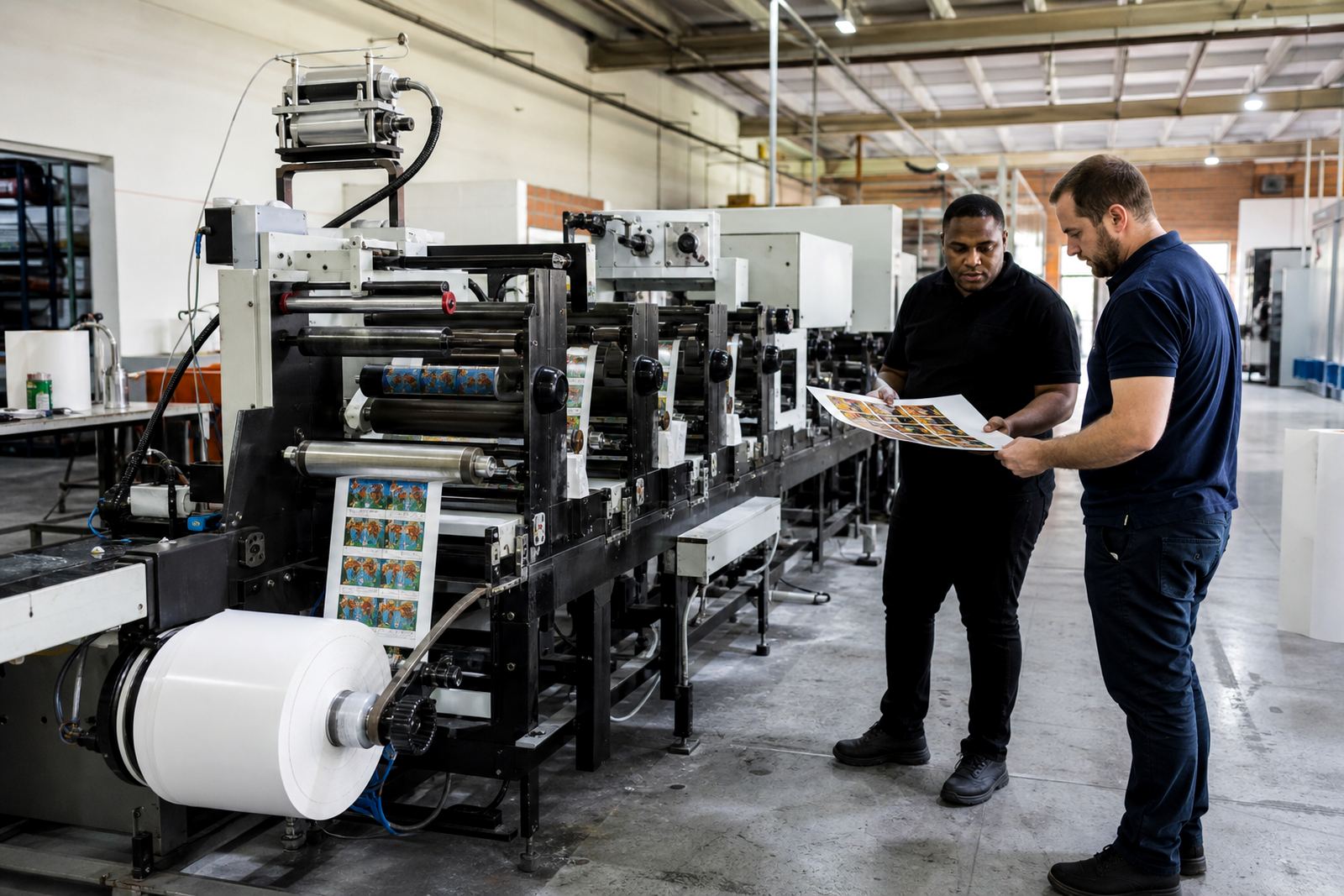
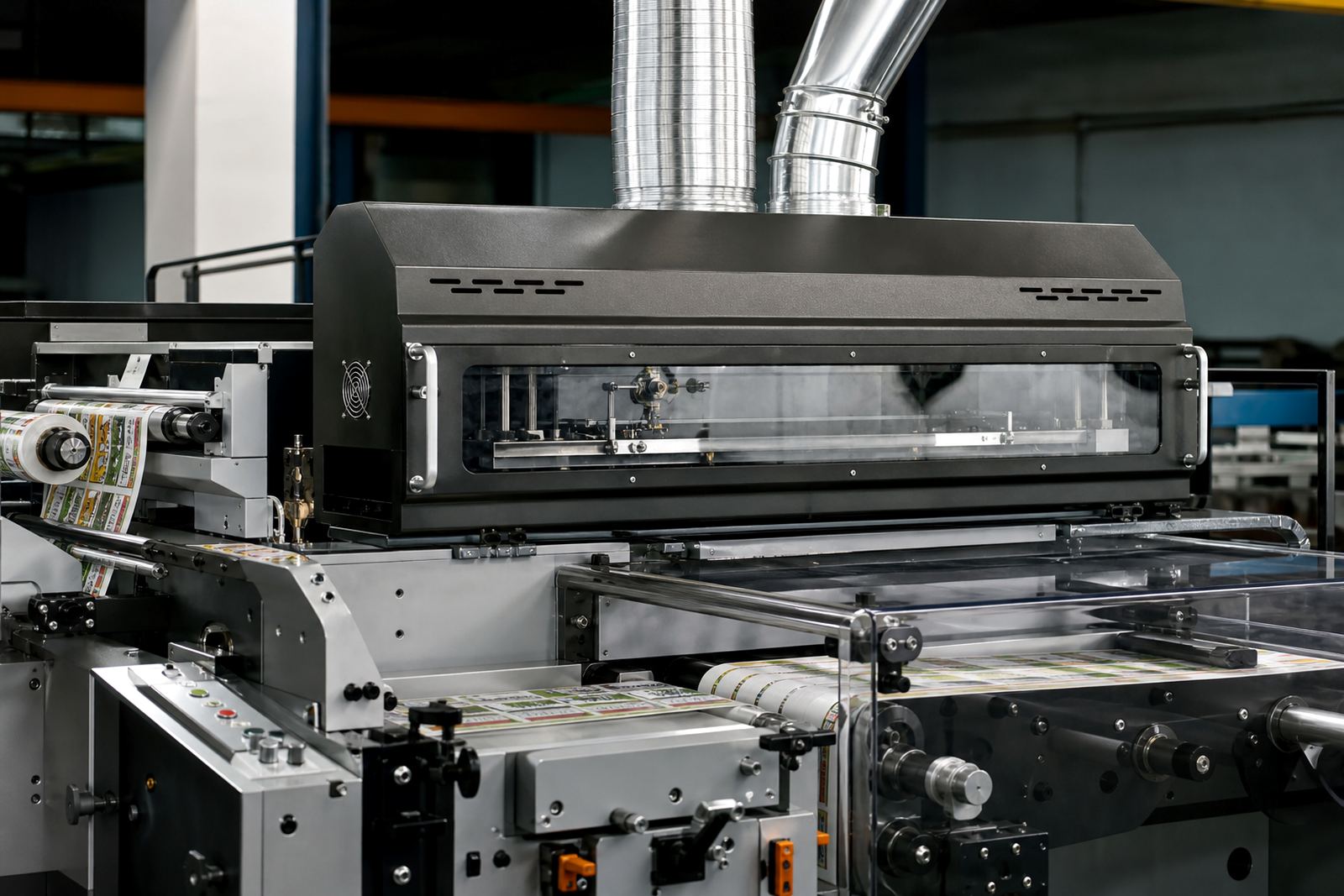
A UV curing unit is fitted into the print line to harden compatible inks and coatings as the web passes through. It is used on suitable flexo label presses where fast drying matters, especially when the job needs immediate rewinding, die cutting or slitting after print. The unit works as part of the press setup, not as a separate finishing machine, so it must be matched to the web path, print stations and material you run most often.
For label converters in Kempton Park, Johannesburg, Pretoria and the coastal centres, the main benefit is control. Printed material leaves the print section ready for handling with less wait time, and that helps where floor space is tight or work changes over many times a day. It also supports more stable production in humid conditions, which can matter in Durban and Gqeberha when standard drying takes longer.
Common Configurations and Size Choices
UV curing units come in different lengths, lamp counts and mounting styles so they can suit a compact narrow-web press or a wider line with more output demand. The right choice depends on your press width, web tension, ink system and the amount of curing needed for the job. Some units are placed after a print station, while others are arranged for inline curing before a coating or finishing section.
Typical ordering points include whether the unit must run with one lamp head or more than one, if it needs air cooling or water cooling, and whether the housing must clear an existing turret, rewind stand or inspection table. On many label lines, the physical fit matters as much as the electrical load. If the curing section sits too close to another station, you can get heat build-up, poor access for cleaning or awkward threading during changeovers.
- Inline placement for flexo ink curing after print stations
- Single or multi-head lamp housing depending on output needs
- Air-cooled or water-cooled arrangement, based on the press and room conditions
- Fixed or adjustable mounting to suit the web path
- Shielding and extraction points for safe operator access
Where It Suits Label Work Best
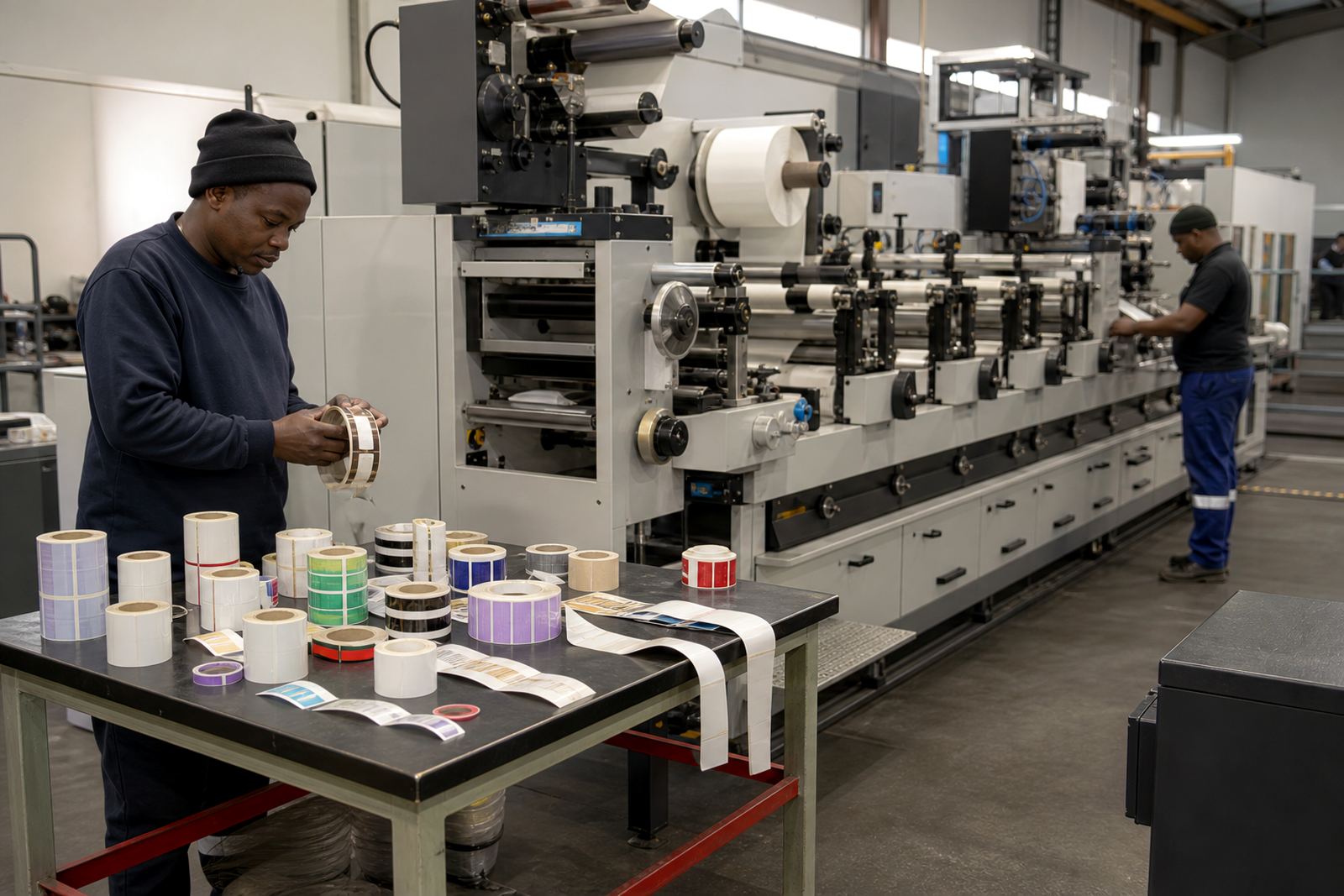
This product suits narrow-web label converters that handle short runs, repeat work and mixed substrates. It is commonly considered for food and beverage labels, cosmetic labels, household goods and retail packaging where print appearance and handling speed both matter. If the job includes overprint varnish, spot coating or special effects, inline curing can help keep the line moving without waiting for the ink to air dry.
It is also useful where the pressroom handles more than one material type. Films, coated papers and other label stocks can react differently to heat and exposure, so the curing section must be set up for the material in use. A good match reduces web distortion, keeps registration steadier and makes the next step in the process easier to manage. On jobs with fine text or dense solids, proper curing can help avoid smudge transfer when reels are handled.
- Short-run and repeat label production
- Food, beverage, cosmetic and retail packaging work
- Jobs needing immediate rewind, slitting or die cutting
- Material sensitive to heat or surface scuffing
Installation, Power Supply and Site Readiness
Installation should be planned around the press layout, the service access you need and the local electrical supply available in the building. For most label factories, the curing unit needs a stable electrical feed, proper earthing and enough space for cable routing and maintenance access. If the model uses cooling, ventilation or extraction, those services must be allowed for before commissioning starts. In some plants, it is worth checking the backup power arrangement too because load-shedding can interrupt production and restart timing matters.
There is usually no gas feed required for a standard UV curing unit, but some installations may need compressed air for shutters, interlocks or cooling related functions. The exact requirement depends on the unit and the press line it is being fitted to. Before sign-off, we check the available panel capacity, breaker size, cable route, cooling clearance and operator standing room. If the unit is being added to an older press, the condition of the frame, guards and web path should be checked first so the fit is safe and practical.
- Stable electrical supply with correct earthing
- Space for access, cleaning and lamp changes
- Cooling or extraction allowance where required
- Compressed air only if the selected unit needs it
- Backup power planning for plants affected by load-shedding
Care, Servicing and Ongoing Support
Like other press equipment, a UV curing unit needs regular checks to stay reliable. Lamp output, reflectors, guards, cooling fans and cables should be inspected on a schedule. Dust, adhesive mist and ink residue can build up inside the housing, so cleaning matters, especially in busy plants where the press is running most days. If cooling paths are blocked or the lamp area is dirty, curing quality can drop and heat on the web can rise.
We support converters with preventive maintenance, breakdown help and remote support where the issue can be diagnosed without waiting for a site visit. Operator training is useful at handover because the team needs to know how to warm up the unit, confirm safe operation and spot early warning signs. A small fault caught early is usually cheaper to correct than a stoppage in the middle of a run. That is especially true for plants working to tight delivery windows, where one delayed job can affect the whole shift.
- Lamp and reflector inspection
- Cooling fan and airflow checks
- Housing cleaning and guard checks
- Electrical connection inspection
- Operator refresher training after service work
What to Confirm Before You Place an Order
Before ordering, confirm the press model, web width, available mounting space and the type of ink or coating you plan to cure. It helps to know the speed range you run most often, the materials you print and whether the curing section must fit into an existing machine or a new line. If you are upgrading an older press, check whether the current control panel has enough capacity for the new unit and whether the guarding can be adapted cleanly.
You should also confirm whether the unit needs air cooling, water cooling or extra extraction, and whether your site has the correct power arrangement. If your factory runs in an area with frequent interruptions, ask how the unit should restart after a stop so the line can resume safely. When we quote or plan support, we also look at setup, plate mounting help, finishing setup and startup production support where needed, because the curing section must work with the rest of the line not on its own.
Key facts
| Use | Inline curing of compatible inks and coatings on narrow-web flexo label presses |
|---|---|
| Web width | Matched to the press and line layout, subject to the selected unit |
| Cooling | Air-cooled or water-cooled options, depending on the installation |
| Power | Stable electrical supply with correct earthing and panel capacity |
| Air or gas needs | No process gas on most units, compressed air only if the selected model requires it |
| Support | Installation, commissioning, operator training, maintenance and breakdown support |