What an Ink Mixing Station Does on a Flexo Floor
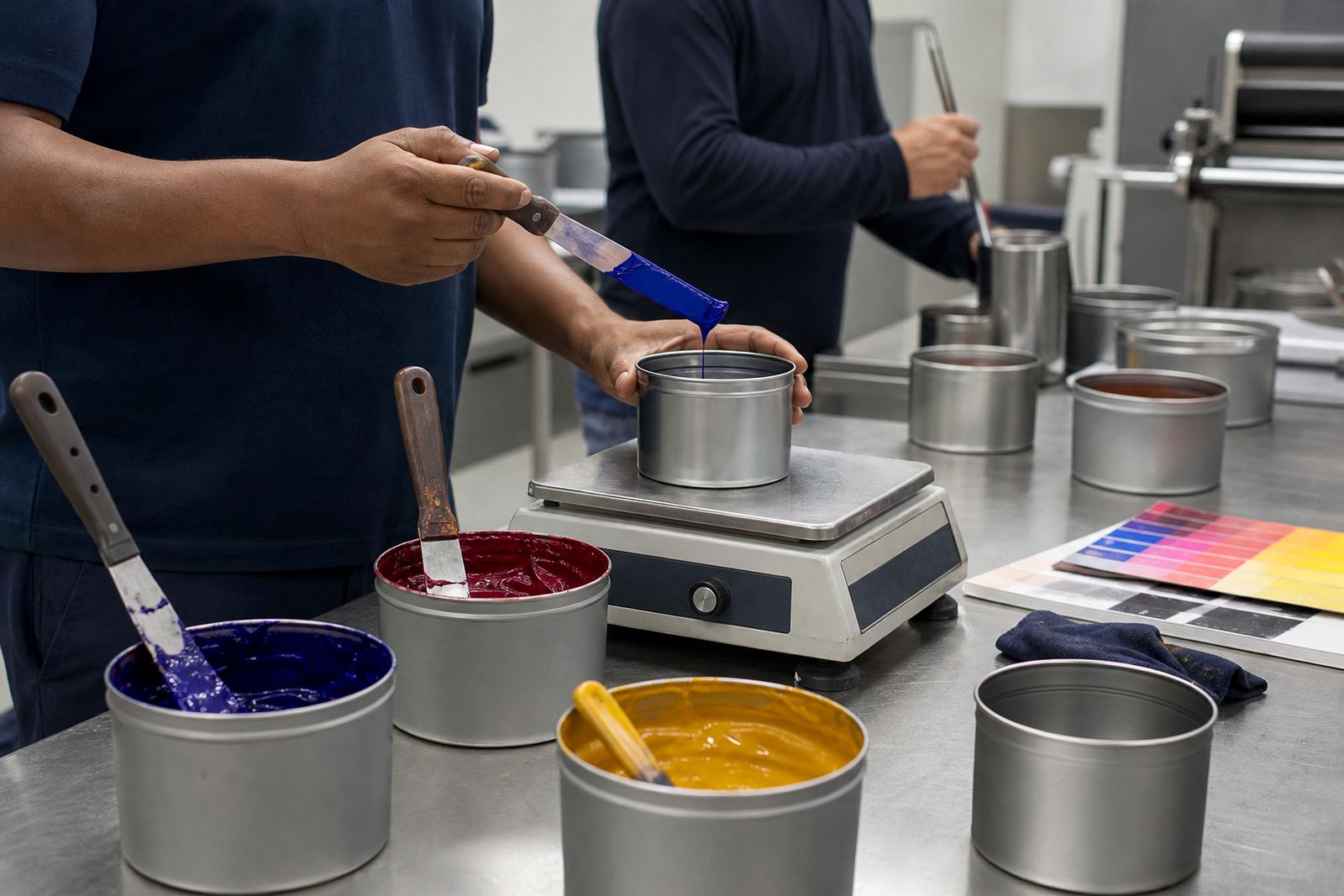
An ink mixing station is a dedicated work area for measuring, blending and holding press inks before they go to the narrow-web press. It keeps the colour preparation process separate from the pressroom, which helps with housekeeping, traceability and faster changeovers. In a busy label plant, that matters when you are running food labels one hour and retail labels the next.
For South African converters, the station is often used to manage spot colours, control returns, and keep mixed inks covered and identified properly. It can also be set up with trays, scales, shelving and wash-up areas so operators are not carrying open containers across the floor. That reduces spills and supports better quality control, especially on long shifts or during load-shedding when the team has to restart carefully.
Size Options and Common Layouts for Label Shops
Ink mixing stations are usually specified to suit the space available and the volume of work being handled. Some sites need a compact single-bench setup for a smaller conversion line, while larger operations prefer a longer station with separate areas for weighing, mixing, storing and cleaning. The right layout depends on how many presses you run, how often colours are changed, and how much stock you keep on site.
Typical options include:
- Wall-side bench station for compact pressrooms
- Free-standing mixing island with access from both sides
- Station with enclosed cupboards for ink storage and consumables
- Unit with integrated wash-up sink or cleaning point
- Configuration with shelving for trays, pails and labelled containers
In humid coastal conditions such as Durban or Gqeberha, covered storage and good airflow help keep materials tidy and easier to handle. In hotter inland sites around Kempton Park, Pretoria or Johannesburg, a planned layout also helps staff move quickly without crowding the press area.
Where It Suits Best in South African Production
This product suits label converters, packaging printers and finishing departments that need repeatable colour preparation. It is especially useful where multiple jobs are run in a day, where customer approvals are strict, or where the site handles a mix of food, beverage, cosmetics and retail labels. A proper mixing station supports consistency from one batch to the next, which helps cut down on rework.
It also works well where finishing steps are part of the same workflow. If your plant includes varnish handling, overprint ink preparation or colour touch-up before finishing, the station gives the team a proper control point. That is useful for converters supplying Gauteng, KwaZulu-Natal and the Western Cape, where turnaround times are often tight and communication between pre-press, press and finishing has to be clear.
- Label converters with short-run and repeat business
- Plants needing tighter colour matching and batch control
- Operations wanting cleaner ink handling and less cross-contamination
- Pressrooms that need clearer workflow between prep and press
Installation, Power and Site Readiness
Installation is usually straightforward, but the site must be prepared properly. The floor should be level, easy to clean and able to take the weight of the station and its contents. Access should allow inks and consumables to move in safely, with enough space for operator access and cleaning. If the station includes powered equipment such as a stirrer, extraction point or dedicated lighting, the electrical feed must be checked before delivery.
Power needs depend on the final layout. Some stations only need standard single-phase supply for lighting or a small mixer, while others may require a dedicated electrical point for accessories. If your site has irregular supply due to load-shedding, it is worth planning how the station will be used during restart periods so open ink containers are not left exposed. Gas is not normally required for an ink mixing station unless the site has a separate process using gas-assisted heating or drying nearby.
At Spartan in Kempton Park, we often see better results when the station is placed close to the pressroom but not inside the main traffic path. That keeps colour prep close enough for practical use without blocking material movement.
Care, Cleaning and Servicing Over Time
An ink mixing station needs regular care to stay useful. Surfaces should be wiped down after each shift, lids and containers should be cleaned before storage, and labels must stay legible so older batches are not mixed up with fresh stock. If there are scales or powered accessories, they should be checked routinely for accuracy and safe operation.
Preventive maintenance is usually simple but important. Check hinges, drawer runners, seals and shelving for wear. Make sure the worktop is still sound and easy to clean. If the station includes any integrated mixer or support equipment, book servicing before small faults become downtime. In a coastal area, corrosion checks matter more often due to moisture in the air, while inland dust control can be the bigger issue.
- Daily wipe-down of work surfaces and tools
- Weekly checks on labels, lids and storage order
- Monthly inspection of scales, fittings and moving parts
- Regular cleaning of any wash-up area or sink
- Record batch details so repeat work stays consistent
What to Check Before You Order
Before ordering, it helps to define how the station will be used. Ask what volume of ink you mix per day, how many operators will work there, and whether you need storage for base colours, additives, samples and wash-up items. Also check whether the station must sit against a wall, fit into a narrow aisle, or form part of a larger prep room.
Useful details to confirm include access for delivery, available power points, preferred bench height, and whether you need extra shelving or enclosed storage. If the station will support food label work, ask about clean handling and separation of materials. If you are running multiple shifts, consider how the setup will be handed over between teams so there is no confusion on the next job.
Our team in Kempton Park supports label converters across Johannesburg, Pretoria, Durban, Cape Town and Gqeberha with installation, operator training, startup support and after-sales help. That includes practical guidance on plate mounting help, finishing setup, preventive maintenance and breakdown support, so the station works as part of the full pressroom process.
Key facts
| Type | Controlled ink preparation station for narrow-web flexo label production |
|---|---|
| Layout options | Single bench, twin bench, island setup, wall-side installation |
| Typical use | Ink measuring, blending, batch control and storage support |
| Utilities | Electrical supply as required for accessories; gas usually not needed |
| Site fit | Pressrooms, finishing rooms and colour prep areas |
| Support | Installation, operator training, preventive maintenance and breakdown support |