What Our Breakdown Support Covers
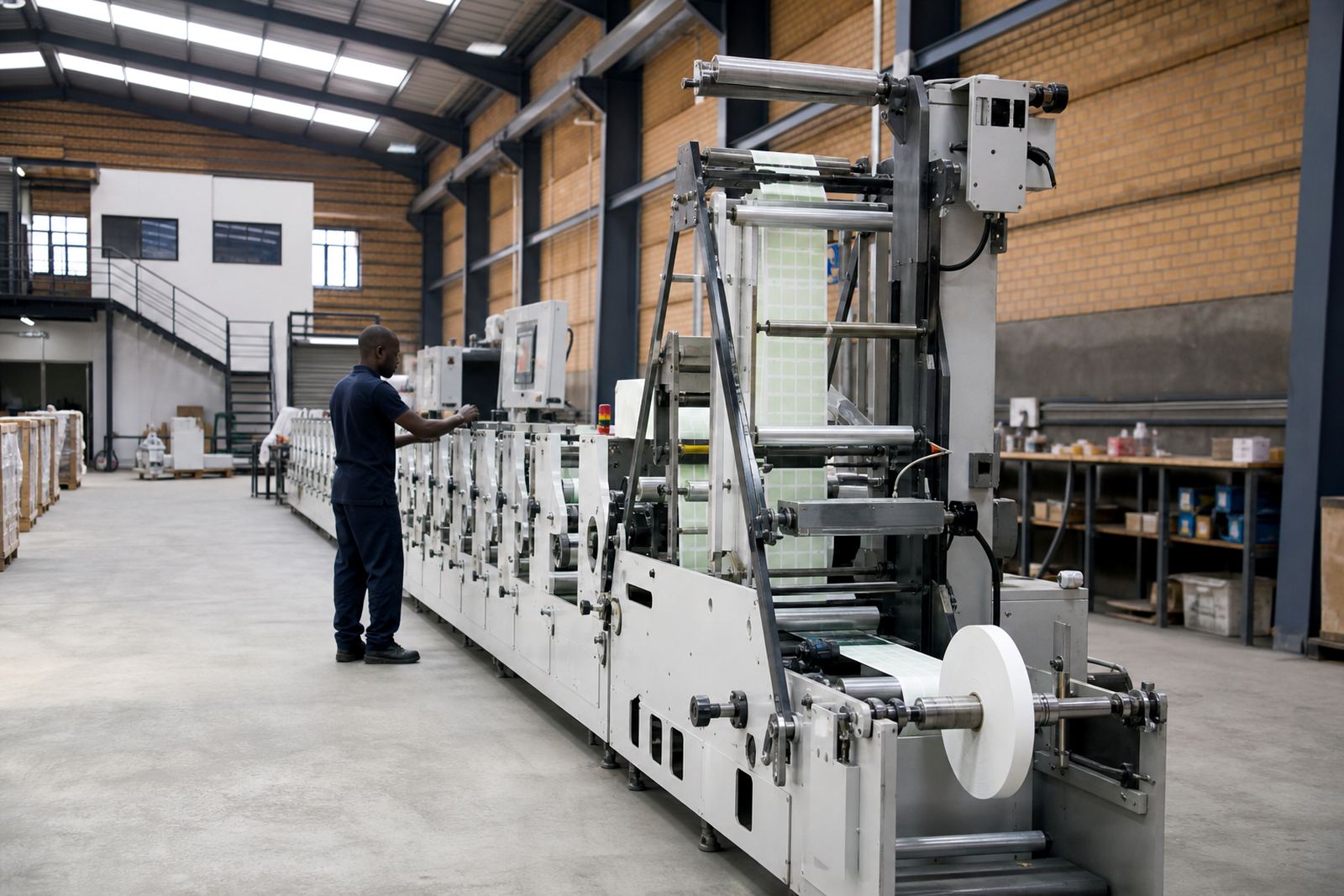
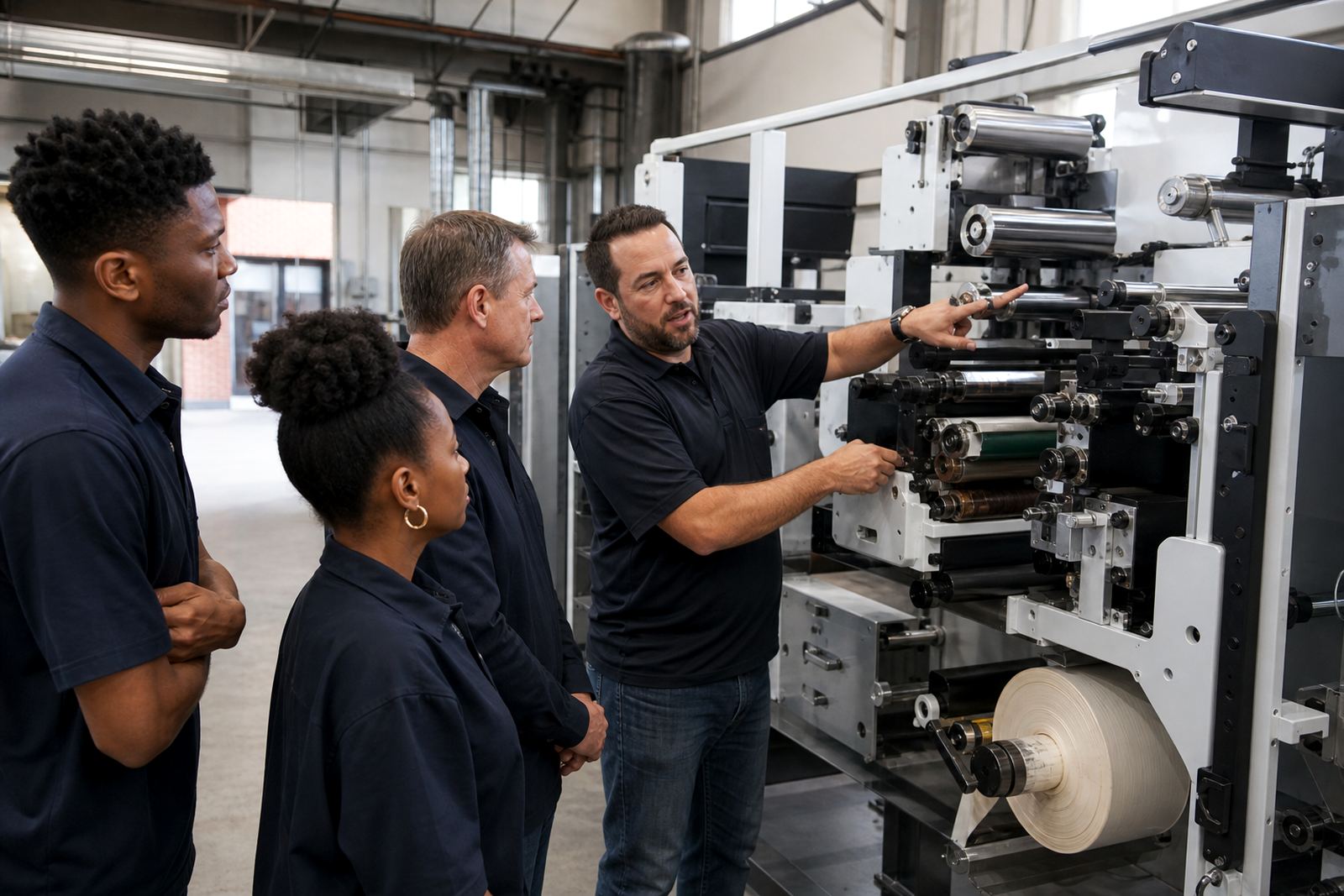
Our breakdown support is for label converters and packaging printers running narrow-web flexo presses in Gauteng and across South Africa. When a press stops, starts slipping or is producing poor registration, our technical team helps isolate the fault and get the line moving again. We work with pressrooms in Johannesburg, Pretoria, Durban, Cape Town, Gqeberha, Kempton Park and surrounding industrial areas.
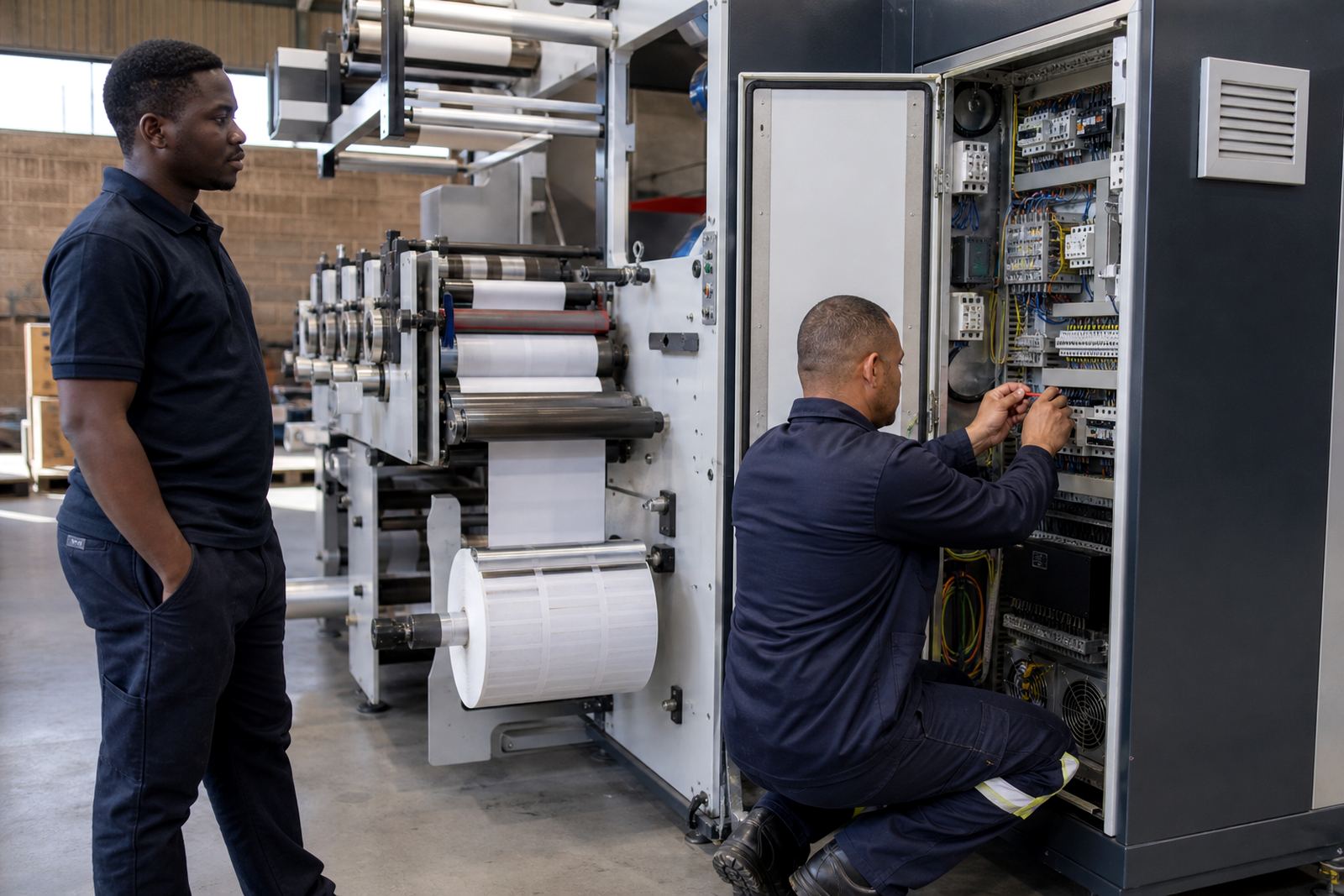
The service is aimed at real production interruptions, not general advice alone. We assist with mechanical faults, setup drift, drying or curing issues, web path problems, plate and anilox related print defects, finishing section issues and operator process errors. If the issue needs parts, we help identify the correct component and guide the next step so the stoppage does not drag on for hours. It is practical support, not guesswork.
- Fault finding on narrow-web flexo label presses
- Support for startup failures, stoppages and print quality faults
- Guidance for press setup, finishing and restart checks
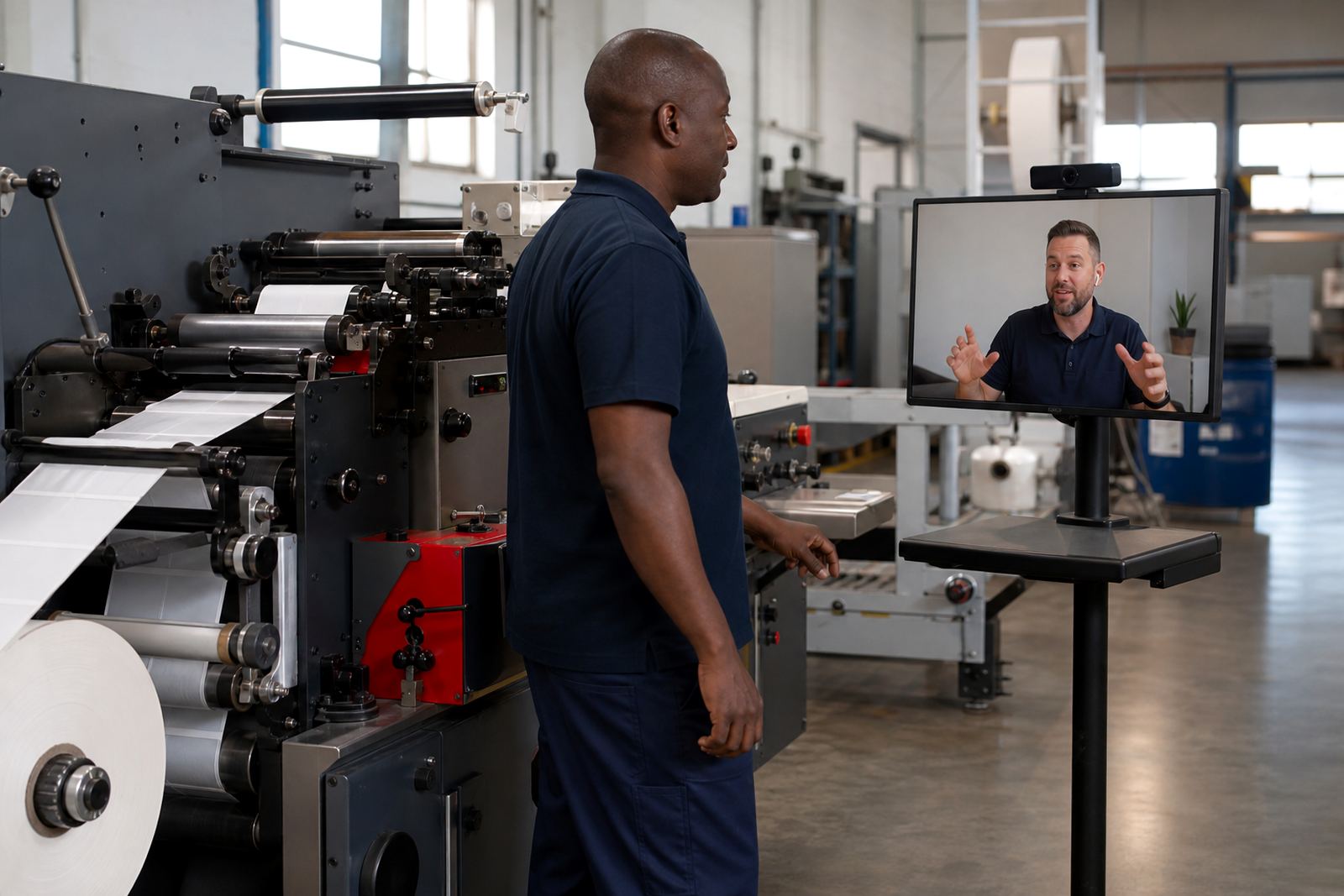
- Remote help for after-hours issues where possible
Typical Press Problems We Respond To
Breakdowns do not always mean a major failure. Many interruptions start with a small change in setup, a worn consumable or an operator adjustment that moved the press out of spec. We help with the problems that commonly affect label production, especially on jobs with tight colour matching, short runs or repeated changeovers.
On a busy shift, the issue may be simple but still time critical. A plate cylinder might not be seated correctly, the web could be tracking off centre, a doctoring setup may be leaving excess ink, or a finishing station can be misaligned after a job change. Coastal humidity, dust and load-shedding related restarts can also change how a line behaves, especially in Durban, Cape Town and Gqeberha.
- Web path, tension and registration problems
- Ink transfer, drying and print consistency faults
- Plate mounting, impression and anilox related issues
- Slitting, rewinding and finishing section faults
How The Response Process Works
We keep the response process straightforward so your team can act quickly. The first step is to gather the symptoms, the press model type, the job running and what changed just before the fault started. From there we decide whether the issue can be handled remotely or whether an on-site visit is needed. That early triage saves time and helps your staff prepare the right tools and spares.
Where remote support is enough, we guide the operator through checks in a set order. If the fault needs hands-on work, we arrange attendance based on location, urgency and production impact. Our team keeps communication practical, with one contact point and clear instructions. No unnecessary back and forth, just the steps needed to get the press back into production.
- Call or submit an enquiry with the fault details
- Receive remote triage and basic restart guidance
- Escalate to on-site support if the issue remains unresolved
- Confirm the fix and review any follow-up actions
Turnaround, Coverage And After-Hours Support
Turnaround depends on the fault, your location and whether the machine needs a local visit or parts. For converters in Kempton Park, Johannesburg and the East Rand, response can often be quicker because travel time is shorter. For Cape Town, Durban, Pretoria and Gqeberha, we still aim for practical turnaround with clear planning around urgency and access.
We know breakdowns do not keep office hours. If a press fails late in the day, over a weekend or during a shift change, the priority is to stabilise the situation and reduce waste. In some cases a temporary workaround is the fastest way to keep production going while a full repair is arranged. That approach often matters more than a perfect fix done too slowly.
- Remote support where the fault can be diagnosed off-site
- On-site support for mechanical, setup or restart issues
- After-hours assistance by arrangement, subject to availability
- Support for converters working to municipal, retail or export deadlines
Pricing Approach And What Affects Cost
We price breakdown support according to the work needed, not a one-size-fits-all rate. A simple remote reset or operator correction is different from a full on-site fault investigation with parts replacement. The main factors are urgency, travel distance, the complexity of the fault and whether the job requires follow-up visits. We keep the quoting method clear so you know what is included before work starts.
If parts are needed, we separate labour, travel and component supply where possible. That makes it easier to compare options and decide whether to repair immediately or schedule a larger service window. For converters with recurring stoppages, a maintenance agreement can lower the cost of repeated callouts and reduce the risk of emergency repairs. A small issue caught early is usually far cheaper than an unplanned shutdown.
- Remote assistance may be billed differently from on-site work
- Travel and parts are quoted separately where needed
- Urgent callouts depend on timing and location
- Planned maintenance can reduce repeat breakdown costs
Maintenance Intervals That Reduce Breakdowns
Breakdown support works best when it is backed by regular maintenance. Narrow-web flexo label presses need routine checks because registration, tension, bearing condition, anilox cleanliness and finishing alignment all affect uptime. In busy plants, we often recommend scheduled checks at sensible intervals based on shift length, job mix and local conditions rather than waiting for a fault to appear.
For high-use lines, a weekly visual check and a monthly deeper inspection can help catch wear before it interrupts production. Pressrooms dealing with dust, heat or coastal moisture may need tighter intervals on cleaning and lubrication. We also advise reviewing operator notes after any fault, because repeat issues often show up in the same section of the machine. A little discipline here goes a long way.
- Weekly checks for cleanliness, tension and visible wear
- Monthly inspection of key moving and print related parts
- Regular review after changeovers, wash-ups and restarts
- Seasonal adjustments for humidity, heat and power interruptions
Why Local Support Matters To Converter Output
Breakdowns cost more than repair time. They affect delivery dates, waste levels, operator morale and the next job in the queue. Having local support in Kempton Park and service coverage in Johannesburg, Pretoria, Durban, Cape Town and Gqeberha means your team gets help from people who understand South African production conditions. That includes load-shedding, spare parts lead times and the pressure of short notice orders.
Since 2008, our focus has been narrow-web flexo label presses, setup, operator training and support for converters that need dependable results. Our team includes Thabo Mokoena, Aisha Patel, Johan van der Merwe, Lerato Ndlovu, Sibusiso Khumalo and Megan Naidoo, each handling a specific part of the support process. The aim is simple: get the press stable, get the job out and keep your production team moving forward. No fuss, just proper support.
Key facts
| Service type | Breakdown support for narrow-web flexo label presses |
|---|---|
| Coverage area | Kempton Park, Johannesburg, Pretoria, Durban, Cape Town, Gqeberha and surrounding areas |
| Support methods | Remote triage, on-site fault finding, restart guidance and parts coordination |
| Common issue areas | Web tension, registration, print quality, finishing alignment and startup faults |
| Response basis | Urgency, fault type, location and parts requirement |
| Maintenance guidance | Weekly visual checks and monthly inspection, adjusted for production load and site conditions |