
Training For The Pressroom, Not Just The Manual
We train press operators on the day-to-day work that matters on a narrow-web flexo label press. That includes web threading, tension checks, registration, ink handling, anilox care, plate mounting help, drying checks, finishing setup and the basic routines that keep jobs moving from start-up to approved print. The aim is simple: reduce waste, shorten make-ready time and give your team a repeatable method they can use on every shift.
Training is practical and site based in most cases, whether you are in Kempton Park, Johannesburg, Pretoria, Durban, Cape Town or Gqeberha. We work with your actual press, your substrates and the jobs you run most often, so the learning fits your production line instead of a generic classroom setup. If the line is a bit behind on load-shedding recovery or the team is still learning changeovers, we adjust the pace to suit.
- Setup and start-up routine for narrow-web flexo presses
- Print quality checks for density, register and repeat consistency
- Changeover method for labels, sleeves and finishing tools
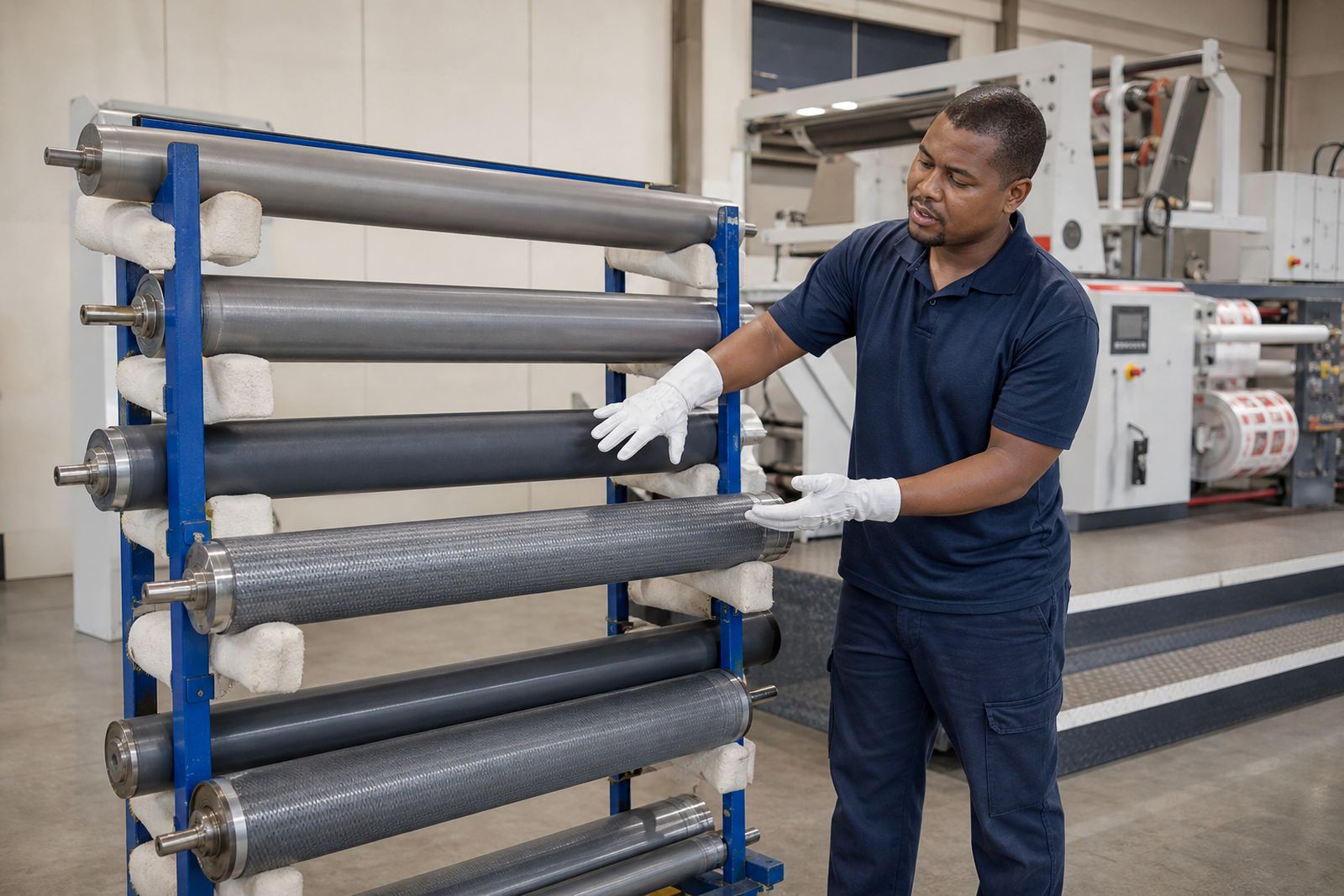
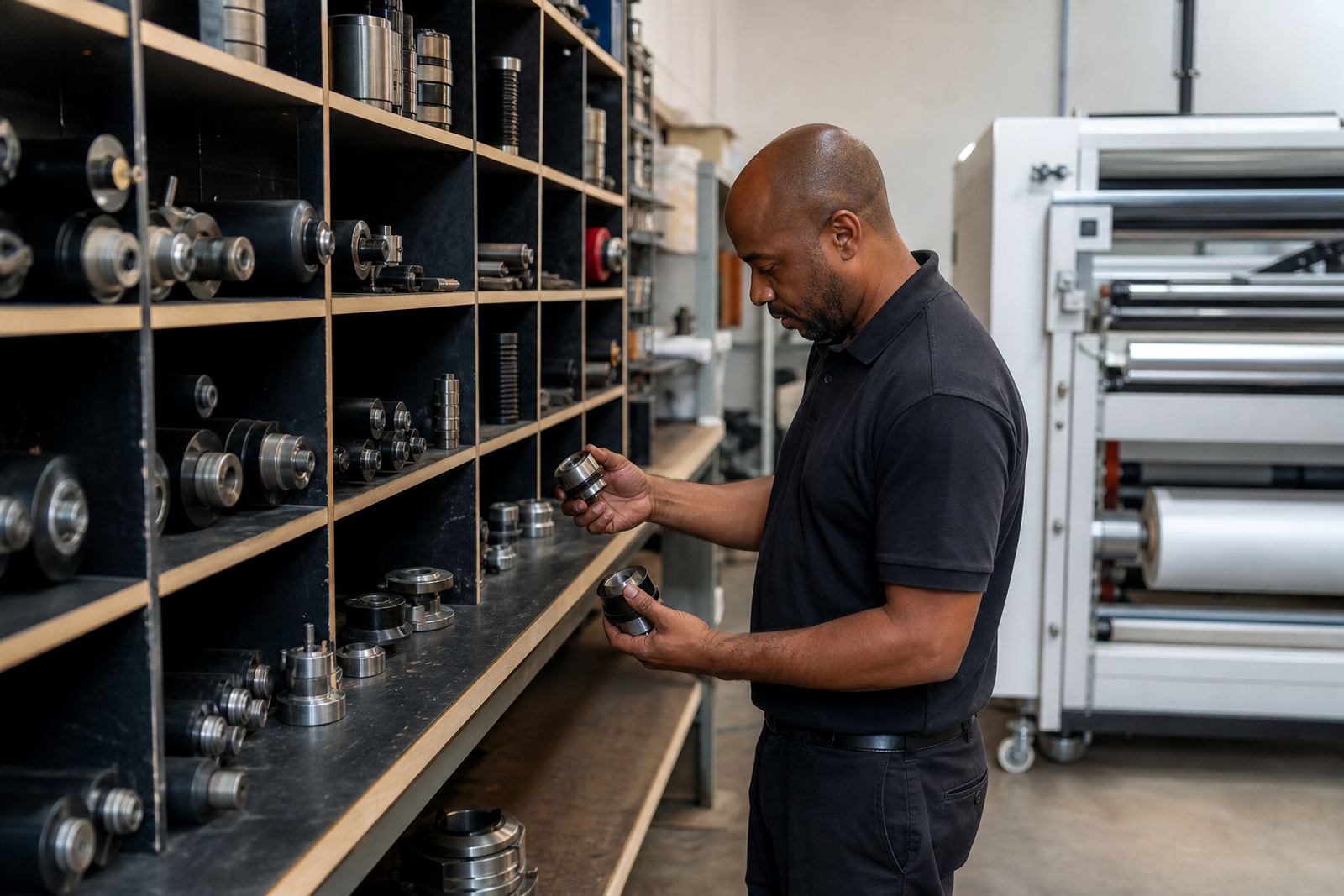
- Routine cleaning and care for press, rollers and ink area
What Your Operators Learn On The Floor
The training covers the full operating sequence from job handover to end-of-run checks. We show your staff how to confirm plates, set web paths, check impression, manage registration and spot the signs of drift before it becomes scrap. We also cover basic troubleshooting so the operator knows when to correct a setting and when to call for technical support.
Because South African label plants often work with mixed jobs and tight delivery windows, we give attention to the small details that save time. That includes how to prepare for quick changeovers, how to protect materials in coastal humidity, and how to keep the press stable during temperature shifts or interrupted power. These are the habits that make a real difference on shift.
- Material handling for paper, film and pressure-sensitive label stocks
- Ink control, viscosity checks and drying awareness
- Finishing setup for slitting, die-cutting and rewind consistency
- Housekeeping practices that support safer, cleaner production
How We Run The Training Session
Every training assignment starts with a short assessment of the press, the crew and the jobs being produced. We look at the operator skill level, the press condition, current make-ready times and the issues that keep repeating. From there we build a practical session plan, from one focused shift to a longer programme over several days. If your team needs support across more than one line, we can structure the training in stages so production does not stop completely.
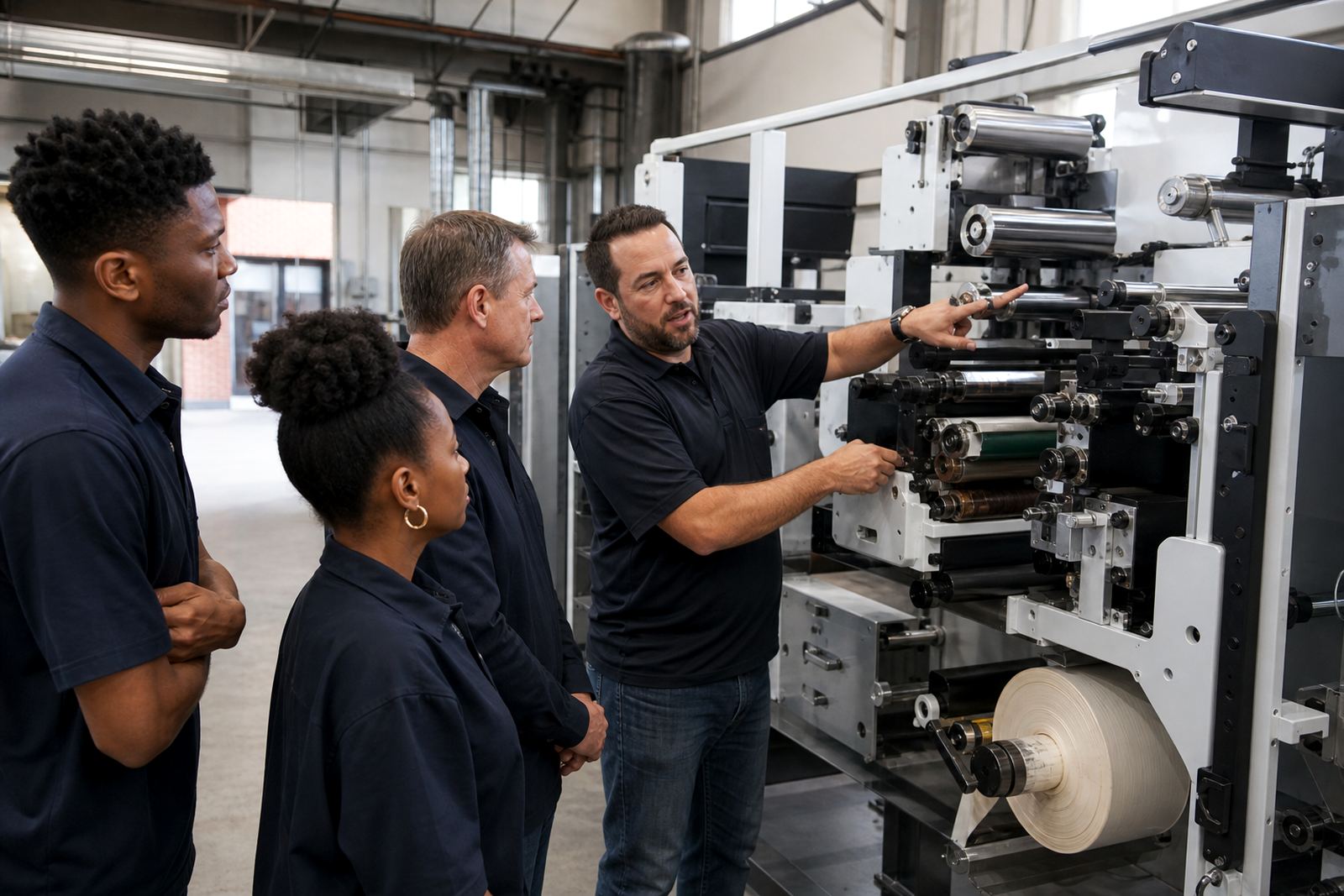
Sessions are led by experienced technical staff and supported by our training co-ordinator. The format is hands-on and direct. We demonstrate the correct method, supervise the operator doing the task, then repeat the step until it is consistent. Where needed, we leave behind a simple internal checklist for start-up, shutdown and routine care, so the team has a clear reference after we leave.
- Initial site review and training plan
- Demonstration on your press and substrate range
- Supervised operator practice with corrective guidance
- Wrap-up review with agreed actions and follow-up points
Turnaround, Scheduling And Support After Training
Most training can be scheduled to fit around production, maintenance windows or commissioning work. If you have a new installation in Spartan, Kempton Park, or a press that needs better output before a busy season, we try to align the session with your practical deadline. The turnaround depends on the size of the team and how many processes must be covered, but the aim is always to get your people operating with more certainty as quickly as possible.
After training, we remain available for remote support and follow-up visits where needed. That helps when an operator meets a job that is slightly different from the training run, or when a changeover routine needs refining. We can also coordinate with preventive maintenance, so the operators and service work support each other instead of pulling in different directions.
- Short refresher sessions for new staff or relief operators
- Follow-up support after commissioning or machine relocation
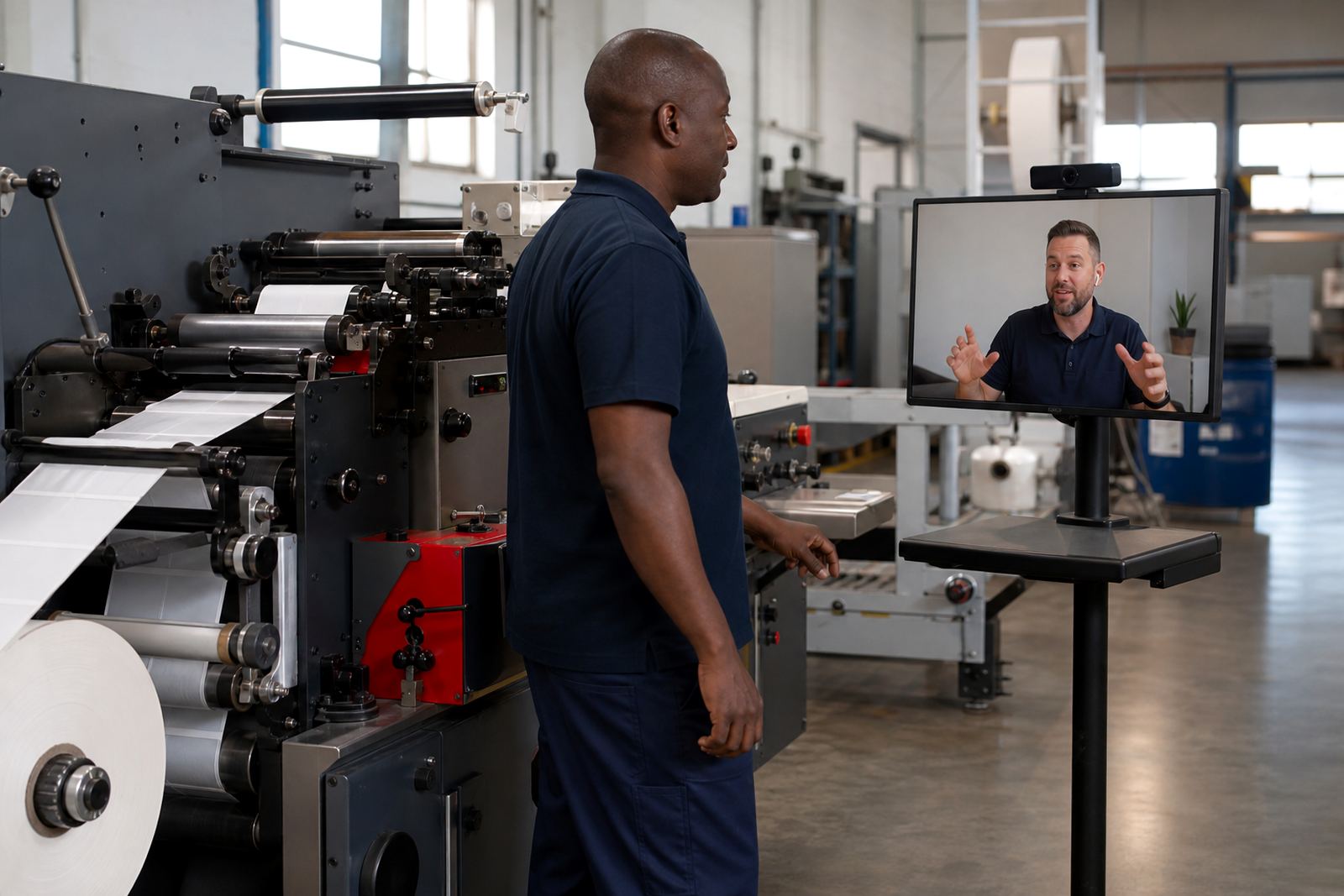
- Remote guidance for fault finding and job setup questions
- Training linked to maintenance intervals and planned service visits
Pricing Approach For Training Engagements
Pricing is based on the scope of work rather than a one-size-fits-all rate. We consider the number of operators, the press type, the training length, the location and whether you need on-site support, remote follow-up or a combination of both. Where training is combined with installation, commissioning or startup production support, we can quote the full scope together to keep the costs clearer.
For many converters, the value lies in reduced waste, quicker job setup and fewer production interruptions. That is why we keep the pricing approach practical and transparent. You get a clear outline of what is included before the work starts, and if the need changes on site, we discuss it before adding anything extra. No surprises, just a straight quote based on the actual work required.
Maintenance Intervals That Keep Skills Current
Operator training works best when it is not treated as a once-off event. On a busy label press, routines can drift over time, especially when shifts change or the team is stretched. We recommend refreshers at planned intervals, particularly after new material introductions, a press move, a major maintenance job or a change in finishing setup. That keeps the crew aligned with the way the press is actually being used.
For plants running in humid coastal areas or through periods of unstable power, more frequent refreshers can help prevent avoidable stoppages. We also suggest reviewing start-up and shutdown routines during preventive maintenance visits. Small adjustments, done regularly, often protect the press better than waiting for a bigger problem to show up.
- Refresher training after machine relocation or major service work
- Periodic checks on operator habits, usually aligned to maintenance visits
- Updated guidance after substrate, ink or finishing changes
- Support for new operators joining an existing production team
Key facts
| Service type | Hands-on operator training for narrow-web flexo label presses |
|---|---|
| Training focus | Setup, print checks, changeovers, routine care and finishing setup |
| Delivery areas | Kempton Park, Johannesburg, Pretoria, Durban, Cape Town, Gqeberha and surrounding areas |
| Training format | On-site practical sessions with supervised operator practice |
| Follow-up options | Remote support, refresher training and maintenance-linked review |
| Typical audience | Label converters, production teams and new or relief press operators |