Parts Identification That Starts With The Right Details
When a press is down, the first job is getting the right part first time. We help you identify replacement items from the machine make, model, serial details, part numbers where available, and the fault symptoms you are seeing on press. That can include items in the print unit, web path, unwind and rewind sections, finishing stations, drying or curing components, and the small fittings that often stop production when they fail.
For many converters in Johannesburg, Pretoria and the East Rand, the challenge is not only finding a replacement but matching it correctly to the existing setup. We assist with wear parts, consumables and service items for narrow-web flexo label presses, then confirm the part against the application before supply is arranged. This reduces the chance of wasted spend and keeps the line moving, especially when load-shedding, shift work or a late breakdown has already tightened the schedule.
What We Can Supply For Supported Presses
Our spare parts support covers common press and finishing items used in narrow-web label production. We do not force a one-size-fits-all approach because the right part depends on the press configuration, substrate mix and production speed you run each day. If the original item is obsolete or unavailable, we help assess a suitable replacement that fits the equipment and the job.
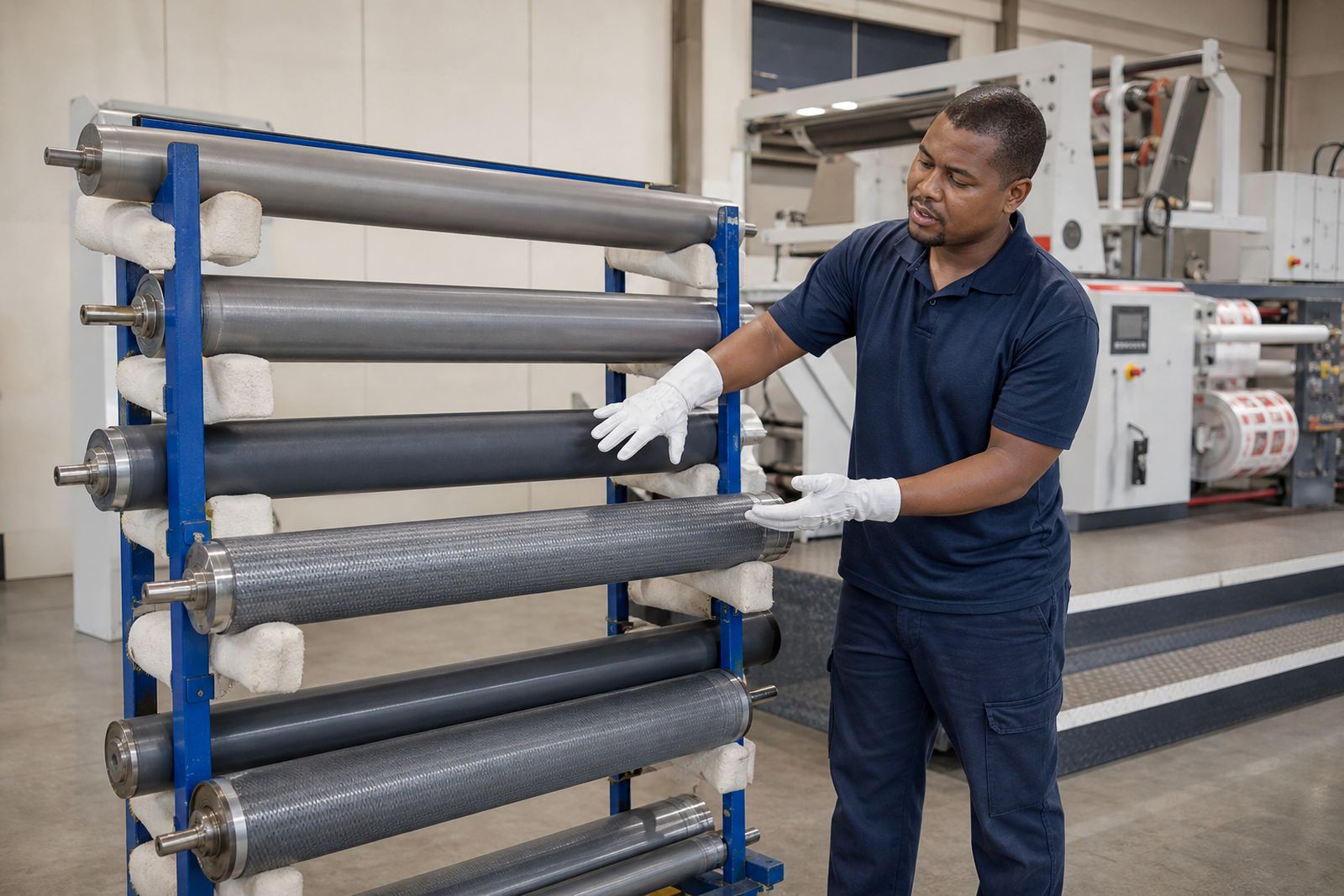
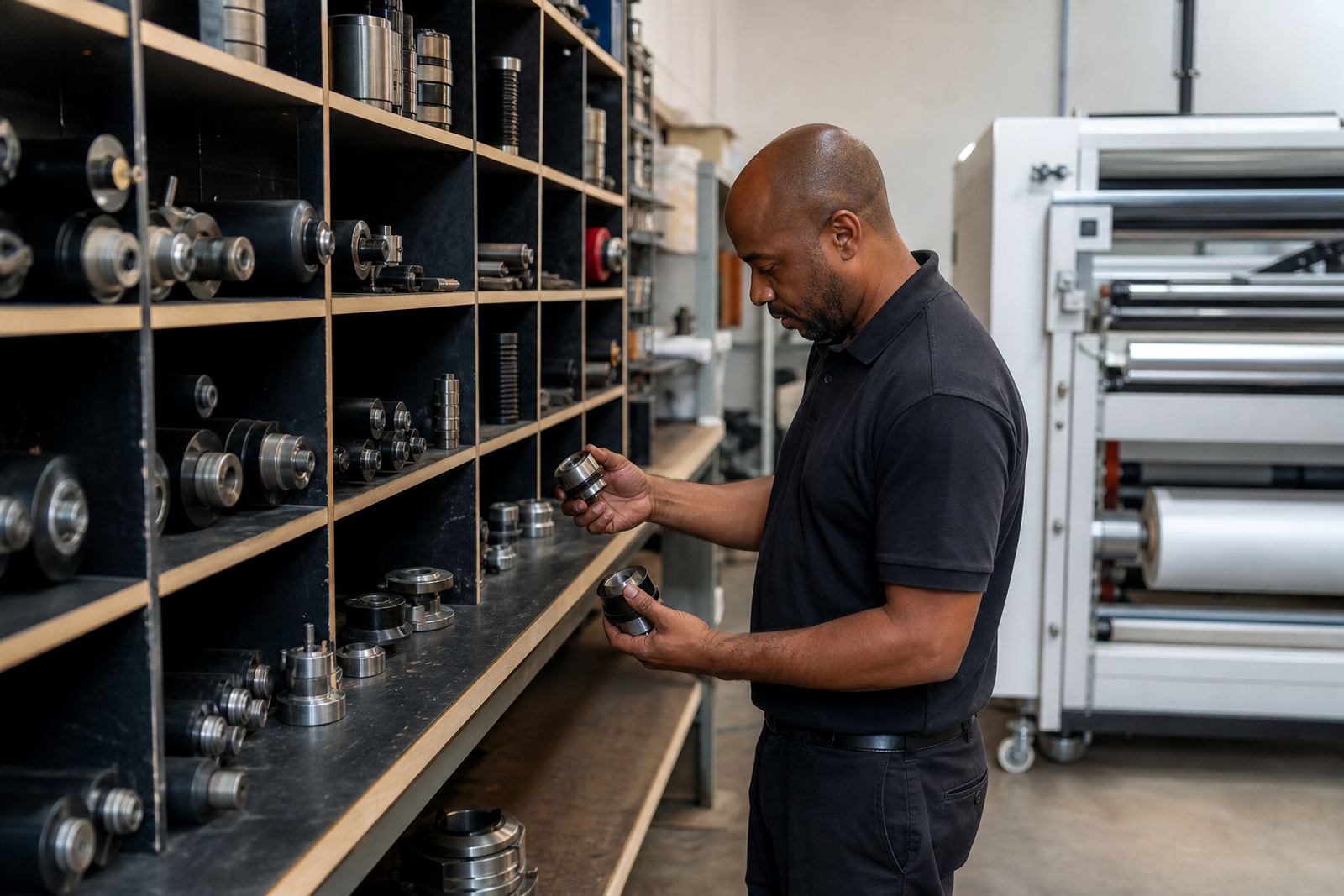
- Bearings, rollers and shafts
- Belts, gears and drive components
- Sensors, switches and cabling
- Pneumatic fittings, valves and seals
- Ink, web path and drying related wear parts
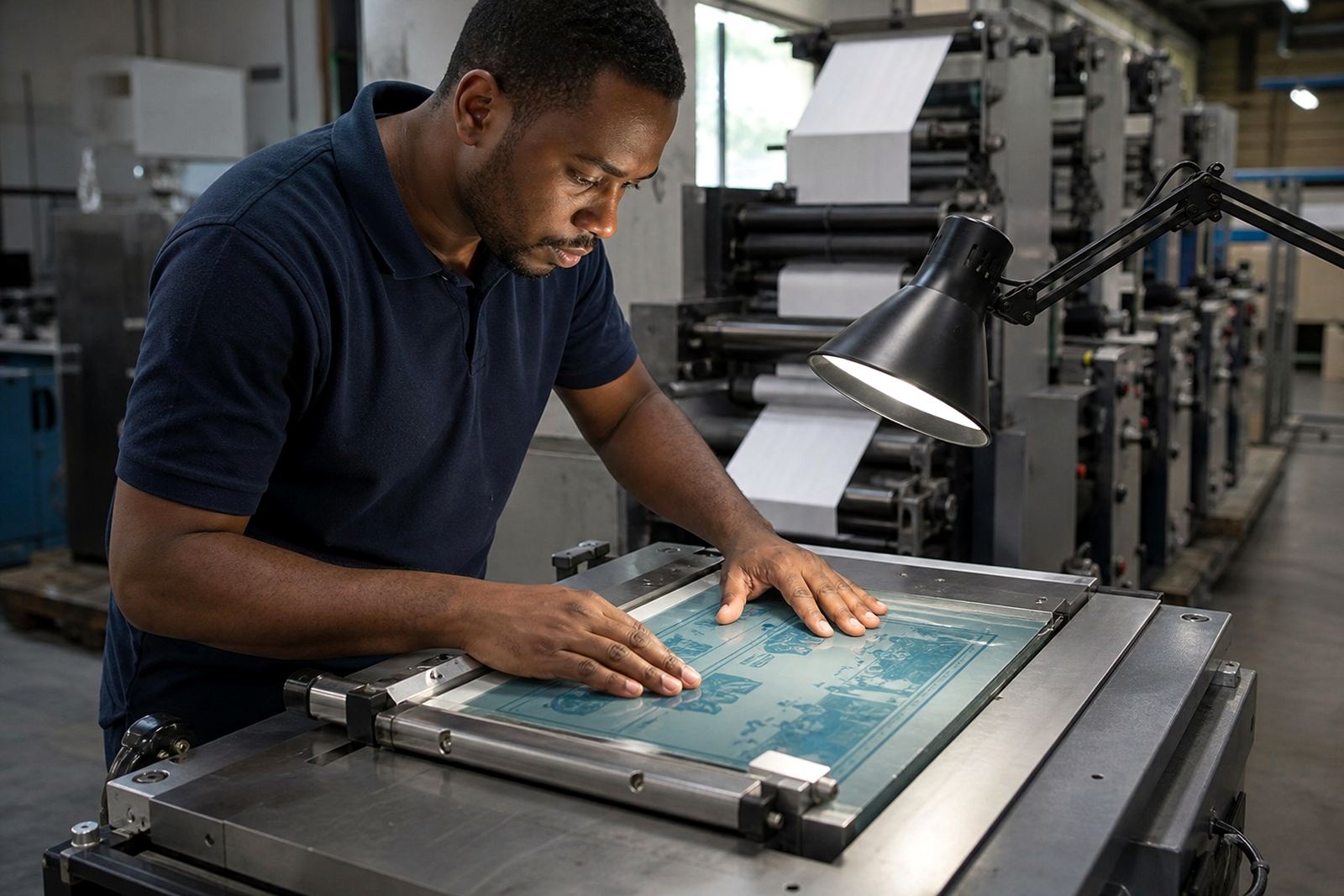
- Plate mounting and finishing accessories
- General service items for scheduled maintenance
For label converters working with food, beverage, cosmetics and retail work, the needs are often specific. Coastal humidity in Durban and Gqeberha can affect storage and wear, while hotter inland conditions can shorten the life of some consumables if they are not checked on time. We help match parts to the way the press is actually used, not only to the original list.
How The Support Process Works
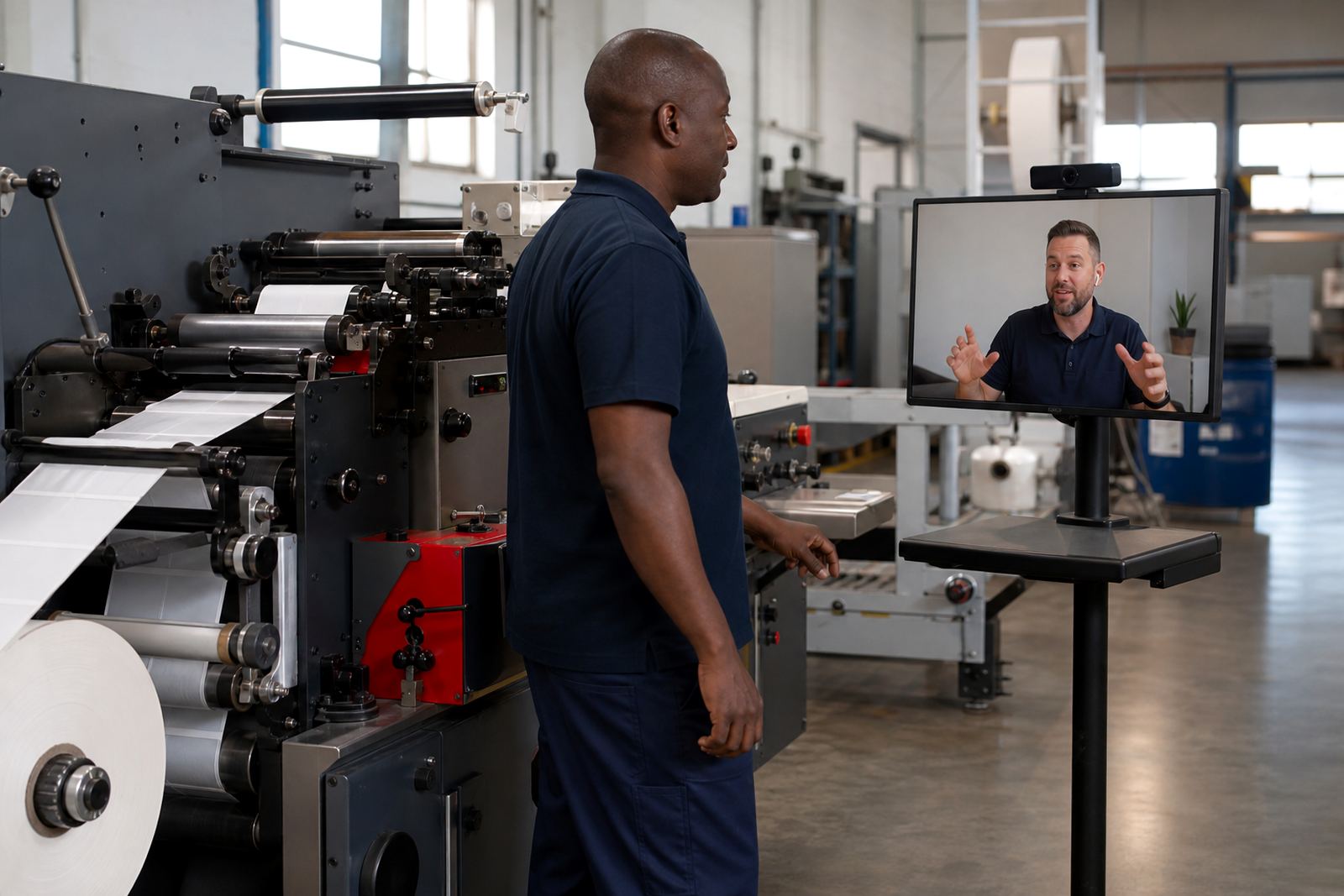
Our process is practical and straightforward. First, you send the machine details and a clear description of the fault or wear issue through the enquiry form on our contact page. If available, photos of the worn part, nameplate, damaged area or old sample help speed things up. From there, we confirm what is needed, check availability and advise on the best route to supply.
- Step 1: Capture equipment details and symptoms
- Step 2: Identify the correct part or replacement option
- Step 3: Confirm supply, lead time and any fitment notes
- Step 4: Arrange delivery or collection guidance
- Step 5: Support fitting, testing and return to production
Where a part forms part of a larger fault, Johan and the technical team can help separate the symptom from the cause. That matters when a worn component has damaged another part downstream. It saves time and avoids replacing only half the problem.
Turnaround Across Gauteng And The Major Centres
Turnaround depends on part type, stock availability and whether the item needs to be matched to an existing component or sourced as a special order. Small service items can often be handled quickly when the requirement is clear and the part is already known. More specialised items may take longer, particularly if the press is an older unit or if the part must be confirmed against the existing assembly.
From Spartan, Kempton Park, we support converters in Johannesburg, Pretoria, Centurion and the wider East Rand with fast response to local needs. For Durban, Cape Town and Gqeberha, we work in a way that keeps freight planning sensible and reduces time lost waiting on the wrong item. If your operation is running around shift changes or weekend production, we will say upfront what can be handled immediately and what needs lead time.
We also factor in municipal and site access limits where relevant, especially for shared industrial parks, loading bay restrictions and security sign-in delays. That kind of detail may seem small, but it often decides whether a part is fitted same day or sits in the receiving area until the next shift starts.
Pricing That Reflects The Real Job
Pricing is based on the part itself, the sourcing route and any technical support needed to confirm fitment. We keep the approach practical. Some customers only need help identifying the correct replacement and want to source it themselves, while others want us to handle the full chain from identification to supply and fitment guidance. Both are possible.
Where the requirement is straightforward, we keep costs aligned to the item and the admin involved. Where there is uncertainty, obsolete stock or a need to compare several options, the quote will reflect the extra time needed to avoid a bad match. That is usually better value than buying the wrong part twice. For busy label converters, the value is often in uptime and less waste, not just the line item on the invoice.
If you need budget planning for recurring wear items, we can help you map likely replacement cycles so you are not caught short during a rush order. It is a simple way to keep spend predictable, rather than waiting for an emergency breakdown and paying under pressure.
Maintenance Intervals And Stock Planning
Good spare parts support is easier when it sits inside a maintenance plan. We recommend checking high-wear items on a scheduled basis, especially on presses running multiple shifts or switching between short label runs. That includes visual inspection, cleaning, measurement of wear, and replacement of parts that show signs of fatigue before they fail on press.
- Weekly checks for visible wear, leaks and loose fittings
- Monthly checks for sensors, belts, rollers and moving assemblies
- Quarterly review of service stock and critical spares
- After breakdowns, a full review of any linked parts that may have been stressed
For coastal sites in Durban and Gqeberha, we often suggest tighter inspection on exposed metal parts and stored consumables because moisture can affect condition over time. In Gauteng, dust and temperature swings can also play a part. Lerato and Megan help customers set up a sensible stock list so the most important items are always close to hand, without overbuying parts that may never be used.
Why Converters Use Our Support
Clients come to us because they need clear answers, not guesswork. Thabo Mokoena leads the business from Spartan with a focus on practical support for label converters, while Aisha Patel, Johan van der Merwe, Lerato Ndlovu, Sibusiso Khumalo and Megan Naidoo keep the process moving from first enquiry to final follow-up. That mix of sales, technical and service knowledge helps when a simple wear part turns into a production problem.
Whether you are running a smaller line in Centurion or a busier plant in Johannesburg, spare parts support needs to be accurate, quick and realistic. We aim to help you keep supported narrow-web flexo equipment in service with the right parts, the right fit and less downtime. If you are not sure what has failed, send the details through the enquiry form and we will help work it out.
Key facts
| Supported equipment | Narrow-web flexo label presses and related finishing equipment |
|---|---|
| Supply scope | Replacement parts, wear items, service components and matched alternatives |
| Typical inputs needed | Machine model, serial details, part number, fault description, photos |
| Support areas | Kempton Park, Johannesburg, Pretoria, Durban, Cape Town, Gqeberha |
| Turnaround basis | Depends on stock, part rarity and confirmation required |
| Pricing approach | Quoted to the part, sourcing complexity and technical support required |