Why a planned maintenance schedule matters
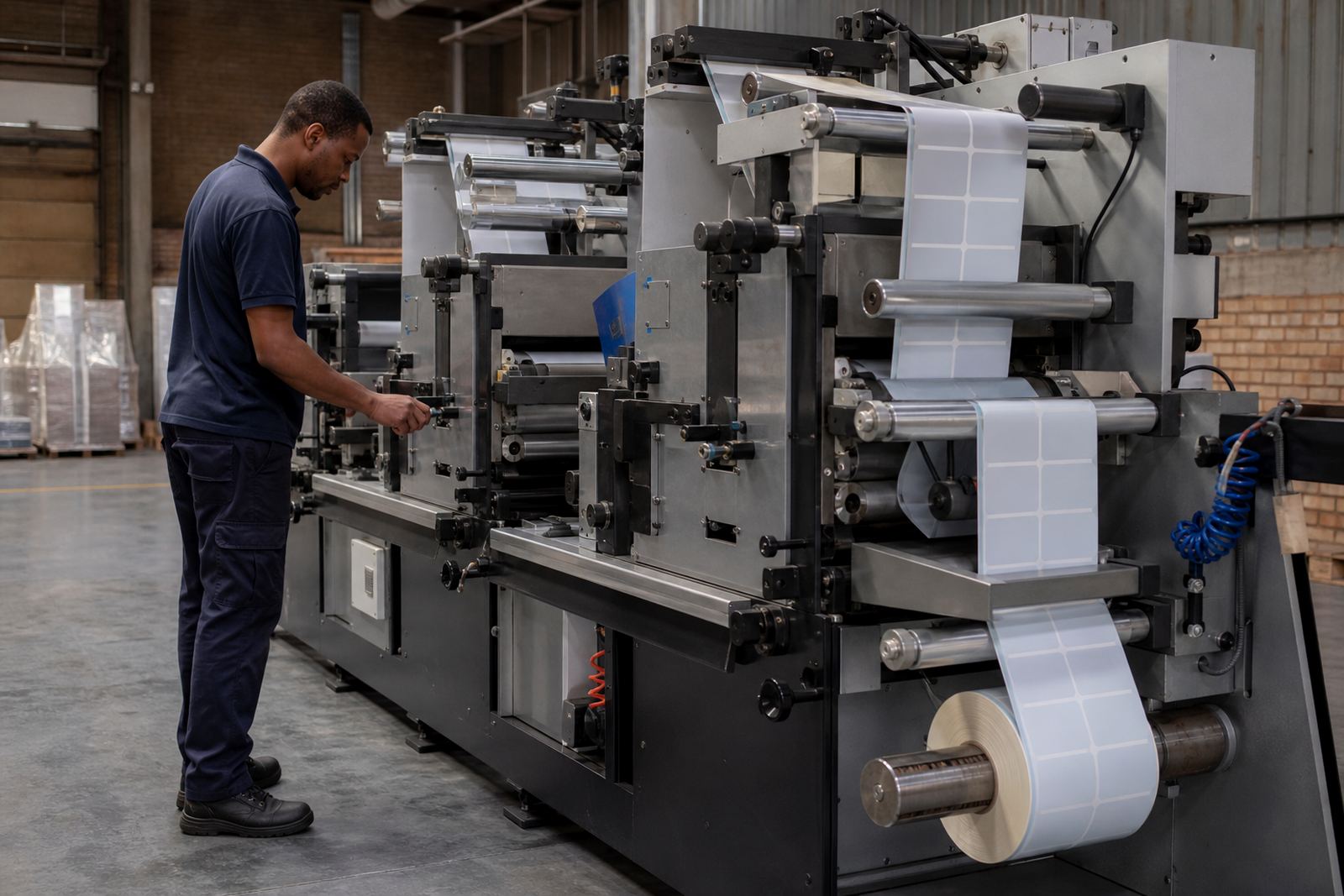
A flexo label press does best when upkeep is regular and the checks are done before a fault turns into stopped production. For label converters in Kempton Park, Johannesburg, Pretoria, Durban, Cape Town and Gqeberha, a maintenance plan gives your team a clear routine for press care, so small issues are picked up early and corrected before they affect print quality.
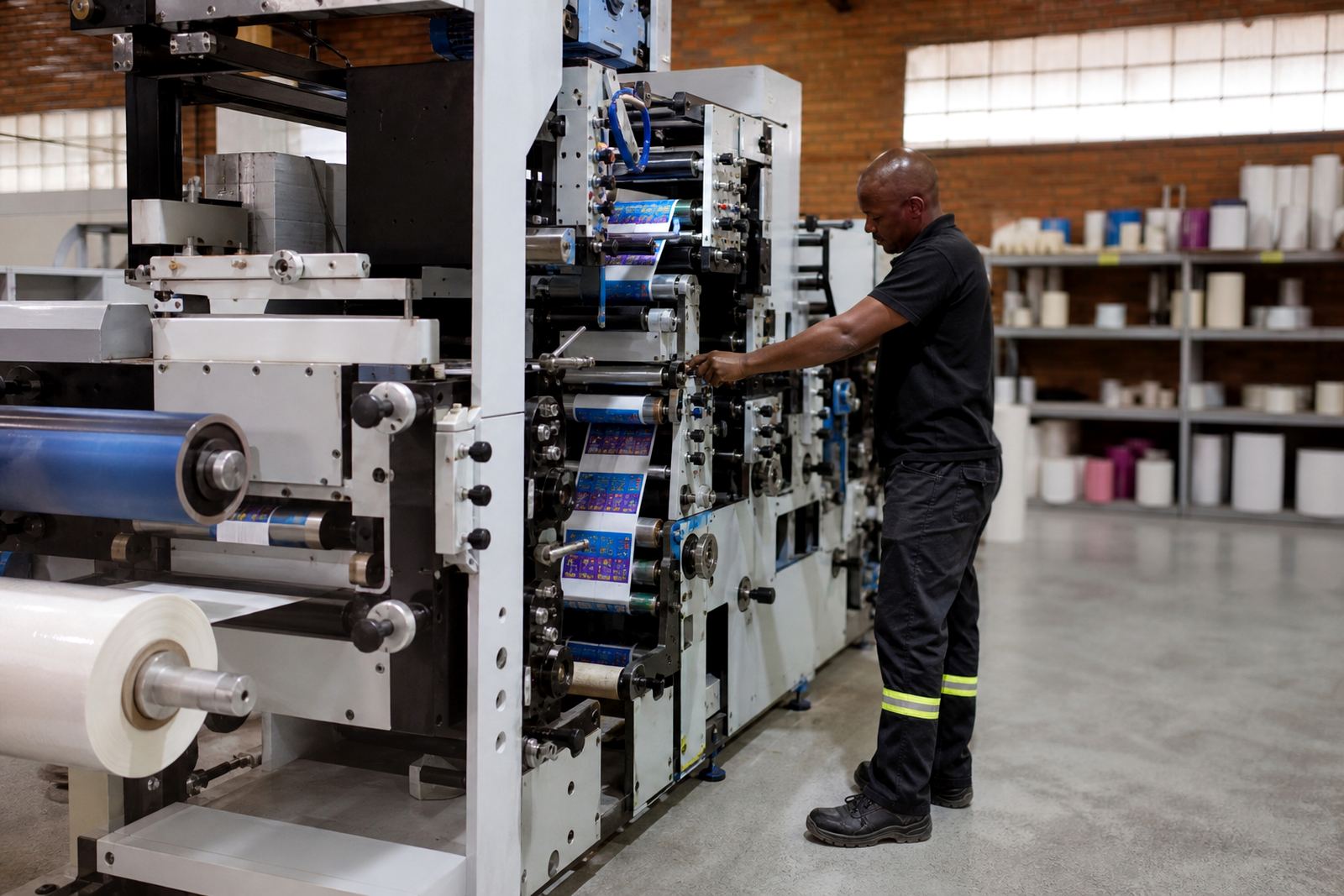
In South African production rooms, conditions vary a lot. Some sites deal with dust, humidity near the coast, power interruptions, or heavy daily changeovers, and each of these puts extra strain on a narrow-web press. A scheduled plan helps keep attention on the parts that matter most, like web handling, ink transfer, plate area care, drying checks and general cleanliness around the press area.
What our maintenance plans can include
Our maintenance plans are arranged around the condition of your press, your production load and the type of labels you run. We do not force a one-size-fits-all schedule. Instead, we look at what your line needs and build a practical routine that fits your shift pattern and service windows.
Typical plan items can cover inspection, cleaning guidance, wear checks, setup review and support for the surrounding finishing process. If your press is used for food labels, cosmetic packaging or retail work, the plan can also include extra focus on consistent registration, neat finishing and clean handling around plate mounting and anilox care.
- Scheduled service visits at agreed intervals
- Preventive checks on key press functions
- Operator support for routine daily and weekly care
- Finishing setup review where required
- Remote support between site visits
How a maintenance visit is carried out
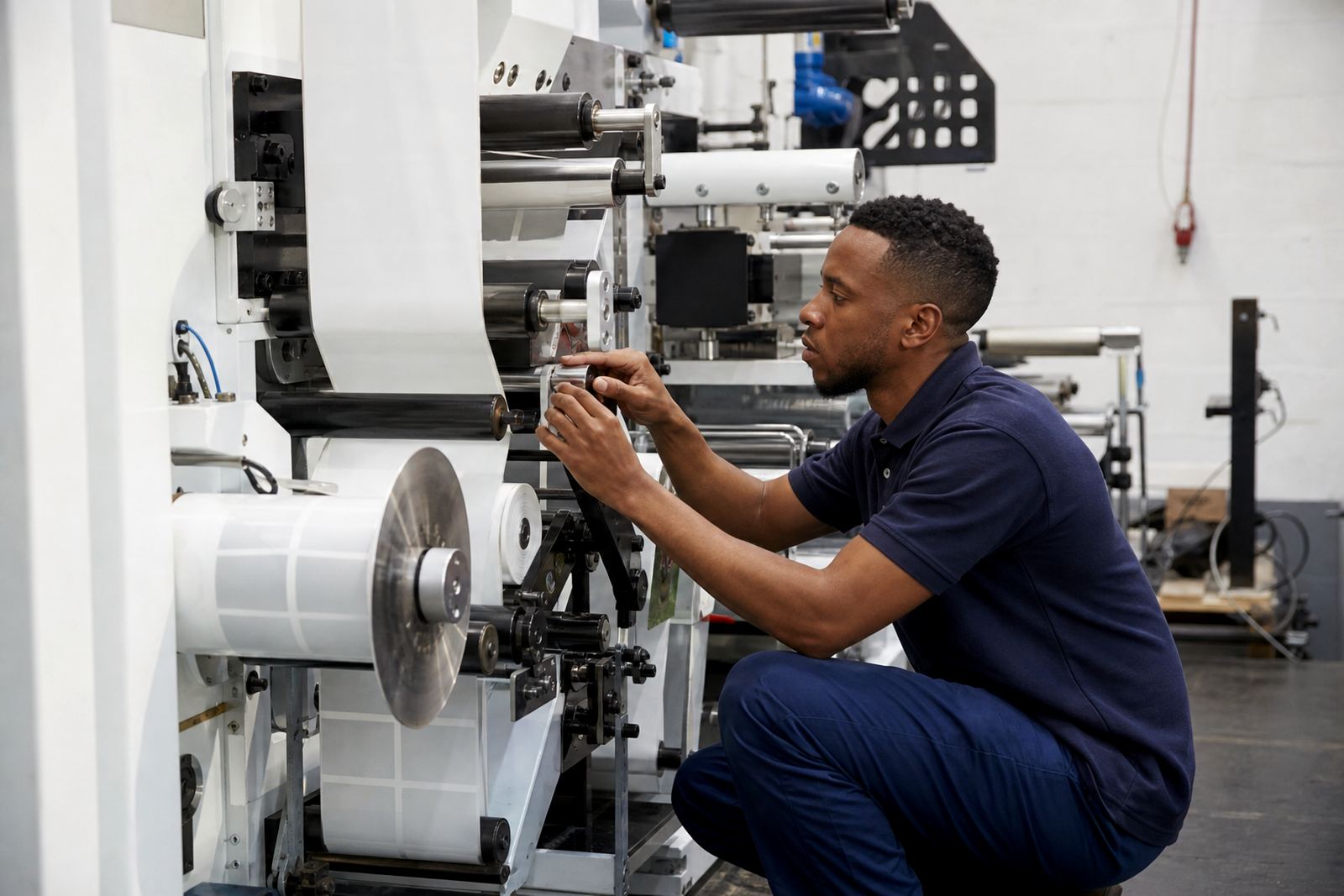
Each visit starts with a practical review of the press condition and the current production issues, if any. We then work through the agreed list in a clear order, so the team knows what has been checked, what needs attention and what should be watched before the next visit. Nothing is done in a rush. The aim is to keep the machine running properly and to leave the operators with clear next steps.
Where needed, we help with plate mounting, anilox care, cleaning routines, finishing setup and basic fault finding. If a part needs replacement, we identify it early and guide the next step so the press is not left waiting for a surprise repair. Good maintenance is not only about tools and spares, it is also about keeping the team informed and ready.
- Initial inspection and fault notes
- Cleaning and condition check
- Adjustment guidance where needed
- Operator feedback and handover
- Written action points for follow-up
Planned support for shifts, changeovers and load-shedding
Many label converters work under pressure from short deadlines, frequent job changes and power cuts. A maintenance plan gives structure to that reality. We can line up support around your preferred shift times and help you prepare the press for planned downtime, so checks are done during windows that suit production. This is useful when a factory needs to keep output moving while also protecting equipment from avoidable wear.
In sites affected by load-shedding, it helps to have a routine for safe shutdown, restart checks and post-outage inspection. Sudden stops can affect registration, tension, drying and cleanliness, so having a set process makes restart smoother. For coastal areas like Durban and Gqeberha, extra attention to humidity and storage conditions also helps with plates, consumables and finishing quality.
How to choose the right plan for your press
The best maintenance plan depends on how your press is used, how many operators share it, and how often you change jobs. A converter with steady repeat work will need a different support pattern from a site that runs many short jobs each day. We look at your actual production routine, not just the machine on paper.
Before setting the plan, we usually ask about the following:
- How many shifts the press runs each week
- What label types and substrates you print most often
- Whether you do your own finishing or use linked equipment
- How your team handles cleaning and daily checks
- Whether you need on-site, remote, or mixed support
That review helps us match the support level to your operation without overcomplicating the process. It also makes budgeting easier because you can plan for service time instead of waiting for breakdowns.
Keeping operators involved in routine care
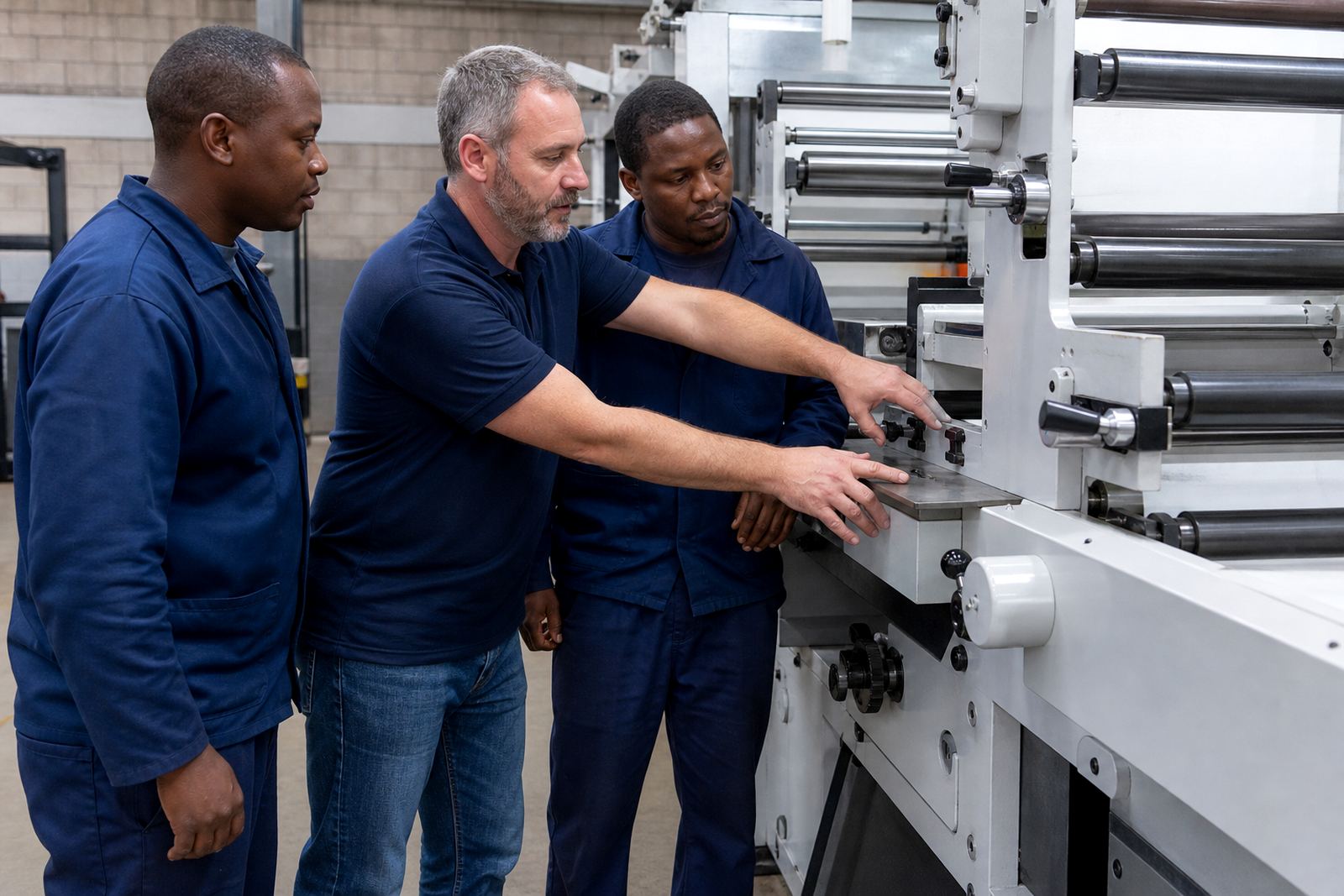
Maintenance works better when operators are part of it from the start. Our training support can be built into a plan so the team knows what to check before a run, what to record during a shift and what to report immediately. This is especially useful where more than one operator uses the same press or where newer staff are joining the line.
We keep the guidance practical. That means clear handover notes, simple inspection habits and plain instructions for day-to-day care. If a team learns to spot wear early, clean correctly and handle changeovers carefully, the press usually stays in better shape and the service callout count stays lower. It also helps protect print quality over time, which matters when customers expect clean labels and consistent finish.
Setting up support from our Spartan base
We operate from Spartan, Kempton Park and support label converters across South Africa, including Johannesburg, Pretoria, Durban, Cape Town, Gqeberha, East Rand and Centurion. If you want a maintenance plan, the first step is to send an enquiry through the contact page and describe your press, your production pattern and the support you need. From there we can discuss the right level of scheduled care and how often visits should take place.
Our service team can cover preventive maintenance, breakdown support, remote support, spare parts support, anilox care, plate mounting help and production consulting. If your operation needs ongoing help, we will build it into a clear support routine that matches your site and your budget. The aim is simple: keep your narrow-web flexo press ready for work and reduce the stress that comes from waiting for things to fail.