The brief from a premium Umhlanga converter
The client was a label converter in Umhlanga serving food, beverage and personal care packers who wanted sharper brand presentation without creating production trouble on the floor. The brief was simple on paper but demanding in practice. The labels had to carry strong colour, fine text and neat finishing, while still running at steady speeds with limited downtime and controlled waste.
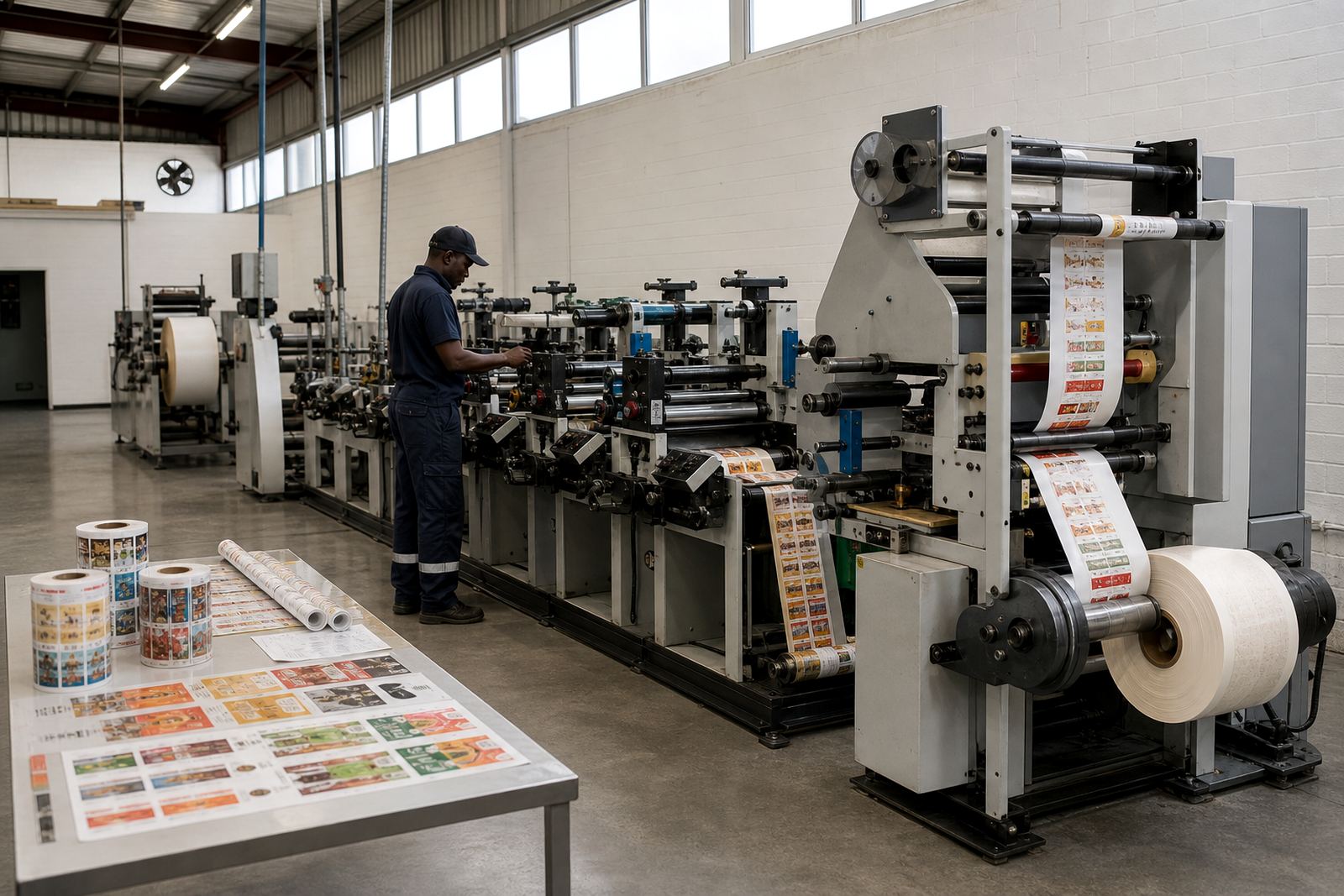
Because the work included short runs and repeat orders, the converter needed a narrow-web flexo label press setup that could change over quickly and hold registration consistently across different substrates. The finish had to suit retail shelves and coastal conditions as well, since Durban humidity can affect drying, handling and storage if the process is not managed properly.
- Client type: premium packaging label converter
- Town: Umhlanga, KwaZulu-Natal
- Application: narrow-web labels for branded packaging
- Main pressure points: colour consistency, finishing, changeover time and waste control
Press setup built for real production conditions
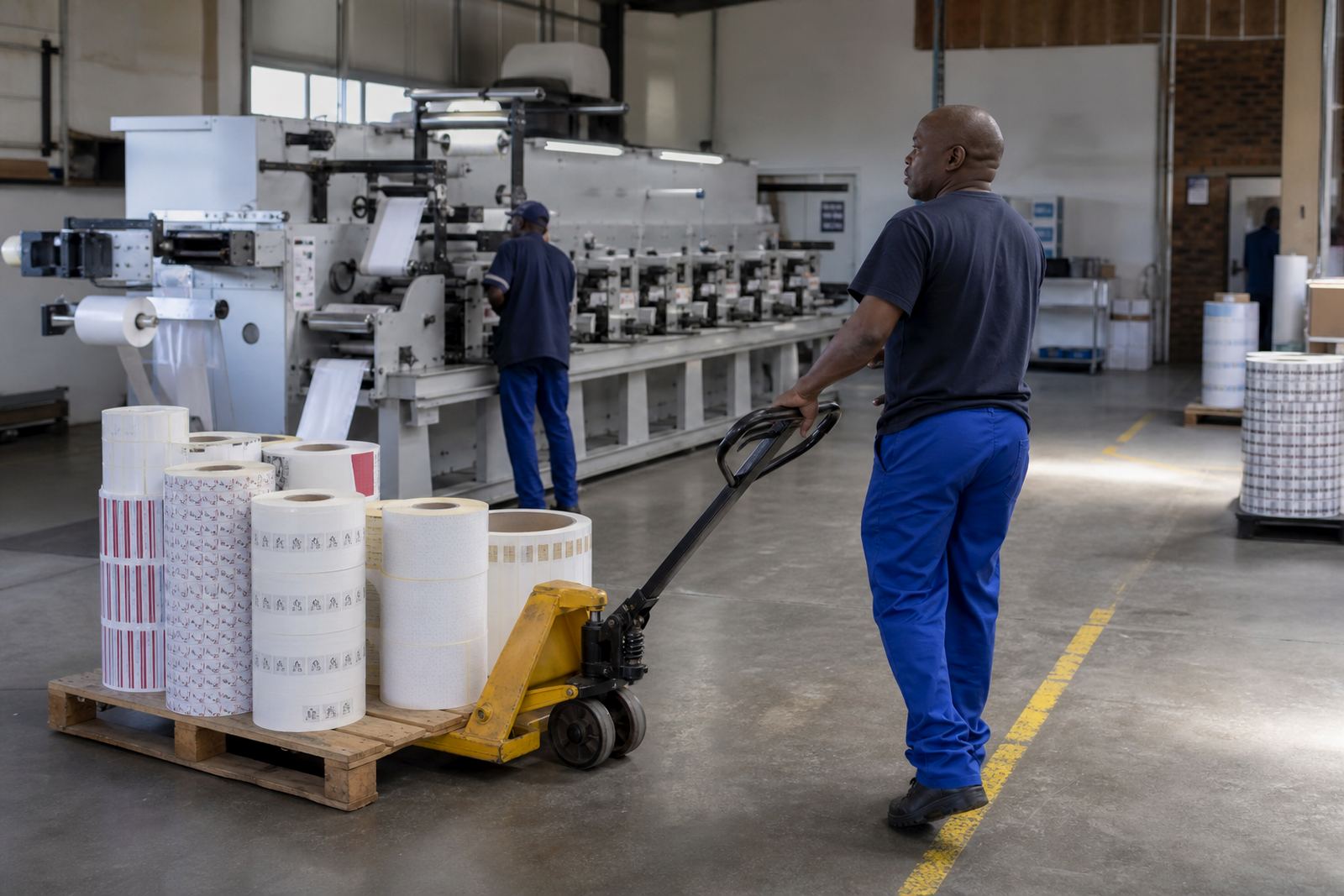
We worked on the press installation and commissioning plan with the converter’s production team so the machine could be handed over in a way that made sense for their daily workload. The setup covered web path checks, plate mounting guidance, inking and impression control, registration alignment and a practical review of drying and finishing stages. We also looked at the workflow around the press, because even a good press can struggle if the material handling and job prep are not organised properly.
The site had to deal with normal South African pressures such as load-shedding, so we kept the setup focused on stable restarting, sensible make-ready routines and clear operator checks. That matters when a line stops and starts during a shift. For a converter near the coast, it also helps to keep housekeeping tight, because moisture, dust and poor storage can show up quickly on labels.
- Press installation and commissioning support
- Setup of plate mounting, registration and impression control
- Review of drying and finishing sequence
- Practical steps for stop-start production conditions
Finishing details that protect shelf appeal
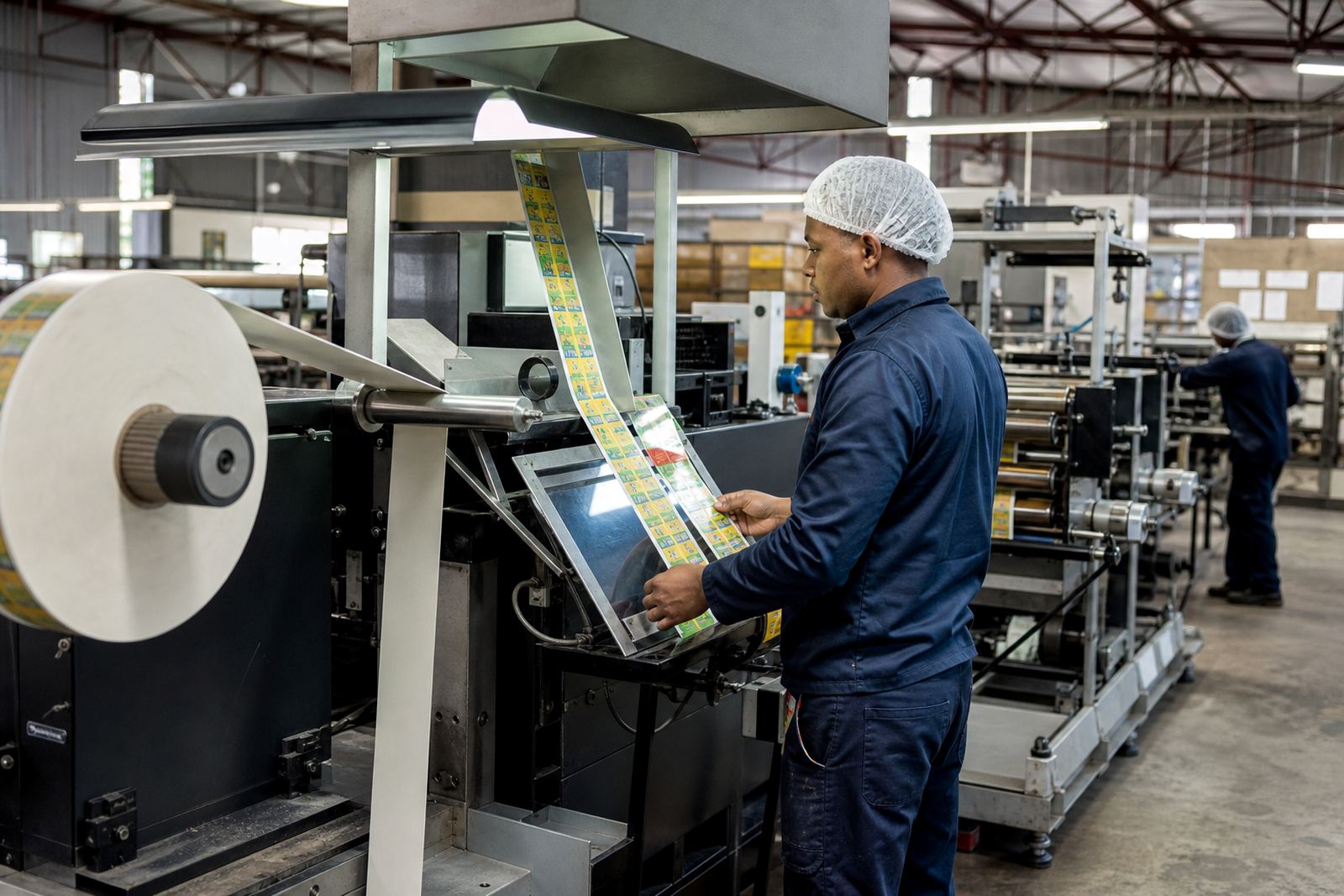
For this project, finishing was not treated as an afterthought. The client wanted labels that looked good from a distance and also held up close up, especially on premium cartons and bottles. We assisted with finishing setup so the converter could handle common label requirements such as consistent die-cutting, clean matrix removal, tidy rewinding and stable handling after print. Where the product needed a cleaner presentation, we advised on the sequence of print and finish steps so the final label would stay neat through packing and application.
That approach helped the team balance visual quality with production efficiency. In label work, a label that looks excellent but slows the line down is not a win. The better result is a finish that suits the substrate, the adhesive and the downstream application method. We kept the advice practical, with a focus on what the operators could repeat on the next job without having to guess.
- Finishing setup for die-cut, rewind and handling control
- Advice on print and finish order for cleaner output
- Support for repeatable job changeovers
Operator training and support over six weeks
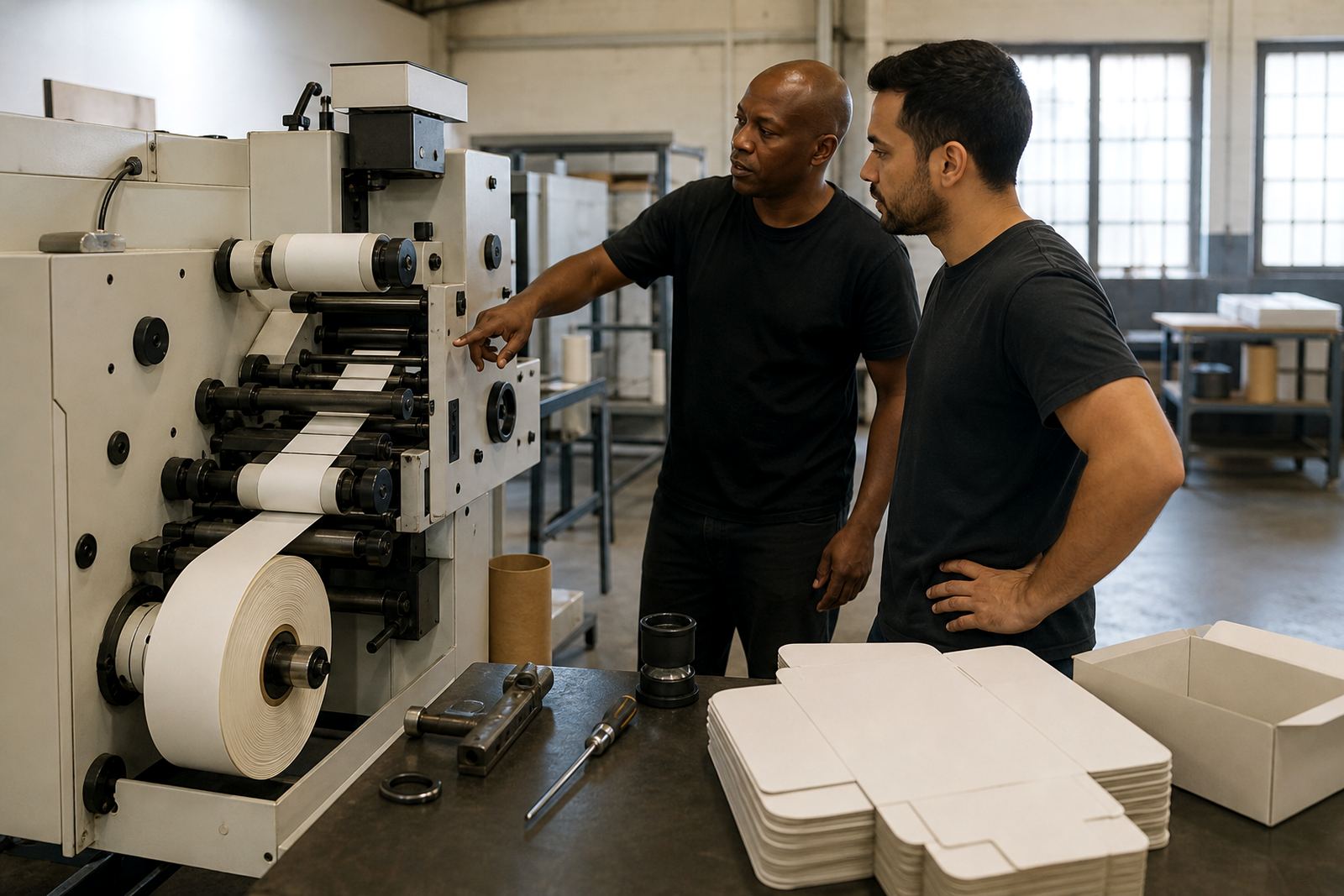
The project ran over six weeks from initial assessment to production support. During that time, we trained operators, supervisors and support staff on the practical routines that keep a narrow-web flexo line steady. That included start-up checks, waste reduction habits, ink handling, plate mounting basics, register adjustment, common fault finding and what to do when the press is stopped unexpectedly. We also spent time on the small habits that make a difference, like consistent cleaning, checking wear points and keeping an eye on drying conditions.
Training was kept hands-on and direct. The team needed to understand how to keep output stable on working days, not just how the machine runs on a good day. A converter in a busy market cannot afford long learning curves, so we kept the sessions focused on the jobs they actually print most often.
- Timeline: 6 weeks
- Hands-on operator and supervisor training
- Startup production support during live jobs
- Fault finding for common print and finishing issues
Maintenance planning for Gauteng and coastal supply chains
Although the converter is based in Umhlanga, parts of the support model were planned from our Spartan, Kempton Park base with follow-up support available remotely and on site when needed. That matters for converters that need a steady supply of consumables, spare parts guidance and maintenance planning without waiting around for problems to grow. The conversation included preventive maintenance intervals, anilox care, plate mounting help and the kind of checks that reduce unplanned stoppages.
For presses running across South Africa, it is never just about one good handover. A proper support plan has to suit local conditions, local power issues and the pace of the customer’s order book. We would use the same approach again for another converter in Johannesburg, Pretoria, Durban, Cape Town or Gqeberha, because the principle is the same: keep the machine ready, keep the operators confident, and keep production moving with fewer surprises.
- Preventive maintenance planning
- Anilox care and plate mounting help
- Breakdown support and remote support as needed
- Spare parts support and production consulting
What changed once production settled
Once the team had worked through the setup and training period, the converter was in a better position to run premium jobs with more control. The main benefit was not one single feature, but the combination of cleaner setup, better operator confidence and a more disciplined finishing process. That helped the client manage brand-critical work with less hesitation and less rework.
If we were to do this again, we would follow the same pattern. Start with a clear brief, check the real production constraints, keep the setup practical, and train the team on the way the press is actually used. That is how you support a premium label business without overcomplicating the floor.
- Better control over make-ready and repeat jobs
- Cleaner finish for premium packaging labels
- More confident operator handover
- Less downtime pressure during normal production shifts
Why label converters call us for narrow-web support
Flexography Printer works with label converters across South Africa who need narrow-web flexo label press support that is practical, local and grounded in real production. From Spartan, Kempton Park, we support press installation, commissioning, training, maintenance and production problem solving for converters that cannot afford trial and error. The Umhlanga project is a good example of how we approach the work: clear steps, hands-on support, and attention to the final label as much as the press itself.
Clients reach us through the enquiry form on our contact page when they want support for a new installation, a press issue, or a production review. That keeps the process direct and organised, which is what most converters want when deadlines are tight and the next run is already lined up.
Key facts
| Project type | Premium packaging label project for a narrow-web flexo converter |
|---|---|
| Town | Umhlanga, KwaZulu-Natal |
| Timeline | 6 weeks from setup to production support |
| Main focus | Visual finish with practical production methods |
| Services supplied | Press installation, commissioning, training, finishing setup and support |
| Support base | Spartan, Kempton Park with remote and on site assistance |