What the Durban North brief asked for
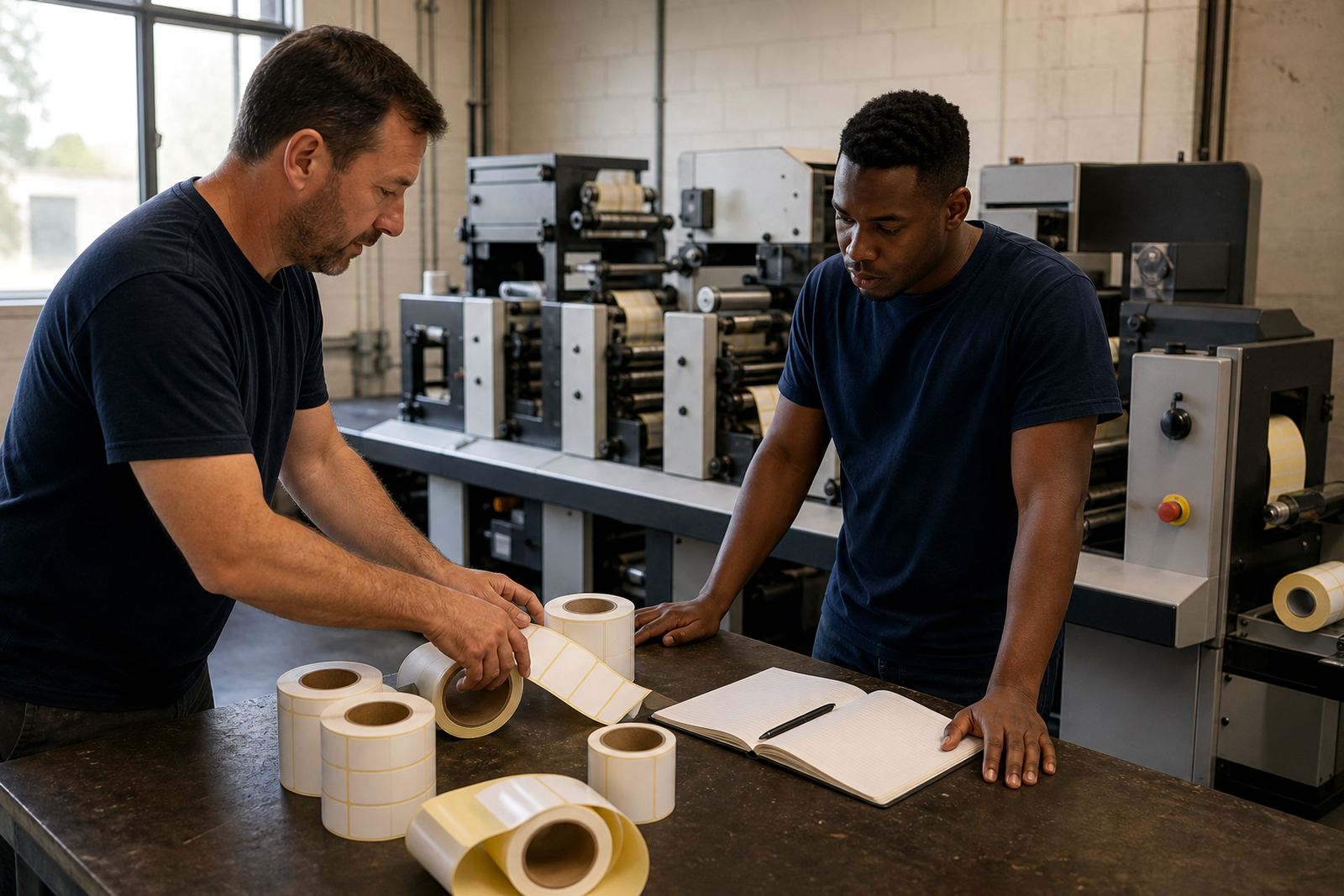
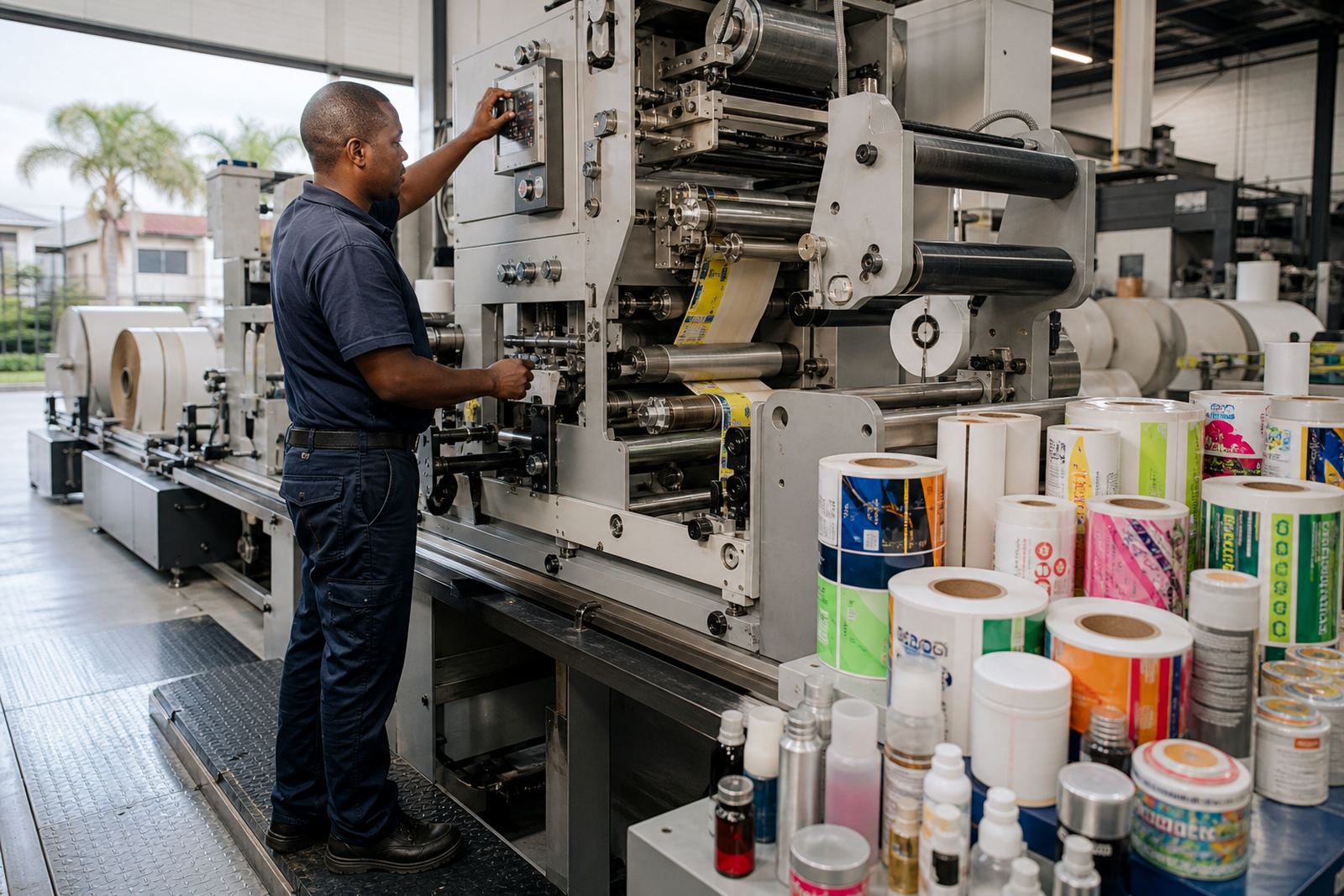
The client was a beauty label converter in Durban North working on labels for personal care packaging. The brief was clear: get the narrow-web flexo label press running in a way that held registration, kept colour consistent and gave the finishing side a neater result for short and repeat runs. They also wanted operators to understand the setup well enough to handle day-to-day production without depending on outside help for every adjustment.
Because the work was for beauty products, the finish had to look clean at point of sale. That meant careful attention to print alignment, web handling, drying balance and the finishing steps that affect appearance after printing. In Durban, coastal humidity can also affect handling and storage, so we kept the approach practical and watched for issues that show up when material sits in warmer, damper conditions.
Constraints on site and what mattered most
The main challenge was not just print quality, but consistency. Beauty labels can show small faults quickly, especially where gloss, fine type or solid colour blocks are involved. The converter also needed a setup that would fit regular production hours and not add unnecessary waste during changeovers. Load-shedding planning was part of the discussion too, because press stops and restarts can disturb registration and waste material if the team is not prepared.
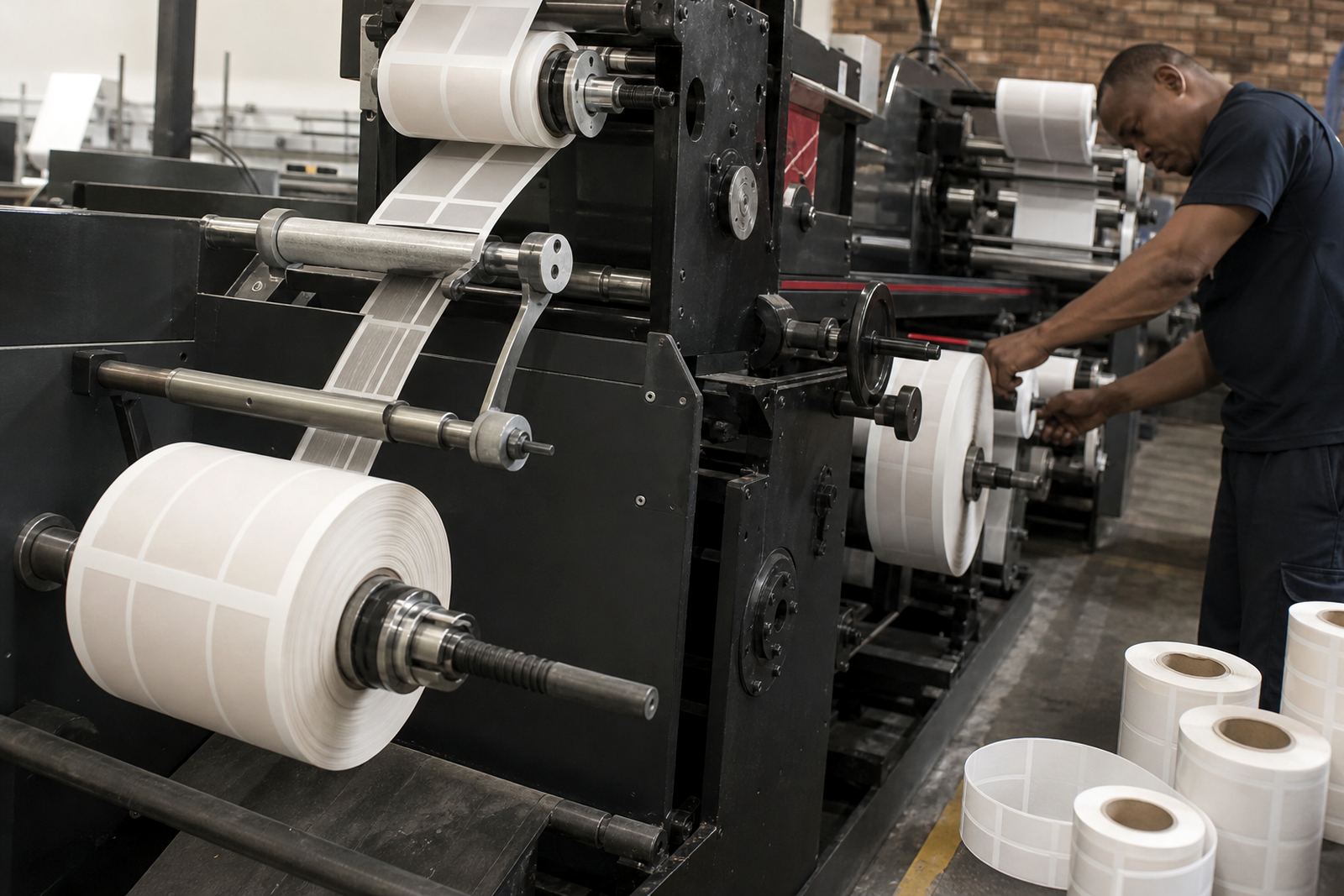
We kept the scope practical and focused on the points that affect output on a narrow-web flexo line. The work centred on getting the press stable, helping the finishing area follow a repeatable method and making sure the operators had a clear process to follow on each job.
- Press setup for narrow-web flexo label production
- Finishing support for cleaner label presentation
- Operator training for routine set-up and changeovers
- Production support that suited Durban conditions and local power interruptions
What we supplied and carried out
We supplied press installation support, commissioning guidance and hands-on operator training. The work included checking the basic running sequence, helping the team settle their setup routine and reviewing the way the press was being prepared before each run. We also provided finishing setup support so the labels came off the line with better consistency in trim, handling and presentation.
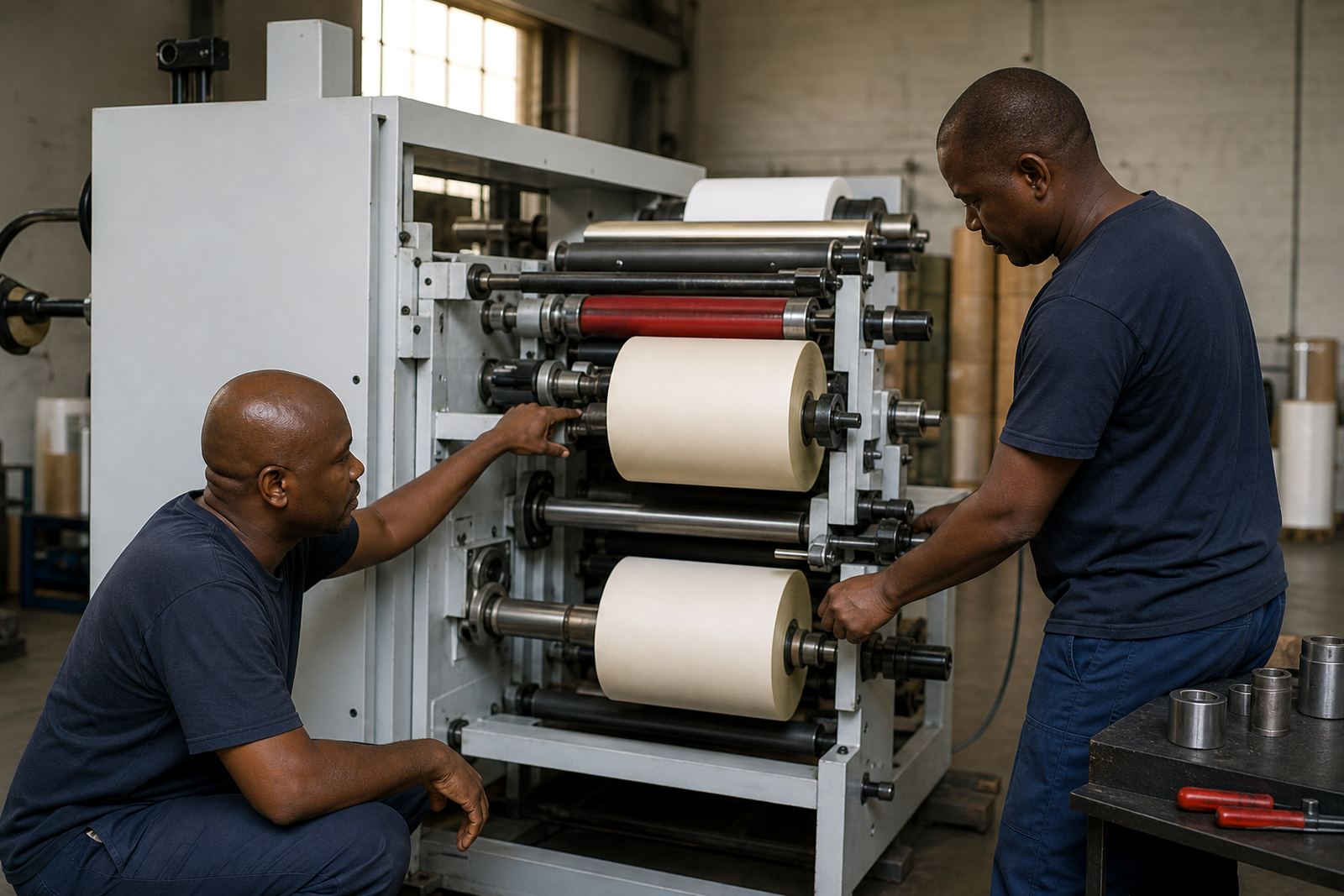
On the technical side, we looked at practical items that matter on flexo work: anilox care, plate mounting, ink handling, web path control and the order of checks before startup. Where the team needed it, we also gave breakdown support and remote support between visits so small issues could be dealt with quickly and production could keep moving.
- Press installation and commissioning support
- Operator training and startup production support
- Finishing setup and plate mounting help
- Preventive maintenance advice and spare parts support
Timeline and working pace
The project ran over three weeks. The first week was spent on inspection, setup review and the first round of operator guidance. In week two we worked through startup production support and finishing adjustments, then checked how the press behaved during actual label runs. The third week was used for follow-up support, fine-tuning and practical coaching so the team could repeat the same setup without guesswork.
That pace worked well for a converter that could not afford long interruptions. Instead of trying to change everything at once, we kept the adjustments staged and tied each step to a visible result on press. That made it easier for the operators to see what changed and why it mattered.
Results on the finished labels
The most useful result was a steadier production process. Once the team had a cleaner setup method, the press was easier to prepare for repeat work and the finishing stage became more predictable. The beauty labels presented better on shelf because the registration and handling were more controlled, and the operators had a stronger understanding of how to keep the job on track through the run.
It was not about chasing fancy figures, it was about making the press behave properly for the work at hand. That is often what label converters need most, especially when they are producing for cosmetics and personal care where appearance matters and customer tolerance for small faults is low.
- More repeatable startup routine
- Cleaner finishing and better label presentation
- Better operator confidence during changeovers
- Fewer avoidable interruptions during production
What we would do again for a similar beauty converter
If we were brought into a similar project again, we would follow the same approach: start with the press, then the finishing area, then the operators. That order works because it deals with the practical causes of waste first, before pushing for speed. We would also make sure the team had simple checklists for startup, cleaning and shutdown so the press could be kept in good working condition between jobs.
For a Durban North converter, coastal air and regular production pressure both matter. The right response is not more complication, but a clear process that the team can maintain. That is the value of local support, and it is why we keep our help grounded in the realities of label production rather than theory.
Project facts for this Durban North job
- Client type: beauty label converter
- Town: Durban North, KwaZulu-Natal
- Press type: narrow-web flexo label press
- Support included: setup, finishing, training and production support
- Project duration: 3 weeks
- Focus: cleaner presentation, steadier running and practical operator training
This project suits converters who need reliable label production support in Durban and across South Africa. We work from Spartan, Kempton Park and support clients in Johannesburg, Pretoria, Durban, Cape Town and Gqeberha through the enquiry form on our contact page.
Key facts
| Project | Durban North Beauty Converter |
|---|---|
| Client type | Beauty label converter |
| Location | Durban North, KwaZulu-Natal |
| Equipment focus | Narrow-web flexo label press |
| Support scope | Setup, finishing, training and production support |
| Timeline | 3 weeks |