Project brief for a Centurion retail label line
The client was a retail packaging label converter in Centurion handling day-to-day label runs for product ranges that change often and need tidy presentation at shelf level. The brief was practical: improve press readiness, shorten make-ready time, tighten registration habits across repeat jobs and set up finishing in a way that suited steady production rather than stop-start guesswork.
They needed support from a South African team that understands narrow-web flexo label work and the realities of local production, including power interruptions, urgent reprints and the pressure to keep labels moving before dispatch cut-offs. The project was handled by our Kempton Park support team, with planning led by Thabo Mokoena and technical input from Johan van der Merwe. The work started with a site review, job flow check and an honest look at where time was being lost between setup, printing and finishing.
- Client type: retail packaging label converter
- Location: Centurion, Gauteng
- Project focus: dependable daily production
- Main issue: slow and uneven changeovers
What the production brief needed from the press
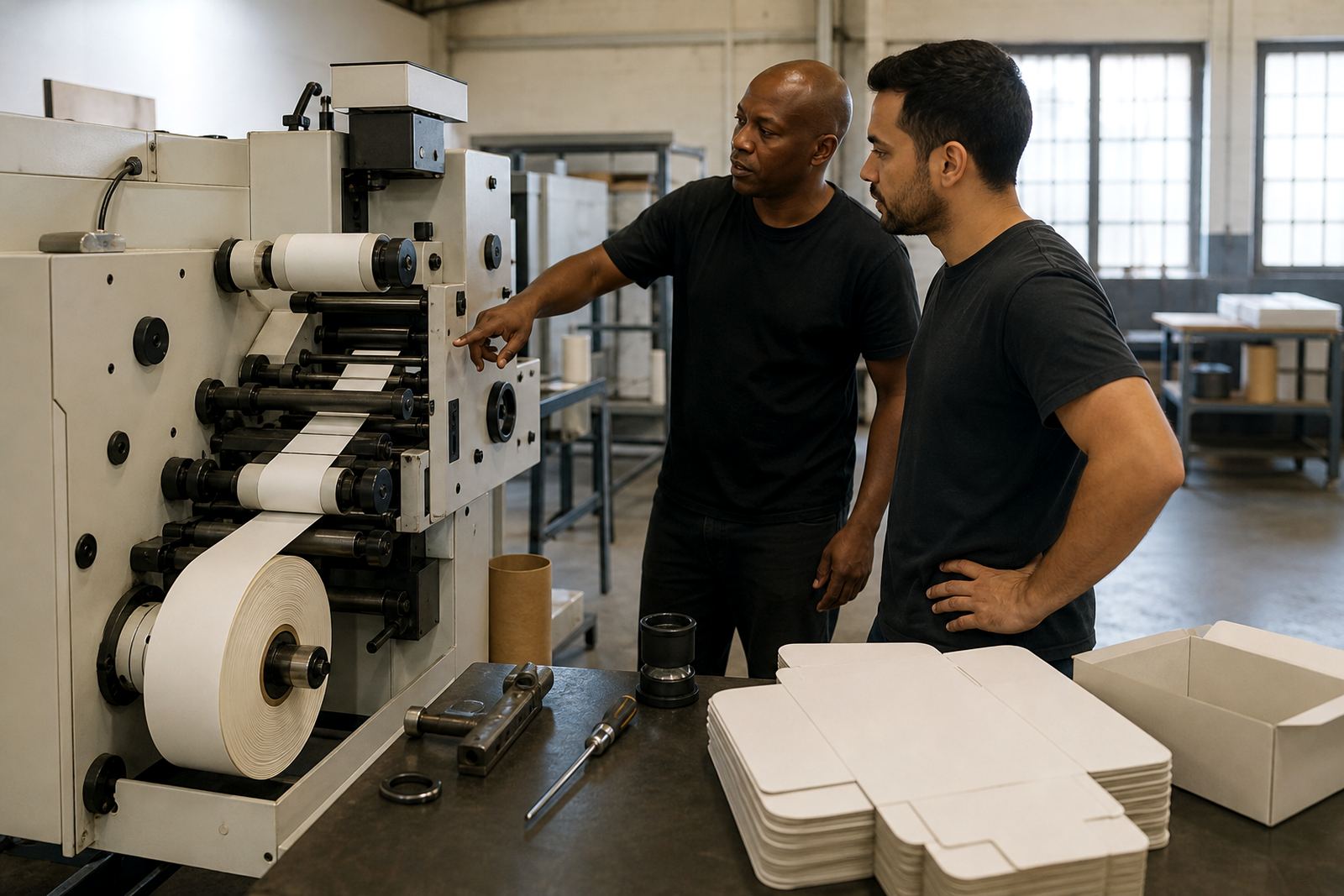
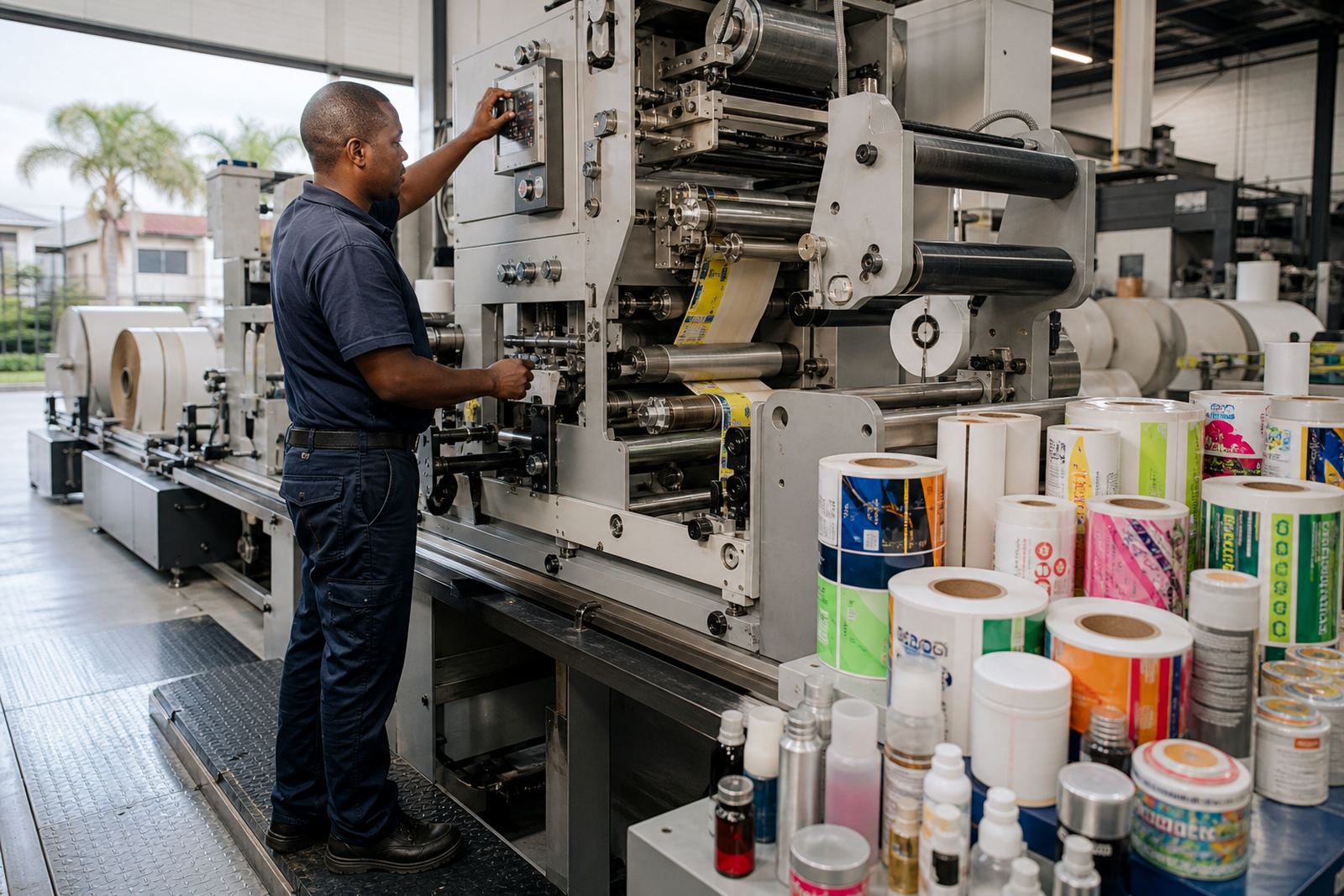
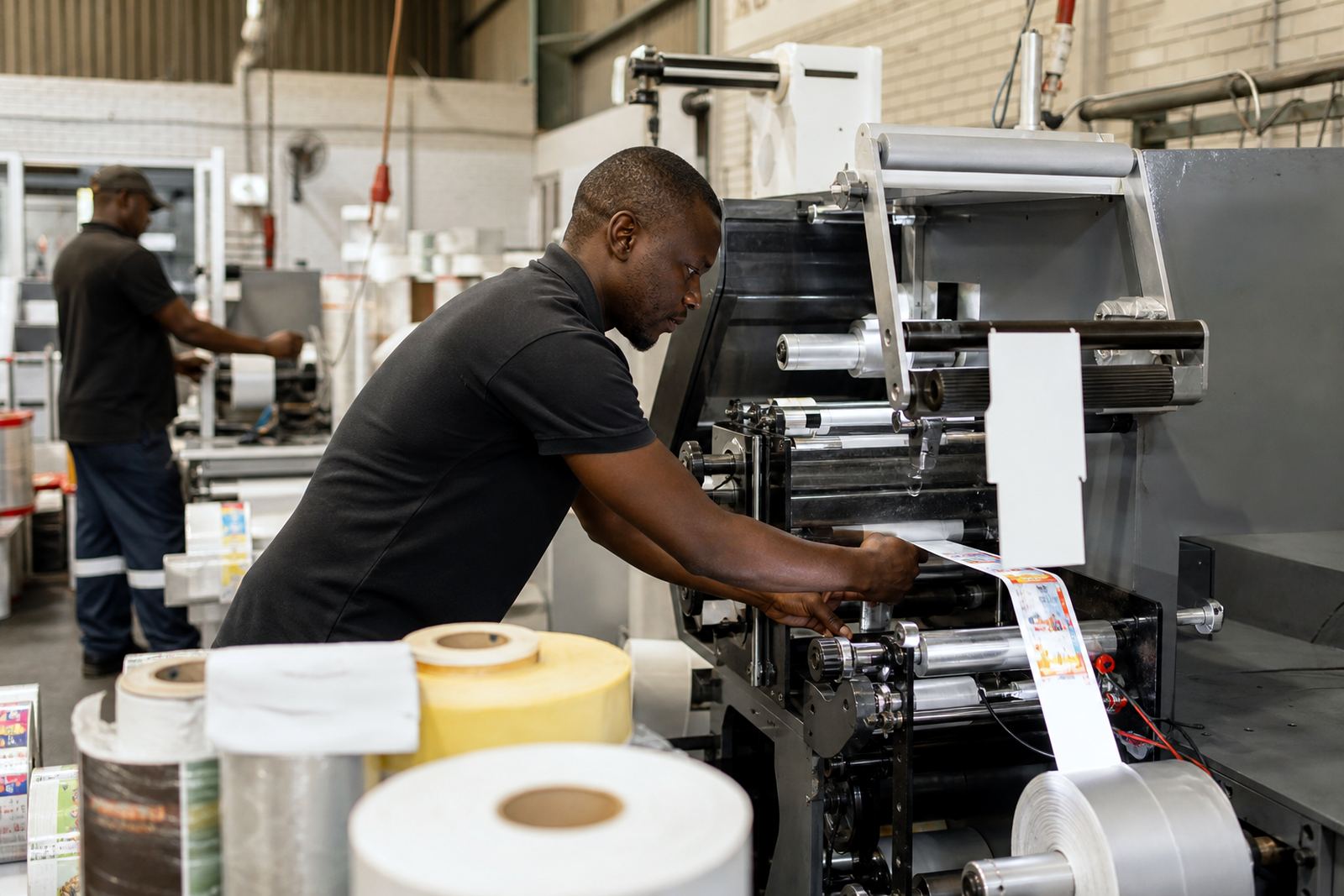
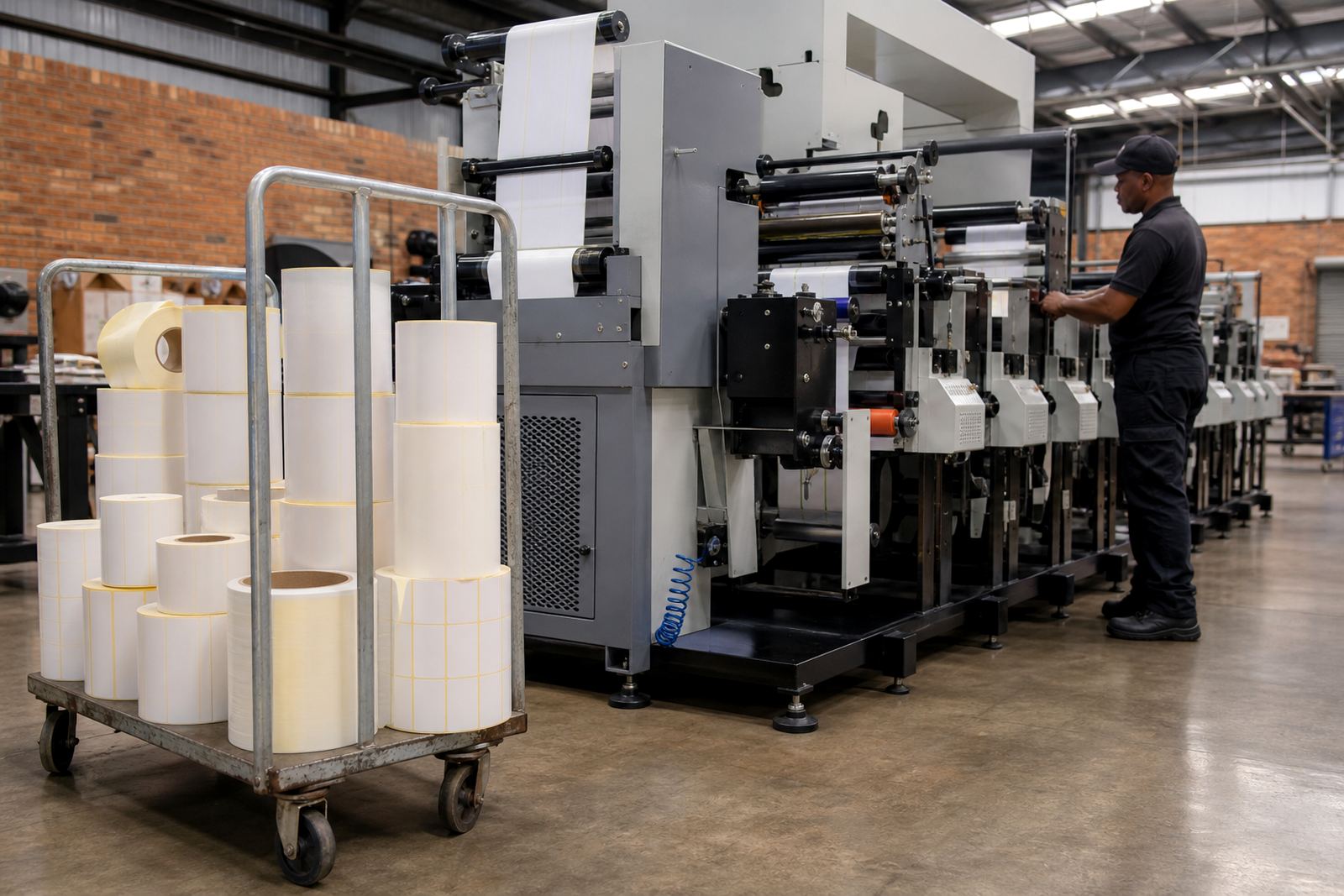
The existing narrow-web flexo label press had to be treated as a production tool, not just a machine on the floor. That meant checking the setup sequence, confirming the practical print path and making sure operators had a clear method for repeat jobs. We also reviewed the finishing side so that labels could move cleanly from print to rewind, slitting and packing without unnecessary handling.
The client wanted better control over labels used for retail packs, where appearance matters and small setup errors show up quickly. The brief also covered an operational goal that many South African converters know well: keep the line usable during load-shedding and minimise disruption when power returns. We worked through how to restart, where to check first, and how to protect web tension and registration during those interruptions. A small thing like a loosed guide can waste a whole roll, so we kept the process simple.
- Cleaner changeovers between short retail jobs
- Clearer operator routines for repeat work
- More consistent finishing setup
- Practical restart steps after outages
What we supplied and how the line was set up
We supplied press installation support, commissioning assistance, operator training and startup production support. On the technical side, the work included plate mounting help, anilox care guidance, finishing setup and a basic production consulting plan for the first weeks of live running. No special claims, just proper line support from people who know narrow-web flexo work.
The setup was handled in stages over two weeks. Week one focused on installation checks, press commissioning and job path review. Week two covered operator training, finishing adjustment and guided production while the team ran actual retail label orders. Megan Naidoo handled customer communication and scheduling, while Sibusiso Khumalo supported on-site service points and spare parts planning. Where the line needed small corrections, we dealt with them there and then rather than leaving them for later.
- Press installation support
- Commissioning and startup checks
- Operator training on setup and changeovers
- Finishing setup and production consulting
Operator training for day-to-day control
Lerato Ndlovu co-ordinated the training with the operators and shift lead so the handover made sense to the people using the press every day. We covered web path checks, plate mounting discipline, ink handling, registration adjustment, drying awareness and the order of checks before starting a run. The aim was not theory for its own sake, but a routine the team could repeat under pressure.
Training also covered how to respond to the common problems that interrupt label work in Gauteng, such as quick changeovers, humidity shifts, and a machine that needs to come back up after a supply cut. The operators were shown what to check first, what to leave alone, and when to call for support. That reduced hesitation on shift and made the line less dependent on one experienced person. It also cut down on small errors that had been slowing production. The team said the job sheets became easier to follow too.
- Clear startup checklist for each shift
- Plate mounting and register control basics
- Practical breakdown response steps
- Guidance for production in power interrupted conditions
Finishing and changeover improvements
The finishing side was important because the client was producing retail labels that had to look clean when packed and applied. We helped set up the finishing sequence so the team could move from printed web to finished roll with less handling and better consistency. That included practical guidance on slitting, rewind order, roll inspection and how to keep the final pack neat for dispatch.
Changeovers were also reviewed closely. The point was to reduce the minutes lost while cleaning, resetting and confirming the next job. We suggested a repeatable order for setup, including what to check before the next roll goes on and how to keep plate storage and anilox handling organised between jobs. On a press of this type, good habits save more time than rushing. The result was a cleaner handover between jobs and fewer stops that came from avoidable setup drift.
- More consistent roll finishing
- Better sequence for job changeovers
- Clearer inspection before packing
- Less handling between print and dispatch
What changed after three weeks on site
Over the three-week project window, the Centurion team moved from a reactive setup style to a more ordered production rhythm. The operators knew the sequence, the supervisors had a better view of where delays were coming from, and the finishing area was easier to keep under control. There was no magic fix, just a steadier way of working that matched the realities of retail label production.
The main result was dependable daily output with cleaner changeovers and fewer small interruptions taking up the shift. The client also had a support route back to our Spartan, Kempton Park base for preventive maintenance, breakdown support and spare parts help. That matters when you are working across Johannesburg, Pretoria and the wider Gauteng corridor, because a slow response can put a whole order at risk. The line was left in a better place to carry on with ordinary work, not just a one-off run.
If we did the same project again, we would keep the same approach: start with the production routine, train the operators on the real jobs they run, and only then fine tune the finishing. That order gives better results than trying to force speed before the basics are settled.
- Daily output became more dependable
- Changeovers were cleaner and faster
- Support route was clear for future calls
- Production controls were easier to repeat
Key facts
| Project type | Retail packaging label production support |
|---|---|
| Town | Centurion, Gauteng |
| Press type | Narrow-web flexo label press |
| Timeline | 3 weeks |
| Scope | Installation, commissioning, training and finishing setup |
| Support base | Spartan, Kempton Park |