Silverton Converter Brief and Production Pressure
The project came from an industrial label converter in Silverton, Pretoria, working across short and repeat label runs for local manufacturing, packaging and retail supply. Their main concern was not just print quality but keeping production moving when jobs changed quickly, with tight delivery windows and limited tolerance for waste.
The press room needed a more controlled approach to narrow-web flexo label production. That meant getting the setup process tighter, making make-readies more consistent and giving operators a clear method for handling artwork changes, substrate changes and finishing requirements. In Pretoria, where many converters still run around load-shedding schedules and municipal water interruptions, the plan also had to account for power stability, cleaning routines and downtime planning.
What We Supplied for the Silverton Job
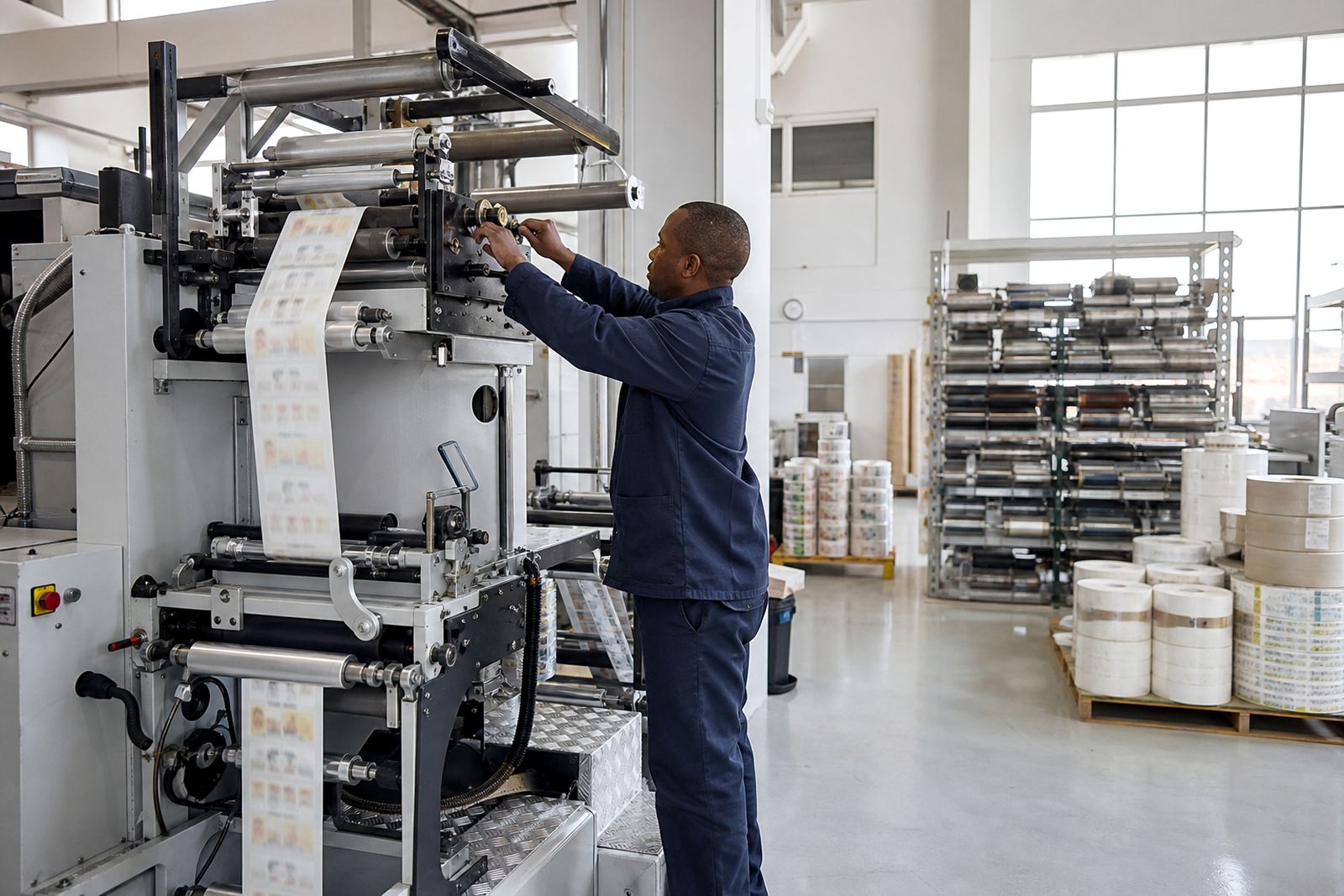
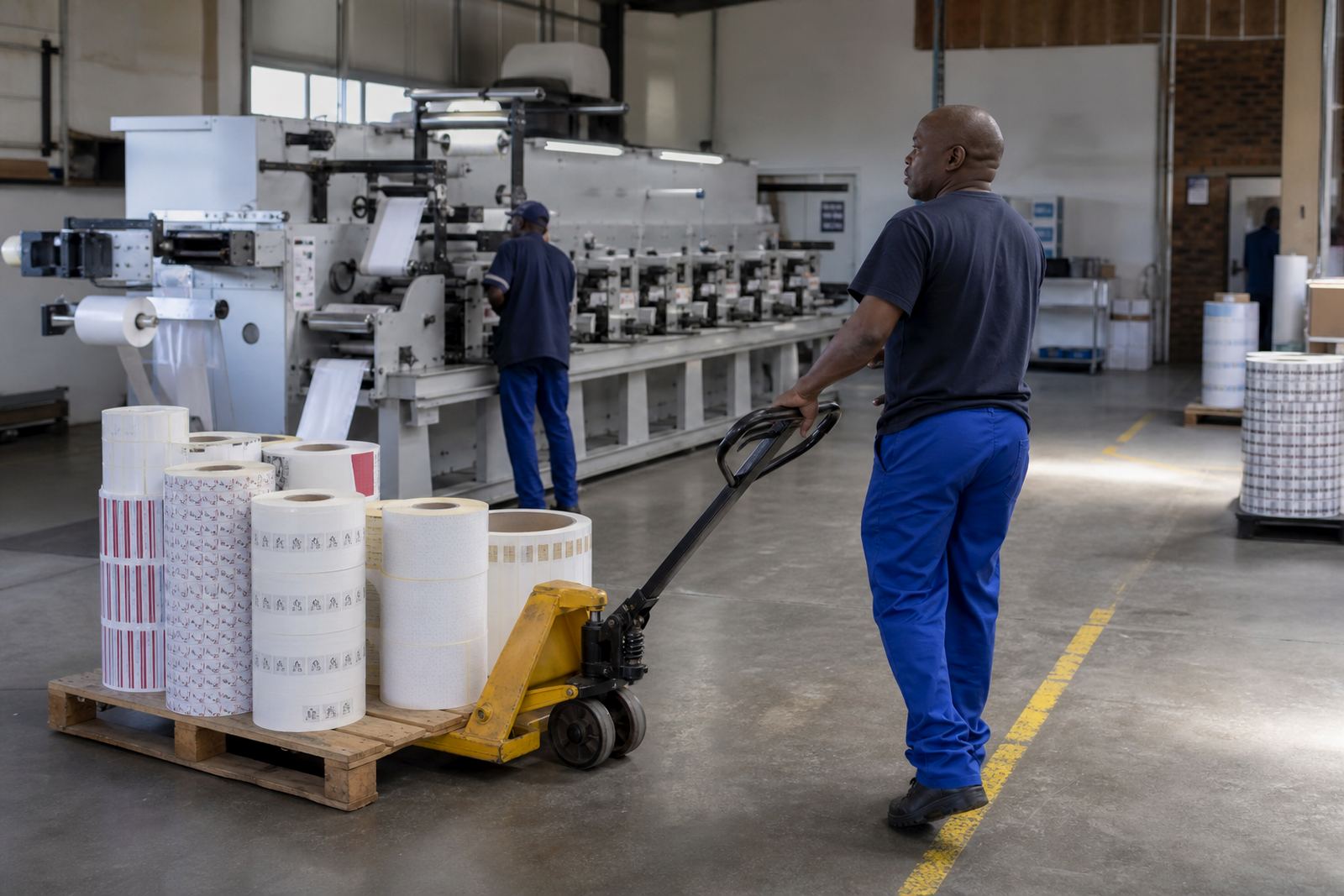
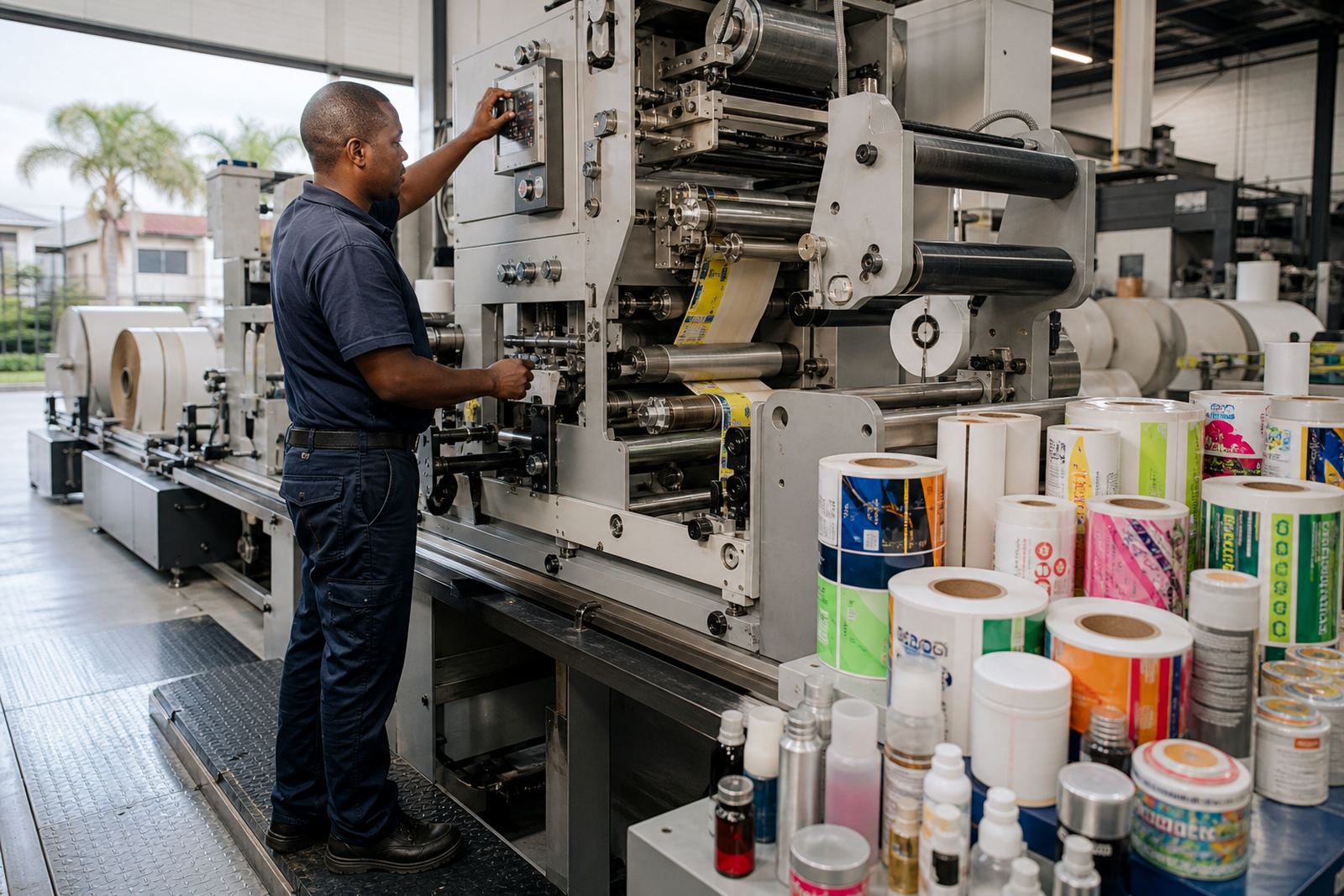
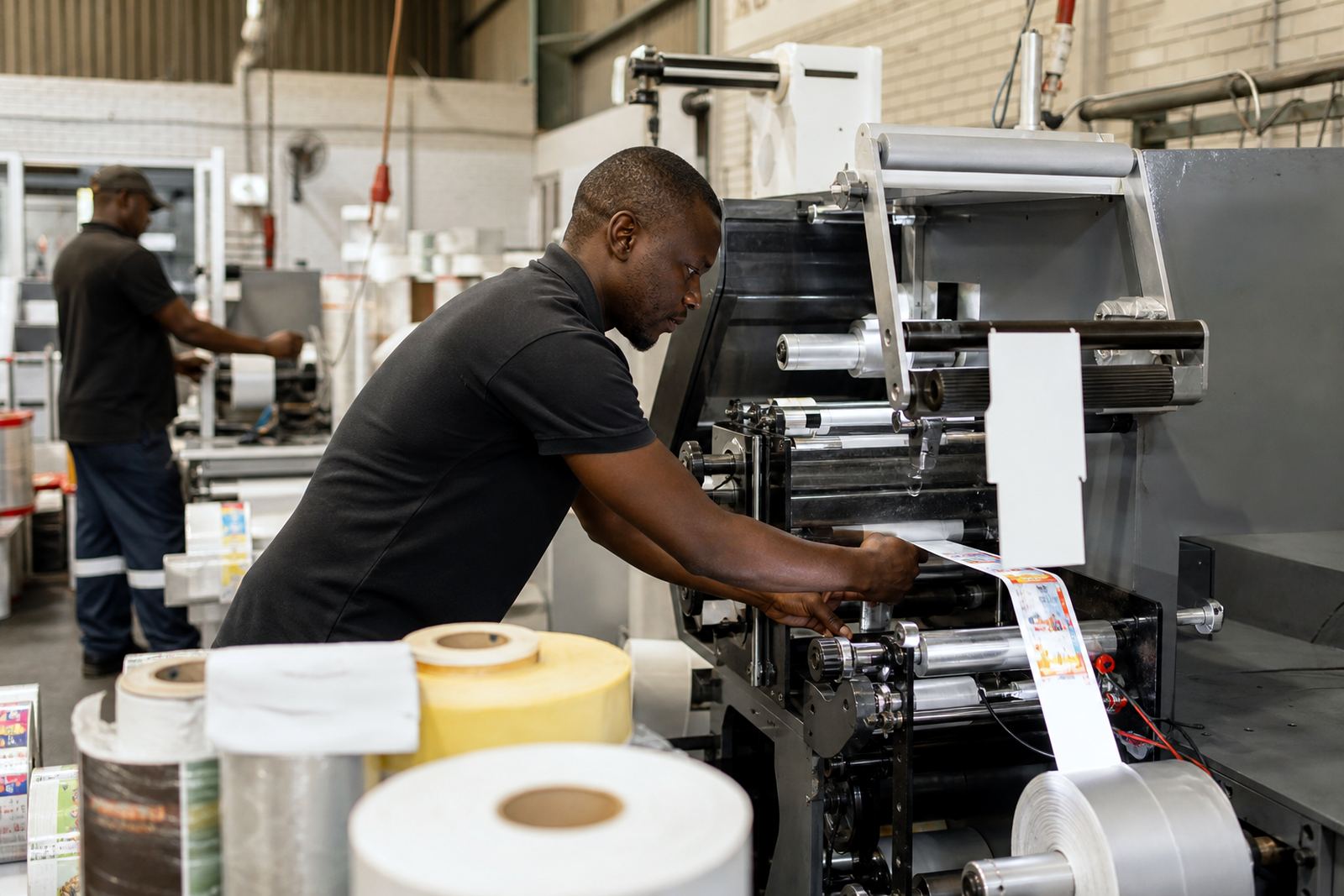
We supported the project with a narrow-web flexo label press package suited to label and packaging work, along with installation, commissioning and startup production support. The focus was on a practical setup for self adhesive labels, shrink sleeves and other narrow-web work where registration, ink control and finishing accuracy matter from the first run.
- Press installation and mechanical positioning
- Press commissioning and run-off checks
- Operator training for setup, cleaning and changeovers
- Startup production support for first jobs
- Finishing setup for rewinding, die-cutting and inspection flow
- Remote support and spare parts support when needed
We also assisted with anilox care, plate mounting help and production consulting so the team could keep print quality steady across multiple job types. The work was done with the realities of an industrial site in mind, including floor layout, dust control and access for service work.
Constraints We Had to Work Around
The main constraint was keeping the converter productive while the new setup was being introduced. There was already an active order book, so the transition needed to fit around live jobs rather than stopping the line for long periods. That meant the installation and first production runs were planned in stages, with checks on substrate handling, registration tolerance and drying behaviour before full output was attempted.
Another issue was the mixed work profile. Some jobs needed fine text and small batch consistency while others needed broader packaging runs with different finishing steps. We had to make sure the press room team could handle both without overcomplicating setup. Cable routing, spare parts access and day-to-day cleaning were also considered, because a tidy press area saves time when the power comes back on after an outage or when a shift starts early.
Four-Week Setup and Commissioning Plan
The project ran over four weeks. In week one we completed the site review, confirmed workflow requirements and mapped the press room layout. Week two covered delivery planning, installation and alignment. Week three was used for commissioning, operator familiarisation and the first production trials. Week four focused on finishing setup, fault-finding, and handover support while the team ran live orders.
- Week 1: site review and workflow planning
- Week 2: installation and alignment
- Week 3: commissioning and trial runs
- Week 4: handover, support and early production
The timeline was kept short enough to avoid a long production gap, but long enough to deal with the small issues that usually appear when a converter changes its production routine. That included setting the right order for plate mounting, ink preparation, web path checks and finishing steps so the operator did not have to guess.
Training That Matched the Shop Floor
Training was a central part of the project. The team needed more than a quick introduction, they needed a repeatable method that new and experienced operators could follow on a Monday morning or after a shift change. We worked through setup checks, job start procedures, print consistency, cleaning routines and basic fault response.
The training also covered practical points that matter in South African production spaces, such as how to keep plates, anilox sleeves and finishing tools in good condition when humidity rises on the East Rand, or when a plant is running with limited backup power. Operators were shown how to spot early signs of ink issues, tension problems and registration drift before those problems affected the whole run.
- Set-up sequence and changeover discipline
- Ink, plate and anilox handling basics
- Web control and print registration checks
- Start-up checks after shutdowns or outages
- Finishing setup and inspection points
Results and What We Would Repeat
By the end of the project, the converter had a cleaner workflow, better operator confidence and a more stable path from job booking to finished labels. The key gain was not one single machine feature but the way the whole line was handled. Setup became more orderly, finishing was easier to plan and the team had a clearer process for support when something needed attention.
What worked best was the combination of hands-on commissioning and aftercare. If we were doing the same job again, we would keep the same staged approach, start with a full workflow review and bring finishing into the conversation earlier. That prevents bottlenecks later, especially for converters serving Johannesburg, Pretoria and coastal customers where turnaround times are often tight and stock has to move quickly.
The Silverton project showed that narrow-web flexo presses perform best when the support around them is just as organised as the press itself.
Key facts
| Project type | Industrial label converter support |
|---|---|
| Location | Silverton, Pretoria, Gauteng |
| Scope | Press installation, commissioning, training and support |
| Production focus | Narrow-web flexo labels and packaging work |
| Timeline | 4 weeks |
| Support model | On-site setup with remote and spare parts back-up |