Project Background in Westmead
The customer was a household goods label converter in Westmead, KwaZulu-Natal, supplying labels for products that need clear copy, neat registration and a clean finish on shelf. The brief was straightforward: improve consistency, reduce setup waste and make sure the press crew could keep production moving without relying on constant outside help.
Westmead is a busy industrial area and the site had the usual pressures that come with local manufacturing, including shift changes, occasional power interruptions and a need to keep maintenance practical. The team did not want a complicated process. They wanted a narrow-web flexo label press setup that could handle routine jobs, change over sensibly and stay stable across longer runs.
What the Brief Required
The job called for a setup that would suit household goods labels where day to day repeatability matters more than flashy features. The converter needed reliable printing for multiple label formats, straightforward finishing and a maintenance plan that the team could follow without special tools all over the shop floor.
- Stable print registration for mixed label sizes
- Clean colour control for repeat runs
- Simple operator routines for wash-up and changeover
- Practical finishing setup for slitting, rewinding and inspection
- Training that matched the skills already on site
- Support for load-shedding planning and restart checks
The other requirement was keeping the line easy to manage. The client did not want long pauses while settings were searched for again, or cleaning routines that took too long at the end of each shift. They needed something that worked in real factory conditions, not just on paper.
Supply, Installation and Commissioning
We supplied the narrow-web flexo label press package and handled the installation at the Westmead site over a planned three week period. The work included press positioning, alignment checks, practical utility connections and a commissioning process that focused on steady running rather than quick first impressions.
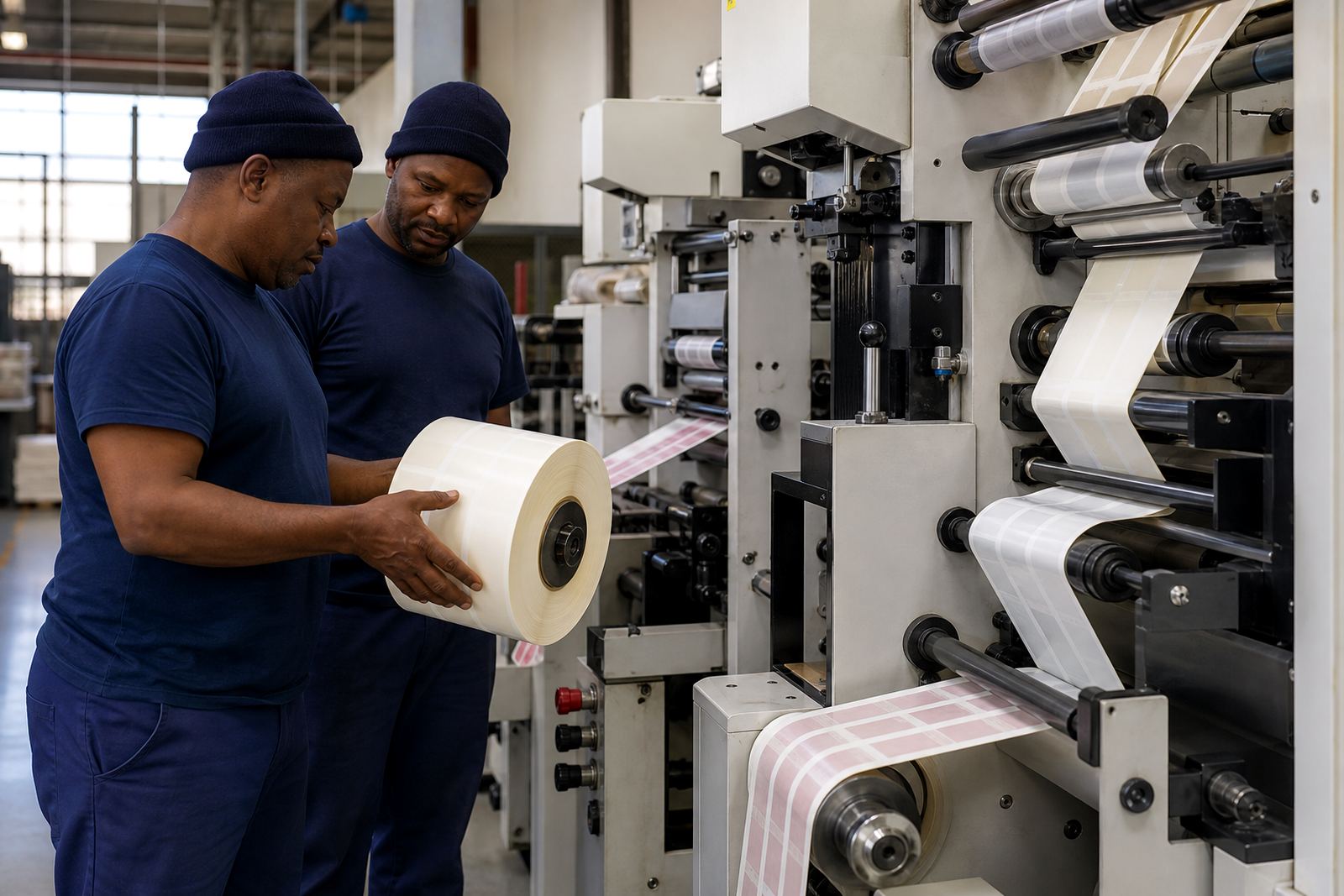
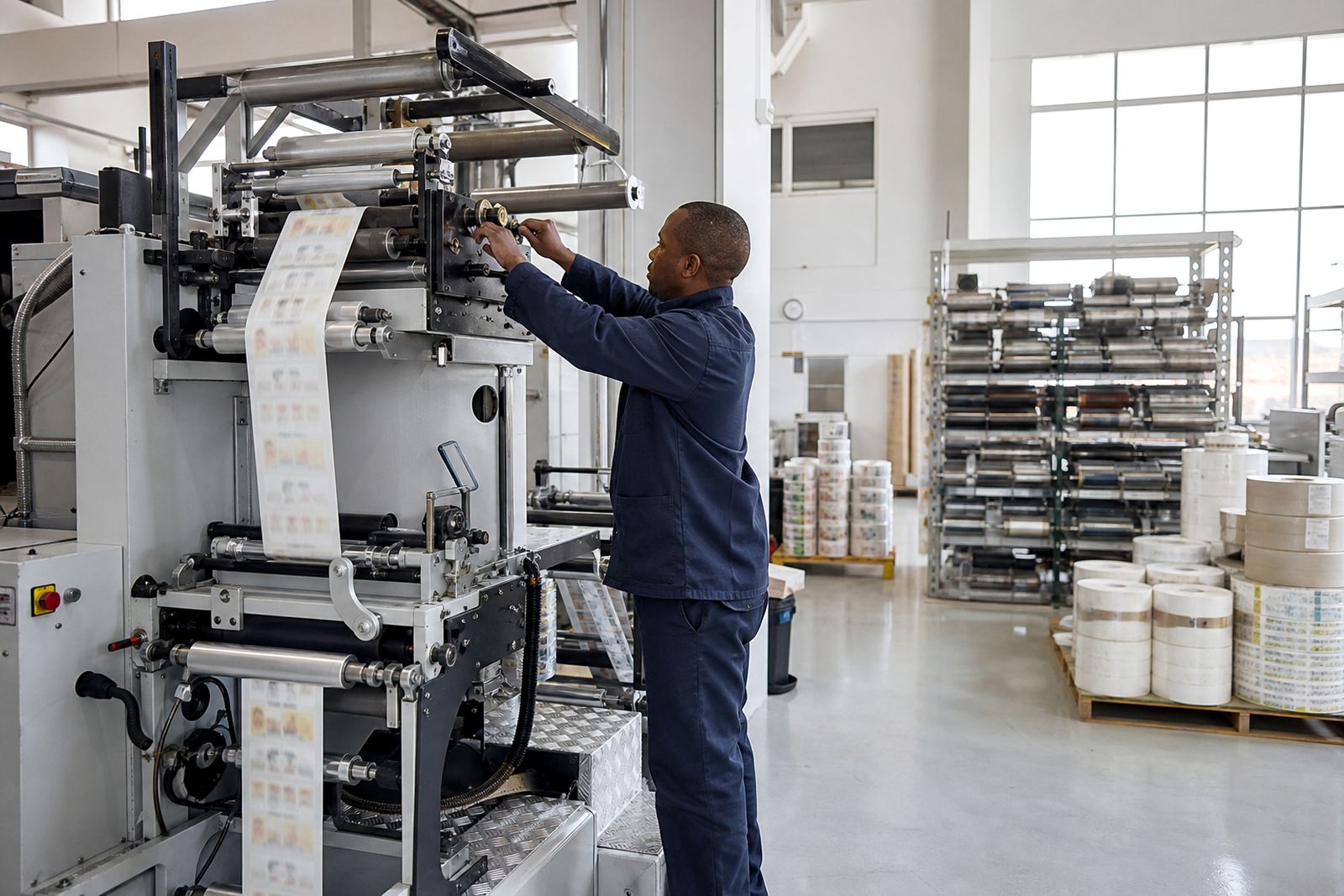
During commissioning we checked registration, tension control, web path behaviour and basic finishing flow. We also worked through the set-up sequence with the operators so they could see where small adjustments made the biggest difference. That included plate mounting help, anilox care, start-up checks and cleaning points that are easy to miss when a line is rushed.
- Press installation and mechanical set-up
- Commissioning with live production checks
- Plate mounting guidance and ink handling routines
- Finishing setup for slitting and rewinding
- Start-up production support on early jobs
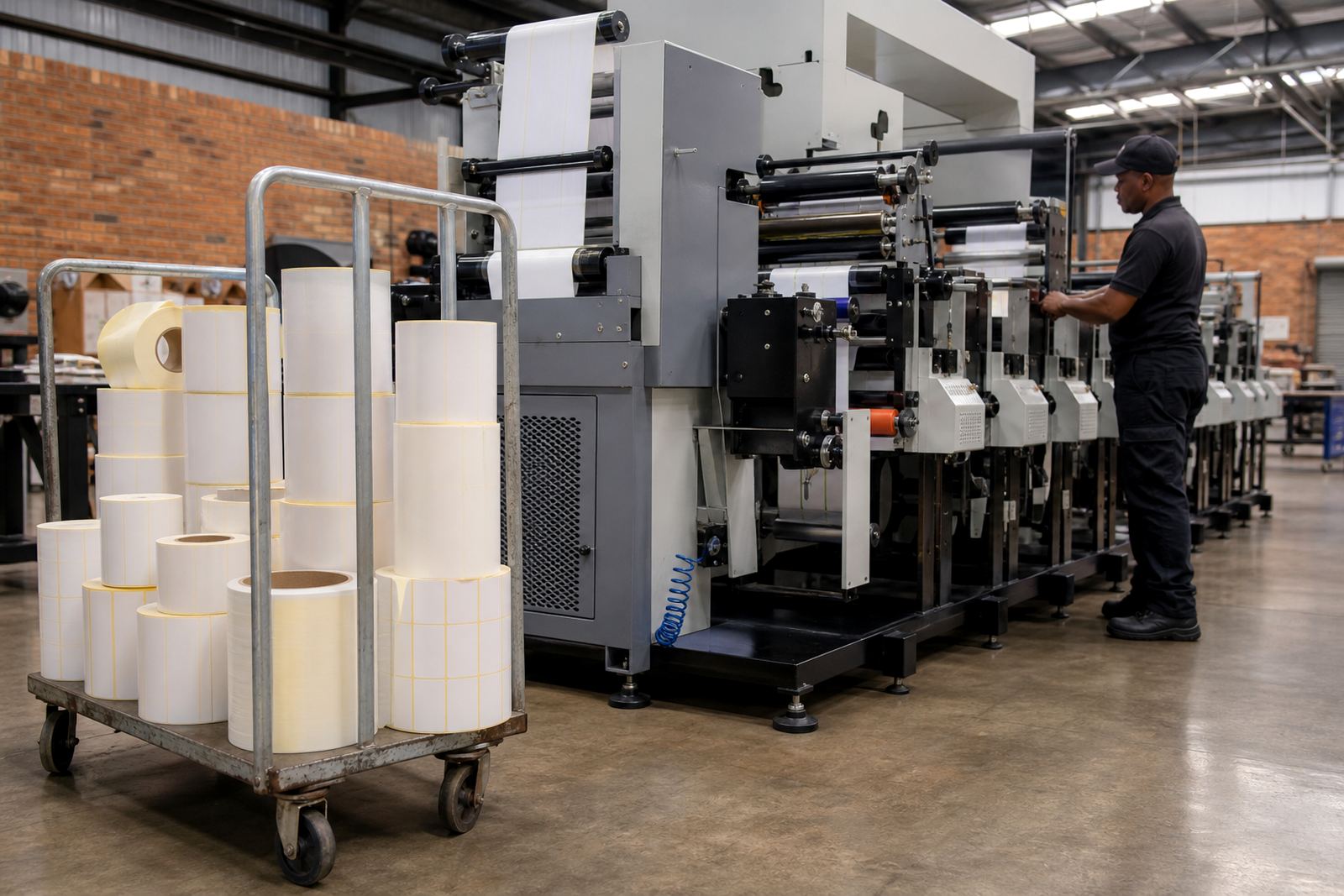
The site had limited room around the equipment so we kept the layout practical and clear. That made daily access easier for maintenance and helped the crew move around the machine without clutter building up.
Operator Training and Maintenance Habits
The biggest gain on this project came from training. We ran operator sessions that focused on repeatable habits, not theory for the sake of it. The team learned how to prepare jobs, check web threading, keep the press clean, and spot the signs of worn parts before they caused stoppages. A small amount of structure went a long way.
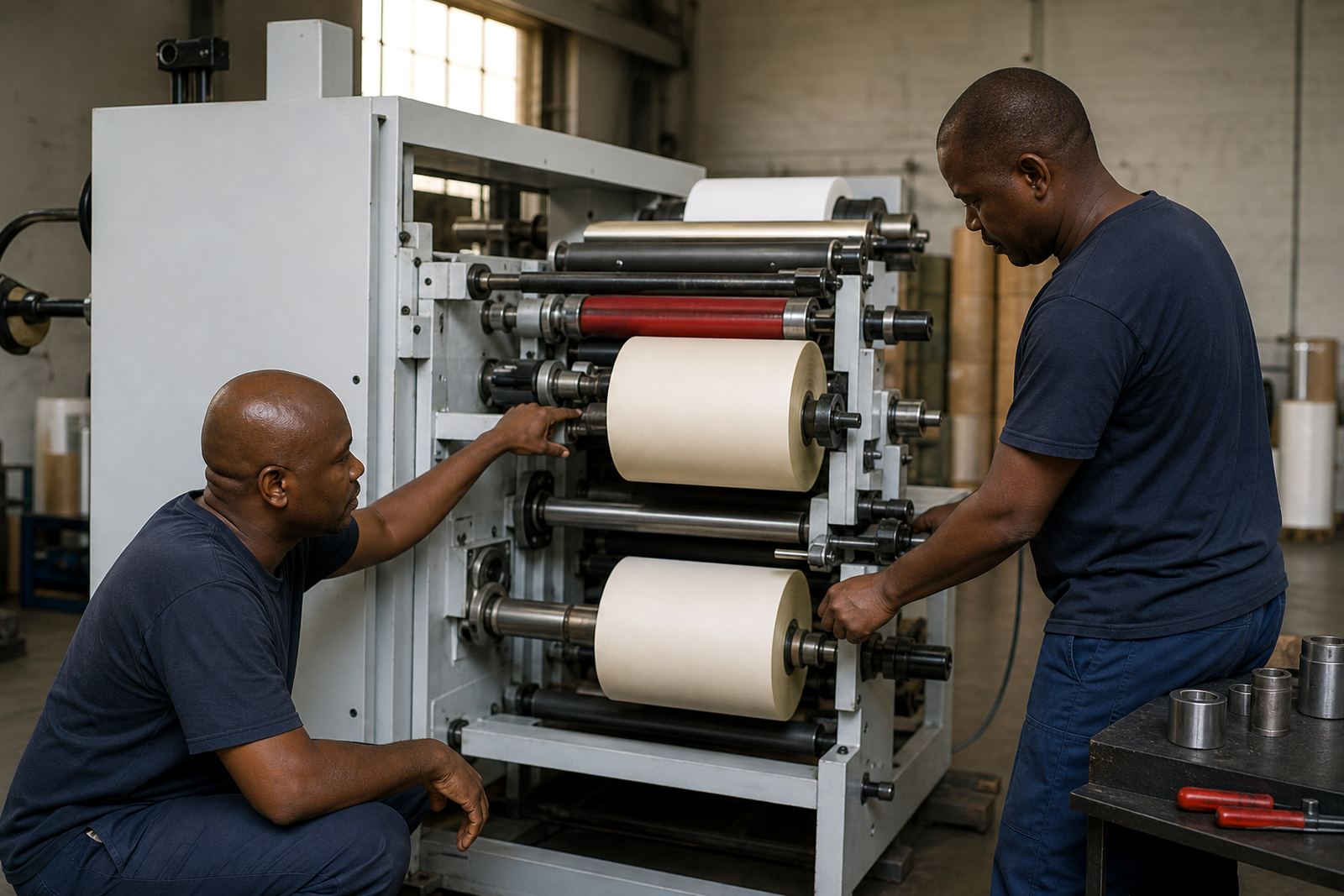
Because the customer wanted simple maintenance habits, we built the routine around what can be done between shifts and during planned downtime. That included inspection points for rollers, plate condition, cleaning around the finishing section and basic checks after a power cut. The aim was to reduce avoidable faults and keep the press ready for the next run, even when the week got busy.
- Operator walk-throughs during live running
- Restart checks after load-shedding or a brief outage
- Cleaning and care routines for rollers and print sections
- Basic fault finding for common setup issues
- Clear handover notes for shift changes
The customer also wanted staff to understand why certain settings mattered. Once the crew could see the link between tension, registration and finish quality, they made better decisions on the floor and asked fewer repeat questions.
Finishing Setup for Household Labels
Household goods labels often need a neat finish because the product has to look tidy on shelf and hold up during handling. We therefore paid careful attention to finishing setup, including slitting, rewind tension and inspection flow. The goal was to keep the label roll even and easy to use further down the packing line.
We also worked through the practical side of changeover. Short runs can create waste if the crew has to reset too much each time, so we helped standardise the process. That meant keeping settings easier to repeat, reducing confusion on job handover and making sure the finishing section matched the pace of the press. The result was smoother roll output and less rework.
For a site in a coastal province like KwaZulu-Natal, humidity can also affect handling and storage, so we discussed keeping consumables and finished rolls in a sensible condition. It is a small detail, but it helps when labels must remain clean and ready for packing.
Results After the First Runs
Within the first few weeks, the customer had a more predictable press routine and a cleaner approach to daily production. The crew became more confident with setup, the finishing section ran with less hesitation and the maintenance plan was simple enough to follow without overthinking it. That matters in a household goods environment where there is no time for guesswork.
The most useful result was not a dramatic change, but a steadier one. The team could keep output more consistent, recover faster after interruptions and handle repeat jobs with fewer surprises. There was also less dependence on one experienced person being available for every minor issue, which made shift cover easier.
- More consistent running from job to job
- Less delay at the start of shifts
- Better operator confidence after training
- Cleaner finishing and easier roll handling
- Practical maintenance habits the team could keep up
In short, the setup did what the client needed it to do: keep production moving and make the process manageable for the whole crew, not just one or two people.
What We Would Repeat on the Next Site
If we were called to another household converter in Johannesburg, Durban, Cape Town or Gqeberha, we would take the same practical approach. Start with the production brief, check the floor constraints, set the press up for repeat work and train the operators on habits that save time every week. That order of work tends to give the best long term result.
We would also repeat the maintenance planning from day one. A press that is easy to clean, inspect and reset is more likely to stay productive. In our experience, the best projects are the ones where the machine, the finishing line and the people on shift all fit together. That is what made this Westmead job work well.
For converters seeking support in Kempton Park, Johannesburg, Pretoria, Durban, Cape Town or Gqeberha, the same approach applies. Keep the setup practical, keep the training clear and keep the maintenance routine simple enough for busy factory life.
Key facts
| Project type | Household goods label setup for a Westmead converter |
|---|---|
| Location | Westmead, KwaZulu-Natal |
| Core scope | Press installation, commissioning, operator training and finishing setup |
| Timeline | 3 weeks from site start to practical handover |
| Production focus | Consistent output, easy maintenance and repeatable changeovers |
| Support model | Startup production support, breakdown support and remote follow-up |