
Healthcare Label Work in Pretoria West
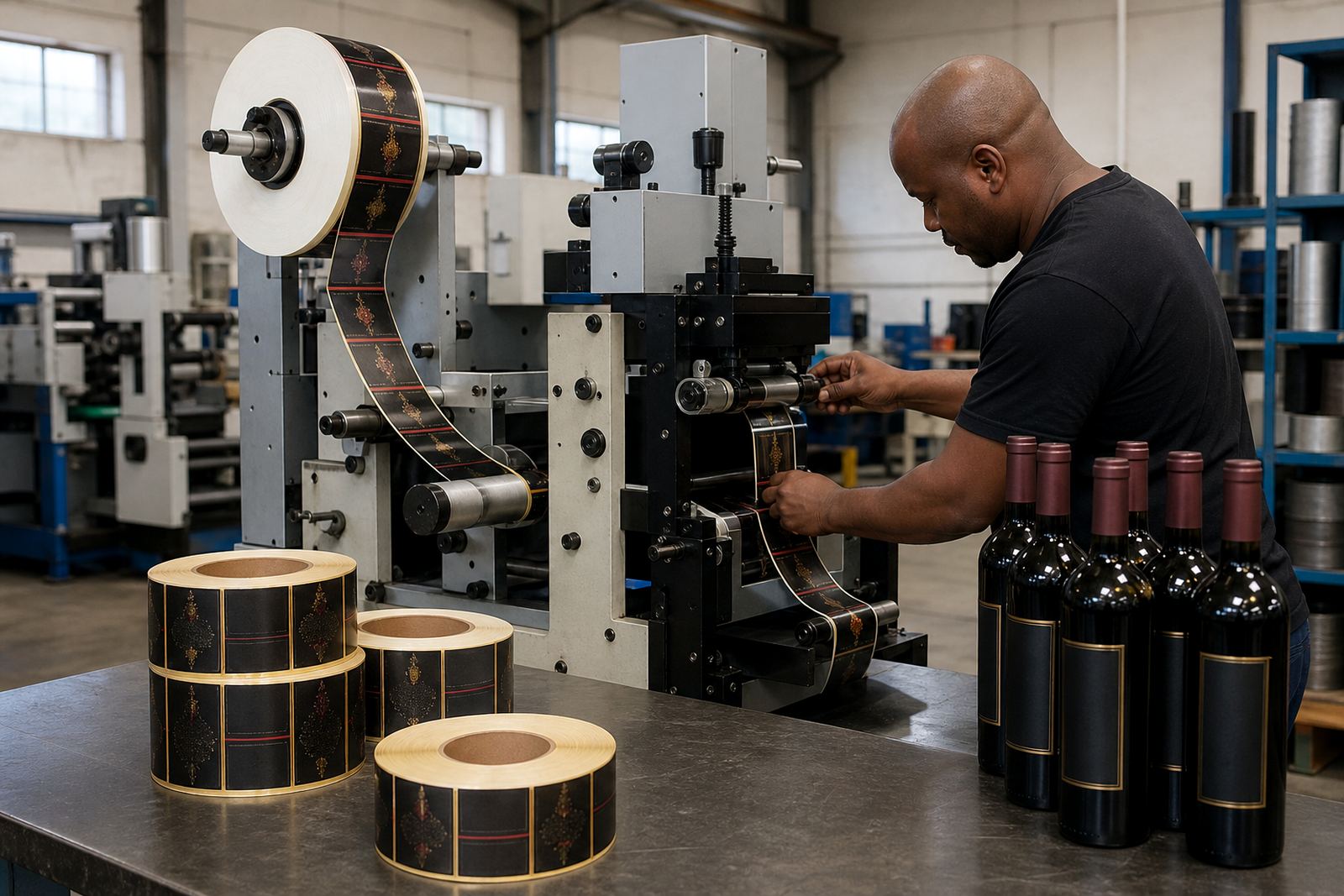
The client was a pharmaceutical converter in Pretoria West handling labels for regulated healthcare packaging. Their work needed clean registration, consistent ink laydown and tidy finishing because the product range carried batch details, barcodes and compliance text that could not afford drifting print quality.
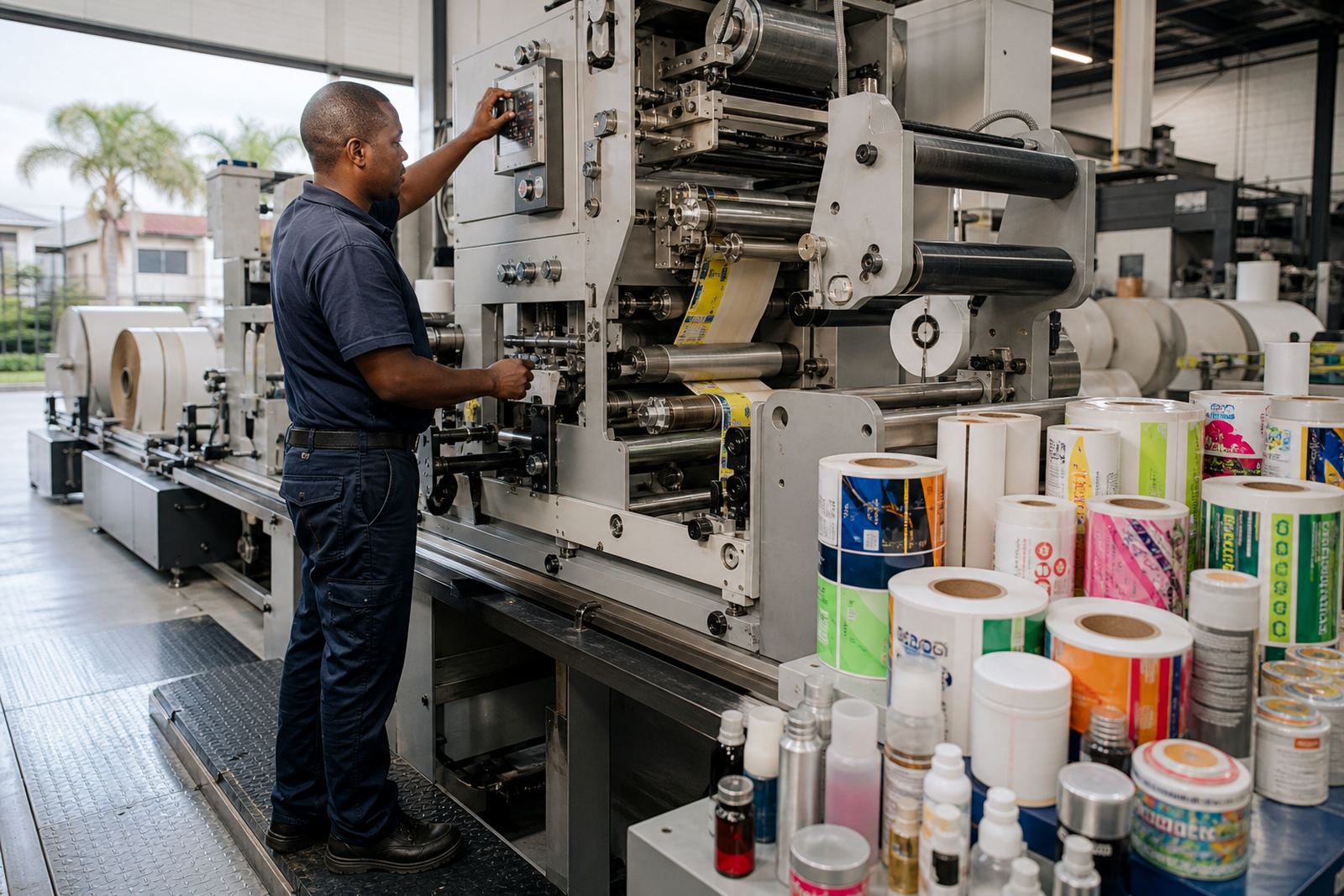
The brief was straightforward but tight. They wanted a narrow-web flexo label press package with setup support, training for the press team and a support routine that would help them keep production steady during changeovers. They also needed the line to cope with local power interruptions and the stop-start conditions that many South African factories still manage on a daily basis.
What the Brief Required From Day One
Pharma work leaves very little room for guesswork. The converter asked for a setup process that could be repeated by the team on every shift, with clear steps for plate mounting, web path checks, ink control and finishing setup. They also needed support for housekeeping around humidity, dust control and storage of consumables because Pretoria's dry seasons and summer storms can both affect label production in different ways.
- Consistent setup for narrow-web flexo label production
- Training for operators and shift leads
- Finishing support for die-cutting, rewinding and inspection
- Preventive maintenance planning around production windows
- Support routines for load-shedding and recovery after stoppages
Supply and Setup in a Planned Six Week Rollout
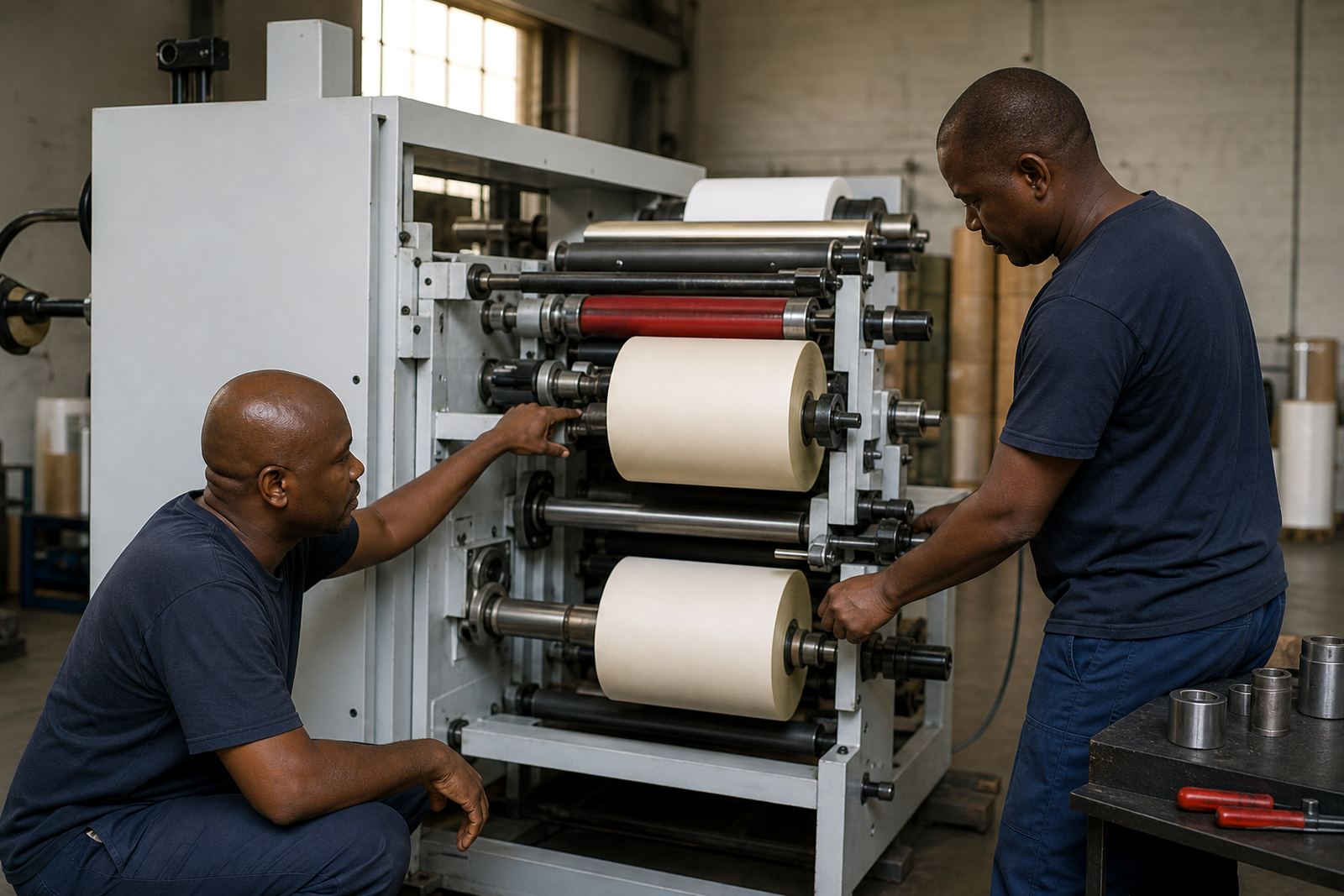
We worked from Spartan, Kempton Park and carried out the project in a six week sequence so production did not lose control of its schedule. Week one focused on site checks, utilities and press placement. Week two covered installation, mechanical alignment and basic machine verification. Weeks three and four were used for commissioning, operator handover and sample runs on typical healthcare label formats.
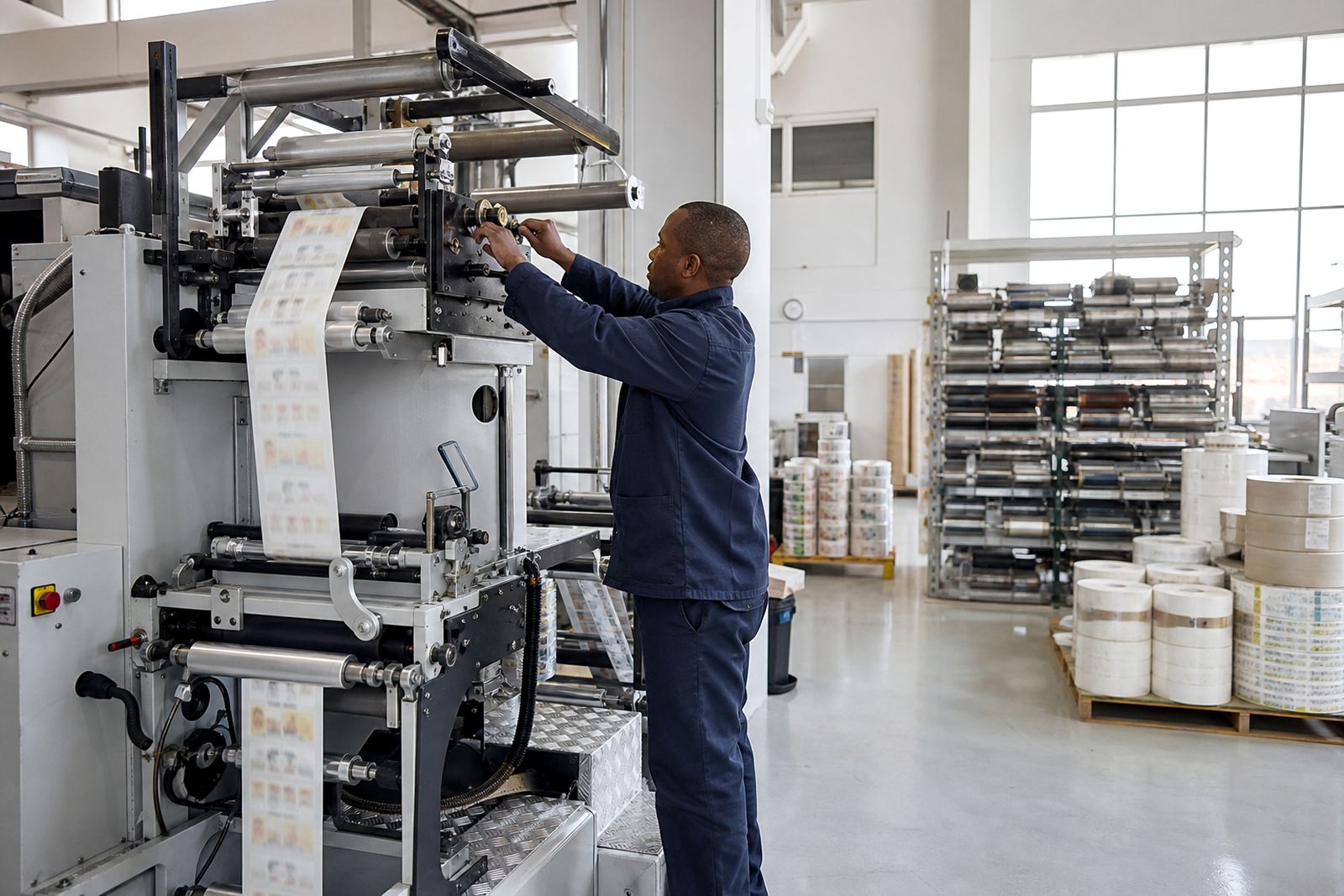
The finishing side came next. We assisted with setup for inspection, slitting, rewinding and plate mounting so the team could move from press to finished roll without unnecessary handling. That part mattered because the client was trying to reduce wasted material and keep the line tidy, especially on tighter orders where one small mistake can upset the whole batch.
Training That Stuck With the Shift Team
Training was built around real production routines, not classroom theory. Lerato Ndlovu co-ordinated the handover while Johan van der Merwe handled the technical side with the operators. We covered setup discipline, basic fault finding, ink changes, plate care, anilox cleaning and what to check after a power dip or emergency stop.
The team also learned how to recognise when a job needed a fresh setup rather than a quick adjustment. That saved time on repeat work and helped the printer keep its colour and registration within a predictable range. Aisha Patel stayed involved on the commercial side so the client could plan future support and spare parts with fewer delays.
- Operator training on setup, make-ready and shutdown routines
- Practical fault finding for common print and web issues
- Guidance for plate mounting and anilox care
- Shift handover notes for continuity between teams
Support Routines for a Regulated Production Floor
Pharma converters tend to prefer steady support rather than dramatic interventions. After startup, we moved the client onto a routine that combined preventive maintenance, remote support and breakdown response when needed. Sibusiso Khumalo handled service visits while Megan Naidoo managed follow-up queries and spares support through the enquiry channel.
The routine was shaped around the reality of local production: short windows for maintenance, occasional municipal interruptions and the need to get back into print without unnecessary delay. We would rather help the team solve small issues early than let them grow into a stoppage that takes half a shift to recover from.
Results Seen After the First Production Runs
By the end of the rollout, the client had a cleaner handover process, better changeover discipline and a more settled approach to finishing. The operators were more confident with web setup and could handle routine checks with less supervision. That made the line easier to run on busy days and gave management a clearer view of what support was needed and when.
The main result was not a single dramatic change but a series of smaller improvements that added up. Less trial-and-error, fewer avoidable stoppages and more predictable output across repeat jobs. For a healthcare converter, that sort of consistency is what keeps the production floor calm.
What We Would Repeat on the Next Pharma Project
If we were doing the same job again, we would keep the same sequence: site readiness first, installation second, then measured commissioning and operator sign-off. We would also keep the training close to live production so the team learns on the exact jobs they will run after handover, not on generic examples that do not match the plant.
That approach worked well for this Pretoria West converter and it suits other regulated label lines too. Thabo Mokoena stayed closely involved as Managing Director, making sure the technical plan and the support plan stayed aligned from start to finish.
Key facts
| Project location | Pretoria West, Gauteng |
|---|---|
| Client type | Healthcare-focused label converter |
| Press type | Narrow-web flexo label press |
| Rollout timeline | 6 weeks |
| Scope | Installation, commissioning, operator training, startup support and finishing setup |
| Support model | Preventive maintenance, breakdown support, remote support and spare parts support |