
Wine Label Brief From Montague Gardens
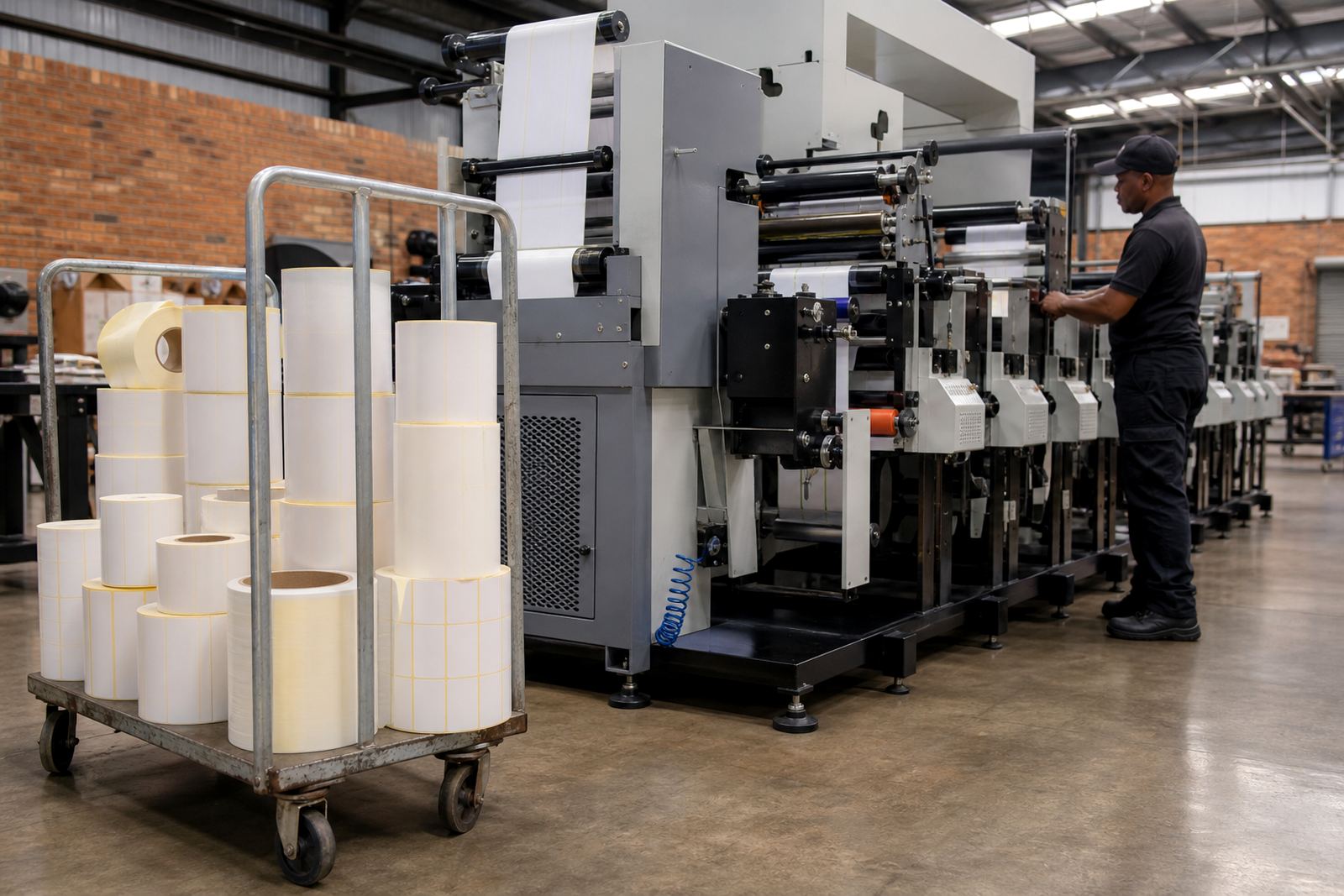
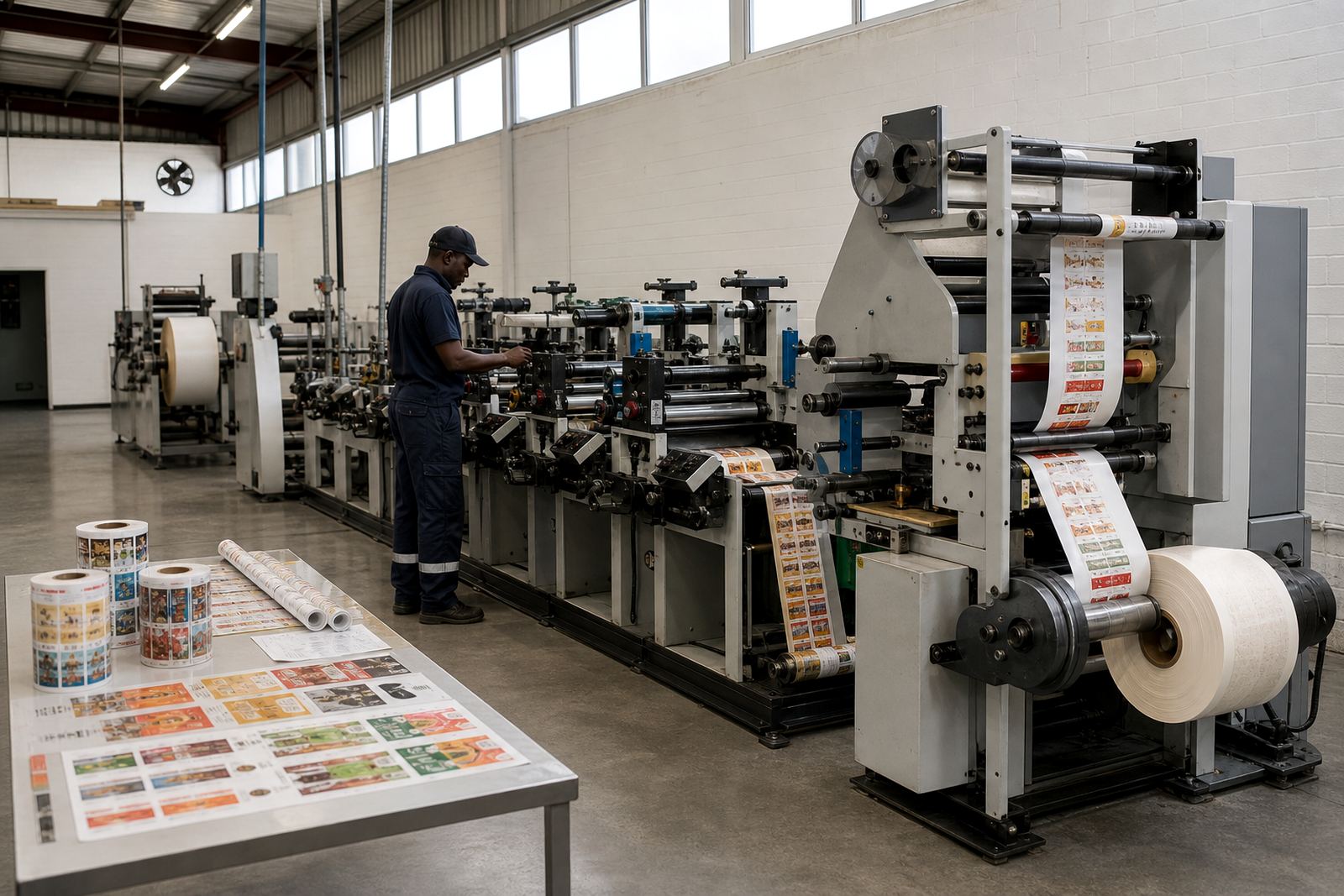
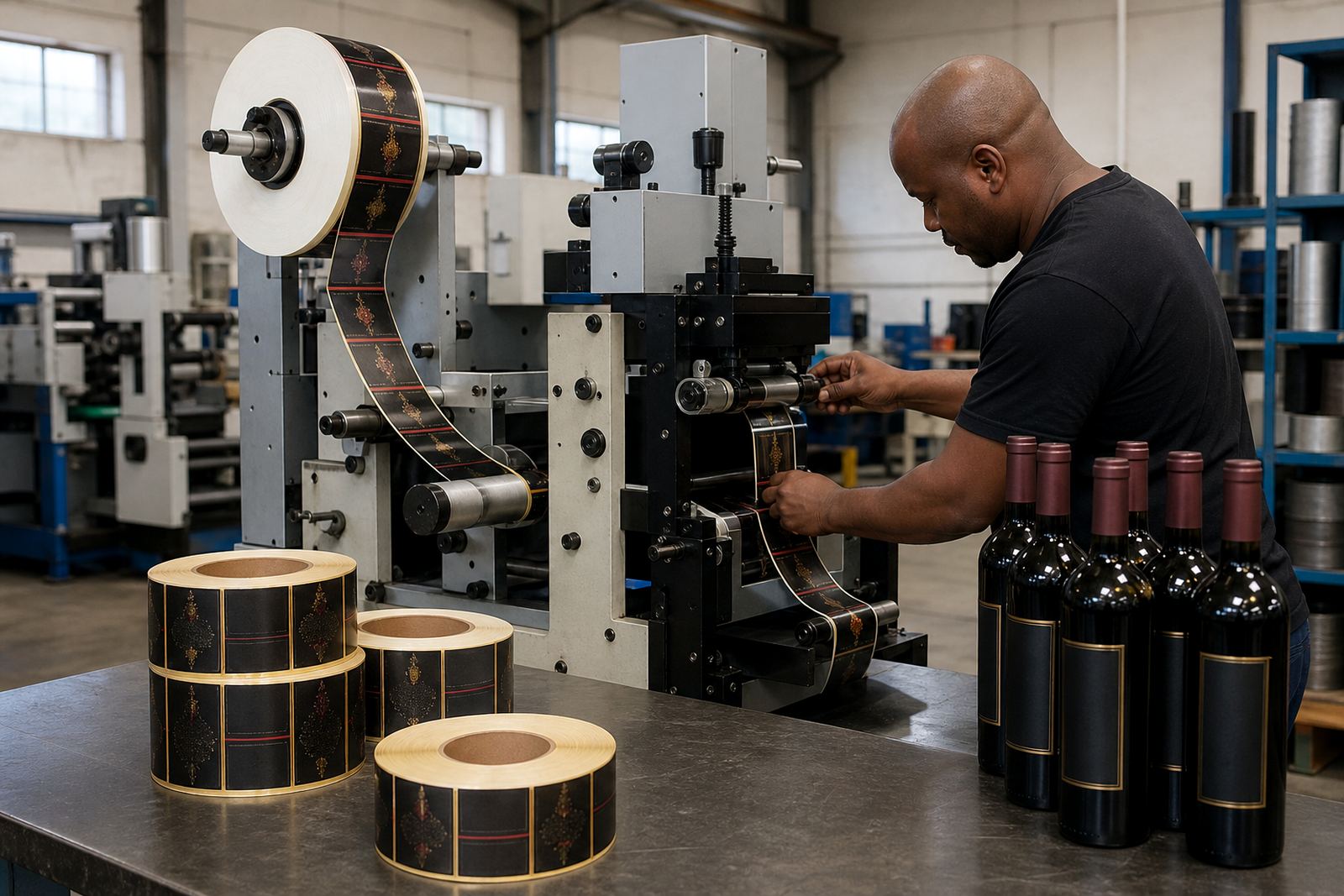
The brief came from a label converter in Montague Gardens, Cape Town that was running wine labels for a premium range. The client wanted a neat, consistent finish on a narrow-web flexo job, with better handling of decorative elements and a cleaner final presentation at press speed. The labels had to suit export and local retail packs, so the print needed to stay sharp and the finishing had to hold up in handling, transport and chill-room storage.
Because wine work is unforgiving, the brief was not only about colour and print quality. It also had to account for repeat consistency, registration control, drying behaviour and a finish that would not scuff too easily during packing. The converter asked for practical support rather than a full rework of their process.
What Made The Job Tricky
The client was working with a label stock that needed careful handling during setup and finishing. The labels included decorative elements that could show up every small issue, so even light variation in tension, impression or drying could affect the final look. The site also had normal Cape Town summer conditions to deal with, including humidity shifts and static during certain shifts.
Load-shedding was part of the planning too. The team needed a setup that could recover cleanly after short interruptions and still keep the job on track once power returned. We kept the approach practical and made sure the press crew had a clear restart routine, plus a simple way to check print and finish before full production resumed.
Our Support On Press And At Finishing
We supplied press installation guidance, commissioning support and finishing setup advice for the job. The aim was not to overcomplicate the process. We focused on the settings and handover steps that would give the operator repeatable results across the run, especially where decorative finishing and label presentation mattered most.
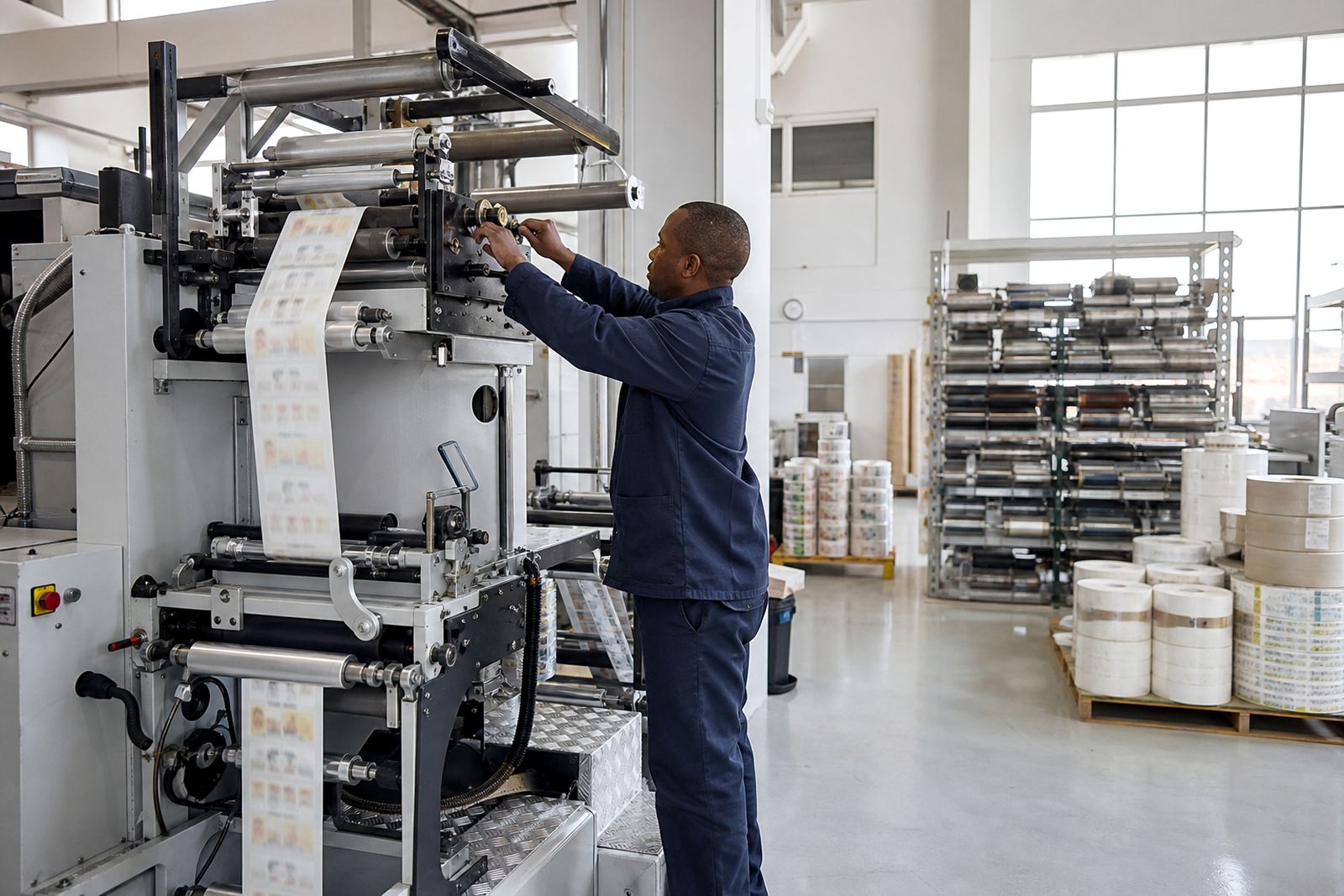
Our technical team worked with the converter on setup checks, plate mounting help and finishing alignment. We also reviewed the production sequence with the operators so they could keep the web stable and reduce waste during the first make-ready. The support was done in plain terms, with a strong focus on what the crew could do on their own after handover.
- Press setup guidance for narrow-web flexo label work
- Plate mounting help and registration checks
- Finishing setup for a cleaner decorative result
- Operator training for make-ready and restart steps
- Remote support for follow-up questions after commissioning
Six-Week Timeline And Handover
The project ran over six weeks from first discussion to production support. Week one covered the brief, site conditions and the finishing target. Weeks two and three focused on installation planning, setup checks and the practical commissioning work. Week four was used for operator training and production support on the first jobs, while weeks five and six were mainly follow-up, minor adjustments and remote support once the crew had settled in.
The handover was kept simple. We left the team with a clear workflow for setup, wash-up, finishing checks and restart after interruptions. That matters on wine labels, because if the crew has to guess, the job can drift very quickly. It was a practical process, with enough detail to help the operators but not so much that it slowed them down.
Result On The Wine Labels
The final labels came off with a cleaner printed appearance and a more controlled finish. Decorative details looked more consistent from the start of the run to the end, and the converter had a better method for keeping finishing aligned with the print. The team also reported fewer hold-ups during make-ready, which helped them get to acceptable production faster.
For a wine label, the result has to do more than look good on the press sheet. It has to leave the factory looking neat, survive packing and still present well when the bottle is in a cellar, retail pack or chilled display. That was the standard for this job, and the support was aimed at meeting it without unnecessary changes to the client’s existing operation.
- Cleaner decorative finish on the final labels
- More consistent setup between shifts
- Better control during make-ready and restart
- Less waste from avoidable press adjustments
What We Would Do Again
If we handled a similar wine converter job again, we would start with the finishing target and the pressroom conditions before anything else. That gives the team a proper baseline for tension, drying, plate mounting and restart planning. On coastal jobs, we would also keep a close eye on humidity and static from the first day, not after problems show up.
We would use the same direct approach with the operator team. Short training, clear checks, and practical follow-up work best when a converter needs reliable label output on a tight schedule. The main lesson from Montague Gardens is simple: when the setup is sound and the finishing is planned properly, the result is easier to repeat. No fuss, just better labels.
Key facts
| Project | Montague Gardens Wine Converter |
|---|---|
| Client type | Label converter in Montague Gardens, Cape Town |
| Work scope | Narrow-web flexo setup and decorative finishing guidance |
| Support period | 6 weeks |
| Output focus | Wine labels with a polished final look |
| Service areas | Cape Town, Johannesburg, Pretoria, Durban, Gqeberha and nationwide support |