
What the converter needed in Parow
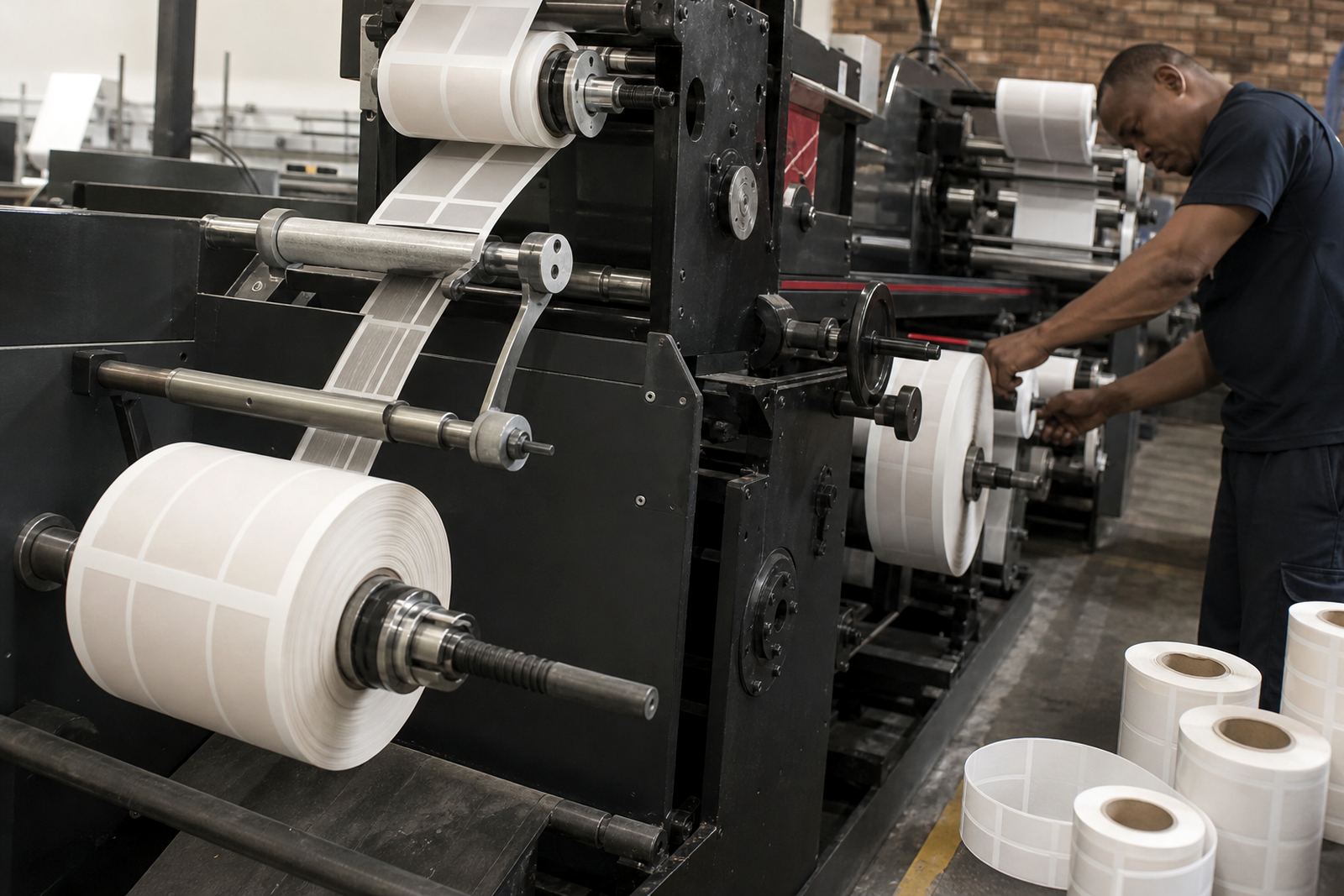
The client was a packaged food converter in Parow, Cape Town, producing labels for everyday food packs that needed clear type, steady registration and neat finishing. The brief was practical: get the press set up for label work, reduce start-up waste, and hand the line over to the local team in a way that made sense for shift work and changing production demands.
As with many food label jobs, the challenge was not only print quality but control. Labels had to run consistently across repeat orders, and the finishing side needed to stay square so die cutting, stripping and rewinding could all hold together without constant adjustments. The team also wanted support that could be repeated later, not a one-off fix.
- Client type: packaged food converter
- Town: Parow, Cape Town
- Project focus: press setup, finishing setup and team handover
- Application: narrow-web flexo label production
The brief and the site limits
The site had the usual Cape Town production pressures, tight floor space, fast turnarounds and the need to keep work moving even when power was uncertain. Load-shedding planning mattered, so the setup had to allow for practical stop-start conditions without losing the whole job every time production paused. The converter also wanted the line arranged so operators could work safely and find faults quickly.
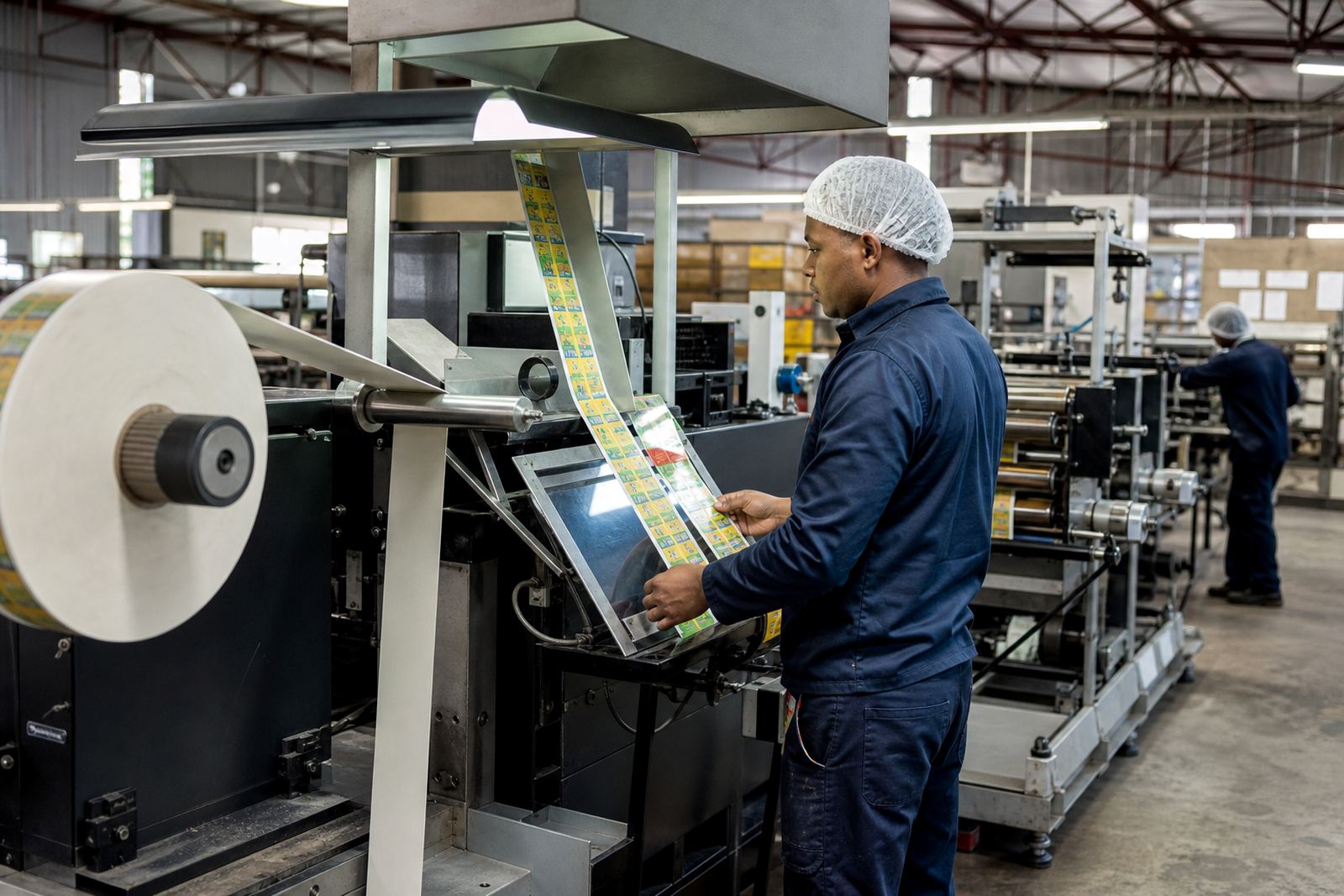
Because this was food packaging, the client asked for a controlled approach to setup and quality checks rather than a push to run flat out from day one. We kept the work focused on stable web handling, clean plate mounting, good impression balance and a finishing path that matched the label format. The goal was less rework and fewer calls for emergency help after the handover.
- Controlled startup to limit waste
- Operator friendly setup for shift work
- Allowance for power interruptions
- Repeatable process notes for future jobs
What we supplied and set up
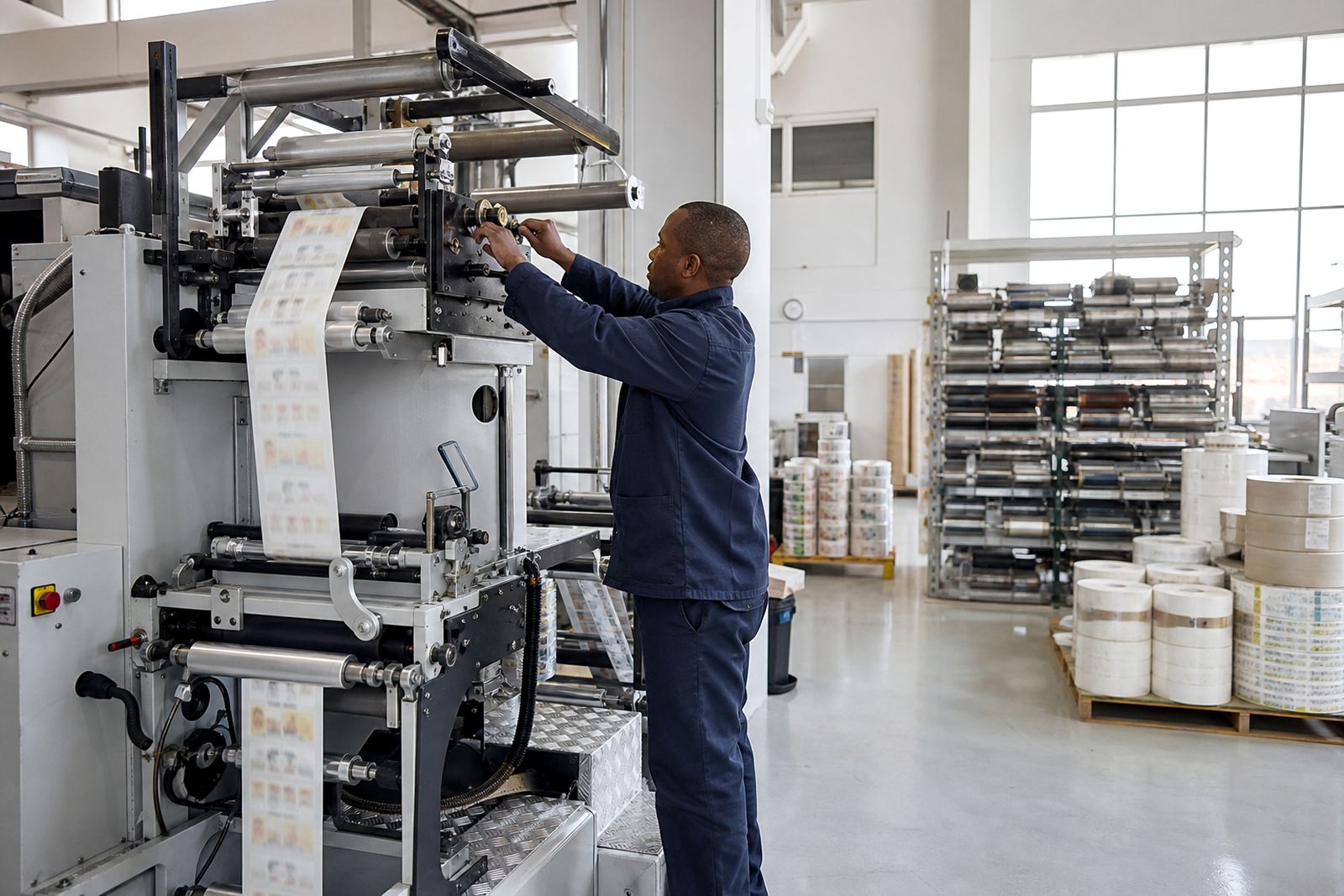
We supplied press installation support, commissioning assistance, operator training and startup production support. The work covered the practical side of a narrow-web flexo label press, from setting the press correctly to helping the team understand how to keep the same print result through the run. We also supported finishing setup so the labels could move through the line with less manual correction.
The setup work included plate mounting help, anilox care, registration checks and steady web control. We paid attention to print consistency, ink transfer and the way the press behaved during changeovers. On the finishing side, we worked through setup for die cutting, waste removal and rewind control so the output matched the converter's production flow.
- Press installation support and commissioning
- Plate mounting help and anilox care
- Finishing setup for die cutting and rewinding
- Startup production support during the first runs
Training the team for day-to-day production
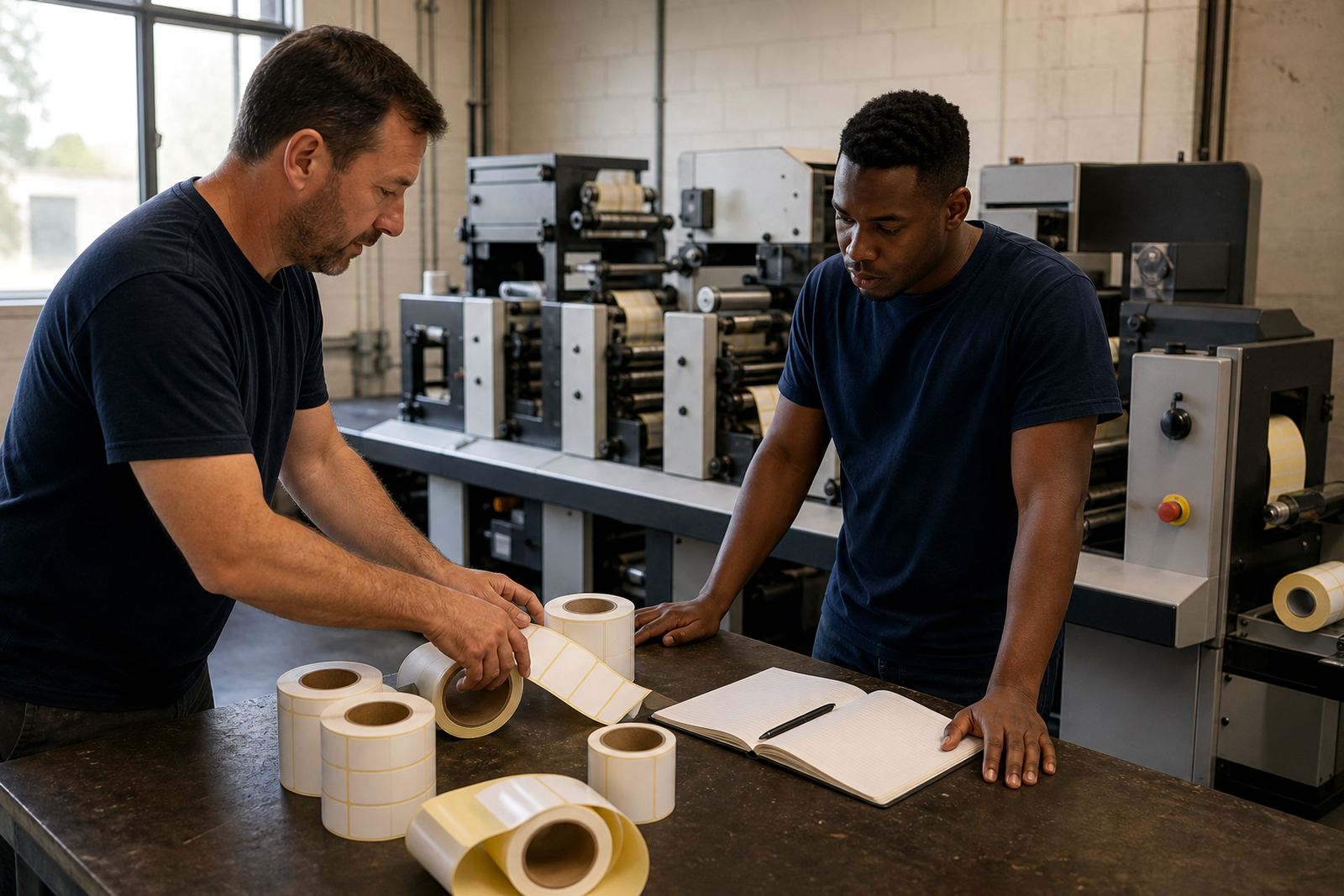
Once the machine was running properly, the handover moved to operator training. The team needed clear, direct instruction that matched the way a real shift works, not a classroom version that falls apart under pressure. We worked through setup checks, print quality checks, basic fault finding and the steps to follow when output starts drifting.
The training also covered what to do between jobs. That included cleaning practices, plate handling, anilox care, and simple checks that help prevent unnecessary downtime. For a food converter, these routines matter because a small error in setup can affect the whole batch, especially when labels are changing from one product line to another.
- Practical operator training on live production conditions
- Changeover routines for repeat label jobs
- Cleaning and care routines between runs
- Fault spotting before waste builds up
Timeline and support over the first weeks
The project ran over three weeks. The first week focused on installation checks and commissioning support. The second week dealt with startup production support, press tuning and finishing adjustments while the team began running production on their own. The third week was used for follow-up support, tighter process control and final handover so the operators could manage normal work with less outside input.
After handover, support remained available remotely and through service follow-up for breakdown support, preventive maintenance and spare parts guidance. That was useful for a Cape Town site that needed practical help without waiting too long for answers. We also made sure the team had a clear point of contact for future production questions.
- Week 1: installation checks and commissioning
- Week 2: startup production support and tuning
- Week 3: follow-up, handover and process control
- Ongoing: remote support and maintenance planning
What changed after handover
By the end of the project, the converter had a better controlled setup, cleaner finishing flow and a team that knew how to keep the press working through normal production changes. The main value was steadier output and less time spent correcting the same problems again and again. That matters in food packaging, where deadlines can be tight and repeat work needs to stay consistent.
If we were to do the job again, we would take the same approach: start with proper setup, keep the training tied to the actual line, and make sure finishing is treated as part of the whole process instead of an afterthought. That is how you get a handover that sticks. It also helps when the converter is working under local pressure from power interruptions and short lead times, because the team already knows what to watch for.
- More stable startup performance
- Less waste during changeovers
- Better confidence on the production floor
- Finishing matched to the print process
Key facts
| Project | Parow Food Converter |
|---|---|
| Industry | Packaged food labels and packaging |
| Location | Parow, Cape Town |
| Equipment | Narrow-web flexo label press |
| Timeline | 3 weeks |
| Scope | Press installation, commissioning, training, finishing setup and startup support |