Why anilox care matters on narrow-web label presses
Anilox rollers control how much ink reaches the plate, which means they sit at the centre of print quality on narrow-web flexo label presses. When the cells are clean and the surface is in good condition, colour holds steady, fine text prints more cleanly and the press runs with fewer surprises.
On South African lines, the pressure on anilox rollers is often practical rather than dramatic. Dust from converting rooms, changes in humidity along the coast, and stop-start production during load-shedding can all affect how quickly ink dries in the cells. If an operator leaves a roller with dried ink, the next job can start with uneven ink transfer before anyone notices what changed.
The main point is simple: anilox care is not only about cleaning after a run. It is also about storage, inspection, safe handling and recording what the roller has been through. A good routine protects the roller and helps the whole printing line stay predictable.
Cleaning after each run without damaging the surface
The best time to clean anilox is immediately after printing, before ink has time to harden in the cells. Use the cleaning method that suits the ink system and follow the press maker or supplier guidance. The aim is to remove ink fully without scratching the surface or forcing residue deeper into the cells.
Hard scrapers, rough cloths and aggressive pressure can do more harm than the ink left behind. The ceramic or engraved surface can be damaged by careless handling, and once that happens the roller may never metre evenly again. In a converter in Kempton Park, that often shows up first on light solids and fine reverse text, where small changes in ink volume are easy to spot.
- Clean soon after the press stops, not at the end of the shift.
- Use approved cleaning tools and soft wiping materials.
- Rinse away loosened ink before it dries back on the roller.
- Check both ends of the roller, not only the centre section.
Inspecting for wear, blockage and damage
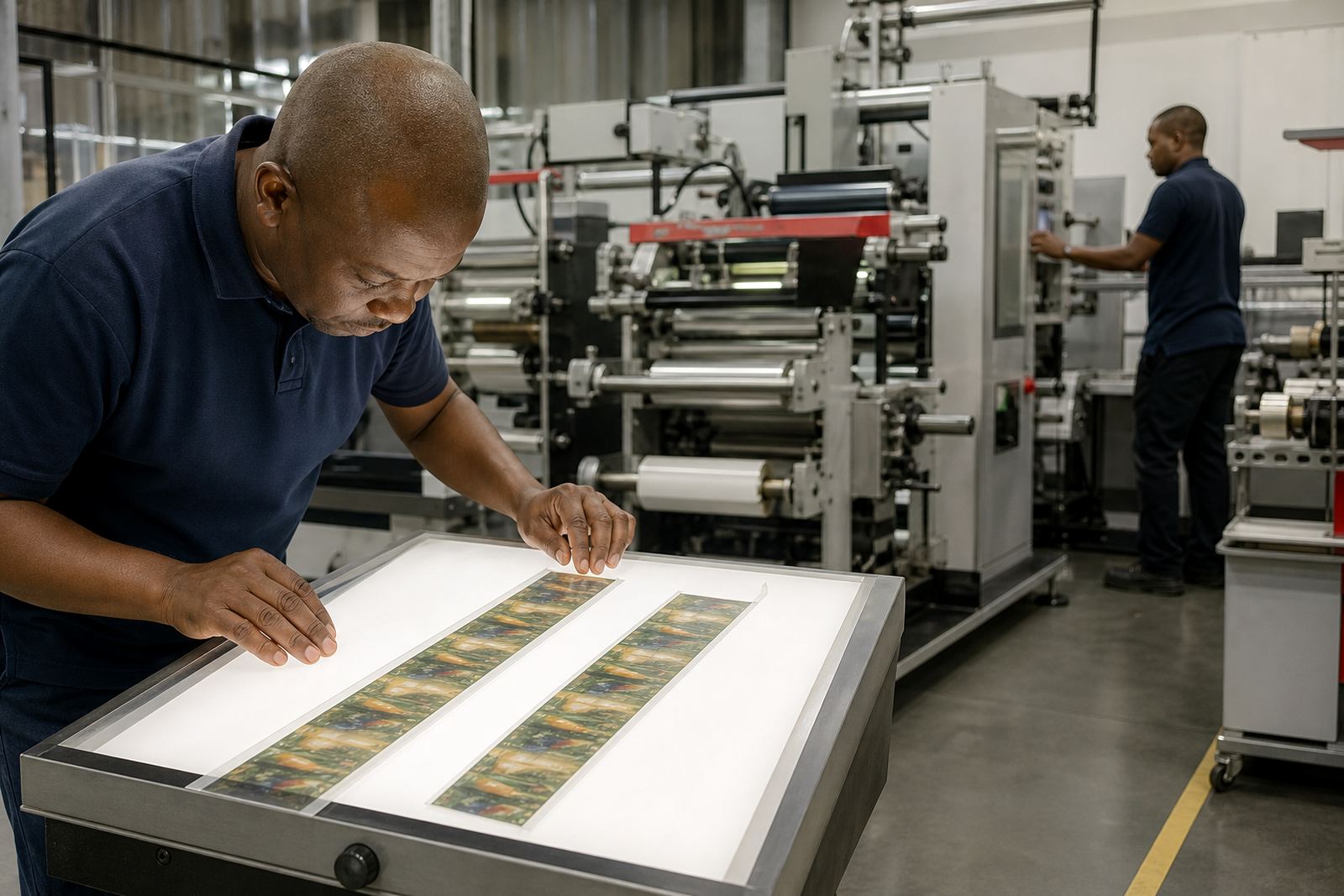
A quick inspection can prevent a small issue from becoming a costly one. Look for blocked cells, scoring, chipped end edges, uneven wear and any sign that the roller is not transferring ink evenly across the web. If the print starts showing banding, pale areas or a patchy solid, the roller should be checked before the job carries on for too long.
Inspection is also about consistency. If the same roller has been moved between different jobs, it helps to note what inks were used and how it was cleaned. Water based and solvent based systems leave different residue, and a roller that looks clean may still have trapped material in the cells. This is one of the reasons converters in Johannesburg and Pretoria often build anilox checks into their planned maintenance instead of leaving it until a fault appears.
- Check for blocked cells under a magnifier or microscope if available.
- Look for banding across the web width during print start-up.
- Record any knocks, scratches or drops immediately.
- Do not ignore one damaged zone, it usually gets worse under load.
Safe handling and storage between jobs
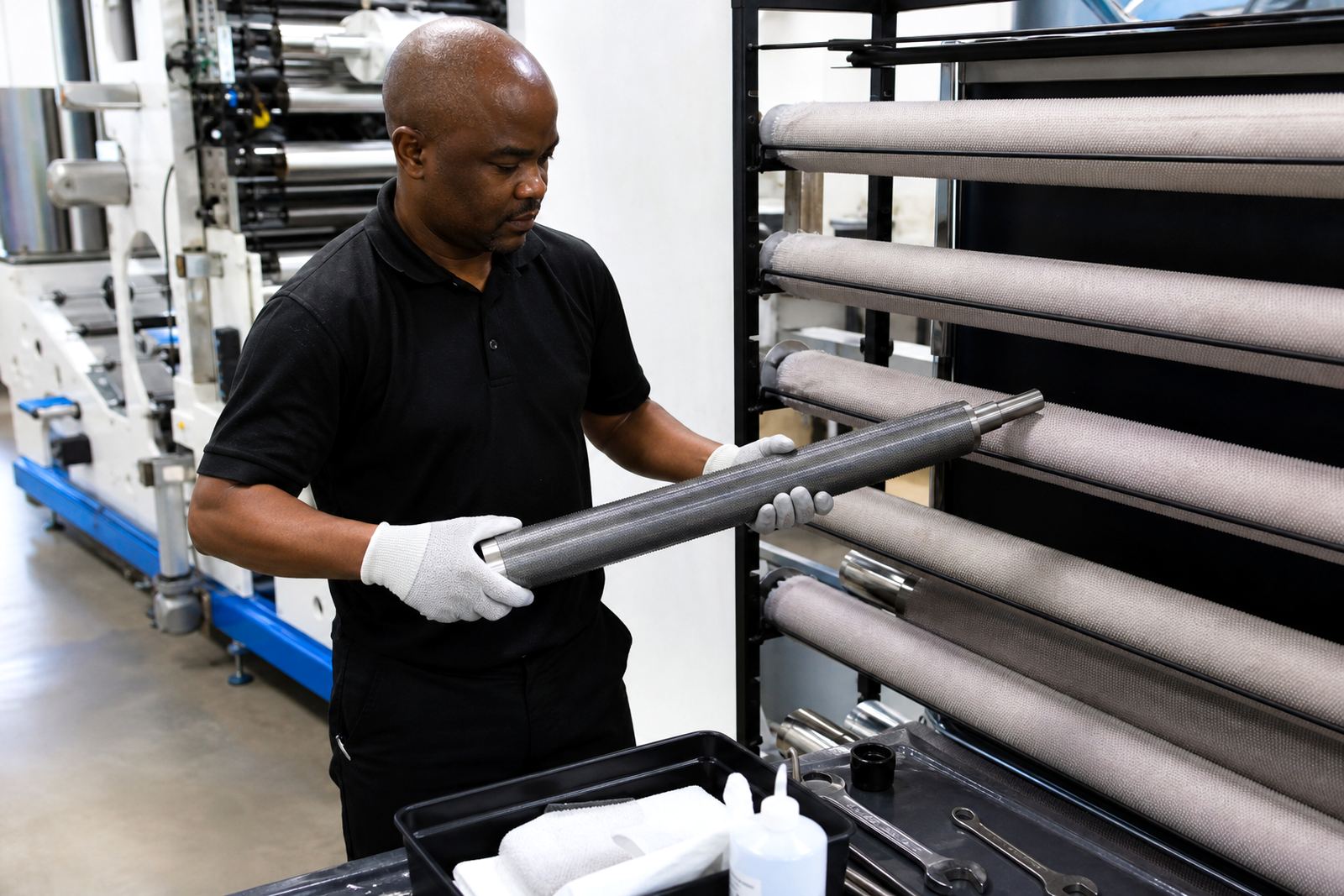
Anilox rollers are easier to damage on a trolley than in a press. Lift and move them carefully, keep them protected from impact, and avoid placing them where they can roll or knock against steel edges. A small chip on the surface can alter ink transfer enough to affect labels across the whole run.
Storage matters just as much as cleaning. Keep rollers in a dry, clean space away from direct dust and heavy vibration. In coastal towns like Durban, moisture can sit on stored equipment for longer, so it pays to make sure the roller is fully dry before storage. In dry inland areas, dust build-up is the bigger problem and open storage near slitting or finishing work is never a good idea.
- Store rollers on proper cradles or supports, not on bare floors.
- Keep them covered and labelled for quick identification.
- Make sure they are dry before putting them away.
- Separate damaged rollers from serviceable ones.
Matching care routines to ink, plates and finishing setup
Anilox care does not happen on its own. It links to plate mounting, ink choice and finishing setup. If the roller volume is not suited to the job, the press operator may try to fix it with speed changes or extra pressure, which can create more trouble than it solves. Good care means checking the roller as part of the full setup, not as a separate task.
For label converters, this is especially important on jobs that move from fine typography to heavier solids, or from plain labels into work that needs varnish or overprint effects. The roller has to be clean enough and in the right condition for the job in front of it. If there is a changeover between food labels, cosmetics and retail work, careful record keeping helps the team return to the right setup without guesswork.
Startup production support should include a basic anilox check before the first sheets or metres are approved. That simple step can save time, reduce waste and keep the finishing line moving without unnecessary reprints.
A practical maintenance rhythm for South African converters
A sound routine is easier to keep than a complicated one. Most shops do better with short daily checks, a proper clean after each run, and a planned deeper inspection at set intervals. During periods of load-shedding or irregular production, the risk is that rollers sit longer than planned with residue on them. That is when care slips and the next job pays for it.
For a converter in Spartan or on the East Rand, the routine might be as simple as assigning one operator to sign off the roller after cleaning, then having the technical team review wear during preventive maintenance visits. In busy months, that small discipline helps protect production and avoids the scramble of breakdown support for something that could have been caught earlier.
- After each job: clean, dry and store correctly.
- Each shift: inspect for build-up, damage and uneven transfer.
- Monthly or planned maintenance: review wear, cleaning practice and storage conditions.
- After unusual stoppages: recheck the roller before restarting production.
What to do when print quality starts to drift
If a roller is starting to lose performance, act early. First confirm that the issue is not coming from the ink, plate mounting or press settings. Then inspect the roller for blocked cells, wear or contamination. If cleaning does not restore the surface, the roller may need more detailed assessment through your support team or the supplier that handles anilox care and spare parts support.
It is worth treating the symptoms seriously. Faded solids, streaks, poor ink laydown and uneven colour are often the first signs that the roller needs attention. Waiting until the print becomes unusable usually means more waste, more downtime and more pressure on operators already trying to keep the line moving.
A clean and well handled anilox roller is one of the simplest ways to protect label quality. It does not need fancy treatment, just consistent habits and a team that knows what to look for.