Why rewind checks matter before the rolls leave the press
On a narrow-web flexo job, the rewind stage is not just about building a neat roll. It is where operators can spot print faults, tension problems, splice issues and finishing mistakes before the work is packed and sent out. If a problem is left until dispatch, the result is usually rework, extra waste and a difficult conversation with the client.
In South Africa, many converters are working with tight lead times, load-shedding interruptions and mixed substrate stocks. That makes rewind checks even more important. A roll can look fine from a distance but still have edge damage, loose winding or missing copy that only shows up when the roll is inspected carefully.
The point is simple: rewind quality checks help protect the print room, the finishing team and the customer. They are a practical control point, not an optional extra.
What to look for while the roll is winding
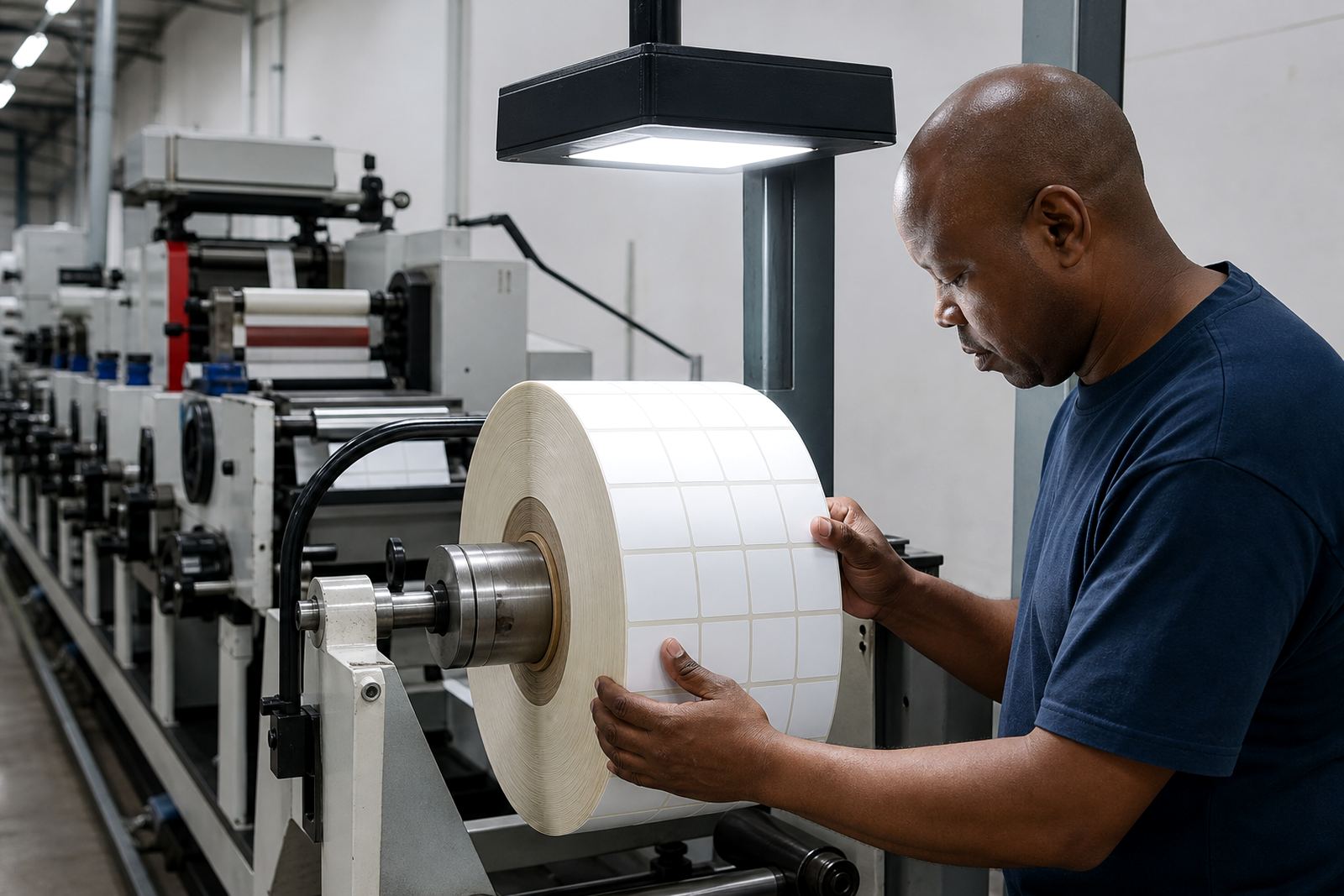
The operator should keep an eye on the roll as it builds, not only at the end. Small changes in tension or alignment can show up as telescoping, wrinkling or uneven winding. Once a roll starts building badly, it can be hard to recover it cleanly.
Good practice is to check the roll visually and by touch where safe to do so. Look for these common signs:
- Uneven roll edges or cone-shaped winding
- Loose sections that move when the roll is handled
- Wrinkles, edge lift or bagginess in the web
- Missing labels, repeats or damaged sections
- Splice marks that are too close to the rewind end
Operators should also listen for changes in sound. A steady rewind usually sounds consistent. A sudden change can point to tension drift, a web path issue or a mechanical setting that needs attention.
How to catch print and finishing faults at rewind
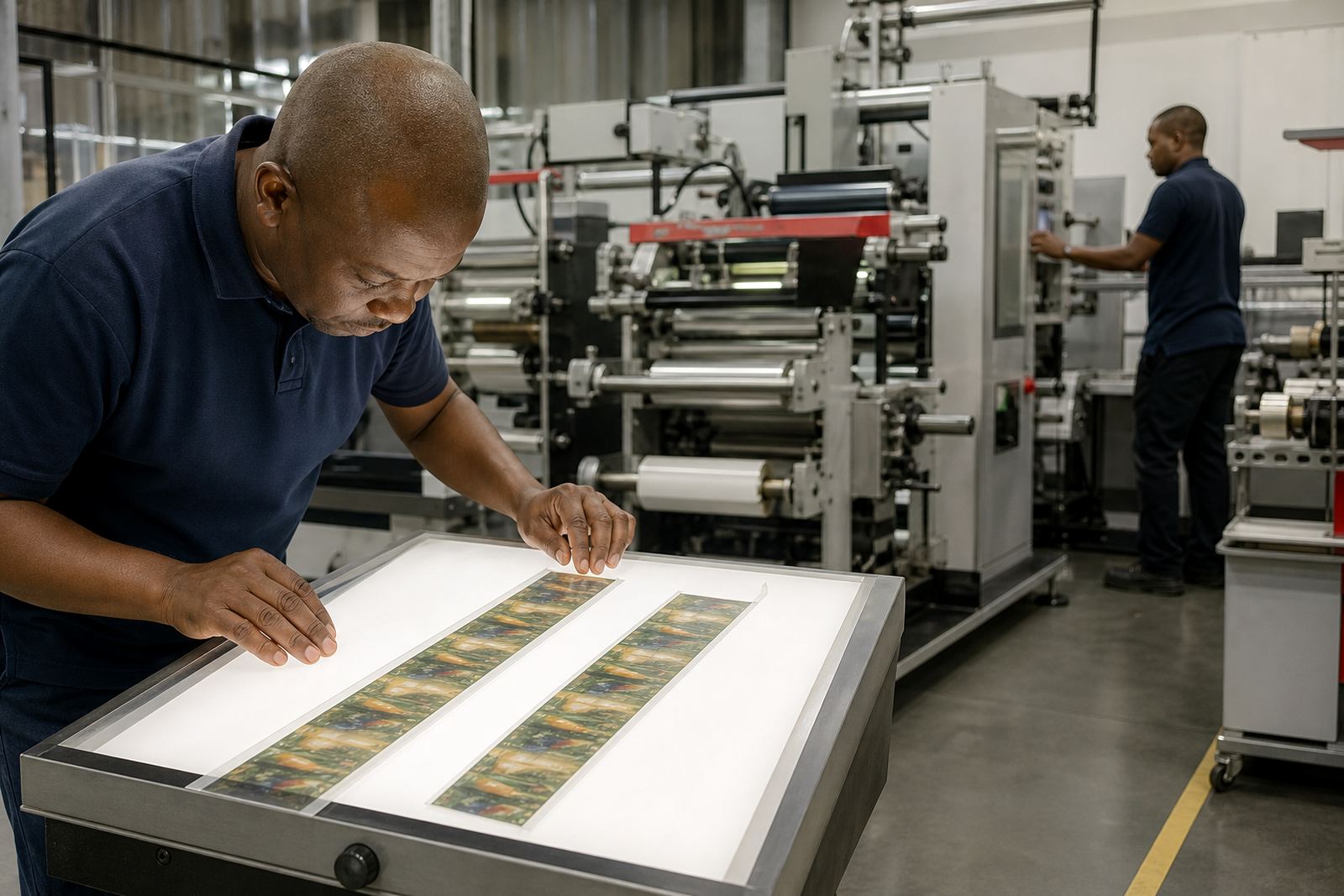
Rewind is the right time to check that the printed image is still true across the full roll. On short test runs, problems are often obvious. On long production runs, faults can hide in the middle of the job where the operator is least likely to notice them during printing.
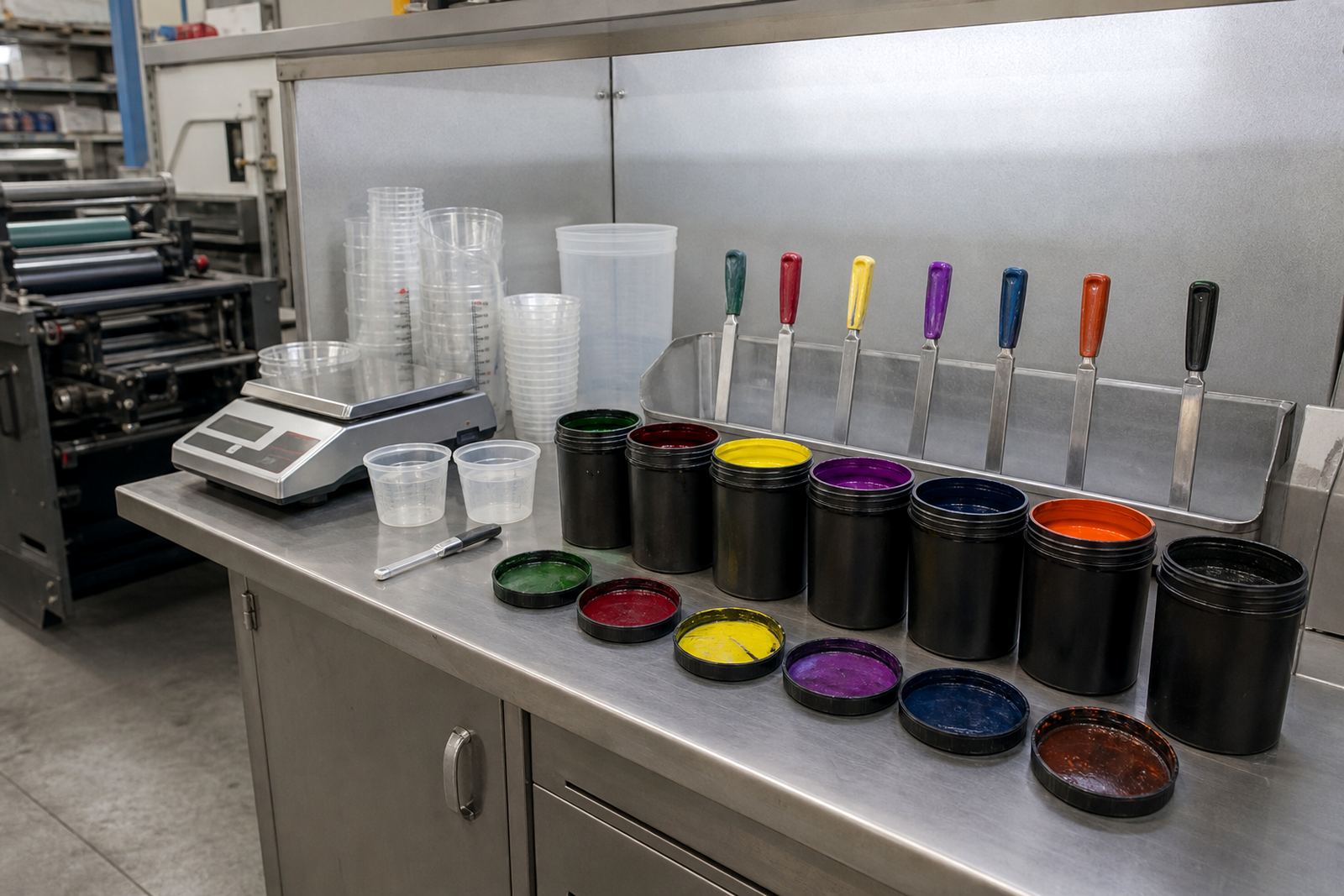
Use the rewind stage to inspect for colour variation, misregister, dirty print, weak text, die-cut issues and any finishing faults that affect the final use of the label. If the roll includes varnish, foil, lamination or other finishing steps, these need their own checks as well.
A practical method is to open the roll enough to inspect the core, the middle and the outer layers. Do not only inspect the first metre or the last metre. Problems often sit in the sections that were produced after a pause, a tension adjustment or a roll change.
- Check the core for crush or slipped layers
- Inspect the middle for print drift and surface marks
- Review the outer layers for handling damage and crush lines
- Confirm the roll length matches the job ticket
A simple rewind checklist for the pressroom
A clear checklist helps different shifts work the same way. It also reduces missed checks when the team is under pressure. The best list is short enough to use every time, but specific enough to stop common mistakes from going out the door.
For many label converters, a practical rewind check can be built around five steps: appearance, tension, size, count and identification. Each step should be signed off before the roll moves to packing.
- Appearance: confirm the roll is neat, clean and free from visible damage
- Tension: confirm the winding feels even and the roll is stable
- Size: check roll width and outside diameter against the job requirement
- Count: verify quantities, repeats and any stop-start sections
- Identification: confirm the correct job code, substrate and batch details
It also helps to include a note if any non-standard action was taken, such as trimming an edge, removing a damaged section or adjusting tension mid-run. That record matters later if a customer query comes in.
Local conditions that affect rewind quality in South Africa
Rewind checks are even more useful when the work is sensitive to local conditions. In Gauteng, dry air and dust can affect static and handling. At the coast, humidity can change how a web behaves, especially on lighter stocks and self-adhesive materials. In both cases, a roll that looks acceptable on the machine can shift once it is moved, stored or shipped.
That is why many converters in Kempton Park, Johannesburg and Pretoria keep a close eye on finished rolls before dispatch. A packer may be the first person to notice a loose outer wrap or a damaged edge. By then the pressroom should already have done the main check, so the problem can be corrected before loading.
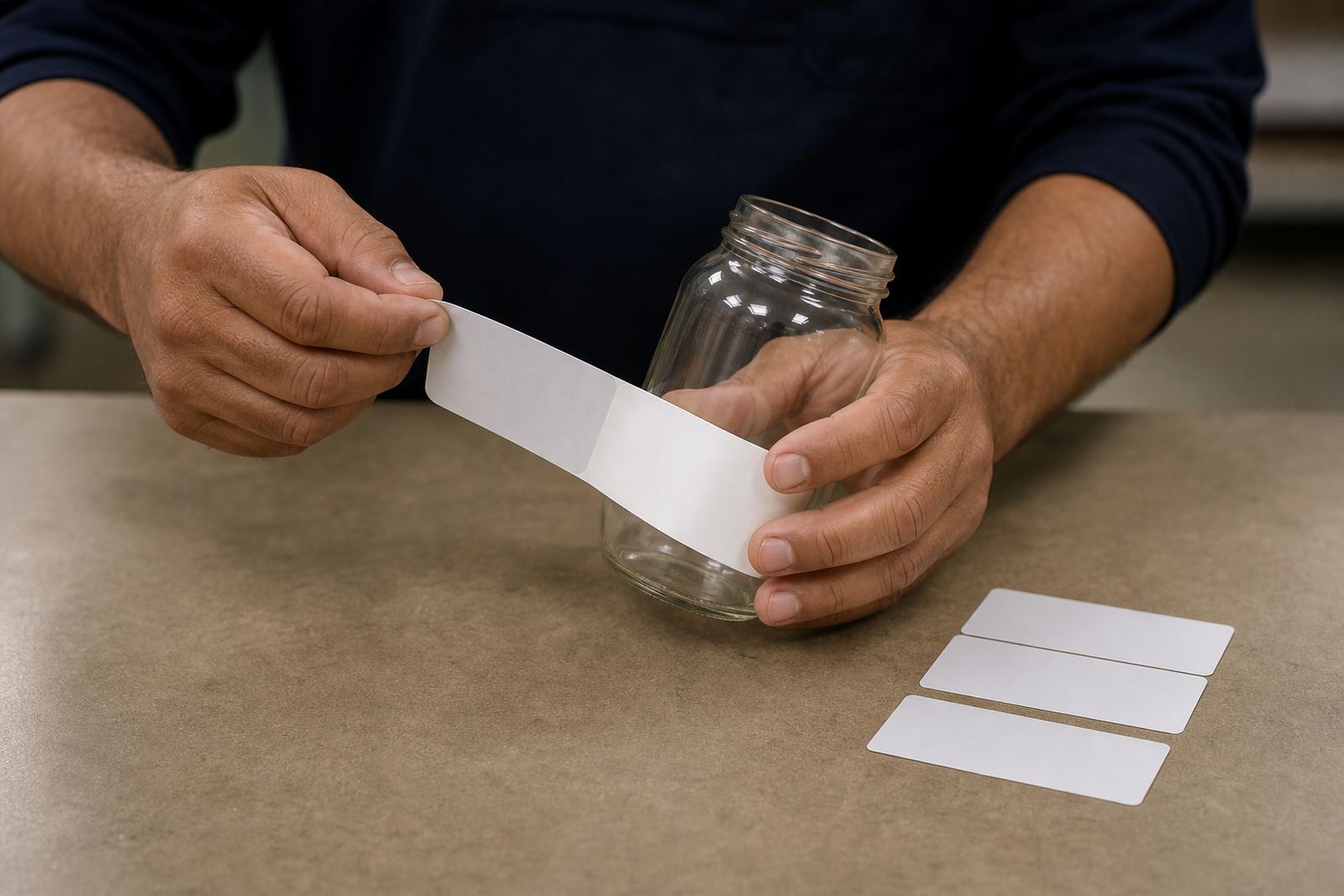
For businesses supplying food, cosmetics and retail labels, consistency matters. These customers often expect clean edges, accurate repeat lengths and rolls that run properly on their own applicators. A tidy rewind is not only about looks, it also affects how well the label performs in the field.
Support from setup through to final rewind
Rewind quality starts earlier than the rewind station itself. Press setup, web path alignment, plate mounting, finishing setup and operator training all influence the final result. If the job is set up well, rewind checks become a confirmation step instead of a rescue job.
Flexography Printer works with label converters across South Africa from our base in Spartan, Kempton Park, with support for Johannesburg, Pretoria, Durban, Cape Town, Gqeberha and surrounding areas. Our team assists with press installation, commissioning, startup production support, preventive maintenance, breakdown support, remote support, spare parts support, anilox care, plate mounting help, finishing setup and production consulting.
For rewind work, the aim is straightforward: help the team identify faults early, keep the job moving and make sure the rolls sent out are fit for use. That means practical guidance, clear checks and support that fits the realities of South African production, including load-shedding and busy shift patterns.
When operators know what to look for, rewind becomes a control point that protects quality without slowing the line down.