What a booklet label does on pack
A booklet label is a multi-page label built to fit onto a container or pack while still opening like a small leaflet. It is often used when a product needs more wording than a standard face label can hold, such as directions, ingredients, warnings, multilingual copy or batch details. In food, cosmetics and household products, this format helps keep the front panel clean while moving the extra text into a compact insert.
For converters, the first consideration is how the booklet will sit on the pack. The label must open properly, stay flat when closed, and still allow the customer to peel it without tearing the face stock or lifting the adhesive. On narrow-web flexo presses, that means planning the panel count, fold direction, glue positions and release points before the job reaches pressroom setup.
Substrate choice and adhesive behaviour
The base material matters because the booklet must handle folding, handling and application without curling or cracking. Some jobs suit paper face stock, while others call for a film construction where moisture resistance or a cleaner finish is needed. In coastal areas like Durban or Gqeberha, humidity can affect layflat and glue behaviour, so converters need to check how the stock behaves in the prevailing room conditions.
Adhesive selection is just as important. The label must bond well to glass, plastic or coated cartons, but not grab too early during application. If the adhesive is too aggressive the booklet can wrinkle on the applicator. If it is too light, corners may lift after filling or cold-room storage. A good setup team checks release, bond and tack before full production starts.
- Match the substrate to the pack surface, not only the artwork.
- Check humidity and temperature in the pressroom before the run.
- Confirm the adhesive suits manual or automatic application.
- Test the label on the actual bottle, tub or carton, not a sample sheet only.
Press setup for clean folds and consistent glue
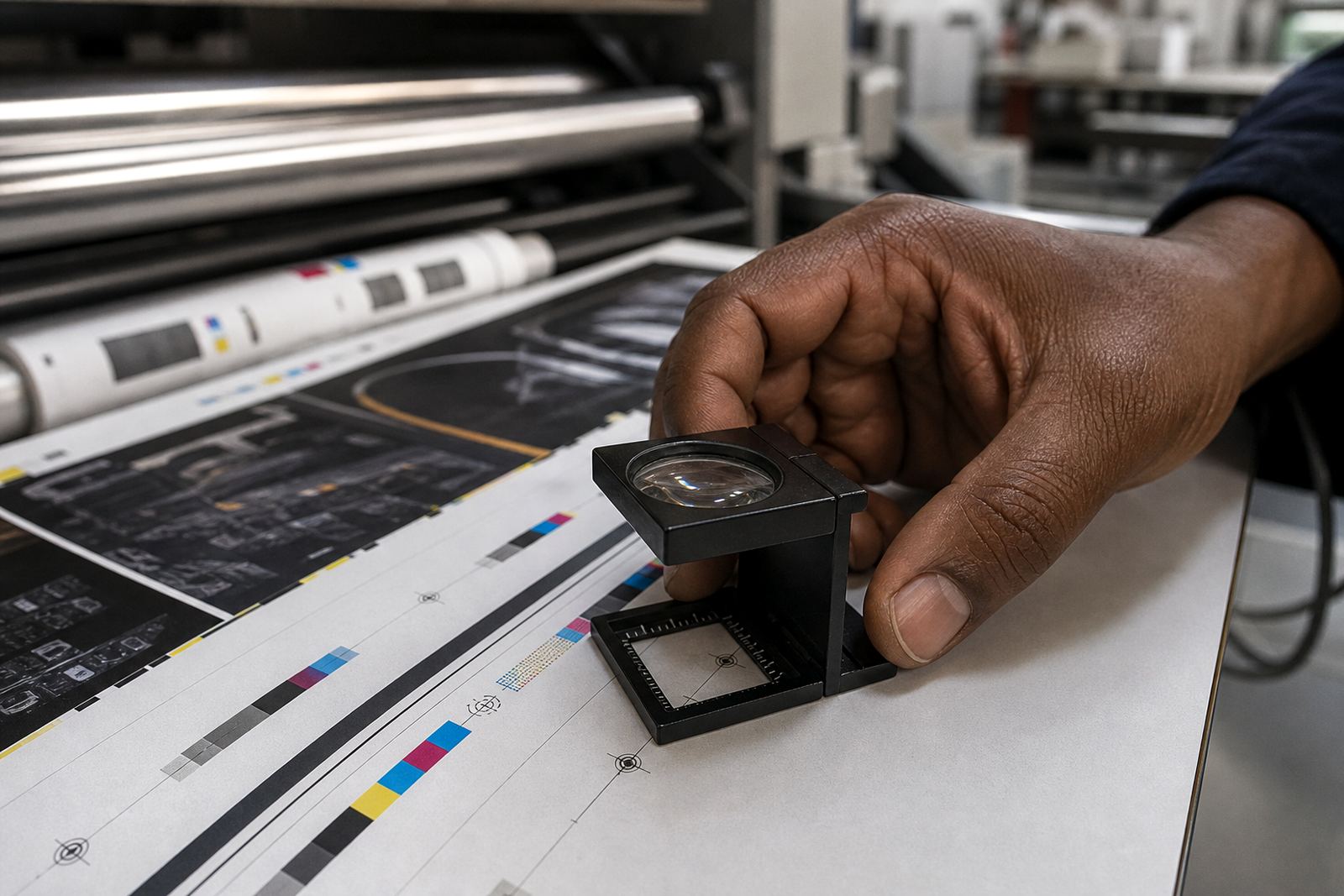
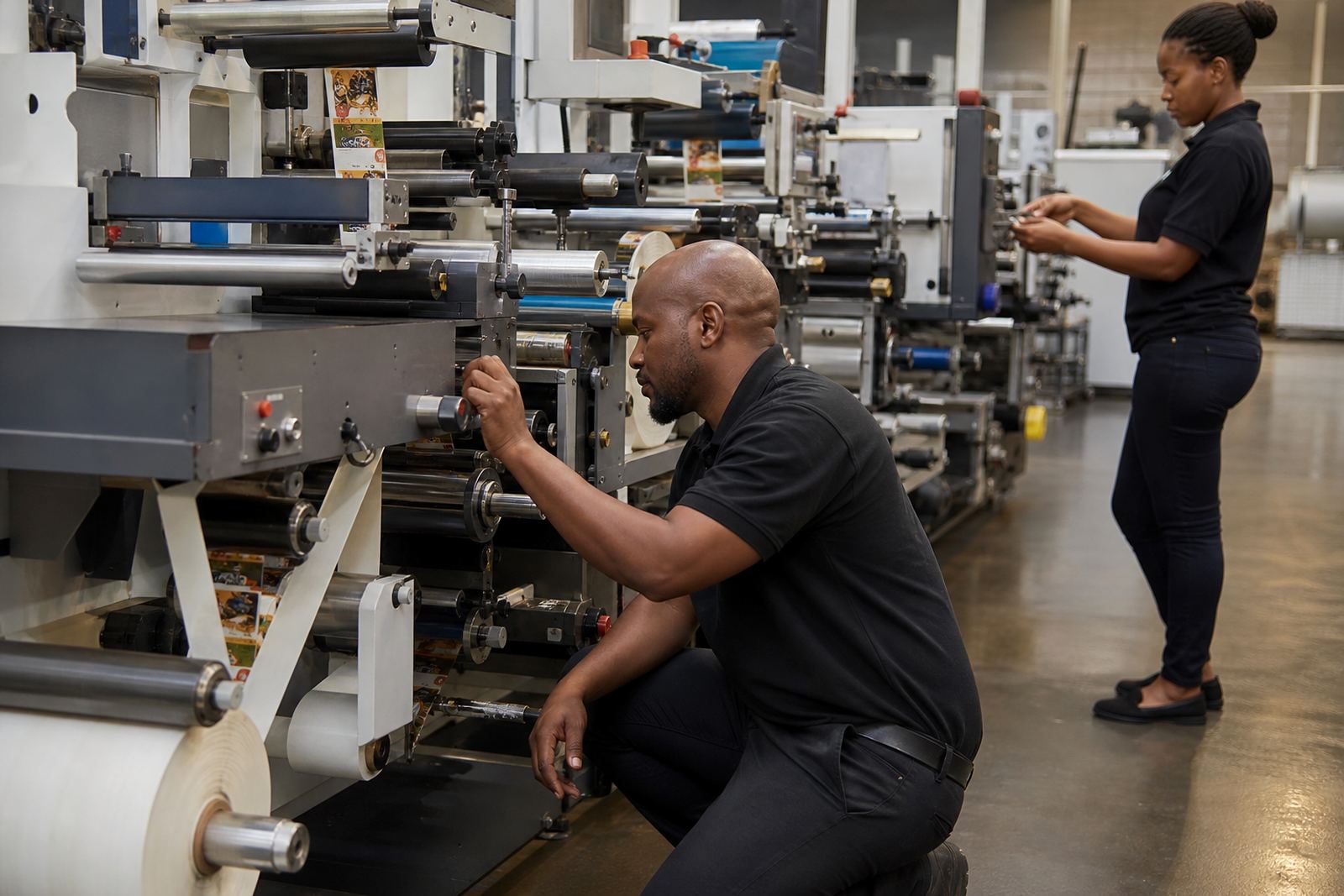
Booklet labels need careful press setup because several processes must line up at once. Registration has to stay stable across the face panel, glued flap and folded sections. If the print drifts even slightly, the panel edges can land out of place and the booklet will not close neatly. On narrow-web flexo presses, this is where operator experience makes a real difference.
The glue station also needs attention. Too much adhesive can seep into the page area and stop the booklet from opening. Too little can allow the booklet to split at the fold. Good setup means checking glue width, placement and drying or curing behaviour before the job runs at speed. In Kempton Park, where many converters work with tight dispatch schedules, a short setup delay is often better than a full rework later.
- Set registration marks for all critical pages and folds.
- Keep glue placement within the agreed safe zone.
- Run short samples first and inspect each fold.
- Watch for web tension changes that can affect panel position.
Finishing that supports the final user experience
Finishing is what turns the printed pieces into a booklet label that opens easily and survives normal use. Depending on the format, the converter may need varnishing, lamination, slitting, die-cutting, perforation or cold glue application. Each step has a practical purpose. A clean slit helps the user open the booklet. A controlled perforation can make the first lift easier without compromising the seal.
For South African brands selling into retail, the booklet must look neat on shelf and still be simple for the consumer to use at home or in store. If the finish is too stiff, the booklet may not open well. If it is too loose, pages can catch during packing. The best finishing setup is the one that suits the pack line, the carton size and the way the label will be handled after application.
Converters should also consider whether the booklet needs overprint space for batch coding or variable data. That affects where the printer leaves clearance and how the finishing station handles the final roll. Clear planning at this stage saves time during production and pack-off.
Quality checks before the job leaves the line
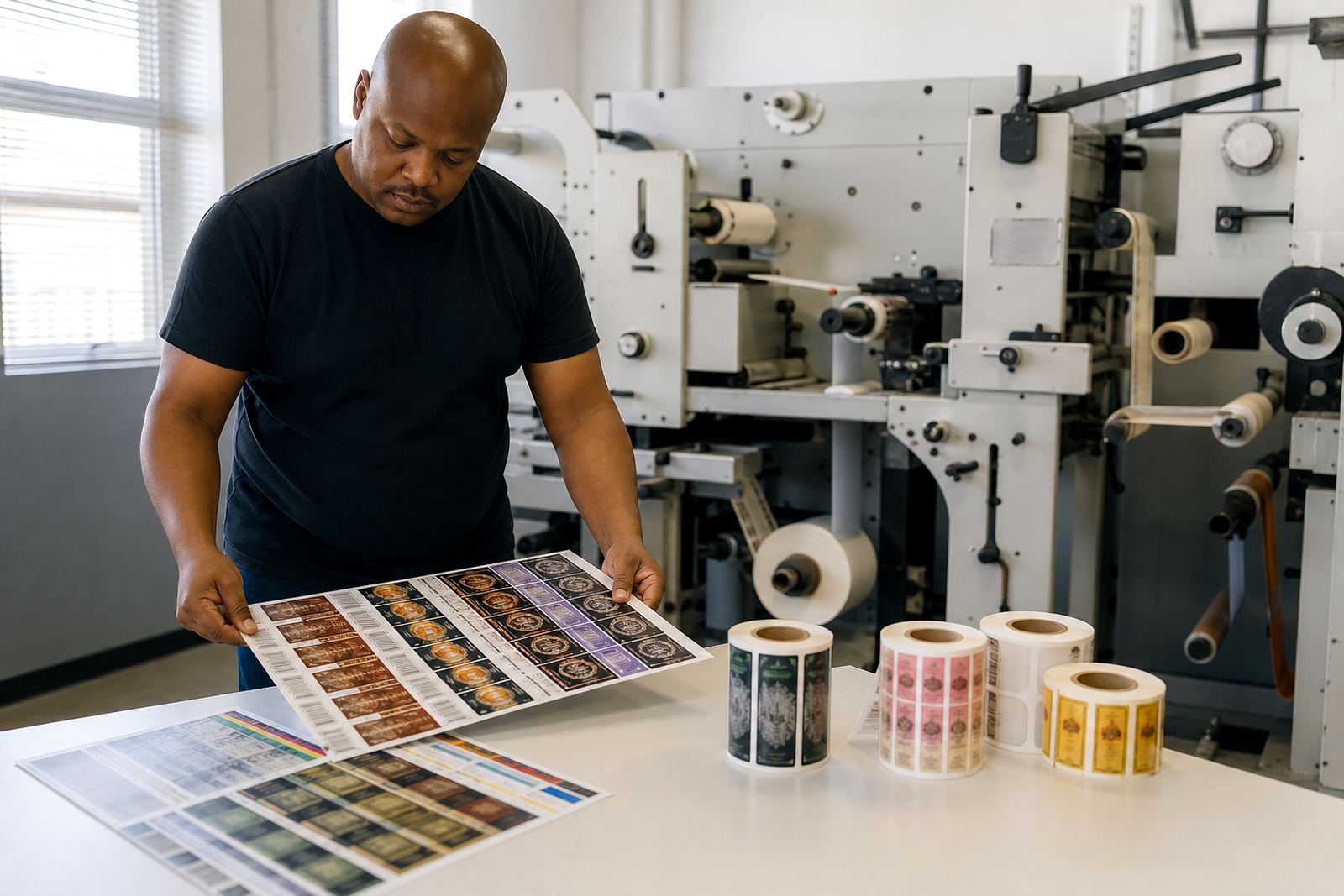
Booklet labels can look correct on the roll and still fail once they reach the filler or packer. That is why sample checks should include opening force, fold alignment, glue hold and panel order. The artwork must remain legible after folding, and the barcode or code area, where relevant, should stay clear of glue and creases.
A practical quality check should also confirm that the booklet can be opened without tearing the outer panel. If the label is going onto bottles, tubs or cartons with curved surfaces, the converter should test it on the real pack shape. Small differences in diameter or panel contour can change the way the booklet sits once applied.
- Check every fold for clean movement and correct panel order.
- Inspect for adhesive bleed, curl or trapped air.
- Confirm the finished roll winds evenly for applicator use.
- Review the label on the actual final pack before release.
A local example from the East Rand
A converter in the East Rand preparing a booklet label for a household chemical line may need to fit safety wording, use instructions and precautionary statements into a compact format. The pack could be moving through an automatic applicator at speed, with the added challenge of warm warehouse conditions and occasional load-shedding affecting shift planning. In that setting, the priority is not only print quality but stable production over the full run.
The job would typically start with clear panel mapping, followed by press setup that keeps the glued area away from the main text. After that, the finishing team would test opening force and pack adhesion on the actual container. If the customer wants the label to sit neatly on a white bottle or a tinted carton, the converter may also need to adjust opacity or varnish choice so the artwork remains easy to read. A well handled booklet label can save space, reduce package clutter and keep the product compliant.
When to bring in support during a booklet label run
Booklet labels can be unforgiving when the setup is rushed. If the folds are wandering, the glue is inconsistent or the press is struggling to keep registration, it is worth bringing in technical support before the waste starts building up. For converters in Johannesburg, Pretoria, Durban, Cape Town and Gqeberha, remote checks and on-site assistance can help get the line back into a usable state without losing a full shift.
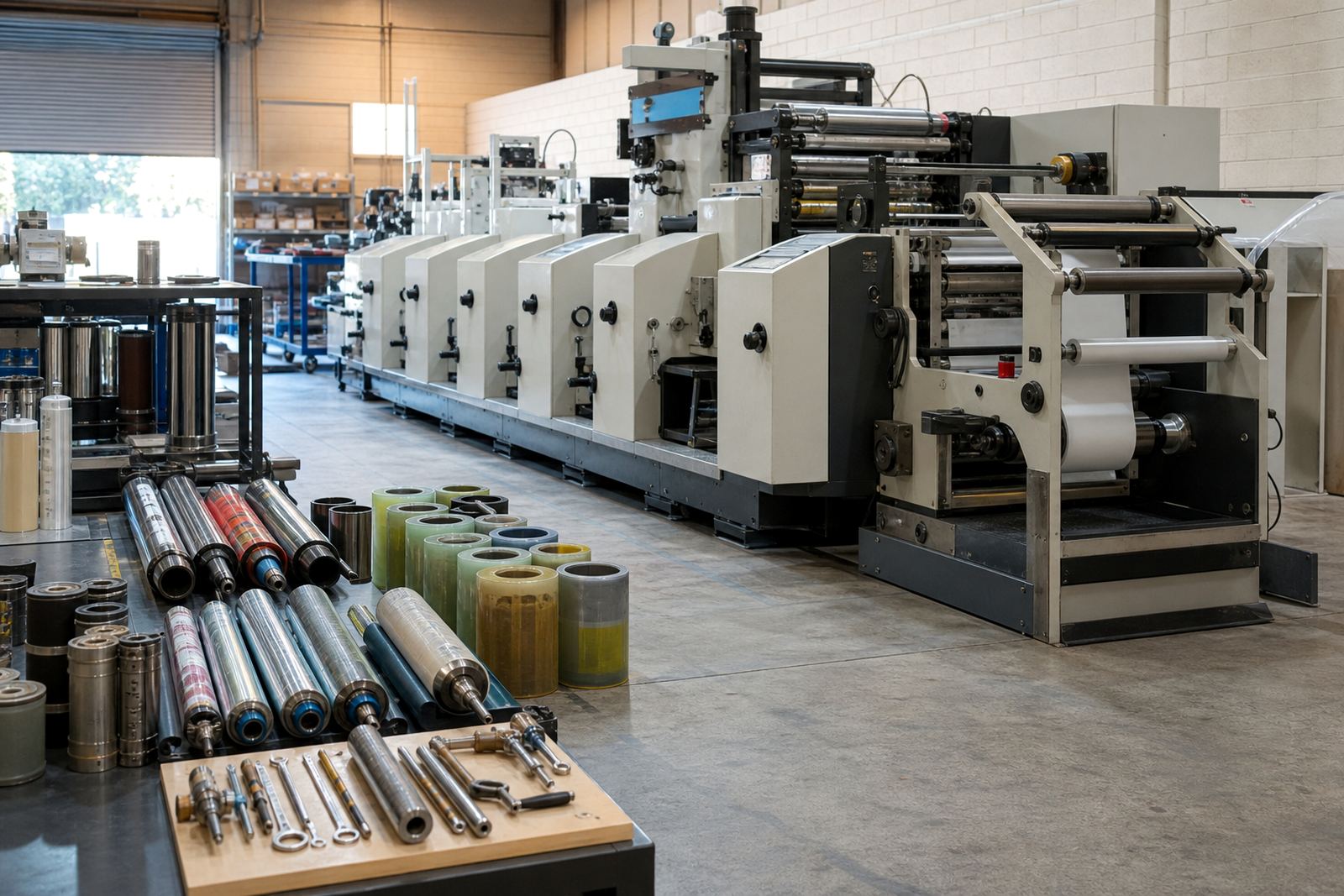
Support is often most useful during press installation, commissioning, operator training, startup production support and preventive maintenance. For recurring booklet work, it also helps to review anilox condition, plate mounting and finishing setup together, because the final result depends on more than one machine setting. A booklet label is small, but the number of steps behind it is not. Get those steps right and the label holds together from pressroom to pack line.