Why registration matters on every label run
Registration is the match-up of each printing unit, so every colour lands in the right place and every cut line sits where the converter expects it. When registration is right, fine text stays readable, solid areas look even and the label trims cleanly after finishing.
For South African label converters, this is not just a print quality issue. It affects waste, changeover time and how much rework lands back on the floor. On small and medium runs, a slight drift can mean spoiled material, extra make-ready and pressure on delivery dates.
In narrow-web flexo, registration is influenced by the press condition, substrate, plates, web handling and the way the operator sets the job. If one part moves out of line, the rest of the run shows it quickly.
What usually throws registration off
Most registration problems come from a handful of causes that are easy to miss during a busy shift. Some are mechanical, some are material related and some are simply setup issues that build up over the first few minutes of production.
- Plate mounting that is slightly uneven or not consistent across units.
- Web tension that changes between start-up and full speed.
- Substrate stretch, curl or slip, especially on lighter films and papers.
- Anilox, ink or impression settings that are not matched to the job.
- Dirty sensors, worn parts or poor tracking on the web path.
- Finishing stations that are out of sync with print marks or cut marks.
Coastal humidity can also play a part. In places like Durban and Gqeberha, materials may behave differently from what you saw on a dry day in Gauteng, so a setup that looked fine in the morning may need a small adjustment later in the shift.
A practical setup routine before the first impression
A good registration start is usually the result of a calm, repeatable routine. Before the press runs at production speed, the operator should check the basics and confirm that each unit is working from the same reference point.
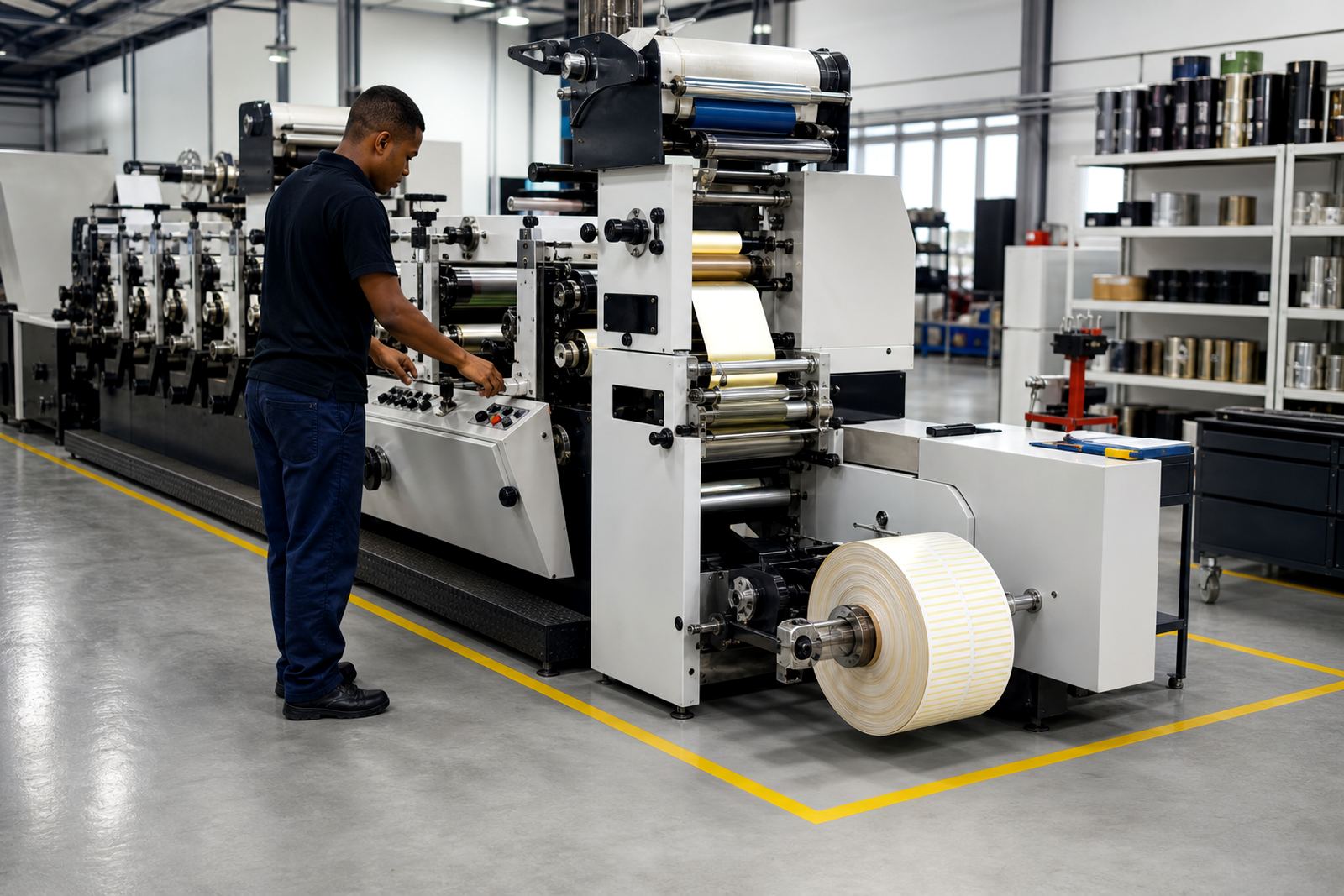
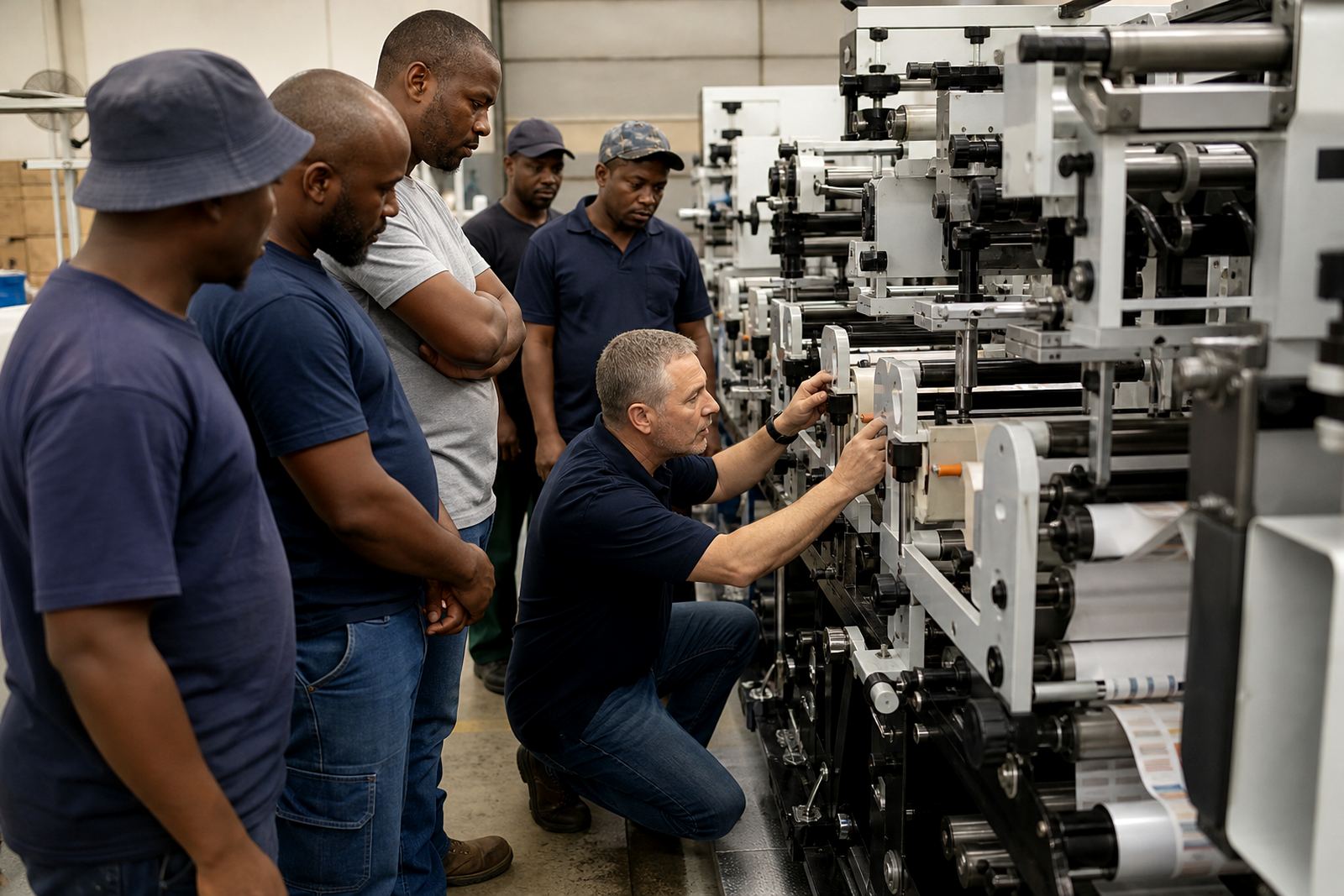
At Flexography Printer, setup support is often about helping the team get from first mount to stable print without chasing the job for hours. That includes press installation, commissioning and hands-on operator training so the crew understands what to check and in what order.
- Confirm plate mounting is even and secure on every unit.
- Check web path alignment and tension settings before threading fully.
- Set impression lightly first, then adjust in small steps.
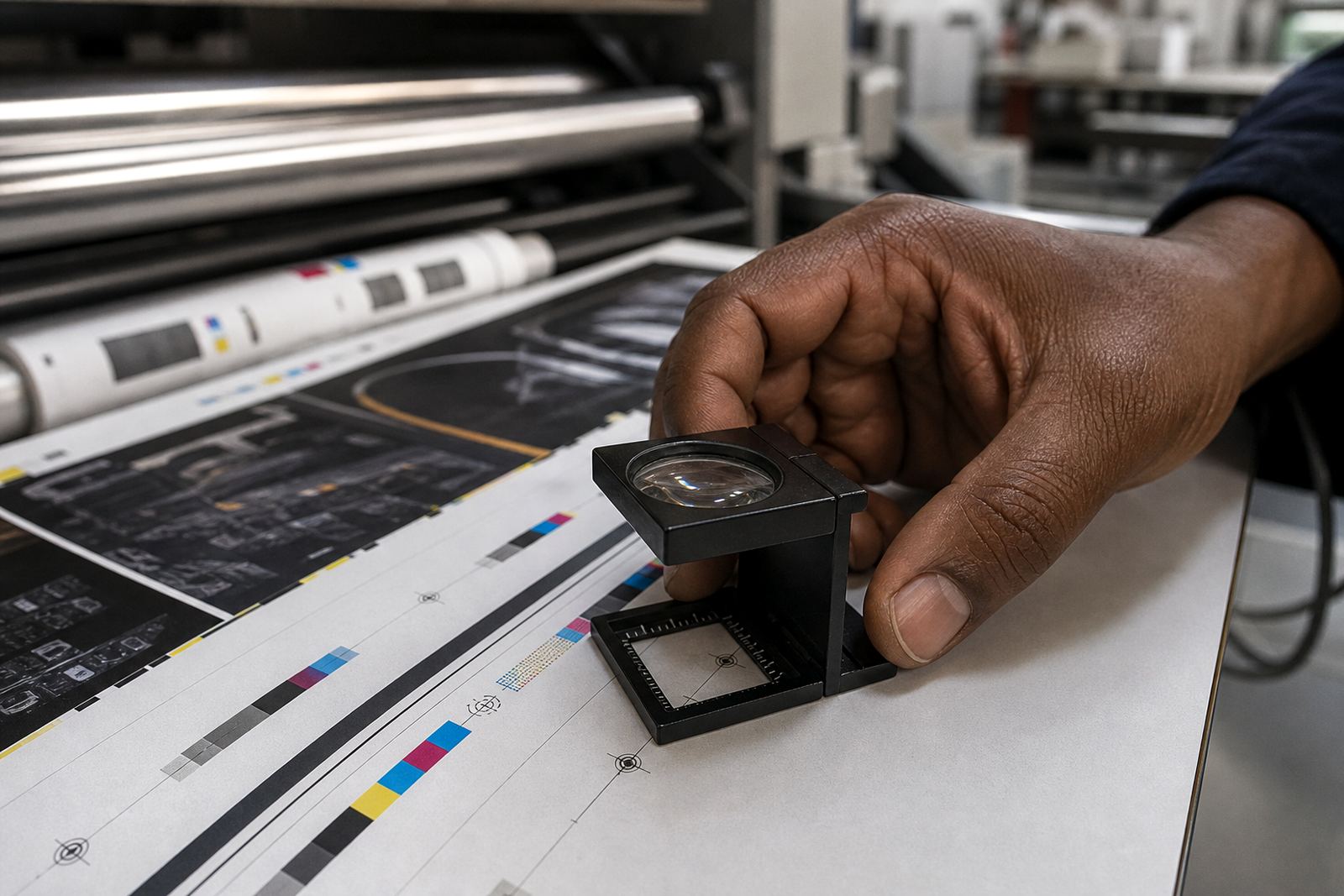
- Run short test lengths and inspect colour-to-colour and print-to-cut position.
- Record the settings that work, so the next repeat job starts faster.
A sound start-up routine saves time later. It is often better to spend a few extra minutes on setup than to lose a full roll because the repeat drifts halfway through the run.
How to read the signs while the press is running
Registration faults show up in patterns. If the image shifts consistently in one direction, the cause is usually different from a fault that comes and goes with speed changes. Operators should learn to read those signs early, before the run gets too far ahead.
Watch the registration marks, fine type and borders on the live job. A small movement may start as a soft edge or a slight colour shadow. If ignored, it can become a full misregister that affects finishing and customer approval.
- Shift that stays steady often points to setup or mounting.
- Shift that changes with speed can point to tension or web control.
- Random variation may point to material inconsistency or worn components.
- Problems that appear after a stop-start sequence often need a restart check.
When a press is running well, the operator should still keep checking. Load shedding, power dips and hurried restarts can upset the repeat position, especially on longer jobs where the material has already been under tension for some time.
Finishing setup needs the same attention
Registration does not end at the print units. Die cutting, slitting, rewinding and any other finishing step must line up with the printed image or the job loses the benefit of a clean press setup. A good print can still become a poor label if the finish is out of position.
That is why finishing setup is part of the same conversation. The print marks, cut marks and rewind tension all need to work together. If the finishing station pulls too hard or too softly, the label can shift or wrinkle, and the printed image may no longer sit correctly on the roll.
For converters supplying food, cosmetics and retail labels, this matters because the label has to look right on shelf and also run properly at the packer. A clean edge and correct repeat position save time further down the chain.
A Kempton Park example from a repeat label job
A converter in Gauteng may bring in a repeat label job that looked fine on the previous run but is now giving a small colour shift after changeover. In a case like this, the first step is not to chase the impression pressure. It is to check whether the plate mounting, web tension and finishing marks are still matching the recorded setup from the last job.
From Spartan in Kempton Park, local support can help the team work through the fault in a practical way, whether that is on site in Johannesburg, Pretoria or the East Rand, or through remote support when the issue can be diagnosed quickly. Sometimes the answer is a simple adjustment. Sometimes it needs spare parts support, anilox care or plate mounting help to get the repeat back in line.
The point is simple. Registration problems are easier to fix when the operator has a method and knows what to look at first. That is where training, maintenance and production support make a real difference.
- Keep a written setup record for repeat work.
- Check the same reference points every time the job returns.
- Use one person to confirm the final sign-off before full production.
- Bring in maintenance early if a fault keeps returning.
Simple habits that keep registration steady
The best registration control is often built from small habits rather than one big technical fix. Regular preventive maintenance, careful plate handling and clean press routines all reduce the chance of drift. The same applies to training. When operators understand how the press behaves, they catch problems sooner and waste less material.
For label converters across South Africa, from Cape Town to Durban and from Centurion to Gqeberha, the practical goal is the same: stable print, less waste and a cleaner finish. Registration becomes much easier to manage when the team knows how the press was set, what changed during the run and where to look if the image starts moving.
Good flexo registration is not about luck. It is about repeatable setup, steady monitoring and support that comes in before a fault becomes expensive.