Why a clean pressroom pays off in day-to-day production
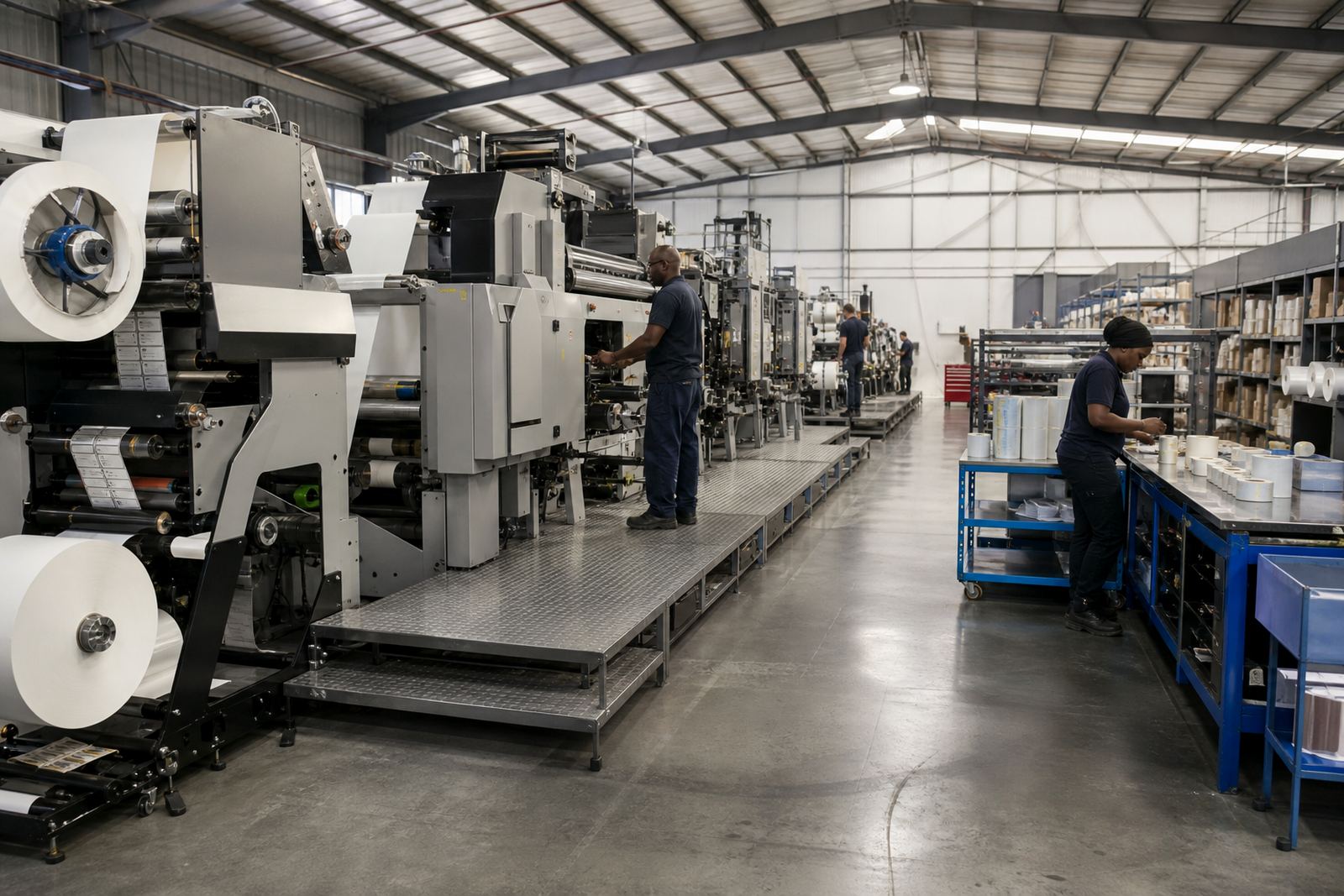
In narrow-web flexo work, small bits of waste can create bigger problems than many printers expect. Labels are often running fast, with tight registration and frequent changeovers, so loose matrix, dust, tape offcuts, ink drips and backing paper can get into the wrong places quickly. A clean pressroom helps operators spot issues early, keep the machine area clear and spend more time printing instead of chasing avoidable faults.
For label converters in Gauteng and beyond, housekeeping also supports consistency. When the floor is clear and each station has its place, an operator can check plate mounting, web path, anilox condition and drying areas without working around clutter. That sort of routine matters whether the job is for food packaging, cosmetics or retail labels.
What housekeeping changes for setup and changeovers
Setup is where a pressroom can lose time if tools and consumables are scattered. If a changeover needs sleeves, blades, tapes, cleaning cloths and inks, those items should be staged before the press stops. A clean, organised area reduces unnecessary walking and avoids delays while someone looks for a missing tool or spare part.
Clear surfaces also help with finishing setup. Creasing, sheeting, varnish work or rewinding adjustments tend to go better when the operator can see the product path and inspect each stage without distraction. In our experience, many repeat problems start as small housekeeping issues, not major mechanical faults.
- Keep job bags, plates and sleeves labelled by work order.
- Remove old backing paper and scrap before the next run starts.
- Wipe down ink trays, guards and nearby surfaces at every changeover.
- Store tools in one fixed place so shift handovers are quicker.
Cleaner equipment is easier to maintain
Preventive maintenance works better when the machine is not buried under dust, dried ink and random offcuts. Technicians need to inspect bearings, rollers, electrical cabinets, drying sections and web handling parts without first cleaning around the problem. That saves time, and it also improves the quality of the inspection.
For sites in areas like Spartan, Kempton Park, where a busy production floor may carry more dust from loading bays and yard traffic, regular cleaning becomes part of machine care. Near the coast in places such as Durban or Gqeberha, humidity can add another layer of trouble, because moisture can affect stored plates, tapes and some consumables. Good housekeeping helps reduce both dust build-up and handling damage.
- Keep compressed air use controlled so dust is not blown deeper into the machine.
- Separate cleaning rags from print room consumables to avoid contamination.
- Inspect anilox, plates and mounting areas after each run, not only when a fault appears.
- Protect spare parts in clean containers, especially where humidity is high.
Housekeeping supports safer operator training
Training works best when the machine area is orderly. New operators learn faster when the path around the press is clear, controls are easy to reach and the work area makes sense from one shift to the next. If someone has to step over scrap or move loose items before operating a press, the risk of mistakes goes up.
At Flexography Printer, operator training and startup production support are easier to deliver when the pressroom already has a simple housekeeping routine. That routine does not need to be complicated. It just needs to be followed every day, especially during shift change and at the end of a run. In busy plants, a few minutes spent resetting the area can prevent a much longer delay later.
- Mark storage spots for plates, tools and cleaning items.
- Use a short end-of-shift checklist for waste removal and wipe-downs.
- Keep floors dry where possible to reduce slip risk and contamination.
- Make sure operators know who to call when a support issue affects production.
A local example from a Kempton Park pressroom
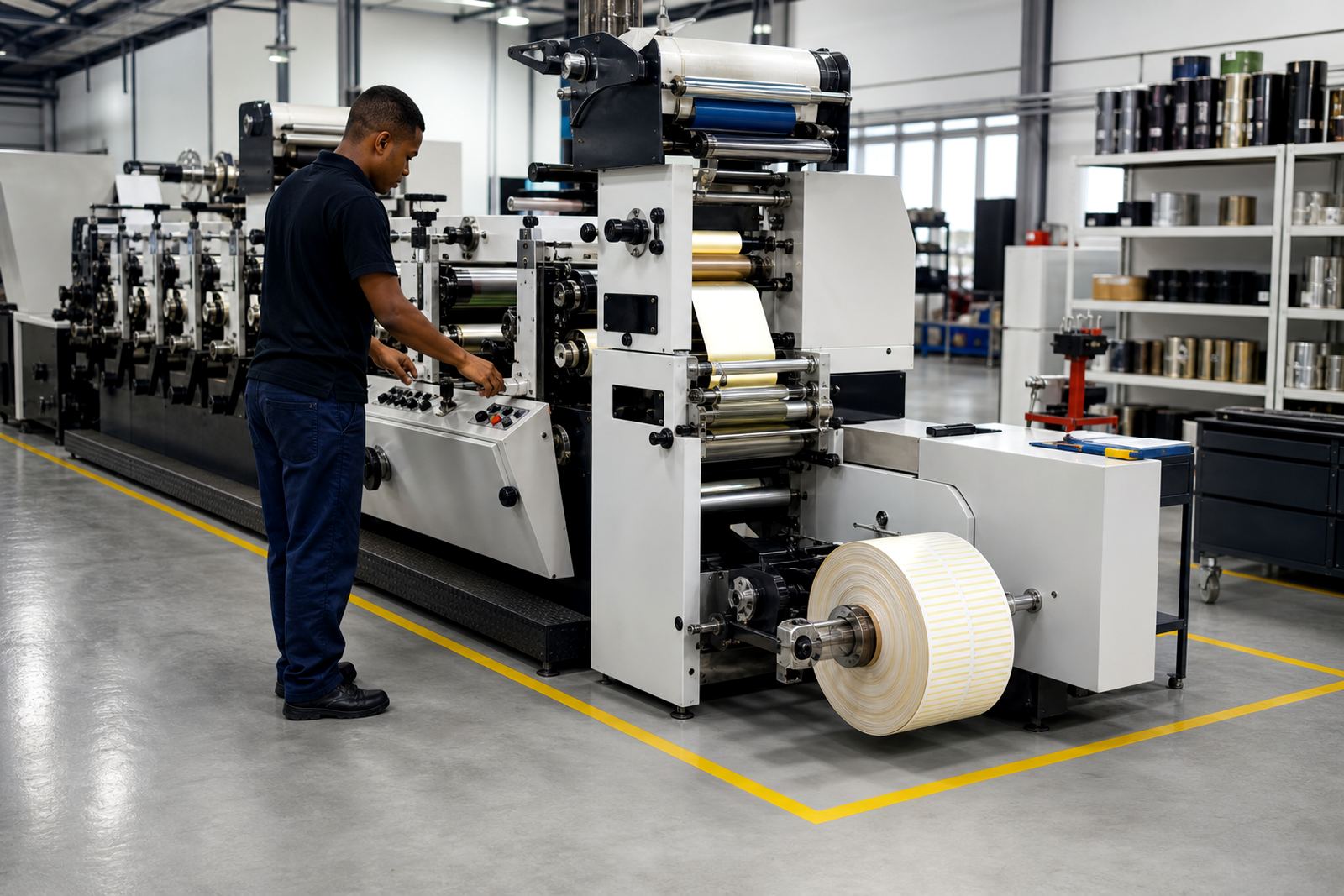
In a typical Kempton Park label converting plant, the production team may be juggling urgent retail jobs, short food label runs and a last-minute repeat order. When housekeeping slips, scrap starts building up around the press, cleaning cloths go missing and the next setup takes longer than planned. That delay can affect dispatch times, especially when trucks are already booked and the customer wants the labels same day or next morning.
Once the team introduces a cleaner reset between jobs, the difference is easy to see. Operators find the right plate set quicker, the finishing area stays clearer and faults are easier to trace. The pressroom may still deal with power interruptions from load-shedding, but a tidy floor and a organised prep area means recovery is faster when power returns. The job may not be perfect every day, but it is far easier to bring back into production.
Practical habits that keep narrow-web lines running well
Good housekeeping is not a once-off clean-up. It is a set of small habits that keep production steady. The best pressrooms build these habits into every shift, so the machine is ready for the next job and maintenance teams can work without fighting clutter.
These are simple steps, but they make a real difference across Johannesburg, Pretoria, Durban, Cape Town and Gqeberha. They also suit converters in the East Rand and Centurion who need dependable support with setup, spare parts, breakdown response and production consulting.
- Do a five-minute clean-down at each changeover.
- Keep ink, anilox and plate handling areas separate from scrap removal points.
- Check that waste bins are emptied before they overflow.
- Schedule preventive maintenance around the production plan, not after a breakdown.
- Use remote support early if a recurring issue is linked to setup or cleaning practice.
When housekeeping becomes part of the job, maintenance gets simpler and production stays more predictable. That is why many converters treat a clean pressroom as part of quality control, not just a housekeeping task.