Private label buyers are judging the label before they judge the product
In private label work, the label often does the selling before the customer ever opens the pack. That is true in supermarkets, pharmacies, hardware stores and smaller retail chains alike. A plain bottle or carton can look premium if the label is well printed, neatly finished and applied without wrinkles or lift. If the print looks flat or the cut is rough, the pack starts at a disadvantage.
For South African converters, the pressure is not only about looking good on a shelf in Johannesburg or Cape Town. It is also about surviving transport, warehouse handling and store conditions. Heat, coastal humidity and frequent movement all test adhesive choice, varnish selection and overall label construction. Private label buyers want a clean, repeatable result and they do not want surprises from one run to the next.
The practical shift is simple: presentation is no longer a finishing touch. It is part of the commercial value of the product.
What retailers and brand owners now expect from label presentation
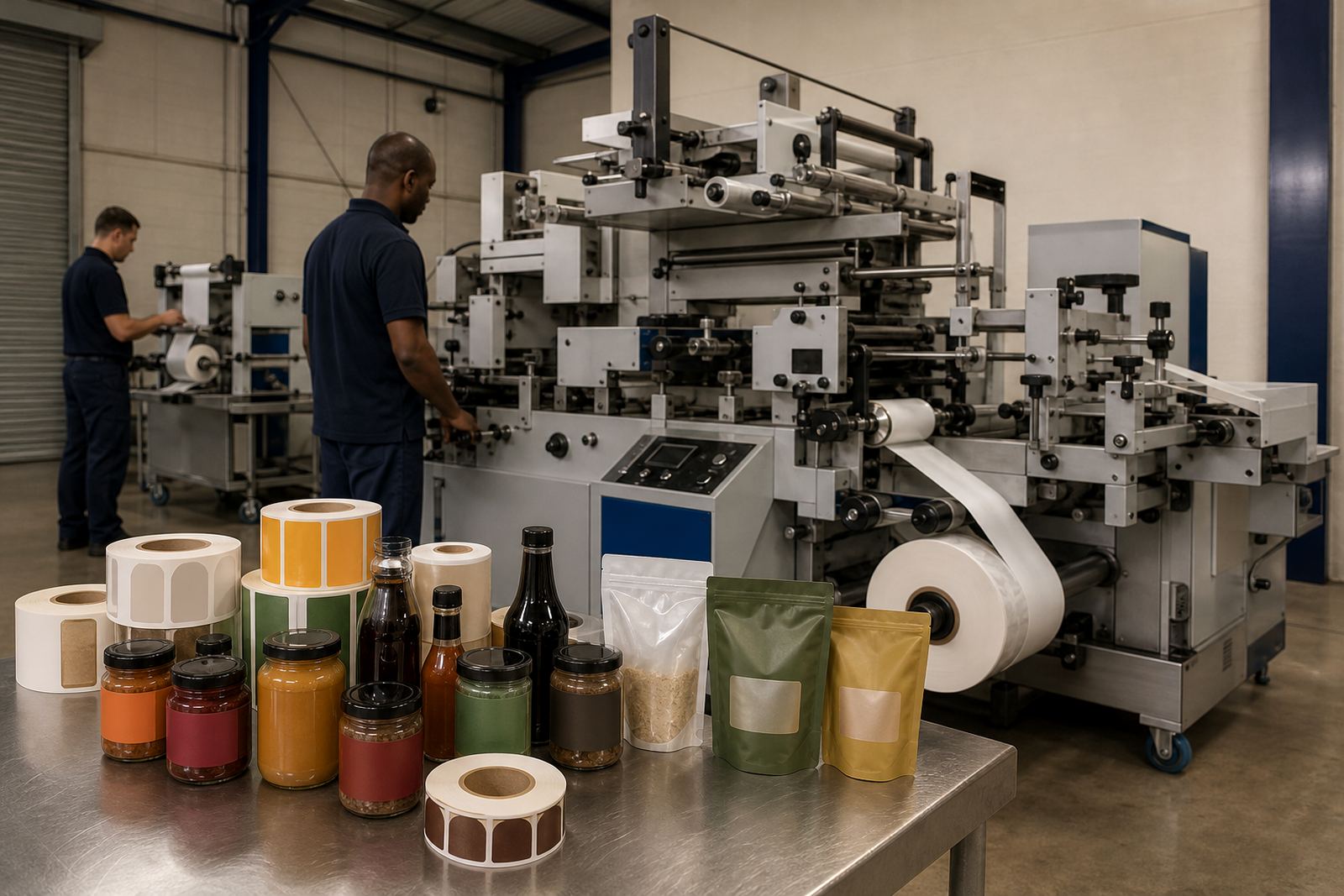
Private label packaging is becoming more disciplined. Buyers still want price, but they also want labels that look intentional. That means colour consistency across repeat orders, sharp text on small panels and finishing that suits the pack form. A label for a sauce bottle needs a different approach from one for a household cleaner or a cosmetic tube.
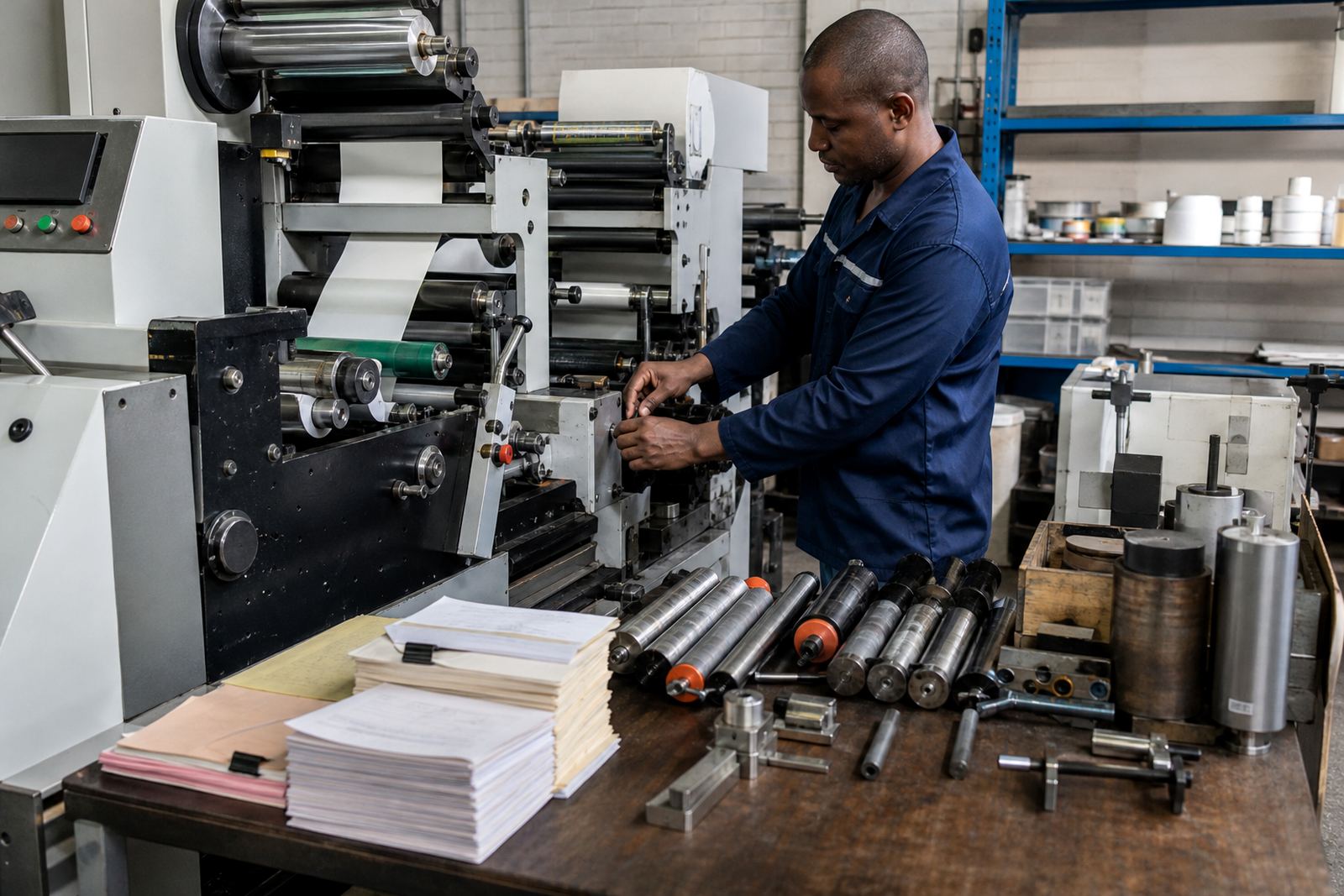
Converters are also being asked for more flexibility. Short runs happen more often, artwork changes happen sooner, and product ranges can expand quickly. A press room that can reset cleanly and keep registration steady is in a better position to respond. Setup time matters, but so does the discipline of checking plates, anilox condition and web handling before production starts. Small faults tend to show up fast on private label jobs.
When working on private label ranges, keep these points in mind:
- Colour should stay consistent across repeat batches
- Text must remain readable on small print areas
- Finishes should suit the pack material and filling line
- Labels must release, apply and hold properly through distribution
- Artwork changes should be manageable without excessive waste
Why narrow-web flexo remains practical for private label work
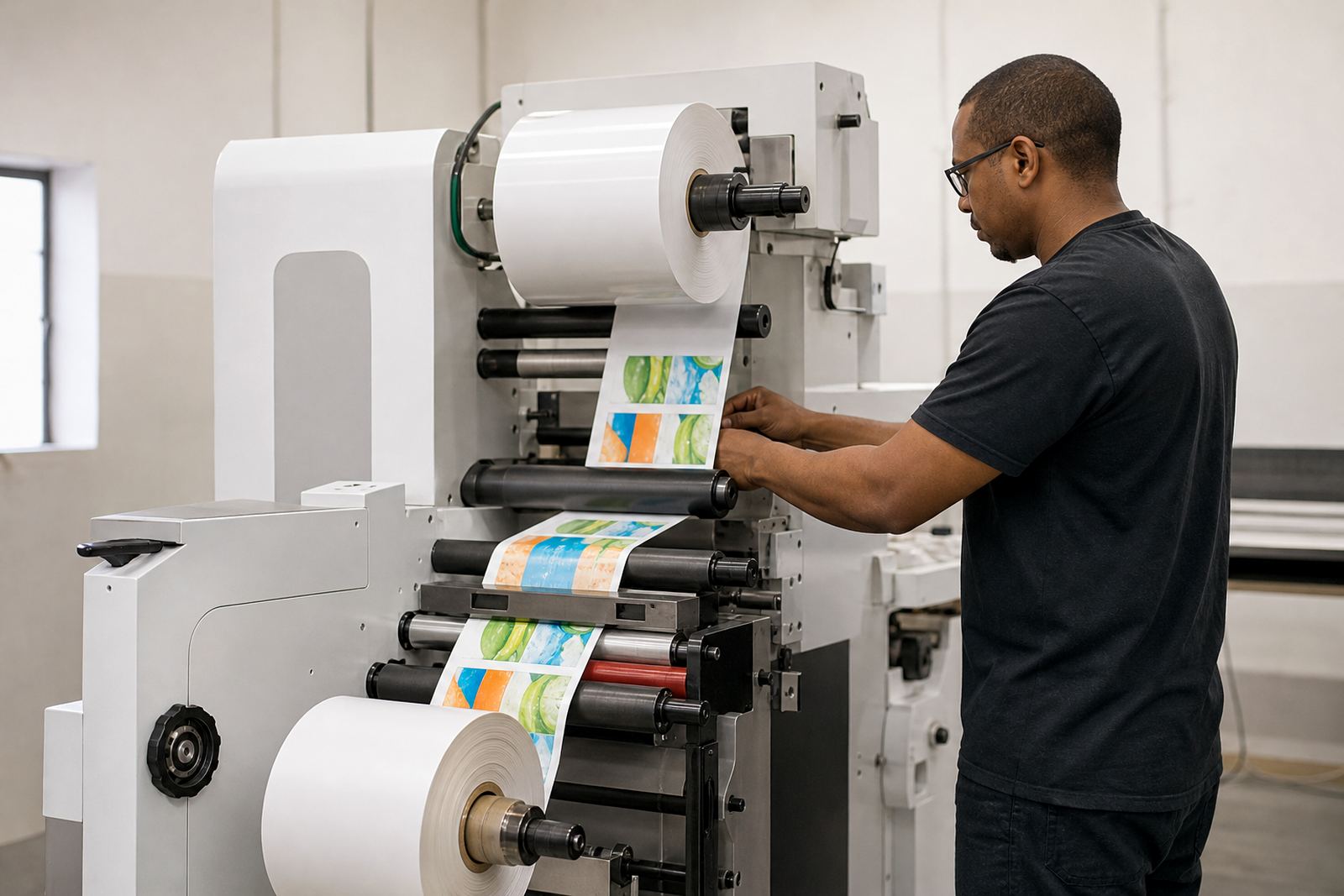
Narrow-web flexo label presses are well suited to private label production because they handle a wide range of label types and finishing needs. Many converters need one line to cover food labels, household products, health and beauty packs and promotional runs. Flexo remains a practical choice when the job list is mixed and the schedule is tight.
The value is not only in speed. It is also in control. With proper setup, the press can handle stable repeat work and produce a consistent result from run to run. That matters for private label ranges, where the same product may be sold under different store groups but still needs a common standard of presentation. Operators who understand substrate behaviour, web tension and the effect of finishing steps can make a real difference to the final pack.
In our experience, the best results come when the press, finishing process and quality checks are treated as one system. If the plate mounting is rushed or the finishing setup is uneven, the whole job suffers. If the machine is set correctly and the team knows what to look for, the work is far easier to repeat.
Finishing choices that influence shelf appeal
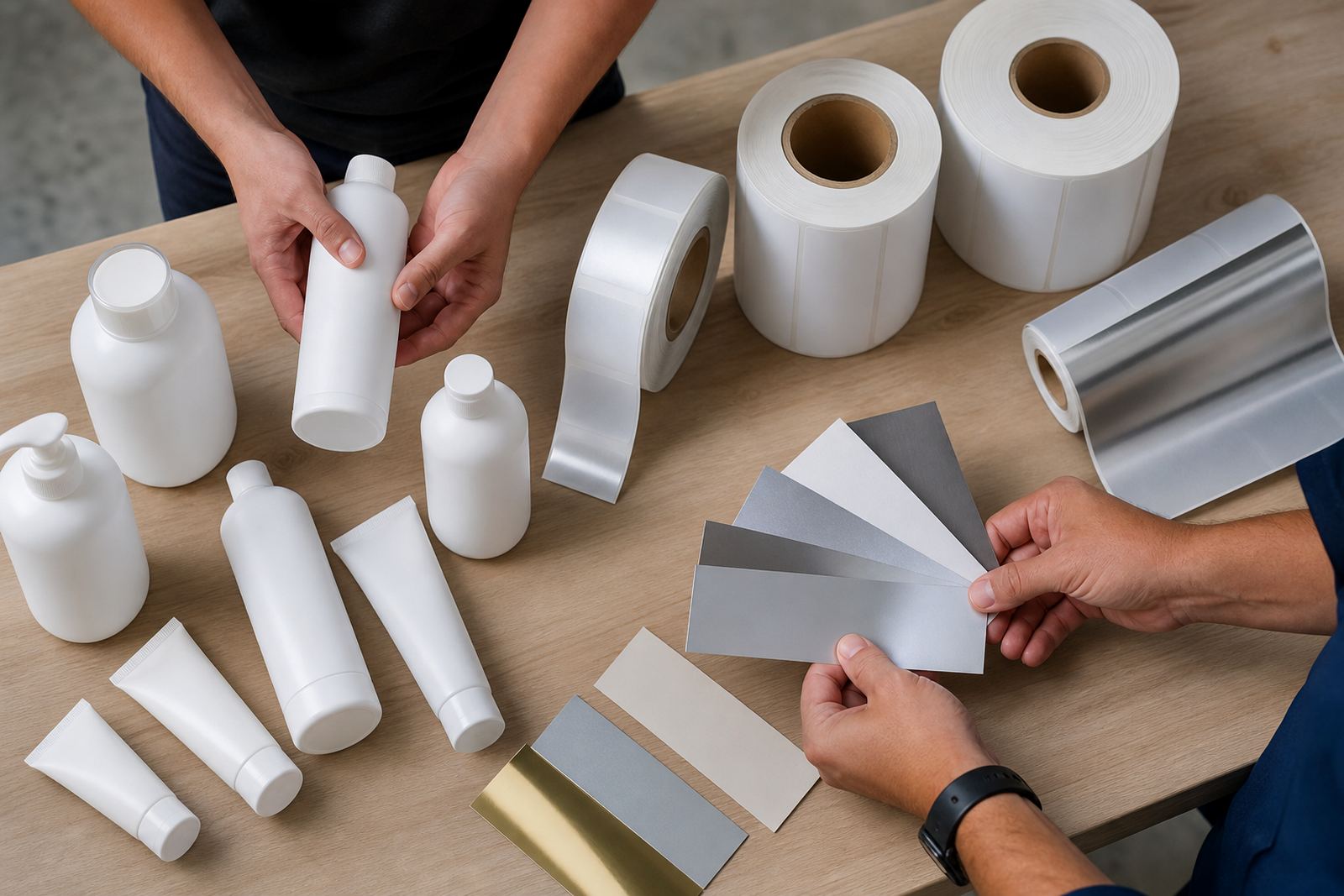
Private label labels do not need to be flashy, but they do need to look intentional. That is where finishing decisions matter. Depending on the pack and market, a converter may use varnish, lamination, die-cutting, foil effects or other finishing steps to shape the final appearance and performance. Each one has a job to do. None should be added just because it looks impressive on paper.
Good finishing starts with the end use. A label on a product that will sit in a chilled cabinet needs different handling from one that will be stored in a dry retail aisle. A pack that passes through an automated applicator needs clean edges and reliable release. A cosmetic or premium food pack may need a more polished look, but that should still be balanced against cost and turnaround time.
- Choose finishes that suit the pack material and storage conditions
- Check edge quality so labels apply cleanly on line
- Avoid overcomplicating a design when the market wants clarity
- Test finished labels under realistic handling conditions
For many private label jobs, the strongest result is the one that looks tidy, prints cleanly and behaves well in production.
Local pressure points for South African converters
South African label converters have to work around realities that are not always visible to the buyer. Load-shedding can interrupt production flow. Coastal humidity can affect materials and storage. Municipal water and cleaning rules can shape how some operations manage housekeeping and maintenance. In the East Rand and around Spartan, Kempton Park, many workshops also have to balance older equipment with growing demand for short-run flexibility.
This is where practical support becomes important. Press installation, commissioning, operator training and preventive maintenance all help reduce downtime. Breakdown support and remote support can keep a line moving when a fault appears. Spare parts support, anilox care and plate mounting help also matter because private label work leaves little room for avoidable delay.
A useful local example is a converter in Gauteng taking on a private label range for a store chain that needs steady pack presentation across multiple outlets. The first challenge is not just printing the label, but getting the job repeatable. That means setup discipline, operator training and a process that can be trusted when volumes rise or artwork changes at short notice.
What converters should prioritise in 2026 and beyond
The direction of private label packaging is clear. Buyers want cleaner presentation, faster turnaround and fewer errors. They are also asking for better consistency across different products in the same range. For converters, that means the pressroom has to be ready for repeat work, seasonal artwork changes and more exact finishing requirements.
Three priorities stand out. First, keep the press in condition so setup remains predictable. Second, train operators to spot small issues before they become spoilage. Third, treat finishing and delivery standards as part of the print process, not an extra step at the end. When those three parts work together, private label labels become easier to quote, easier to produce and easier to sell.
At Flexography Printer, the focus is on helping label converters across Johannesburg, Pretoria, Durban, Cape Town and Gqeberha work with narrow-web flexo label presses in a practical way. That includes installation, commissioning, training, startup support, maintenance and production advice. For private label work, steady support often makes the difference between a job that merely gets out the door and one that keeps the customer coming back.
The real private label advantage is consistency
Private label trends often get discussed as if the main issue is price. Price matters, but presentation is what keeps a product credible once it reaches the shelf. A clear label, proper finish and reliable repeat quality give a retailer or brand owner confidence in the range. That confidence is built in the pressroom long before the product reaches the store.
Converters who understand this are better placed to win and keep private label work. They do not need to promise the world. They need to produce labels that look right, run well and stay consistent from batch to batch. That is the standard buyers notice.