Start With The Product, Not The Artwork
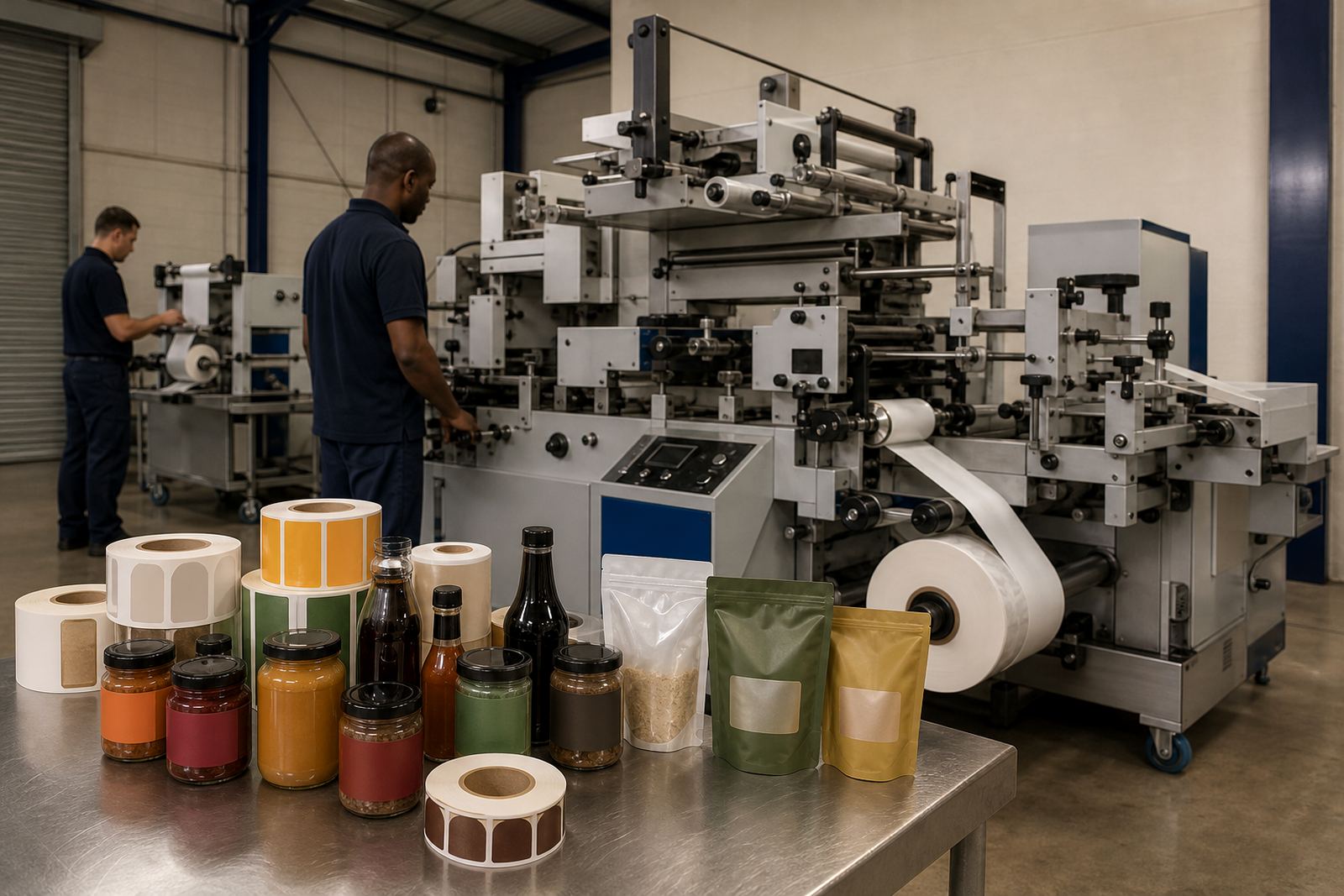
Before a label goes near a press, look at the food itself and how it is packed. A dry spice jar, a chilled dairy tub and a frozen ready meal all ask for different label behaviour. The print may be the same on paper, film or a clear material, but the real test is whether the label stays legible and bonded from packing through to shop shelf.
For label converters in Kempton Park, Pretoria, Durban or Cape Town, this starts with a simple checklist: product temperature, surface type, storage life, moisture exposure and how the pack is handled in transit. If the product will be washed, chilled or moved through cold rooms, the adhesive and face material need proper attention. A good print can still fail if the construction is wrong.
Food producers often focus on colour first, but for shelf life and compliance the small details matter more. You want text that stays sharp, barcodes that scan cleanly and a layout that gives enough space for legally required information. That includes ingredients, batch detail, dates and any warning text where applicable.
Choose Materials That Suit South African Conditions
South African food packs often move through dry inland air, humid coastal conditions and hot delivery vehicles. That mix can affect curl, edge lift and ink stability. When working on narrow-web flexo label presses, the chosen material should suit the end use, not just the print room.
Paper labels can work well for many dry goods, but once moisture or refrigeration enters the picture, films are often easier to manage. Clear labels can suit premium products, yet they need careful handling because any misregistration or scuffing shows quickly. For chilled or frozen foods, the adhesive choice is just as important as the face stock.
- For dry pantry goods, confirm whether a paper or film label is more suitable for handling and shelf life.
- For chilled packs, check moisture resistance and whether the label must stay put on a cold surface.
- For frozen foods, test the bond after deep chill, not only at room temperature.
- For oils, sauces and marinades, allow for splash resistance around seams and cap areas.
In coastal areas like Durban and Gqeberha, humidity can affect both stock and finished rolls. Good storage practice is part of print quality. Keep material sealed where possible and avoid letting reels sit too long in changing conditions, because a label that looks fine in the morning can behave differently by afternoon.
Set Up The Press For Clean Fine Print
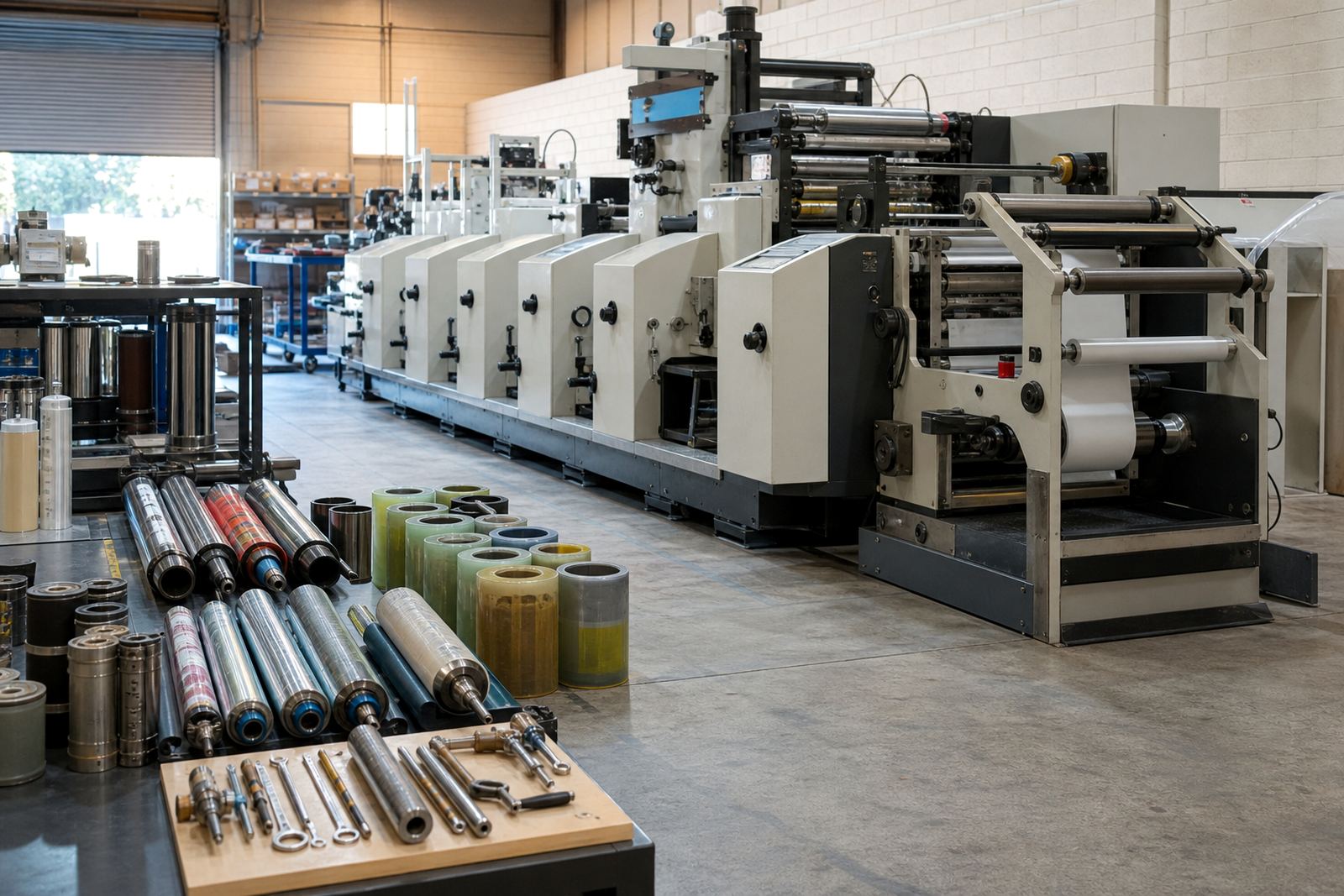
Food labels often carry a lot of information in a small space. That means tight type, ingredient panels, regulatory wording and batch fields must all print cleanly. On narrow-web flexo label presses, setup needs to support crisp text, even solids and consistent repeat length across the run.
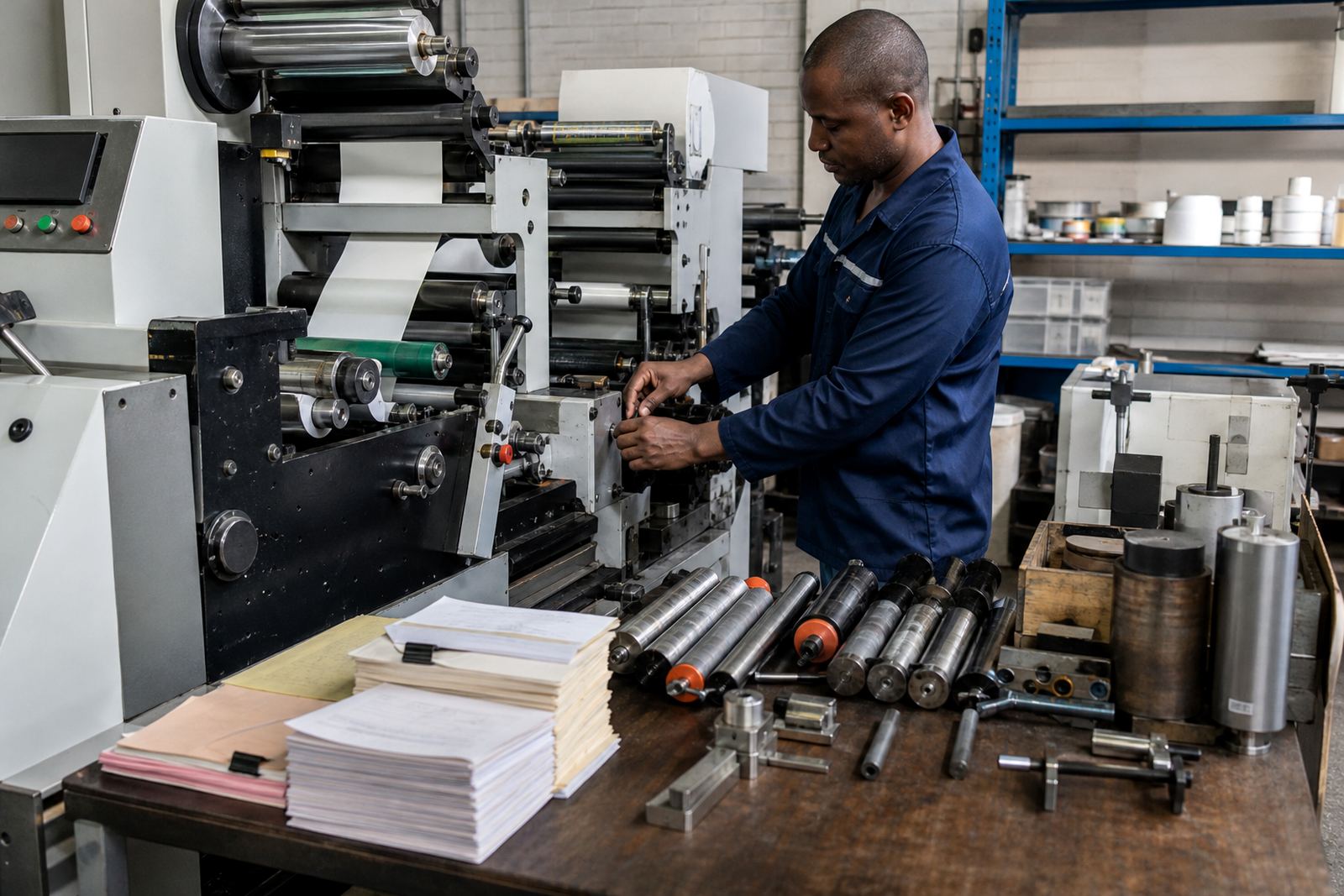
Converters should pay attention to plate mounting, impression settings and anilox care. If the ink laydown is uneven, small text can fill in or lose edge sharpness. If the web tension is not controlled, the label may register well at the start and drift later. The goal is not flashy print, it is clean and repeatable output that can be packed without drama.
For food work, it helps to lock in a practical setup routine:
- Confirm substrate compatibility before the run starts.
- Check print register on the first few metres and again after the press settles.
- Inspect fine text and barcode areas under normal light, not only under press-room conditions.
- Keep inks, plates and cylinders clean so there is no build-up on the production line.
A small setup error can turn into a full reel of rejected labels. That is why press commissioning, operator training and startup production support matter so much in busy plants around Johannesburg and Pretoria where turnaround time is tight and packing lines cannot wait for long adjustments.
Finishing Must Protect Legibility And Handling
Finishing is not just the last step, it is part of the product’s function. Food labels are handled by hand, packed on lines and sometimes exposed to friction in transit. If varnish, lamination, die-cutting or rewinding are not set correctly, the label may look neat in the roll but fail later on pack.
For converters, finishing setup should reflect the end use. A label on a tray pack may need clean edge control and reliable release from the liner. A label on a jar may need an extra layer of protection against rubbing. A label for a small pouch may need tighter control of flex and curl so it feeds properly into packing equipment.
Practical finishing checks include:
- Make sure cut edges are clean and do not lift after rewinding.
- Check that varnish or laminate does not block required readable areas.
- Test whether the finished roll runs smoothly on the application line.
- Confirm that any shiny finish still allows important text to be read in shop lighting.
Production teams sometimes chase a brighter finish and only notice the problem later when sleeves, cartons or packs start rubbing the label surface. A practical finish is one that still looks proper after transport, stacking and cold-room handling. That is the standard worth aiming for.
Match Label Construction To The Filling Line
The best food label is the one that runs well at speed. If the pack line is stopping for missed labels, feed issues or poor adhesion, the printing quality becomes secondary. Label converters should understand the application method, because a label that performs on one line may fail on another.
For example, high-speed bottling lines often need very consistent roll winding and release. Cold-filled products may need extra attention to adhesive set. Carton packs and jars may have different surfaces, so one construction will not suit everything. In some cases, the same design can be adapted with a different liner, adhesive or finish instead of changing the artwork.
A local example: a Gauteng food packer filling dry spices in a plant near Spartan may need labels that print neatly, stack well and apply cleanly after long shifts. If the same label is sent to a coastal depot in Durban, storage and humidity may shift the way the reel behaves. That is why local testing and production support are worth the time. It saves rework later.
Keep Compliance And Brand Information Easy To Read
Food labelling is practical before it is decorative. The consumer must be able to find the key details quickly, and the packer must be able to apply the label without confusion. If the layout is crowded, important information gets lost. If the type is too small, the label may print but still fail its purpose.
Good label design for food products should leave room for mandatory information, traceability fields and brand elements without forcing the operator to guess. That means sensible spacing, enough contrast and careful choice of print process for the amount of detail involved. It also means checking that the chosen finishing does not affect scannable areas or date coding spaces.
When a converter plans a run properly, the result is easier to manage from press start to pack-out. That includes setup, operator training, preventive maintenance and spare parts support where needed. In a South African plant, especially where load-shedding or schedule pressure can interrupt production, reliable process control is often worth more than a last-minute fix.
Food labels should do three things well: stay attached, stay readable and stay neat. If they do that, the rest of the packaging line has a far easier job.