
Where quality checks belong in the pressroom
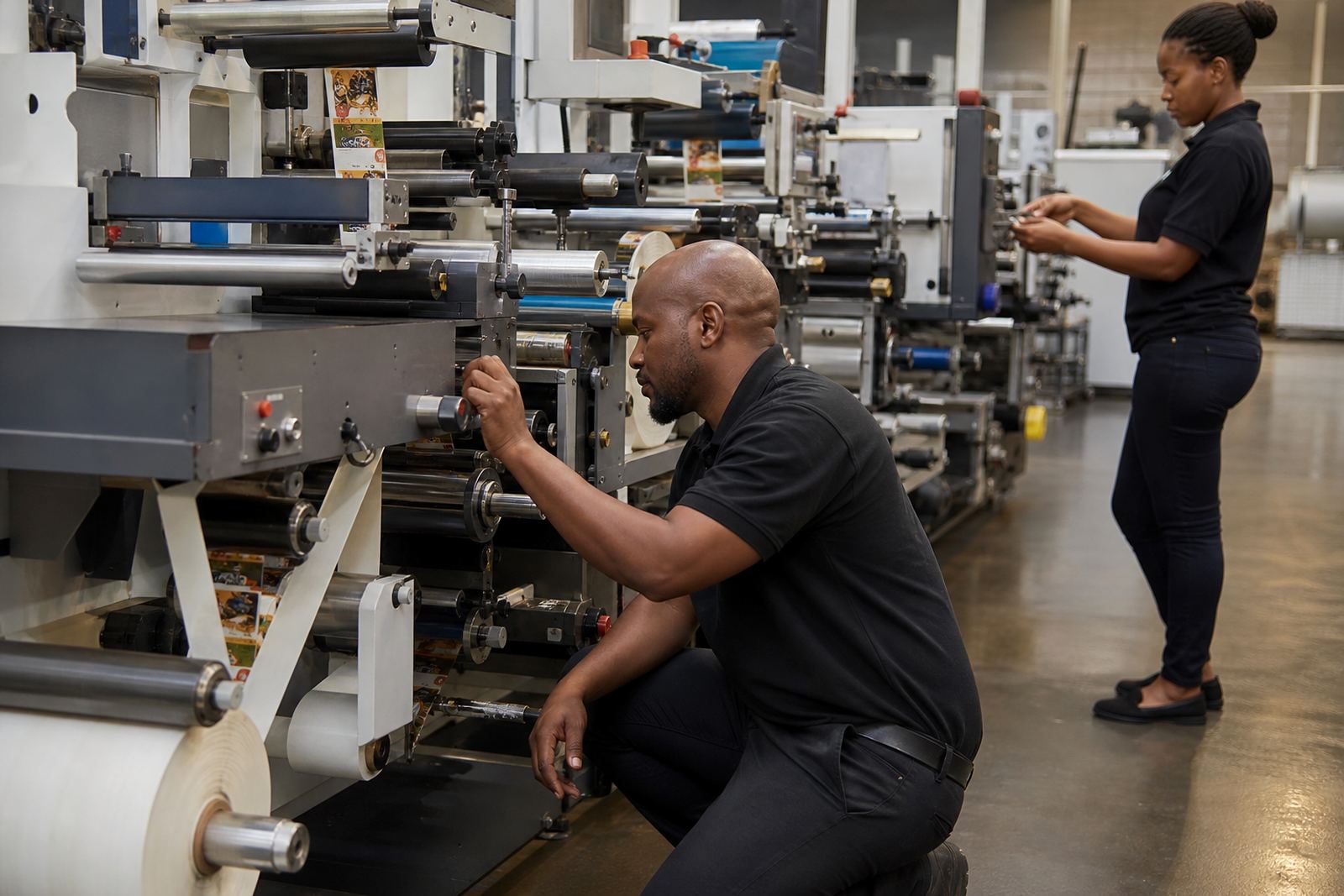
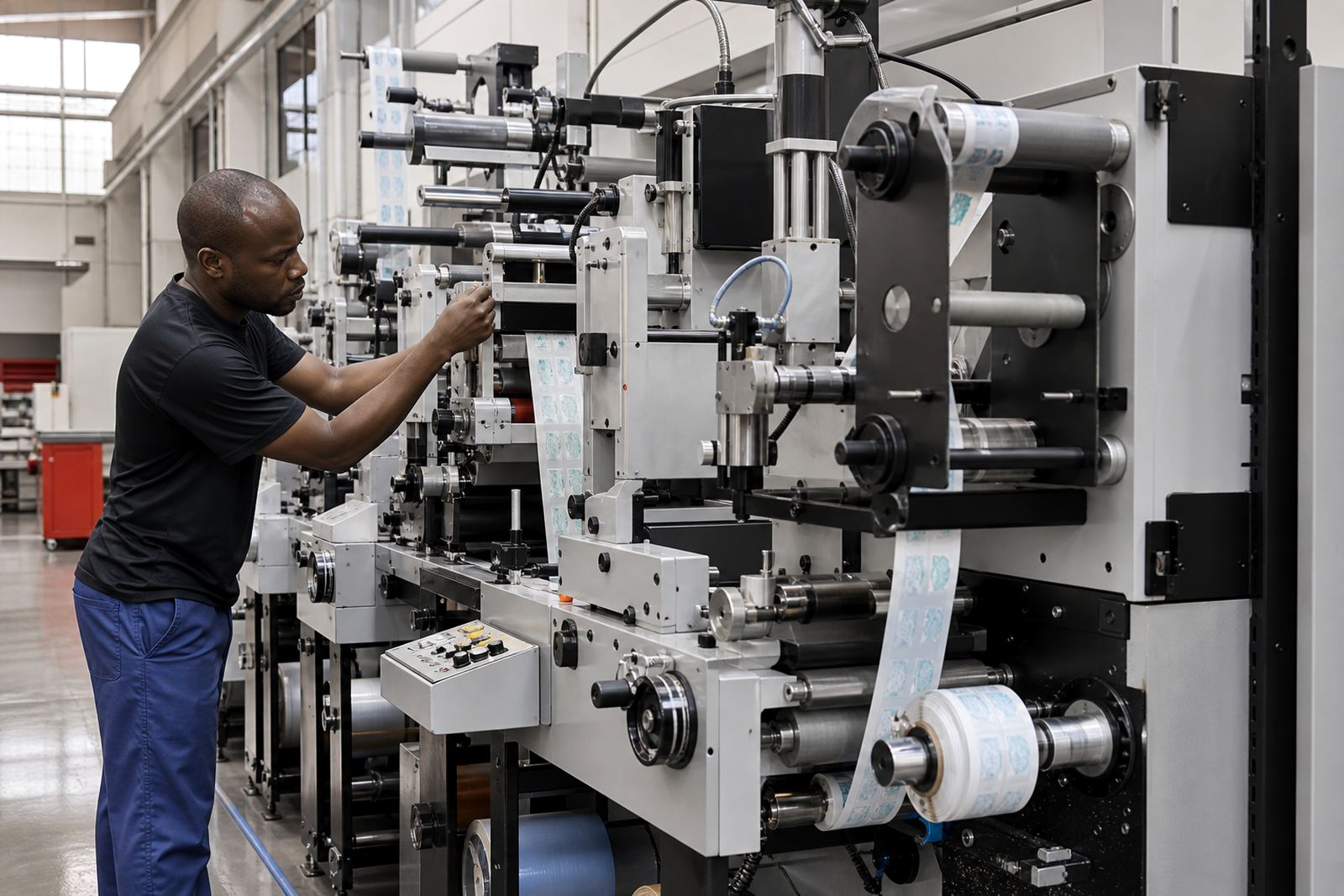
A sensible label production flow starts before the first metre runs. On a narrow-web flexo press, the operator should check the substrate, plates, inks, anilox condition, web path and registration settings before production gets going. That first check is not just paperwork. It decides whether the job runs cleanly or spends the day chasing faults.
In Kempton Park, where temperature changes and dust can affect handling, a simple pre-run routine helps keep jobs stable. It also matters for sites working through load-shedding, because a stop-start shift can upset tension and curing, so the job needs quick rechecks after every interruption.
The first checkpoint is a clean and ready press
Before setup, the press should be clean, dry and ready for the job at hand. That means checking rollers, sleeves, plates, doctoring areas and the general press path for dried ink, glue residue or loose debris. Even a small build-up can affect print sharpness or cause marks on labels. The old habit of checking only when a fault shows up costs more in waste than many teams expect.
- Confirm the substrate roll is correct for the job and stored properly.
- Check plate condition, mounting alignment and obvious wear.
- Make sure the anilox and ink system are clean before loading colour.
- Verify the web path, guides and tension settings before speed goes up.
Good setup work also helps in coastal areas such as Durban and Gqeberha, where humidity can change how paper and film behave during a shift. If the pressman sees a slight change in register or drying, it is better to stop and check than push on and print another few hundred metres wrong.
In-run checks that keep colour and register under control
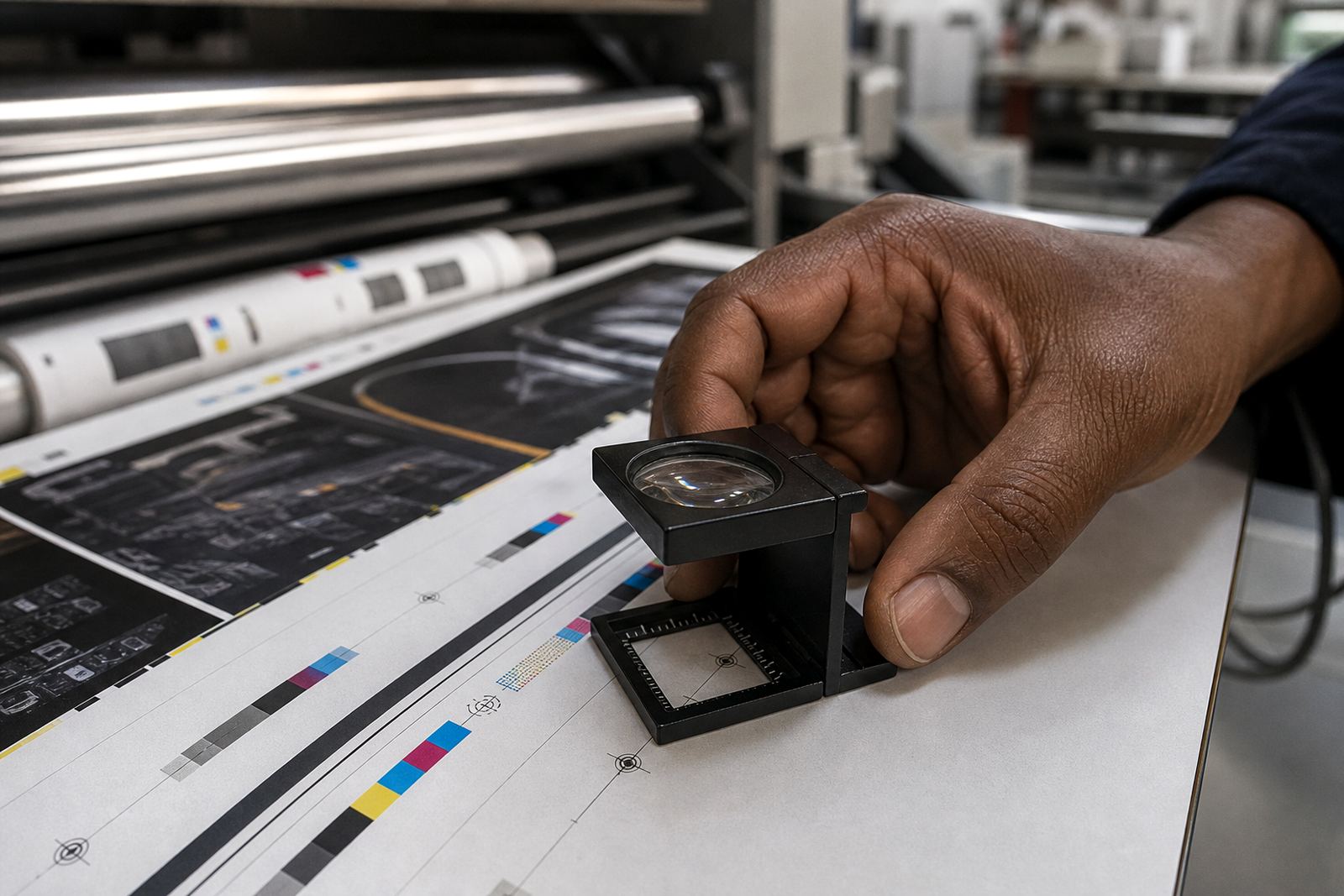
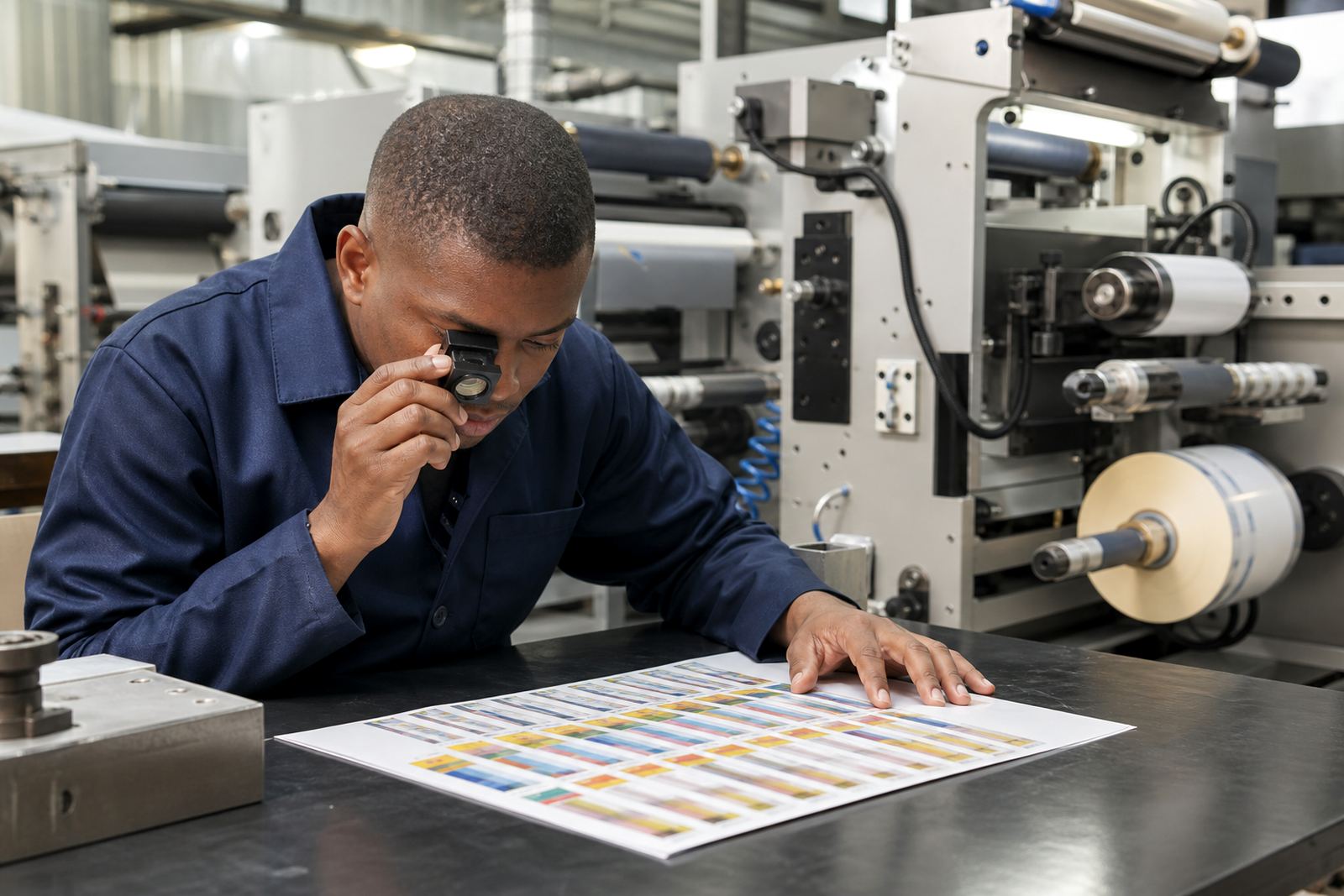
Once the job is running, the focus shifts to repeat checks at set intervals. This is where operators look at colour density, register, text clarity, barcodes, overprint and any signs of spotting or pinholing. On a narrow-web line, changes can happen quickly, especially after a splice, a web break or a speed change. A short pause for checking is often cheaper than sorting out a full batch later.
For food and beverage, cosmetics and retail labels, the visual standard has to stay consistent from the first label to the last. That means checking more than the eye can catch at a glance. If a line on the plate is lifting or a colour is drifting, the team must know how to correct it without overcomplicating the job.
- Check the first off-cut against the approved sample before ramping up.
- Inspect register after every stop, splice or speed change.
- Watch for tone shift, haze or uneven ink transfer across the web.
- Review the label edge, die cut and waste matrix removal during the run.
Finishing checks are part of print quality too
Many print faults only show up once the job reaches finishing. That is why finishing setup should never be treated as an afterthought. Slitting, die cutting, varnishing, foiling and rewinding all need their own checks because a good print can still end up with uneven rolls, poor cut depth or damaged edges. In practice, finishing is where tidy work becomes saleable stock.
A useful habit is to compare the finished roll against the approved sample before packing. Look at roll tension, core placement, label count, edge quality and any blocking or lifting. If a job is meant for hand application, the rewind and release need to suit the end user, not just the pressroom. That one step saves trouble later when the labels are being applied on a packing line or at a store room in Pretoria or Cape Town.
Training staff to spot problems early
Quality checkpoints work best when every operator knows what good looks like. That is why operator training and startup production support are central to a steady production flow. A trained press operator does not wait for a supervisor to notice a fault. They can see the warning signs, call a halt if needed and correct the issue before it grows. The same applies to finishing teams, who need to understand how print, rewind and cut quality affect the final pack.
It helps to build short checklists into the shift routine, especially on jobs with tight deadlines or multiple SKUs. A team that uses the same checks every time makes fewer mistakes and wastes less substrate. It also keeps breakdowns from turning into panic, because the crew already knows what to review when a line slows or stops.
- Use a short checklist at setup, first-off approval and every shift change.
- Assign one person to sign off colour and one to confirm finishing quality.
- Keep a sample of the approved label at the machine for comparison.
- Record faults clearly so the same problem can be traced on the next run.
A local example from a busy Gauteng run
Take a label converter in the East Rand running a mix of short jobs for retail and food packaging. The day starts with a substrate check, then plate mounting and a first-off pull. Midway through the shift, a power dip interrupts the line and the operator has to restart. Without a proper checkpoint routine, the team may miss a small register shift or a slight change in colour after restart. With the right habit in place, they pause, recheck the sample and carry on with confidence.
That sort of routine is especially useful for plants servicing Johannesburg, Pretoria and Centurion, where turnaround times can be tight and jobs often move quickly from one press to finishing. It keeps the production flow sensible and helps reduce scrap, which matters when margins are already under pressure.
After the job: what to review before the next run
The final checkpoint is not on the finished roll alone. Once the job is packed, the team should review what happened during the run. Was the anilox clean enough. Did the plates hold up. Did the finishing line need extra adjustment. Were there any recurring stoppages or support calls. That review turns one job into better practice for the next one.
Preventive maintenance and spare parts support fit naturally here too. If a wear point keeps showing up, it is better to sort it before the next production slot. For narrow-web flexo press work, the best quality system is not complicated. It is simply steady, specific and repeated every time, so the next job starts in a better place than the last.