Start With Clean, Labelled Ink Stations
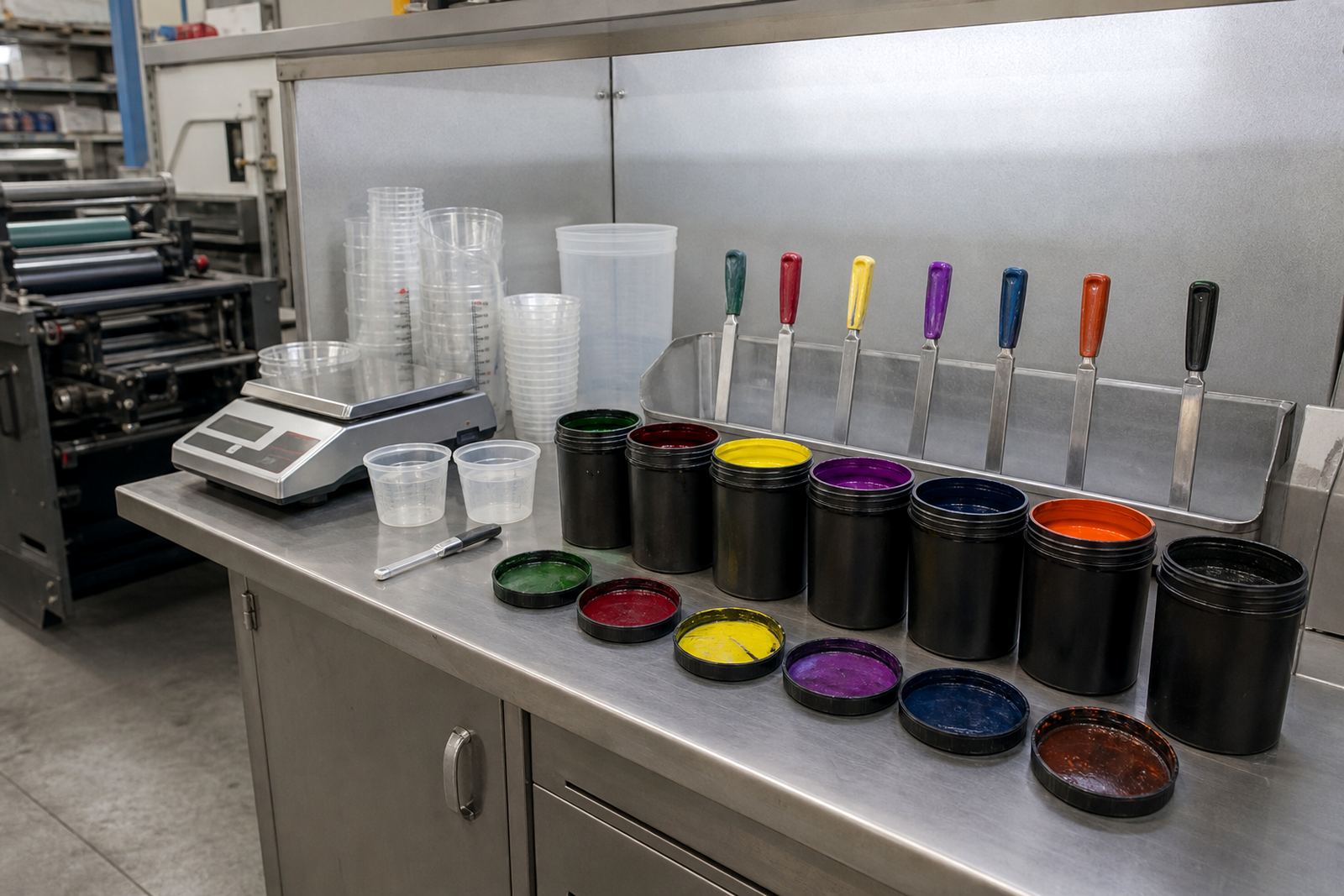
Ink rooms go off track when lids are left open, trays are mixed up, or half-used containers are stored without labels. In a narrow-web label environment, that sort of clutter quickly turns into contamination, colour drift and avoidable rework. Keep every ink station marked by colour family or job number, and make sure only one open container is on the bench at a time.
Simple order matters more than fancy tools. A clean scoop, a dedicated stirrer and a fixed place for wipes and measuring cups helps operators work the same way every shift. On busy days in Kempton Park or Johannesburg, that kind of routine makes the difference between a pressroom that stays under control and one that needs constant chasing.
- Keep lids on when ink is not in use.
- Use one scoop or stirrer per ink family where possible.
- Mark partial containers clearly with date, job and colour.
- Remove old rags, tape and scrap from the ink area before setup starts.
Mix Only What You Need For The Job
Overmixing is a common cause of waste. It is tempting to prepare extra ink before startup, but if the run is short or the artwork changes, the leftover material can be difficult to reuse. A better habit is to estimate the draw correctly, then mix in stages. That way you can top up without sitting on excess stock.
When ink is mixed in stages, the press crew can check the shade against the first approved sample and adjust before the full run starts. This also helps when jobs move between shifts. One operator can hand over to another with a clear note on what was mixed, what was reduced and what still needs to be checked. That sort of discipline is especially useful when load-shedding disrupts the day and the press restarts after a pause.
- Prepare a small test batch first.
- Record the mix ratio and the approved shade.
- Stir again before topping up the tray or fountain.
- Do not return unused ink to the main container unless it is still clean.
Control Dust, Skins And Spills Before They Spread
Ink handling problems often begin with small things: dust on a lid, a skin forming on the surface, or a drip on the floor that gets walked through the whole pressroom. Once that starts, anilox rolls, plates and surrounding parts need more cleaning, and the next job may pick up unwanted marks. A quick wipe is easier than a full clean-up later.
Coastal humidity in places like Durban and Gqeberha can make some materials behave differently, so it is worth checking storage conditions and opening only what is needed for the shift. In dry months, static and airborne dust can also create trouble around exposed ink. The safest habit is to close containers immediately after use and clean spills while they are still small.
- Wipe rims before sealing containers.
- Keep ink away from floor dust and packing debris.
- Use a spill tray under mixing points.
- Dispose of contaminated wipes in a covered bin.
Match Ink Prep To The Press Setup
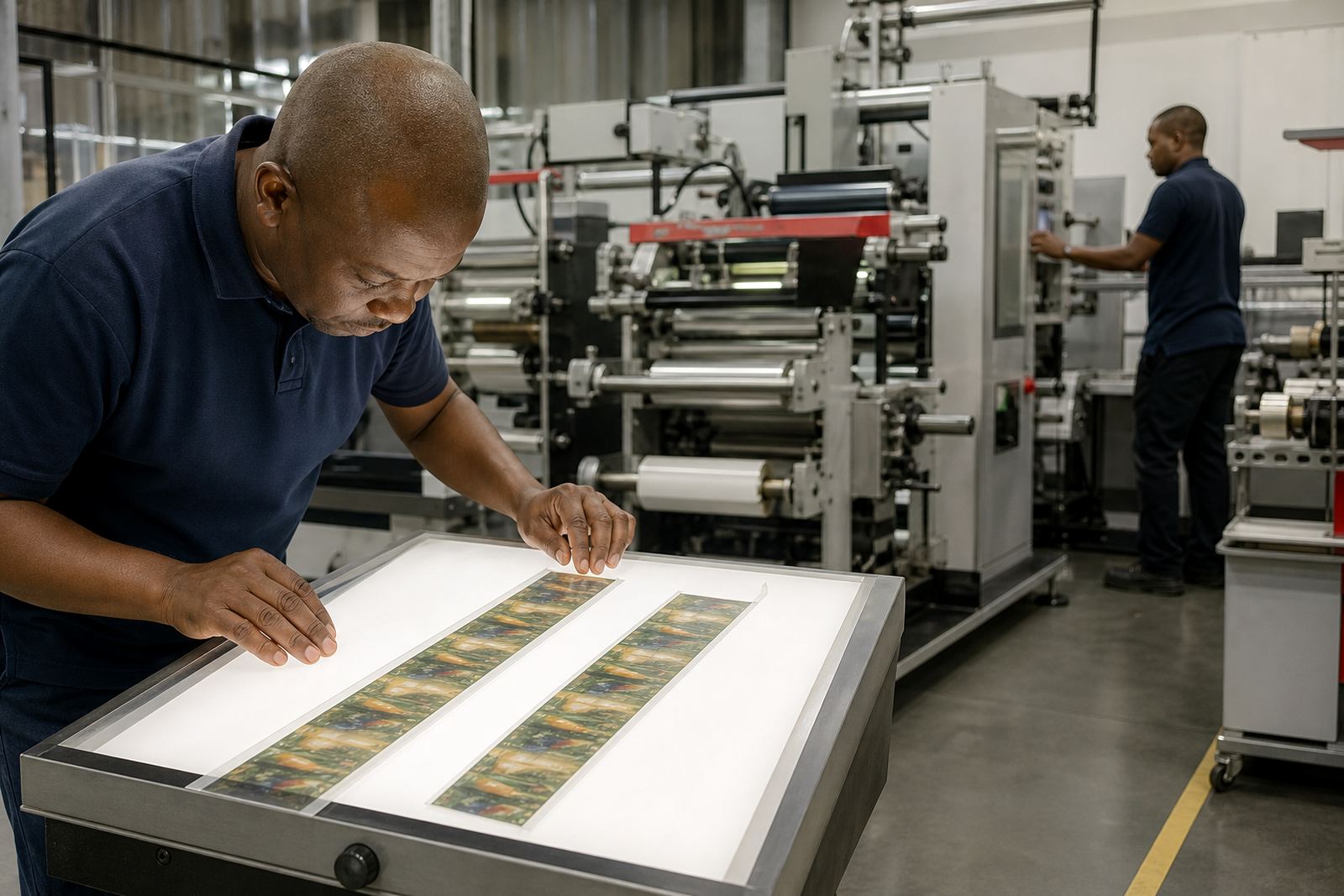
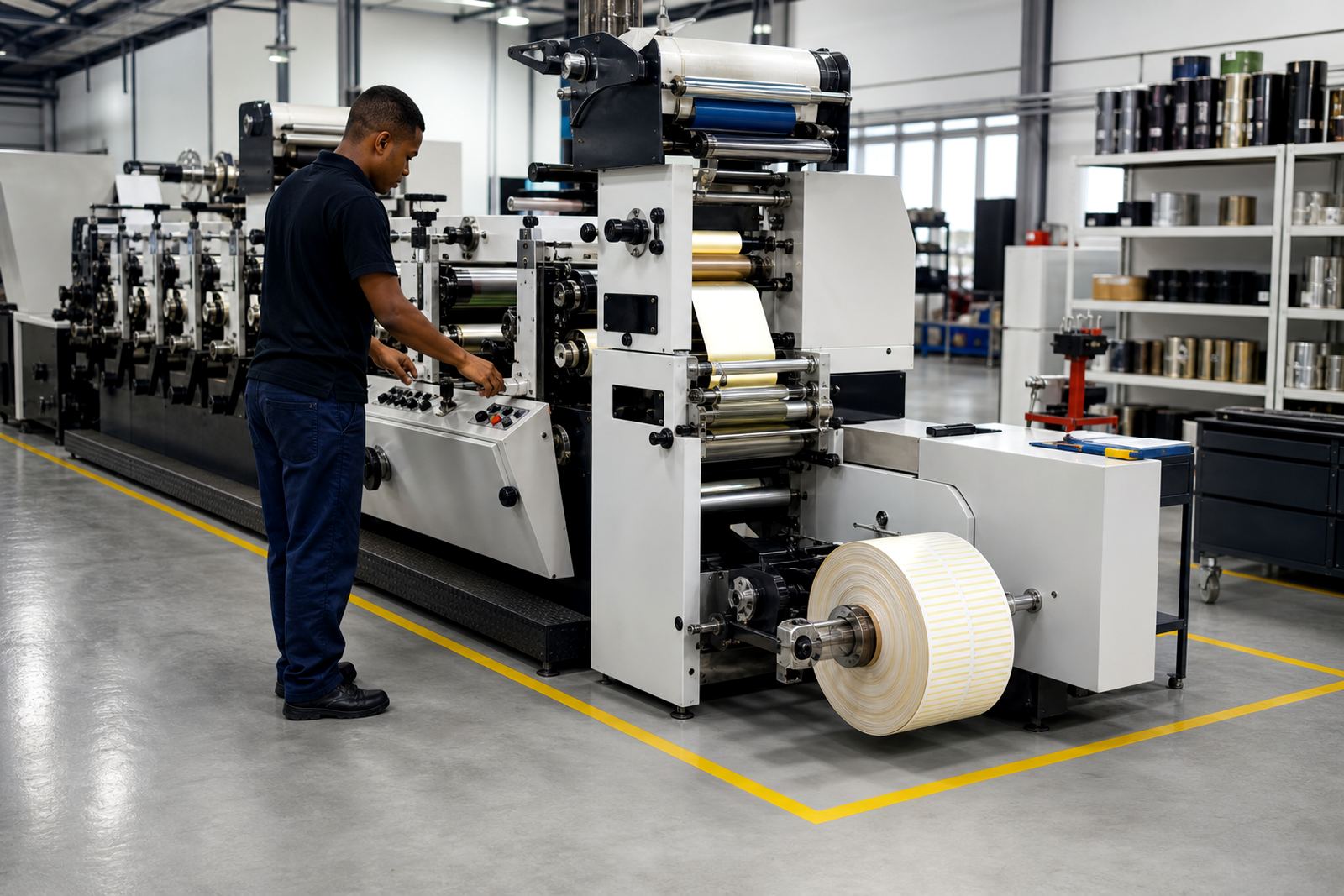
Ink handling does not sit on its own. It has to match the press setup, the plate condition and the finishing plan. If a job needs strong edge definition, smooth solids or clean overprint, then the ink should be prepared with the final result in mind. That includes checking viscosity, flow and any adjustments needed for the selected substrate.
When the press team and the finishing team talk early, there are fewer surprises later. A label that will be die-cut, slit or varnished may need a different approach from one that leaves the press and goes straight to packing. For converters handling repeat retail work in Pretoria or Centurion, this can prevent last-minute changes that slow down the whole line.
- Check the substrate before mixing the final batch.
- Keep a written note of any approved adjustments.
- Link ink prep to the finishing steps that follow.
- Confirm the job standard before production starts.
Train The Crew On Repeatable Housekeeping
Good ink handling is not only about one careful operator. It works best when the whole crew follows the same method. New staff need to know where materials live, how to record usage and what counts as clean enough before a job begins. If every shift uses a different method, the pressroom will never stay tidy for long.
Training should cover the small things as much as the technical ones. That means how to open and reseal containers, how to avoid cross-contamination, and how to clear away waste at the end of the run. A converter in East Rand support territory once ran two shift teams with different cleanup habits, and the result was simple: one shift always started with someone else’s mess. Once the crew agreed on one routine, the room stayed cleaner and setup moved faster.
- Assign one person to sign off the ink area at shift change.
- Keep cleaning cloths and tools in the same place every day.
- Use the same job card notes for all operators.
- Review mistakes after the run, not in the middle of production.
Plan For Maintenance And Support Before The Job Slips
Ink trouble is often a sign that the wider pressroom needs attention. If pumps, trays, rollers or related parts are not being checked, operators end up compensating with more manual cleaning and more guesswork. Preventive maintenance keeps the basic path clear, so ink can move and spread as expected. It also helps when a line is restarted after a breakdown or a planned stop.
For label converters across South Africa, especially those working under tight delivery windows, support should include more than emergency fixes. A practical service plan can cover installation, commissioning, operator guidance, production support, spare parts and cleaning methods around the inking system. At our Spartan, Kempton Park base, we often see that the best results come from the shops that keep their routines simple and consistent, not the ones trying to rescue every job at the last minute.
That is why ink handling should be treated as part of the full pressroom process. When the team keeps the area clean, measures carefully and records what worked, the next job starts in better shape. It is a small habit, but it saves time on the floor and makes the whole operation easier to manage.